Asian markets tumble again after Fed hikes interest rates to highest since 2008

Uma Devi
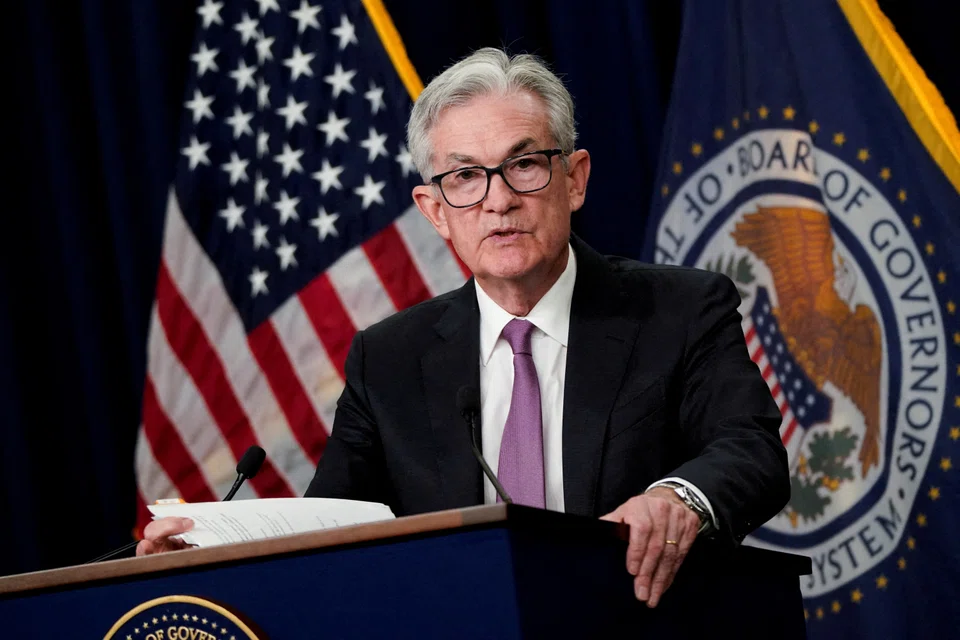
STOCK markets in the region took a beating on Thursday (Nov 3) after the US Federal Reserve announced its fourth 0.75-point interest rate hike of the year. This took the central bank’s short-term borrowing rate to a target range of 3.75 per cent to 4 per cent, the highest level since 2008.
The Fed upped interest rates by 75 basis points in a bid to fight rising inflation rates, with a warning that it may raise rates in smaller increments in the near term.
As at market close on Thursday, the Straits Times Index was down 1.2 per cent or 38.62 points to 3,102.51. Decliners surged past advancers 313 to 190, after 1.3 billion securities worth just over S$1 billion changed hands.
It was a similar story across the Asia-Pacific, with most markets reeling from the rate hike. The Hang Seng Index fell 3.1 per cent, the KLCI dropped 2.2 per cent, and the Kospi slipped 0.3 per cent. Elsewhere, the ASX 200 lost 1.8 per cent. The Jakarta Composite Index was the only outlier, ending the day 0.3 per cent higher.
Over on Wall Street, major indices finished Wednesday’s trading session in the red, as investor sentiments took a hit from the Fed’s latest announcement. The S&P 500 fell 2.5 per cent; the Dow Jones Industrial Average lost 1.6 per cent, and the Nasdaq Composite shed 3.4 per cent.
Fed chair Jerome Powell had said “there is still ground to cover” in terms of future rate hikes, adding that the ultimate level of interest rates in this cycle would be higher than previously expected.
Although the latest rate hike was largely expected by markets, the guidance has now changed, said David Page, head of macro research at AXA Investment Managers. Future hikes are now likely, he said, although these will take into account “cumulative tightening and lags” which indicate a slower pace of tightening in the future.
Page added that Powell had explained that the Fed tightening worked on three levels – “how fast, how high and how long”.
Greg Baker, chief executive of TD Ameritrade Singapore, said current interest rates are in “stark contrast to the ultra-low interest rates at the start of 2022”.
“All eyes are now on whether the Fed will moderate its policy in December’s meeting amid growing fears of a financial crisis,” he said.
But the current situation, coupled with the possibility of future rate hikes, mean greater volatility for equity markets.
Baker warned that investors are unlikely to have both “growth and recovery” based on the Fed’s current trajectory. “Those looking to mitigate the impact of a potential recession should focus on rebalancing and diversifying their portfolio to weather any upcoming storms,” he added.
Market watchers believe future rate hikes are imminent, but said that these will be done with more caution.
Many analysts predict that interest rates will peak at about 5 per cent. Paul O’Connor, head of multi-asset at Janus Henderson Investors, said that market expectations for future interest rates have “edged marginally higher”, with most 2023 rates moving to new cycle highs.
“With interest rate expectations now looking realistic, we see bond duration regaining a useful role in multi-asset portfolios. Further rises in bonds yields are likely to be self-limiting, which would suggest that duration assets should be bought on dips,” he said.
For investors looking at risk assets, he warned that “patience remains the key”. “Equity valuations still look expensive relative to real bond yields and earnings estimates remain at risk, as monetary policy bites and growth continues to slow.”
Ray Sharma-Ong, investment director of multi-asset solutions Abrdn, said a higher rate environment also allows for rate beneficiaries in Asia such as Singapore and Indonesia equities to perform.
Oanda analyst Edward Moya said stocks might “struggle” as the risk of the Fed taking rates above 5 per cent remains.
Pierre Chartres, fixed income investment director at M&G Investments, said it appears as though the Fed is entering the “second phase of its monetary tightening cycle” – which takes into account the cumulative tightening that has already occurred and the lags with which monetary policy affects economic activity.
“While the Fed remains data dependent and committed to fighting inflation, it is likely to exert more caution with interest rate increases going forward.”
AXA’s Page has raised the expectations of the Fed “peak rate” to 5 per cent in March, with no cuts before 2024. He is expecting a 0.5 per cent hike in December, and a hike of either 0.25 per cent or 0.5 per cent in February. He is, however, expecting a further 0.25 per cent hike in March, which will result in “material headwinds to activity”.
Abrdn’s Sharma-Ong said Asian investors can tap the strength of the US dollar (USD) given that the Fed intends to push terminal rates higher while other central banks are considering pausing.
These investors can capitalise on the strength of the USD through methods such as quality US companies, US quality companies, USD and USD-hedged investment grade bonds, as well as currencies and equities of service-driven economies.
“We expect both the equities and currencies of service-led economies to outperform goods export-dependent ones. As such, we see opportunities for the currencies and equities of Asean countries (such as Singapore and Thailand) outperforming that of Taiwan and Korea,” he added.
Sim Moh Siong, a currency strategist at Bank of Singapore, said that on a year-to-date basis, North Asia currencies have depreciated a fair bit. Central banks across Asia are responding through currency intervention – either verbally or through dollar sales, or tightening monetary policies.
Singapore, he said, has been leading the region in terms of tightening, and the Singapore dollar is “holding up very well” against other Asian currencies. However, the latest inflation numbers are still “too high for comfort”, which could pave the way for some further tightening in April.