Europe: Shares slump to 2012 lows; travel and leisure stocks pummelled
 Add BT as a preferred source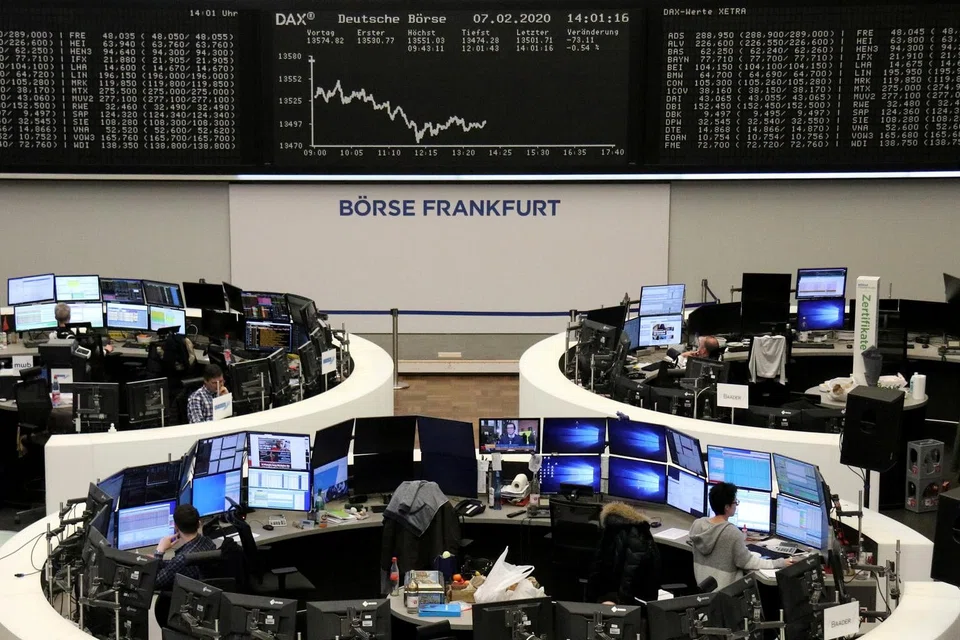
DeeperDive is a beta AI feature. Refer to full articles for the facts.
[BENGALURU] European shares plummeted to 2012 lows on Monday as the coronavirus pandemic raged through Europe, with dramatic monetary easing by global central banks failing to reassure investors about its growing economic damage.
The pan-European Stoxx 600 fell 4.9 per cent, with markets in France and Spain leading losses as the two countries joined Italy in enforcing a national lockdown.
Airlines and holiday operators including TUI, EasyJet, British-Airways owner IAG and Air France - KLM were among the biggest decliners on the Stoxx 600 as the pandemic brought global travel to a standstill.
The wider travel and leisure index plunged more than 10 per cent. The Euro Stoxx 50 volatility index, popularly termed the European "fear gauge" jumped to a record high of 95.02.
"The already-struggling restaurants and companies operating in tourism, hotel and leisure will lay off people, who they might hire back later, but initially there will be an increase in unemployment, and that means a further shock to the minds of investors," said Andrea Cicione, head of strategy at TS Lombard in London.
The US Federal Reserve cut interest rates to near zero in its second emergency move in two weeks and pledged hundreds of billions of dollars in asset purchases, saying the epidemic was having a "profound" impact on the economy.
Navigate Asia in
a new global order
Get the insights delivered to your inbox.
"That pretty much surprised everybody, at least with the timing of their announcement. It was a large cut. On top of that, in terms of purchases, they said they're going to go in quite big from the beginning," TS Lombard's Cicione said.
Central banks in Japan, Australia and New Zealand followed with their own measures but could not stem a slide in global stocks.
Wall Street fell more than 8 per cent at opening on Monday and triggered an automatic 15-minute halt of its three main indexes for the third time in six days.
The benchmark European index has now lost more than a third of its value since hitting a record high in mid-February, with declines made worse by a crash in oil prices and the European Central Bank's decision to hold interest rates last week.
The latest economic data from China showed factory production plunging at its fastest pace in 30 years. That re-ignited fears of a global recession as the pandemic paralyses supply chains and crushes business sentiment.
French banks Natixis and SocGen gave up 11.8 per cent and 15.3 per cent, respectively, dragging the wider market down 5.8 per cent to its lowest level since June 2013.
Spain's IBEX slumped almost 8 per cent to its lowest in nearly two decades, with financials Santander, BBVA, Caixabank SA and Banco de Sabadell SA shedding 10.6 per cent to 13 per cent.
Europe's banking index fell 8.4 per cent to a record low.
Credit Suisse plummeted 9.4 per cent to an all-time low after a report that US prosecutors were investigating the bank's role in a US$2 billion Mozambique corruption case.
REUTERS
Decoding Asia newsletter: your guide to navigating Asia in a new global order. Sign up here to get Decoding Asia newsletter. Delivered to your inbox. Free.
Share with us your feedback on BT's products and services