

Longest bull run in US history seen sustaining its momentum
Consumer inflation data this week, comments from China or US on tariffs are among factors that can cause a swing
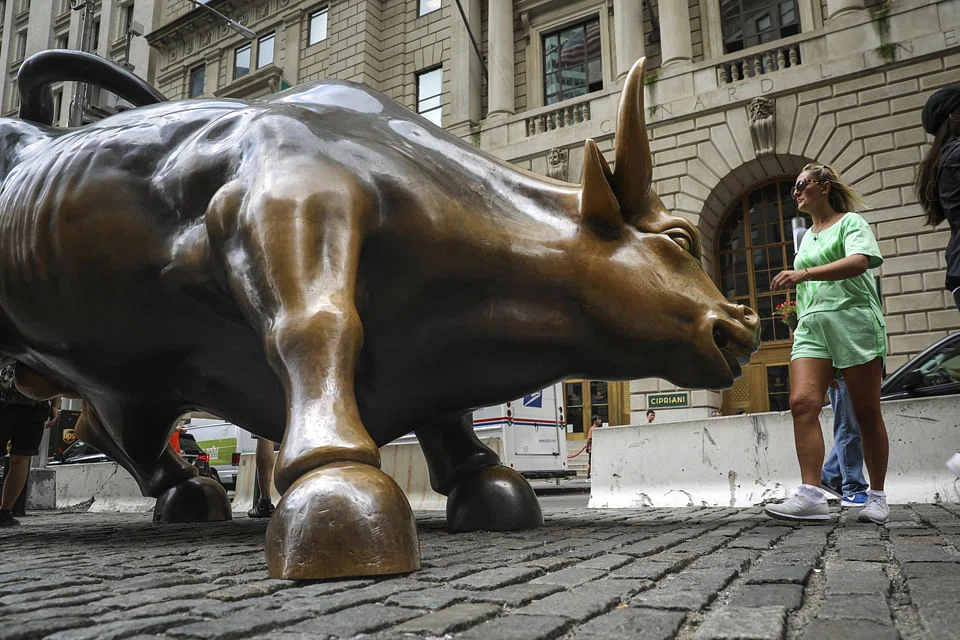
LAST week, major US indexes finished at record highs, extending the longest bull market on record as investors took heart from a more accommodative than expected tone from Federal Reserve chairman Jerome Powell.
Investors will be glued to stock charts this week, trying to ascertain if the market can sustain its upward momentum for long.
The debate over the sustainability of the bull market has lasted almost as long as the run itself. The bears warn that, despite Mr Powell's reassurances about interest rates, borrowing costs are set to rise.
They cite the effects of an ongoing trade war and, with criminal cases pending against two of US President Donald Trump's closest confidants, the potential for volatility around mid-term elections later this year.
In a speech in Wyoming, Mr Powell emphasised the "gradual" nature of rate hike plans. While markets had already priced in a September hike, the comments lowered the odds of a second hike in December, said Quincy Krosby, chief market strategist at Prudential Financial.
In the wake of those comments, the broad Standard & Poor's 500 closed on Friday at 2,874, the highest-ever close. It was the first new high of the year since a correction began in late January.
The broad index broke another record last week, according to some analysts' estimates.
Last Wednesday marked the 3,453rd day of the bull market, tying the age of the previous longest that ran from late-1990 to early-2000.
The bulls declared this as a victory over bears who resurfaced during the correction to warn that it might be the end of the bull run.
"The bull market that began in March 2009 has now become the longest in US history, and all the most important indicators - credit conditions, inflation, interest rates, and earnings - suggest that it has further to run," said Tim Shirata, executive vice-president of money manager Guild Investments.
The bears still have some evidence to make their case, however. The July reading of used-home sales showed the fourth straight monthly retreat, the longest such reversal since 2013. New home sales also declined in July.
Aggregate home-sales data suggests that the up-tick in mortgage rates and elevated home prices are destroying demand in some parts of the country.
Business for home-improvement retailers such as Home Depot and Lowe's is still booming, according to their latest reports. People may not continue to pour money into their homes if, as typically happens after a slowdown in demand, home prices begin to fall.
More contours of the economy will be traced this week by data on consumer inflation, expected to moderate, and revisions of gross domestic product.
Any comments from China or the US on tariffs also have the potential to cause a big swing.
A large part of the final leg up for stocks was inspired by the resumption of trade talks between the US and China, with another round in Washington last week.
But those mid-level talks were, by all accounts, fruitless. Trade experts quoted in Bloomberg warned that the likelihood of a ceasefire in the trade war between the two major nations is rapidly winnowing.
When Mr Trump cited Chinese interference as one reason he cancelled planned nuclear talks between Secretary of State Mike Pompeo and North Korean officials, it sounded as though the trade dispute between the US and China had turned into something wider, something akin to a new Cold War.
"Emerging markets have been beaten down primarily by trade-war fears and by a rising dollar," said Mr Shirata. "As negotiations bear fruit, and trade-war fears subside, some emerging-market stocks may be bargains, provided that the US dollar is not rising."
The corollary to that theory would, of course, be more trade-war fears and more emerging-markets sell-offs, if negotiations fail to bear fruit.
Shares of hot technology stocks could be volatile after Tesla chief Elon Musk conceded that he would not take the electric-car maker private, ending speculation that Mr Musk himself started with a tweet claiming he had lined up financing for a buyout.
Most market watchers disagreed with Mr Trump when he warned, after the criminal proceedings against his associates, that his impeachment would crash the stock market.
Strategists say that the market-friendly policies that caused the "Trump bump" rally - principally tax cuts - since his election are unlikely to be overturned even if Mr Trump is kicked out of office.
A combination "of US inflation peak", weakness in Treasury yields and "China stimulus goes big" could constitute a "positive autumn shock", for the stock market, said strategists at brokerage Bank of America (BOA) Merrill Lynch Global Research.
Negative autumn shocks could include another bout of selling in emerging-markets bonds and "credit contagion", or an "autumn of hardball politics", they added.
In the latter scenario, stocks could sell off because of a "hard Brexit", Italian tensions with the European Union, Chinese trade developments and/or a Democratic mid-term sweep.
A Democratic win could lead to the passage of a bill designed to limit stock buybacks, which have helped fuel stock advances this year, according to the BOA strategists.
TRENDING NOW

Government to bring forward raising of retirement age, give employers more financial support to create flexi-load jobs

Former minister Maliki Osman, Revolut chairman join Asia Gulf Holdings advisory board

Is Manila Asia’s new dining hot spot?

Simba at risk of losing operating licence over spectrum misuse

