

Prolonged China factory closures to weigh on Singapore firms' earnings
Market watchers say companies with a big portion of their plants in China, or which are not geographically diversified, will be hardest hit
Claudia Tan HS
Singapore
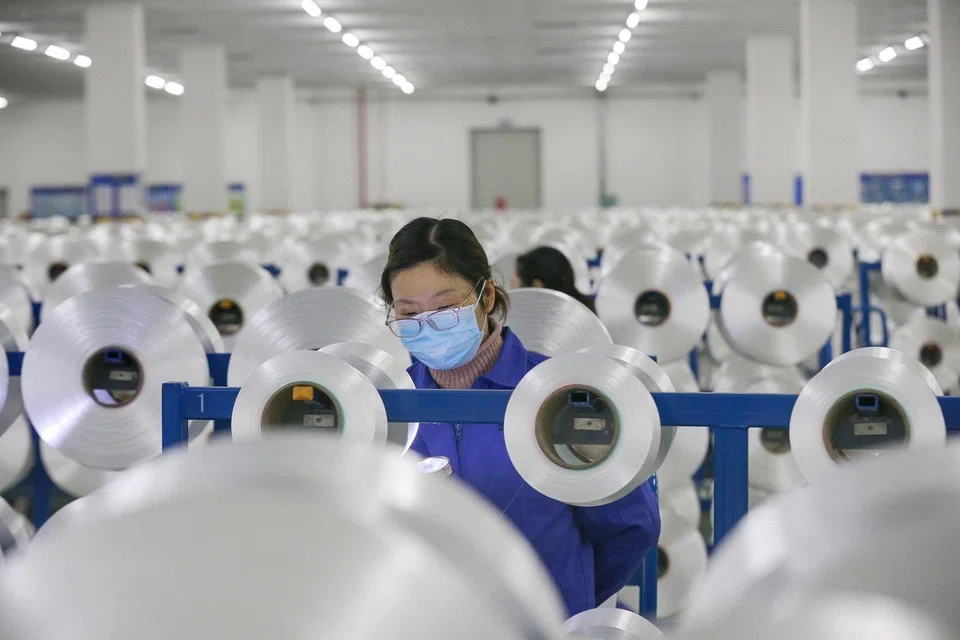
SINGAPORE-listed companies with manufacturing plants in China have yet to register any impact on their businesses from the novel coronavirus outbreak, but analysts say they expect the earnings of these firms to take a hit from prolonged closures.
Most factories had shut for the Chinese New Year holidays, with initial plans to reopen on Feb 3. But following directives from the Chinese authorities amid the escalation of the outbreak, businesses have been instructed to resume operations in their Chinese facilities only on Feb 10.
Even with this directive in force, many companies with plants in China have yet to comment on the impact of the outbreak, noted RHB Securities analyst Jarick Seet.
Hi-P, Valuetronics, AEM and Sunningdale Tech, which all have manufacturing facilities in China, declined comment when reached by The Business Times (BT).
Elson Hew, chief executive at precision plastics manufacturer Fu Yu, told BT: "We have reached out to our employees in China and we understand that they are currently safe."
Fu Yu remains closed, in line with the Chinese authorities' directive, and will reopen on Feb 10, he added.
CDW Holding, which produces niche precision components, has also suspended operations in its Shanghai and Dongguan facilities.
Its chief executive officer Makoto Yoshikawa said: "The company will comply with all directives imposed by the government to contain the outbreak, and will make the necessary announcements if and when there is any material impact on its operations as a result of the novel coronavirus."
However, the health crisis is likely to put a strain on supply chains if the closures are protracted.
Firms like Hi-P and Fu Yu could bear the brunt of the impact, given that at least half their manufacturing plants are in China, said DBS analyst Ling Lee Keng.
Hi-P, an electronics contract manufacturer, has plants in Shanghai, Chengdu, Xiamen, Suzhou and Nantong; Fu Yu's facilities are in Dongguan, Suzhou, Zhuhai and Chongqing.
DBS' Ms Ling said: "Using the Sars period as a guide, earnings could be down 10 per cent each for Hi-P and Fu Yu."
She said that firms with a smaller proportion of their facilities in China could still have their earnings shaved. Global high-tech capital and consumer equipment service provider Frencken, which has six of its 17 manufacturing sites in China, could have its earnings pared by 3 per cent.
China's manufacturing Purchasing Managers' Index (PMI) for January recorded a decrease of 0.2 point to 50.0, the National Bureau of Statistics (NBS) reported. However, the survey did not factor in the impact of the virus outbreak.
United Overseas Bank economist Barnabas Gan noted in a report on Singapore's PMI, which also did not take into account the impact of the virus, that "an exacerbation of the negative impact from the virus would almost certainly hurt manufacturers' sentiment in the coming months".
Having said that, many companies today are better able to weather crises like a virus outbreak because their businesses are diversified.
Said RHB Securities' Mr Seet: "Geographical diversification reduces the risk of concentration in a country which has been exposed to one-off events like virus outbreaks, natural disasters or even political issues, which could impact operations."
For instance, precision parts manufacturer Micro-Mechanics said in a Singapore Exchange filing that the closure of its Suzhou factory is not expected to affect customers in other markets, given that it still has manufacturing operations in Singapore, Malaysia, the Philippines and the United States.
For the first quarter ended last Sept 30, sales derived from customers in China amounted to S$4.7 million or around 30 per cent of the group's revenue.
Fu Yu, which generated around 54 per cent of its revenue for the nine months ended Sept 30 from its operations in China, is also confident about coping with production amid the virus outbreak.
Said CEO Mr Hew: "With our established manufacturing facilities in Singapore and Malaysia, we have the capability to support any changes in the production requirements of our customers."
TRENDING NOW

KKR founders among investors buying 42% of Peter Lim’s Valencia; club valued at US$1.4 billion

Singapore’s central gas buyer affirms Indonesia’s role as ‘important partner’ amid export review warning

Why the biggest business decision about AI isn’t which model to choose

NEA issues notices to 10 Singapore-based companies, including Wilmar and APP, over haze

