

Wuhan virus contagion pummels Asian markets
Market watchers say that given the virus' incubation period, sentiment will worsen before it gets better
Singapore
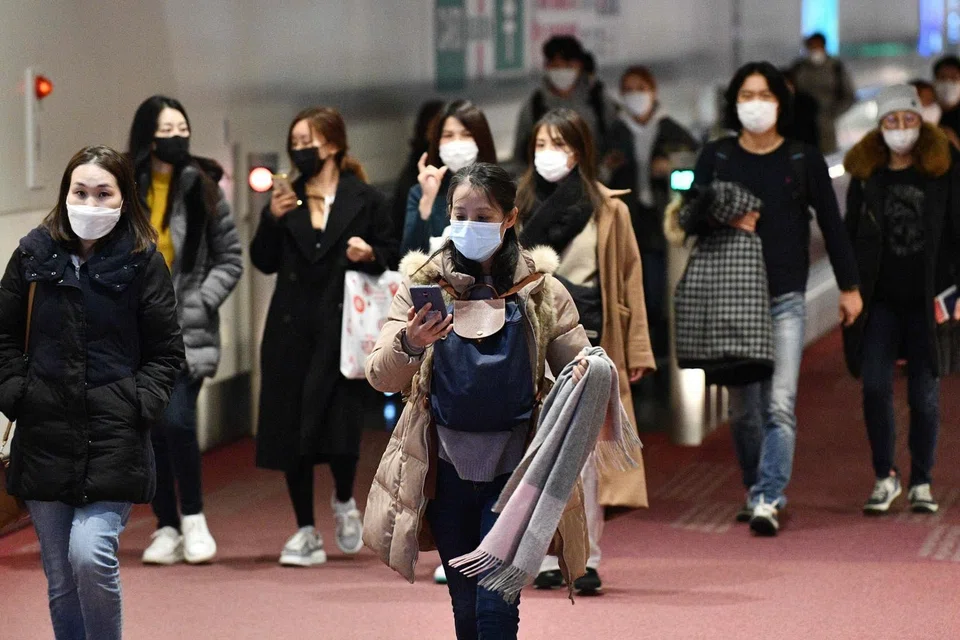
ASIAN equity markets returning from the Chinese New Year (CNY) break joined others in a sea of red as fears mounted over the spread of the Wuhan coronavirus - jolting memories of 2003's Sars outbreak in Asia and weighing on the region's risk assets.
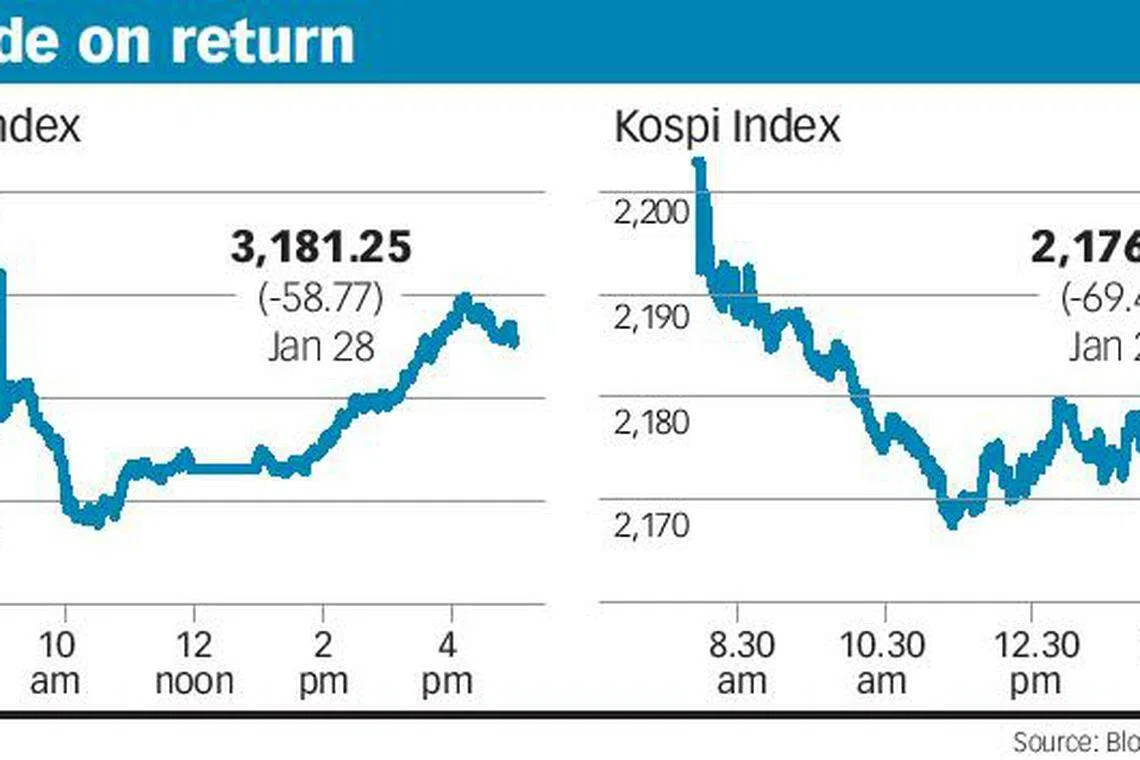
On Tuesday, Singapore's Straits Times Index (STI) fell by as much as 2.9 per cent to close 58.77 points or 1.8 per cent lower at 3,181.25, below the blue chip's support level of 3,200.
Elsewhere in the Asia-Pacific, Australia's ASX 200 was down 96.00 points or 1.4 per cent to 6,994.50, and Japan's Nikkei 225 slid a further 127.80 points or 0.6 per cent to 23,215.71 after Monday's 2 per cent drop. South Korea's Kospi Index skidded 69.41 points or 3.1 per cent to 2,176.72, posting its sharpest single day fall since Oct 2018.
China, Hong Kong and Taiwan markets were closed for the CNY holidays.
Among South-east Asian markets, Indonesia's Jakarta Composite Index closed at a fairly muted 22.02-point or 0.4 per cent decrease to 6,111.18; Malaysia's Kuala Lumpur Composite Index ended 21.17 points or 1.4 per cent lower at 1,551.64.
Since last Friday, the number of deaths from the Wuhan virus has tripled to over 100 and confirmed cases have swelled past 3,000. Given that the virus' incubation period spans between seven and 14 days and the outbreak is still at an early stage, numbers are expected to rise in the coming days. Market watchers noted that sentiment could get worse before improving.
AxiTrader chief Asia market strategist Stephen Innes told The Business Times: "The running assumption that was confirmed by Tuesday's rising reports of confirmed cases is that it will probably get worse given the incubation period, and the likelihood of more virus cases after the mass migration of people over Chinese New Year."
Market reaction has been both "swift and one-sided", he said, adding that it is too early to discount the recent price action as a "classic risk-off then rebound, especially with the market fear index going through the roof".
"With the market moving into risk-off mode, the intensity of the sell-off will be in direct correlation to the increase in reported cases. But once it peaks, the markers will reverse."
Oanda's Asia-Pacific senior market analyst Jeffrey Halley is of the view that the length and depth of market correction ultimately depends "both on the success of China's efforts to control the viral spread, and the prevalence of its occurrence internationally".
He acknowledged that the "situation is likely to remain in status quo" until a clearer picture of China's progress in controlling the Wuhan virus emerges.
"One silver lining is that the region is well placed for an equally speedy recovery if positive news starts to emerge from the mainland," he said.
Citing the Sars outbreak in 2003, Bank of Singapore head of investment strategy Eli Lee observed that markets "hit bottom when the rate of infection peaked, and then staged a sharp recovery as the number of new cases began to stabilise".
This, he added, suggests that the recent price correction "is ultimately one to buy, but it is now too early to buy broadly on dips".
Mr Lee said: "We believe the Wuhan virus outbreak alone is unlikely to derail an expected global economic recovery this year, given the low interest rates, relief from a US-China trade truce and the likelihood of more stimulus from China to counteract the outbreak's economic hit."
Kelvin Tay, the Asia-Pacific regional chief investment officer at UBS Global Wealth Management, shares a similar view: "While we remain alert for a further increase in its severity, we expect the impact on the region's economy and risk assets to be short-lived, in part based on evidence from the past (as was the case with Sars, avian flu, Middle East respiratory syndrone and swine flu outbreaks)."
He does not recommend that investors "take directional positions or withdraw from financial markets based on news about the virus". Instead, he is inclined to view the drop in markets as an opportunity to add exposure to both emerging market (EM) and Chinese stocks.
In the current climate, OCBC Investment Research advised clients on Tuesday to keep "market fundamentals in mind, avoid panicking and to remain well-diversified".
Bank of Singapore has kept its asset allocation strategy unchanged, maintaining its neutral position on Asia ex-Japan equities. Meanwhile, UBS has maintained its overweight position on EM equities.
READ MORE:
TRENDING NOW

Once staunchly pro-China, Malaysian Chinese businesses are now distancing themselves from Beijing

Cliff Tan has 7 million followers and a 4-month waitlist. Why won’t he expand his business?

Grab CEO’s wife Chloe Tong on life with Anthony Tan and finding her purpose

Singapore F1 to proceed despite haze; no changes planned to outdoor entertainment

