

In surviving 'tech-clash', interactive TV shows highlight a new opportunity for business
Providing more human-focused experiences can help address concerns over privacy and ethics. Peter Yuan, managing director and technology lead of Southeast Asia at Accenture, shares how businesses can prep for the future of technology
Increasingly, TV shows have become more interactive, giving viewers the power to make decisions for the main character - listen to this song, throw that cup of tea, or bury the body. For shows that adopt such interactive choose-your-own-adventure formats, there are different endings and many ways of getting there.
With the new possibilities brought about by new technology, you can start to imagine how viewer experience have become more and more engaging, putting people in the driver's seat to co-create their own adventures and eventually making those adventures unique for each individual.
Providing immersive and co-created experiences is how leading businesses are connecting with their customers and turning passive audiences into active participants. The next generation of technology-driven experiences will be those that give people agency to guide their experiences to fit their mood or the moment.
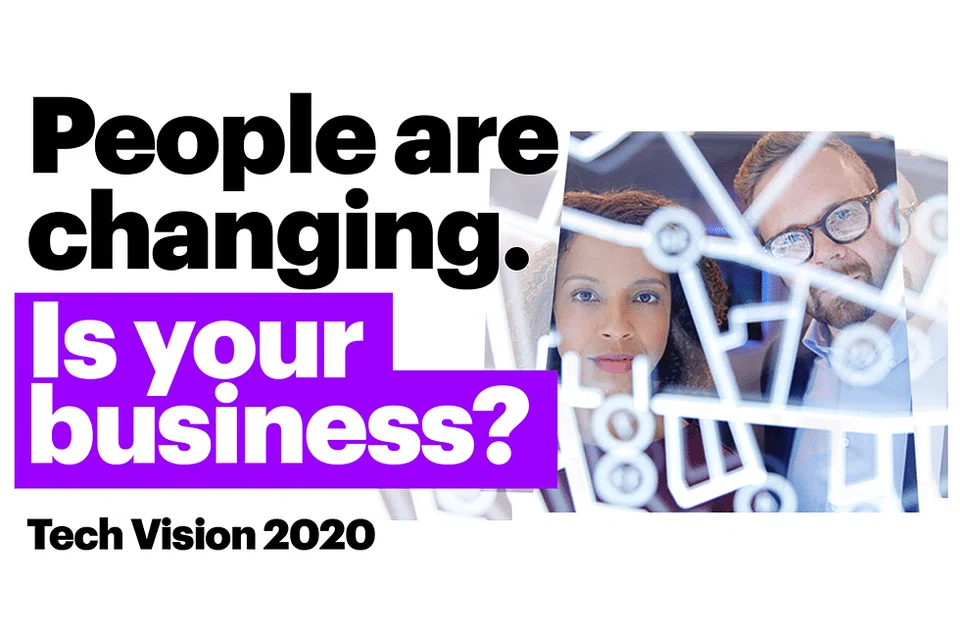
This is one of the central themes in Accenture's Technology Vision 2020 report. It is also the issue with the most serious potential repercussions for businesses down the road.
No going back to old ways
We are moving into the "made for me" era, where companies need to shift away from legacy approaches to achieve personalisation at scale. Apart from placing user experience at the centre of the design process, companies need to explore event-driven architecture, merge software, hardware, data, and cloud into a living system, in order to innovate.
The old ways of doing things must change. By continuing to use outdated practices and business models, organisations run the risk of failing to keep pace with people's evolving expectations and values.
The growing concern over user privacy on major tech platforms may have been characterised as a backlash against tech, or what the media have coined as "techlash". However, many fail to recognise that people still love technology. Instead, we are facing a tech-clash - tension between business and technology models that are incongruous with stakeholders' needs and expectations.
Tech-clash is evident everywhere. Smart products are proliferating, for example, even as businesses wall them off in closed ecosystem models. Our demand for unlimited choices is met by vendor lock-in and inflexibility. Similarly, where we ask for a relook of ownership model - and a share in the rewards of our valuable data, we are more often cut off from both.
And then there is artificial intelligence (AI). While the technology is being applied more broadly, automation is still the standout application and that leaves many people worried about the future of their jobs and livelihoods. Thanks to tech-clash, consumer wariness and distrust of technology are on the rise.
Evolving to future systems
Accenture's recent Future Systems report found that today's leaders cultivate a state in which businesses adopt complex, interconnected living systems of technologies, applications and people. As a result, their systems allow for a seamless flow of product and service innovations from one process to another.
Businesses must look at re-engineering the experiences that bring people and technology together, considering the implications of the democratisation of data and technology, and re-evaluating what technology is providing for people and how it is changing people's lives in the process.
Trust and accountability will be increasingly important as both enterprises and individuals become more dependent on digital platforms, and boundaries between the online and offline worlds blur.
The tech-clash is therefore a challenge with a clear solution. Businesses that find a way to deliver technology in line with people's expectations will be best positioned to grow now - and in the future.
Diffusing tech-clash
In the Technology Vision 2020 report, we identify five major trends that organisations should consider as part of their efforts to realign their models to bring a more human-centric approach to their technology and innovation efforts.
Collaboration runs through all five trends, as it is only by working more closely with people that you will be able to meet their expectations. The trends are:
• The I in Experience Leading organisations will design experiences that amplify an individual's agency and choice. Instead of one-way experiences that can leave people feeling out of the loop, leaders will offer true collaborations that turn passive audiences into active and engaged participants.
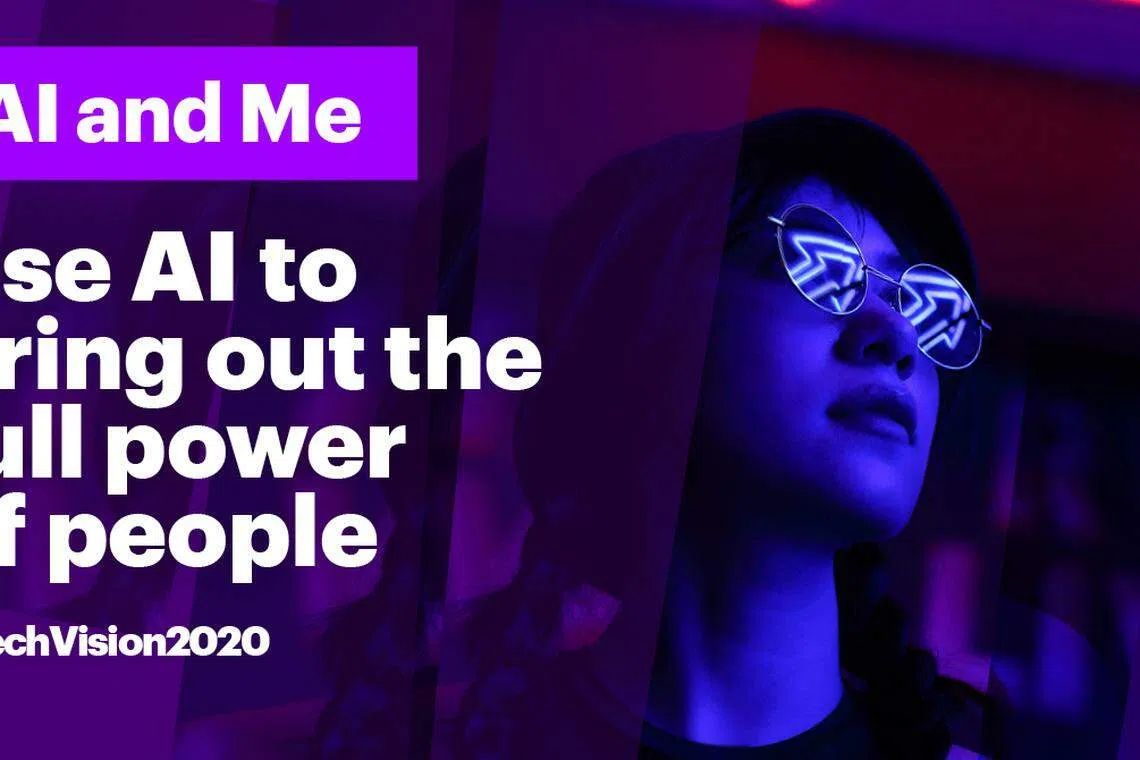
• AI and Me As AI capabilities grow, the real pioneers will be those that think about how the technology can be harnessed to bring out the full power and potential of their people. That means moving beyond automation/job replacement use cases and reimagining AI as an addition and augmentation to how people perform their work.
• The Dilemma of Smart Things Soon, the tech world will be in a state of perpetual beta development, with products and services being continual works in progress. This challenges existing assumptions about who owns a product. As enterprises seek to introduce a new generation of products that are driven by digital experiences, addressing this new reality of constant upgrades will be critical to success.
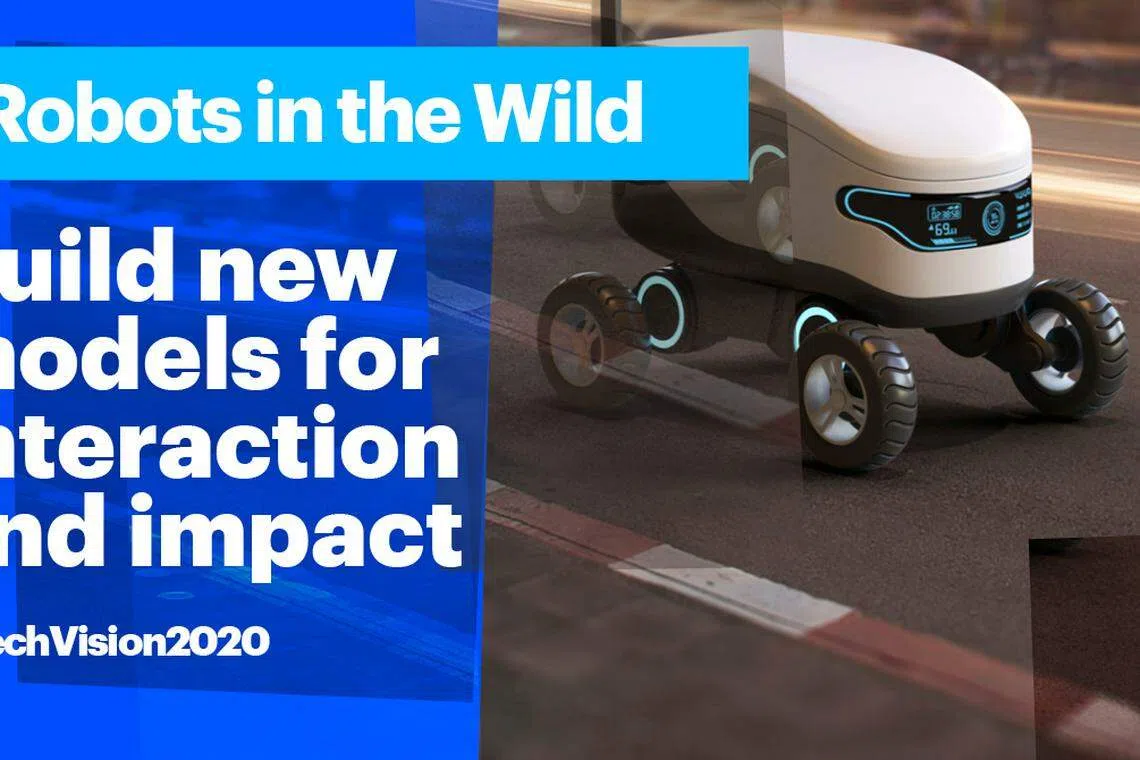
• Robots in the Wild Robotics are no longer confined to the warehouse or factory floor. With 5G poised to rapidly accelerate this fast-growing trend, every enterprise must re-think their company's future through the lens of robotics.
• Innovation DNA Disruptive technologies like distributed ledgers, artificial intelligence, extended reality and quantum computing are proliferating, providing enterprises many routes to innovation. To manage all these technologies - and evolve at the speed demanded by the market today - organisations will need to establish their own unique innovation DNA.
To grow and compete in a world where digitalisation is everywhere, businesses will need to reorient their strategies around a more human-centric approach in which customers are collaborators, not just passive recipients.
Ultimately, businesses that take decisive action to respond to these trends will forge stronger and deeper relationships with their customers, capture increased market share and set the standard for their industries.
This article is contributed by Peter Yuan, managing director and technology lead of Southeast Asia at Accenture.
Share with us your feedback on BT's products and services
TRENDING NOW

Looking beyond looming CEO succession, should UOB potentially pursue a transformative merger?

MAS holds monetary policy settings, pausing after two straight tightenings

Once staunchly pro-China, Malaysian Chinese businesses are now distancing themselves from Beijing

Stocks to watch: Kore US Reit, Parkway Life Reit, Raffles Education, Vin’s Holdings

