Micron Tech output up this year despite slide in Singapore exports
Fab maker takes ups and downs in its stride; sees 5G driving five-to-seven-year electronics growth cycle

Annabeth Leow
Singapore
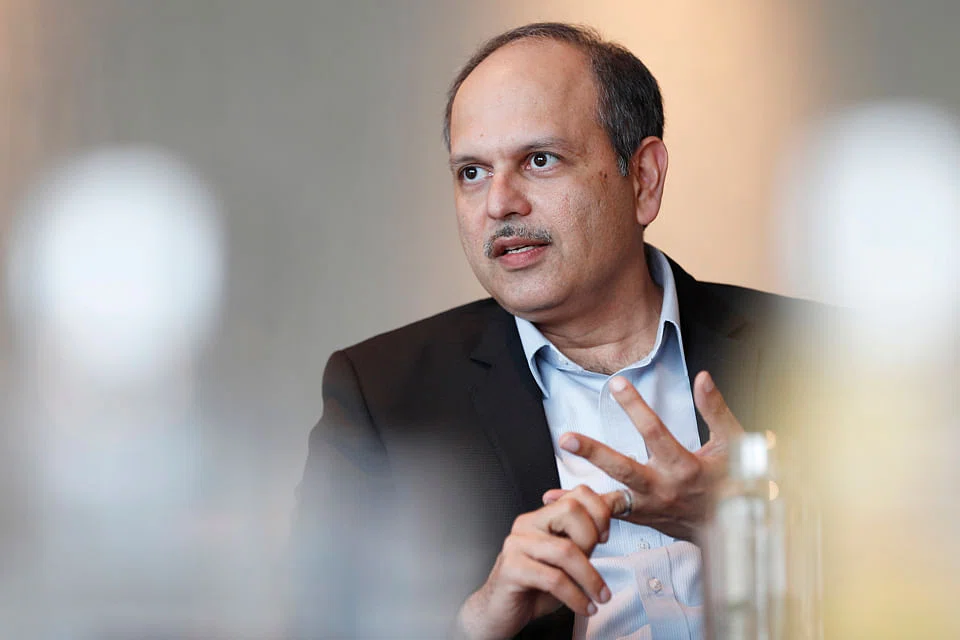
CUTBACKS have been made across the Micron Technology portfolio, but chief business officer Sumit Sadana has reiterated the multinational's commitment to its footprint here.
Singapore's recent factory and export data have shown declines in electronics manufacturing, but Mr Sadana told The Business Times that "small perturbations and ups and downs will happen, in economies like Singapore and around the world".
Mr Sadana believes the dawn of fifth-generation (5G) mobile technology should drive a five- to seven-year growth cycle in electronics.
Both in Singapore and across the overall Micron portfolio, fab production is "substantially higher this year, compared with last year, and we expect that trend to continue", he said, even though price woes have eaten into the market value of that output.
Micron posted revenue of US$5.84 billion for the quarter to Feb 28, down by 21 per cent on the year prior, which it attributed in its statements to "pricing declines resulting from deteriorating market conditions".
There has been "some level of challenges in terms of supply and demand balance in the market" for both DRAM and NAND memory products, Mr Sadana said. These are two of the group's three key revenue streams, with Singapore making most of Micron's NAND products worldwide.
But based on input from customers, Mr Sadana expects a pick-up in demand in the second half of the year, which he said "will help the overall tone of the financial performance".
He said that Micron has already "taken some tactical actions to help balance the market", including reducing the fiscal year's planned capex from US$10.5 billion to US$9 billion, and pulling back on wafer fab output.
"Both of these actions, as well as some of the publicly announced actions by other suppliers, should create a better environment in terms of demand and supply balance," said Mr Sadana, who expects a broad industry recovery in the second half of 2019.
When asked about the implications of the portfolio rebalancing on operations here, Mr Sadana said that the group's Singapore investments "are more medium- to long-term in nature" as it gears up for growth areas.
"Even without increasing any wafer capacity, just the additional tools and the new nodes of technology require this additional space...
"So our investments here, and the growth in our investments here in Singapore, are going to continue, because we feel that they are very much required to really deliver on the promise of these technologies," he said.
On what point the global tech cycle is at, Mr Sadana acknowledged that electronics and semiconductors have had "a few soft months, in terms of demand", but added: "If the macroeconomic environment hangs in there, we think that the electronics business and the semiconductor industry should start to perform well."
He also called himself "optimistic that we will see improvements in demand" from the third quarter, on factors such as an ongoing shortage of processors for personal computers.
But it's 5G in particular that Mr Sadana credits as a "very significant driver" of future industry growth.
"This is going to be a five- to seven-year cycle of demand growth, driven by 5G, because it's not easy to upgrade the infrastructure," he said, adding that the multi-year roll-out is "going to create a pretty significant uplift for the entire electronics and semiconductor ecosystem".
"It is going to have a big ripple effect across multiple segments in the market," he said. Besides the need for base stations and micro-servers, mobile handsets are expected to get a boost after flattish smartphone sales.
"There is a pent-up demand that is increasing, but there hasn't been a catalyst for people... With 5G, it is going to be a very, very different consumer experience. That cycle, we believe, will start next year, and should continue for several years."
He noted that "China is a very important place" for the group, even while conceding that Idaho-based Micron ramped up operations in Taiwan and Mexico to mitigate some of the effects of tariffs amid the trade war between the United States and China.
Mr Sadana told BT: "We have pretty globally dispersed manufacturing, and we're not over-exposed to any one particular region or country. So we feel pretty good about the resilience of our global supply chain."
Micron now also has four facilities in Singapore, including one assembly and test site - although it is handing over a factory in Ang Mo Kio to STMicroelectronics next month, under a US$30 million deal inked in 2017.
But Mr Sadana said that Micron remains committed to raising its headcount and footprint in Singapore, with works now under way to add cleanroom space at another site in North Coast Drive. The expanded cleanroom facility is expected to start wafer production by year-end.
So far, 600 offers have been made for the 1,000 jobs that the facility will create, he said. Micron's headcount in the Republic reportedly stood at more than 8,000, as at early May - up from around 7,500 the year before.
Singapore's semiconductor industry makes up about 5 per cent of gross domestic product and one-third of factory output, according to the Economic Development Board.