

Nanofilm says it will improve communication with the market to align views
Claudia Tan HS
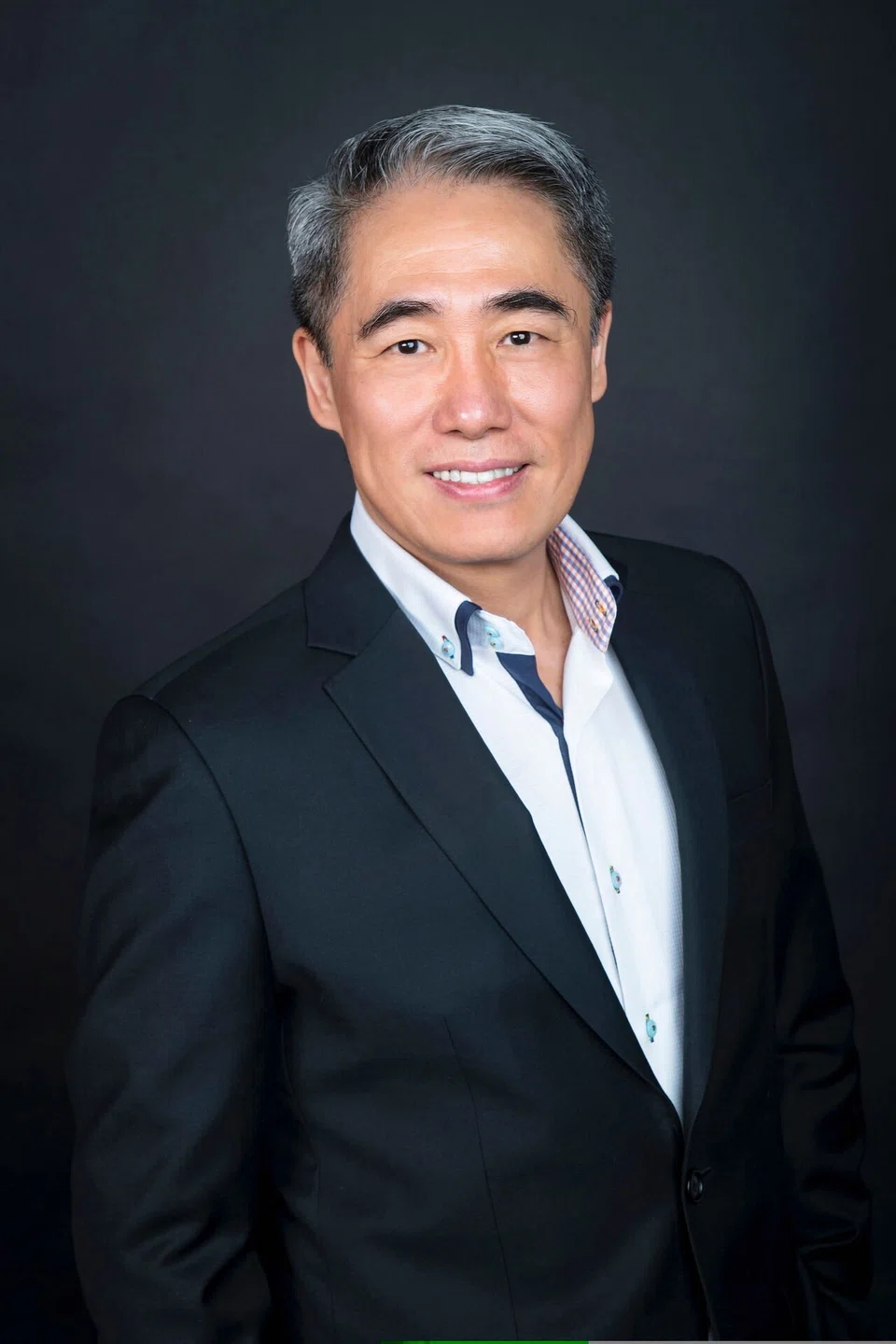
THE sell-off in Nanofilm Technologies' shares following its half-year results came as a surprise to the company, with founder and executive chairman Shi Xu saying that there are gaps to be plugged when it comes to communicating with the market.
In a briefing on Wednesday, Dr Shi said that the company did not expect "such drastic results" after the release of its financial statements.
Nanofilm's MZH shares lost almost a third of its value on Monday, which prompted a series of share buybacks. According to filings on the Singapore Exchange (SGX) as at Wednesday 8.30pm, the company had spent about S$16 million to buy back over 3.9 million shares since Monday.
Its shares ended Wednesday at S$3.96, up 3.7 per cent or S$0.14. Year-to-date, Nanofilm is down 10 per cent.
Dr Shi said that the company has to learn to "coexist with the marketplace" and improve communication with the public and investors.
He said that there is "quite a bit of a gap" between market perception and the management's view on their first half-year results.
"We need to have a better sense and pulse of the market sentiment and we also need to make our views, positions and the company's performance better known to the market," he added. Co-deputy chief executive officer Gian Yi Hsen also asked for the market's patience given that growth requires time and investment on Nanofilm's part.
"You have to think about Nanofilm beyond what you see on an operational basis, simply because we are a deep-tech company," he said.
"Our customers don't come to us purely because we are the cheapest guy on the block. They come to us because we can do something different," he said.
Nanofilm has been actively engaging with its institutional investors over the past couple of days to explain the management's position, company's performance and outlook, said Dr Shi. The overall response from investors had been "very positive" and views on the company's future growth and strategy are aligned, he said.
Recent management changes have also come into focus following the resignation of its chief operating officer (COO) Ricky Tan, and after chief executive officer (CEO) and executive director Lee Liang Huang announced on June 23 that he would resign from his role due to health reasons.
The group is actively assessing potential CEO candidates internally, in view of continuity and familiarity of the business that will allow for a smooth transition, it said in a statement. '
Meanwhile, Nanofilm will not be looking for a COO replacement and had previously shared that its various business units are well-positioned to operate independently.
"I do realise there is a bit of concern in the market about the senior management," said Dr Shi, adding that the company is in fact in good hands.
The management team is of a suitable age range and has strong proven competence and credentials, he said.
On the possibility of Dr Shi increasing his stake in Nanofilm, the company said that given that the share buybacks were recommended by the board, which Dr Shi sits on, there is a conflict of interest and he therefore will not be able to purchase more shares.
Dr Shi added that there is no intention of making Nanofilm a "family-owned" company but rather for it to be a "fully" publicly-listed corporation.
In a Singapore Exchange filing and a series of analyst and investor briefings post-results announcement, Nanofilm had sought to further elaborate on its half-year results.
Nanofilm's net profit dipped 3.1 per cent to S$17.9 million for the first half of this year, from S$18.5 million the previous year, amid higher costs in manpower and manufacturing overheads.
Costs incurred for the new Shanghai Plant 2 and equipment qualification stood at S$2.6 million.
The company said that qualification costs related to the new Shanghai Plant 2, which was due to delays in contractor work and associated approvals as a result of the pandemic, will not recur in the second half of the year.
For equipment qualification, the group's customers have qualified its 60 coating equipment in anticipation of upcoming mass production requirements. These are expected to contribute positively to revenue in H2.
In addition, the increase in new product introduction (NPI) projects led to some S$2.8 million in costs. But these NPI projects are expected to contribute positively to the group's revenue in the coming months once they progressively enter mass production, said Nanofilm.
Dr Shi also said that the group's performance in H1 is generally not comparable with the preceding H2 performance.This is due the seasonal nature and supply chain arrangements of the 3C (computer, communications and consumer electronics) segment.
The second half of the year is typically the peak season where majority of production will be executed. The first half of the year, on the other hand, will usually be focused on activities related to development.
Revenue had improved 24.2 per cent to S$96.6 million for the six months ended June 30, from S$77.8 million for the corresponding period last year - a sign that Nanofilm is doing a good job in terms of increasing market reach, according to Dr Shi.
Overall, the group is aggressively building up revenue pipeline, with multiple strategic projects currently under development and expected take shape in the second half of the year and beyond, it said.
READ MORE:
TRENDING NOW

Once staunchly pro-China, Malaysian Chinese businesses are now distancing themselves from Beijing

Britain’s mansion tax shows the difficulty of targeting wealth

Three hats, one goal: How Ng Kian Swan runs sustainability at NUHS

COE review: The gap between luxury and mass-market cars isn’t the only one worth bridging

