

New cluster makes 3D printing more accessible
Companies can reduce costs and tap into researchers' expertise by teaming up with local universities
Singapore
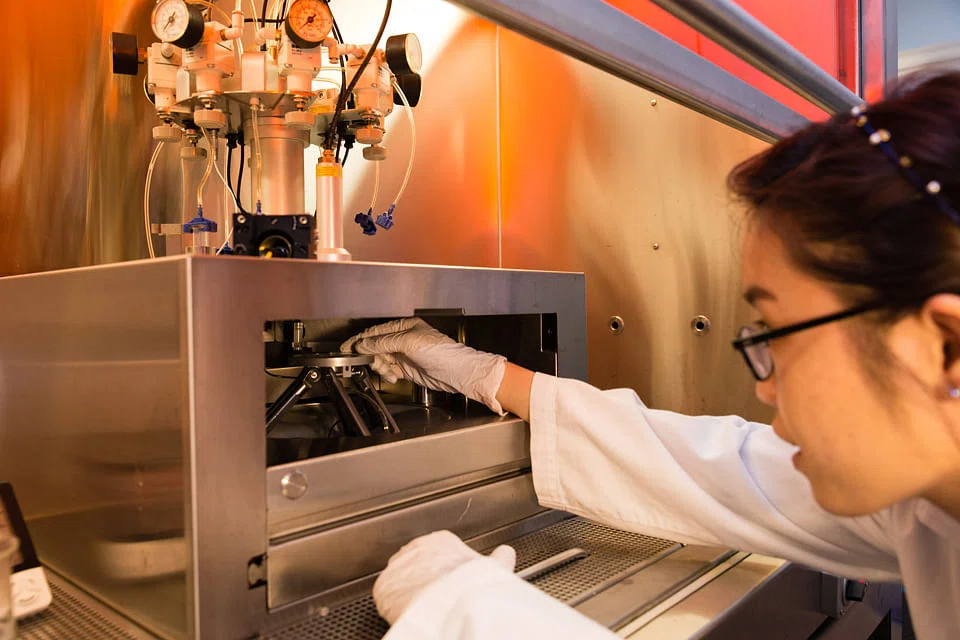
COMPANIES looking to tap into 3D printing technology in the local universities will now be shown how to go about doing it: a national cluster has been set up to this end, to encourage the growth of the additive manufacturing industry.
Speaking at the launch of the National Additive Manufacturing Innovation Cluster (Namic) on Monday, Ministry of Trade and Industry permanent secretary Loh Khum Yean noted that 3D printing has gone from being a prototyping tool to an essential technology that can raise manufacturing productivity.
In 3D printing, a three-dimensional object is created from data in a digital file by laying down successive layers of material until the object is formed.
Mr Loh said: "It is important to ensure that our manufacturing sector is able to harness advanced technologies like additive manufacturing to raise productivity, create novel products and develop new business models."
Namic's managing director Ho Chaw Sing noted that 3D printing has taken off for products in the aerospace and biomedical sectors, but that local companies find the barrier to entry high because of the lack of expertise in additive manufacturing and the costliness of 3D printers.
Namic is a virtual organisation which enables companies to leverage the technical knowledge of scientists and engineers. "This way, we ensure that the innovative solutions developed through research will meet real business needs," said Mr Ho.
Namic comprises the research institutions of Nanyang Technological University (NTU), National University of Singapore and Singapore University of Technology and Design. It has coordinated 39 partnerships between companies and the institutions so far; another 60 projects are in the works.
A tie-up between NTU's Singapore Centre for 3D Printing and global inventions company Intellectual Ventures has produced a barcode for 3D printed products; with this, identifying data is embedded in the product during printing and can be scanned to verify the product's authenticity.
Lead scientist Tran Anh Tuan, an assistant professor at the NTU Centre, said this identification is crucial as 3D printing expands into, for example, the health-sciences industry. "If we print bones for a patient, how would you know that this particular bone was made well or by a fake manufacturer? This (barcode) enables us to verify that before it is used as an implant."
Namic's launch came at the first Additive Manufacturing Summit in Singapore, which focused on precision engineering; more events to come will cover the aerospace, marine offshore and health-science sectors and emerging applications.
TRENDING NOW

Mooted COE changes will solve category issues, but higher premiums likely: observers

Grab CEO’s wife Chloe Tong on life with Anthony Tan and finding her purpose

Once staunchly pro-China, Malaysian Chinese businesses are now distancing themselves from Beijing

Cliff Tan has 7 million followers and a 4-month waitlist. Why won’t he expand his business?

