Rolls-Royce, A*Star pump extra S$8m into joint lab
Total investment into the five-year collaboration now stands at S$69 million
Singapore
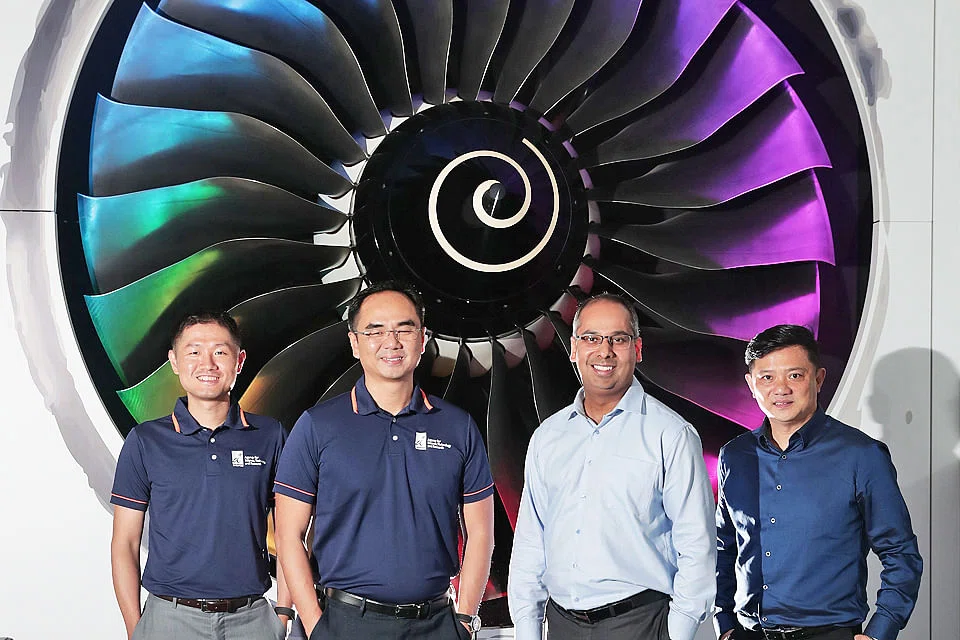
ROLLS-ROYCE and the Agency for Science, Technology and Research (A*Star) announced on Friday that they are investing a further S$8 million into their joint lab with Singapore Aero Engine Services (SAESL).
The investment brings the total investment into the five-year collaboration to S$69 million, and will fund a sixth workstream focused on developing advanced maintenance, repair and overhaul (MRO) technologies for repairing high-value engine components.
As with the initial investment in 2017, the funds will be used to develop technology solutions in A*Star's Advanced Remanufacturing and Technology Centre (ARTC) for problem statements from Rolls-Royce and SAESL. The five original workstreams in the first phase were focused on smart assembly systems, integrated remanufacturing technologies, advanced fan blade manufacturing, future manufacturing processes and knowledge-based manufacturing.
Since 2017, the joint lab has started nearly 30 projects within these workstreams and implemented two of them in Rolls-Royce's facilities.
"Based on the success of this first phase, Rolls-Royce has decided to invest more in a sixth area of advanced maintenance, repair and overhaul," said David Low, chief executive officer of ARTC.
"Singapore is the largest aerospace MRO hub in Asia, so this is very important. The idea is that while the research is being done here (at ARTC) with Rolls-Royce, the recipient is SAESL as an overhaul facility."
Said Bicky Bhangu, Rolls-Royce president for South-east Asia, Pacific and South Korea: "When we first started the programme, it was really focused on automation and digital technologies. As we progressed, we have realised that these technologies and solutions that we're developing are not just suitable for original equipment manufacturing, but they're also suitable for MRO.
"Bringing SAESL into this picture has been absolutely key, so we can develop once and deploy across the value chain of aerospace, from assembly and testing to MRO."
Since A*Star's focus is on research and development rather than commercialisation of technologies, the projects also involve partnerships with nearly 100 companies, more than 40 of which are local small and medium-sized enterprises (SMEs). These companies are tasked with scaling up and implementing the solutions in Rolls-Royce and SAESL facilities after A*Star completes the proof of concept and process development.
ARTC's Dr Low sees such collaborations as win-win for SMEs and Rolls-Royce, providing SMEs with exposure to the aerospace business while allowing Rolls-Royce to tap the local supply chain.
One such SME is KA Industrial Engineering, which has deployed an automated boron nitride spray process developed by A*Star for Rolls-Royce's Seletar facility. The company has specialised in the solar industry for the past 12 years, and this is its first aerospace project .
The robotic solution replaces the conventional method of spraying the coating onto aircraft engine fan blades with handheld guns, reducing inconsistencies and eliminating the need for workers to be exposed to the chemicals.
To commercialise the technology and ensure it could be used on fan blades of various dimensions, KA tapped its automation knowledge and expertise in applying coatings for solar technology components. This foray into the aerospace industry has given it a chance to enhance its capabilities and potentially seek out other aerospace projects in future, said KA manager Desmond Nyo.
"It's not every SME that has this chance to penetrate the aerospace industry. We treasure this opportunity and we would like to work closely in future with ARTC on other promising projects," Mr Nyo said.
Rolls-Royce's Mr Bhangu added that KA's expertise in robotics also helped Rolls-Royce automate a separate process of loading fan blades into 900-degree ovens. KA advised Rolls-Royce on the type of robot and algorithm that would be best suited for the job, and Rolls-Royce was able to develop and deploy the solution within a short period of time.
"There's a lot of innovation that comes from SMEs, and we're starting to learn and engage more with SMEs. ARTC is a fantastic vehicle for us to bring that MNC and SME culture of innovation together," said Mr Bhangu.