Singtel's tech-services unit recast as pan-Asian B2B digital services provider
The rebranded NCS has one wing to gun for contracts with governments and smart cities, and another, to help telcos raise their efficiency and develop 5G-enabled solutions


Singapore
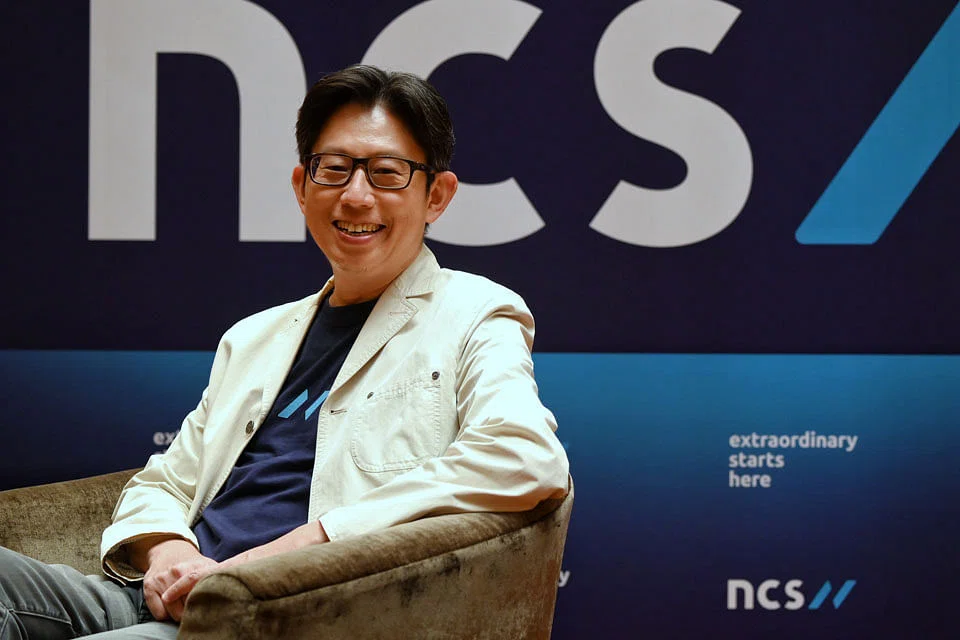
SINGTEL technology services arm NCS, which announced a strategic transformation at the end of last year, on Wednesday unveiled a new brand identity.
The information and communications technology (ICT) subsidiary, identified as a key growth engine for the group, has been recast as a pan-Asian business-to-business (B2B) digital services provider.
Its launch came on the same day as parent Singtel's annual report, in which group chairman Lee Theng Kiat and chief executive Yuen Kuan Moon wrote that Covid-19 has handed Singtel tailwinds of digitalisation that the telco intends to exploit.
Janice Chong, senior director at Fitch Ratings, told The Business Times: "Globally, we are increasingly seeing telcos reconsidering what their strategic priorities are. And what is driving that is 5G and the pandemic - we're not seeing this just in Singtel."
Singtel first announced plans for a strategic reset on May 27, when it reported a 92.7 per cent decline in H2 net profit to S$87.6 million from S$1.2 billion in H2 FY2020.
Its strategy to address this entails reinvigorating its core business to capture 5G market share, developing new growth engines in ICT and digital services, and unlocking the value of its infrastructure assets.
The revamped NCS business comprises two key business segments - "Gov+" and "Telco+" - and is gunning for inorganic expansion.
The firm also plans to hire "up to 2,000 tech talents over the next two years", as its 1½-year-old NCS NEXT arm, supports a pivot towards digital, cloud and platform services.
Expanding on NCS' track record serving the Singapore public sector, the mission of the Gov+ wing is to grow the portfolio with governments and smart cities across the Asia-Pacific.
Telco+ has been billed as a joint initiative with parent company Singtel, to help telcos improve operational efficiencies and develop 5G-enabled solutions for businesses.
Besides undertaking digital transformation in the Singtel group and its regional associates, NCS chief executive Ng Kuo Pin told BT that NCS would like to take the same capabilities to other markets in the Asia-Pacific, such as mainland China, Hong Kong, and potentially even North Asia, if there's demand.
Part of Telco+'s remit is to develop 5G enterprise applications such as "B2B services for a large government, large enterprises like banks", he said.
Mr Ng noted that "it would be naive to believe that Singtel's competitors would actually work with NCS" in Singtel's core markets of Singapore and Australia, which have fewer telecom operators.
When asked how NCS will stand out in crowded markets such as China, he said: "We are known to do big projects well. That is our legacy because of the Singapore government projects that we do. Very few tech services companies or systems integrators are able to do large-scale projects - basically, turnkey, outcome-based types of projects - and I think that is the differentiation that NCS has."
NCS had earlier named Singapore, Australia and Greater China as key markets, with innovation centres in Singapore, Melbourne and Shenzhen.
Key industries where it aims to serve clients will include telecoms, high-tech manufacturing and financial services in mainland China, as well as in healthcare, transport and government services in Hong Kong.
Mr Ng said that although "the vast majority" of revenue still derives from the home market in Singapore, he expects the geographical mix to change "as we expand the pie".
Mr Yuen, the Singtel chief, added in a statement to the press that NCS "has been a key growth engine for the group over the years" and "will play an even more important role now".
Yet Fitch's Ms Chong warned that the investment in NCS will not be an overnight success, and may take years to pay off, as NCS has to build expertise, especially overseas.
"NCS will not drastically transform the group on its own," she added. "Clearly, Singtel faces a lot of headwinds, and this is just one growth area it is focusing on - which could lead to more cash flow in the coming years. But it is not an overnight thing; it will take time."
Other than retooling NCS, Singtel's leaders also said in the annual report that the quest for 5G market share in Singapore and Australia entails innovating products and services to deliver the best possible customer experience, and growing digital businesses in adjacent lifestyle sectors.
The group will focus on growing 5G enterprise, cloud and more holistic technology solutions in these two markets and regional associates.
Singtel also intends to adopt a multi-local strategy when working with associates to create and port lifestyle products, services, business segments or even companies across its regional footprint to capitalise on Asean's digital economies.
Having previously announced its intention to unlock the value of its infrastructure assets, the group said it is open to forming alliances with "suitable partners with more experience and direct focus on these assets" to further increase network utilisation, provide funding for new builds and improve operating efficiencies.
Singtel added that it is also doubling down on the digitalisation of its operations to drive productivity and make cost improvements.
The counter closed at S$2.26 on Wednesday, down by S$0.04 or 1.74 per cent, after the news.
READ MORE: Digital sector to grow economy, add 20,000 jobs: Josephine Teo