

Tech-friendly Singapore 'a good city for urban trials'

Annabeth Leow
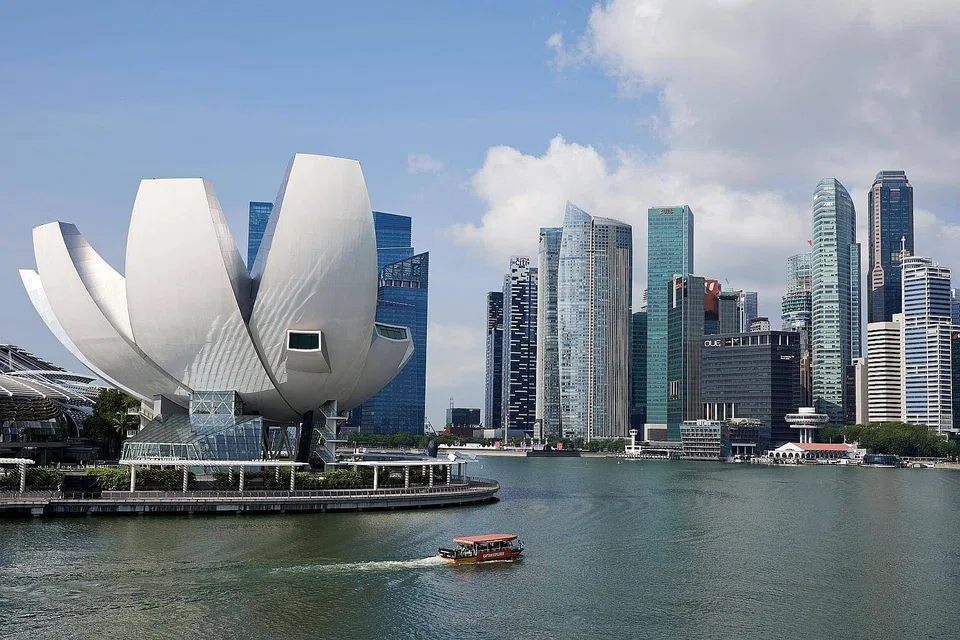
Singapore
SINGAPORE's tech-friendly climate has made it attractive for urban trials, said Katsumi Emura, chief technology officer of Japan's NEC Corp.
But he also cautioned that technical developments cannot replace value creation, as solutions must take into account the needs of each situation.
NEC, a software company known for its biometrics and visual analytics technology, has rolled out a "safer cities" drive that Dr Emura said encompasses physical security and digital services, along urban-solutions pillars such as healthcare and transport.
"The government is somewhat pushing those kinds of things. We can try any type of solutions, doing testing in Singapore, compared with Japan, where there are so many restrictions to do new things," Dr Emura said in an exclusive Business Times interview earlier this month, in the wake of the World Cities Summit.
"For example, we are staying here because we can do drone testing, but the same kind of situation is very tough for us to have in Japan.
"It's easy to say connect the things, but even in a city, there are always several configurations to connect things next to each other - so this is really a challenge, starting from the data format standardisation."
Ongoing work in Singapore includes a trial of portable facial recognition tools for law and traffic enforcement, NEC told BT.
The company wrapped up three security-related test projects - which tapped facial and fingerprint recognition and audio and video analytics - in the Jurong Island area earlier this year. It also offered public transport operator SMRT a telematics monitoring system to watch and analyse drivers' behaviour, in a 2014 collaboration.
Dr Emura spoke to BT at his company's Advanced Centre for Experimentation in Biopolis, which opened last August. The facility, used for proof-of-concept testing with clients, has a mandate to hire specialists in fields such as artificial intelligence (AI) and the Internet of Things.
"White-box" AI - or computer solutions that can explain the machine's "thought" process, in contrast to the "black-box" model - is a key technology for the company, he noted.
"We have lots of artificial intelligence-related technologies. That also contributes to improving the operational efficiency. But it's not only improving the operational efficiency; in some cases, we need to make better city designs," said Dr Emura.
"Many people currently are using deep learning. Deep learning is a very good technology that gives you very precise answers, but without explanations.
"When we, for example, try to improve factory operations, it's okay to get results from the black box. We can know how much we could improve the problems. But for city mayors to decide things, they have to understand why, in some cases, AI is recommending those things."
Dr Emura added that NEC's commercial strategy involves working with clients to craft solutions.
"The technology people see the things from the technology side...
"But, if we talk with customers, they may want different things. Maybe they may want much more economical solutions. But once the researcher understands the real needs, we can change direction."
Dr Emura noted that urban planners' needs will vary by city: For example, mayors may be scratching their heads over labour automation in ageing Japan, while Chinese municipalities want to tackle air pollution.
"Japan, the United States, China, there are huge populations. Singapore is six million. It's a good size for doing things as a city. And, if that population exceeds 10 million, we should think differently."
NEC's Asia-Pacific market, which includes China, but not Japan, reaped 400.9 billion yen (S$4.85 billion) in revenue for the year to March 31 - up 45.6 per cent on the year before, and about one-fifth of global turnover.






