

Making life a little more beautiful
Melissa Kwee, CEO of National Volunteer and Philanthropy Centre, is on a mission to enhance the charity landscape in Singapore amid the pandemic.

Vivien Ang
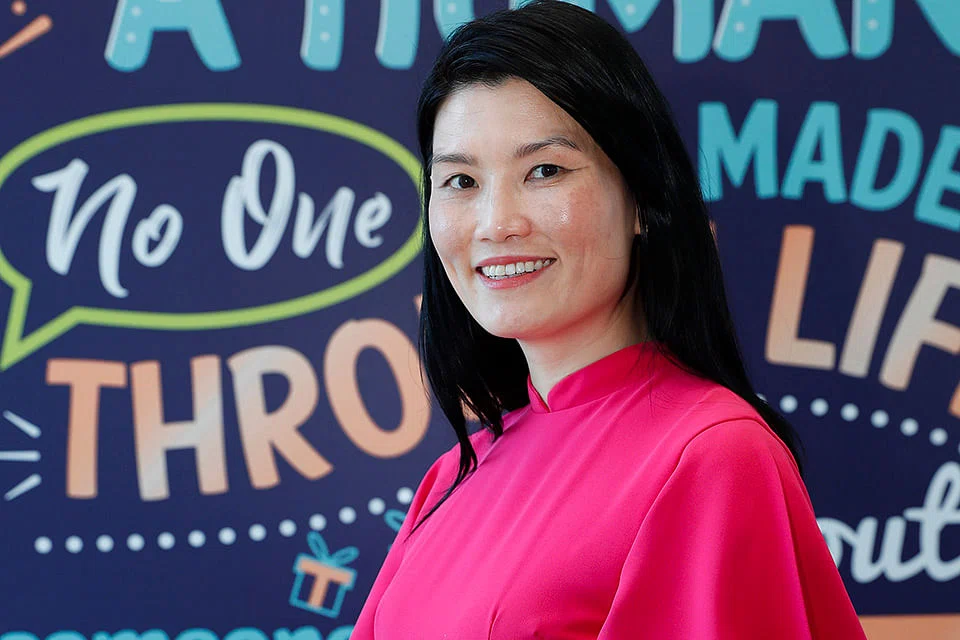
TO LOSE is to win. That's the mantra that Melissa Kwee, CEO of National Volunteer and Philanthropy Centre (NVPC), abides by.
"We are guided (by this phrase) that my oldest uncle taught us . . . it means to be big hearted. To lose is to win when it comes to relationships. No one appreciates someone who is always seeking to maximise (benefits) for themselves. That isn't how you build trust. For a family business, or arguably any business, trust is the foundation," says Ms Kwee.
The 48-year-old is a scion of the Pontiac Land Group family, which boasts a portfolio that includes Regent Singapore, Ritz-Carlton Millenia, and the Conrad Centennial Singapore. However, the anthropology graduate from Harvard University took the road less travelled among family members when it came to career choice, opting instead to join the voluntary sector.
On the family business and local culture, the US-born naturalised Singaporean says that Pontiac Land is about making life more beautiful in architecture that complements and enhances the cityscape and enriches people's daily lives in civic, hospitality or residential spaces.
"I'm really grateful to have a supportive family and an awesome set of cousins who have my back and we cheer each other on," she adds.
Volunteering since she was 17, Ms Kwee says her first stint during an internship at the Annapurna Conservation Area Project, in a national park in Nepal, left an indelible mark.
"My boss was a tall, strapping Gurung who had been sponsored and mentored by a Peace Corp volunteer . . . I will always remember his devotion to serve. He could have taken his PhD and lived a nice life in America, but he returned to give his life to uplifting the underserved in the remote villages of Nepal and introducing this revolutionary approach, which was to involve uneducated villagers in national development.
"He believed they had different knowledge and all wanted to make life better for their children, and could be involved to help reduce mortality rates, increase literacy, rural electrification, crop diversification and all kinds of new things that would help villages develop. He told me 'Hope for the best. Expect the worst.' I think you have to believe in the impossible and be part of making it so but expect it not to be a straight or easy road."
Asked if she ever felt that her family wealth overshadowed the work that she has done, the oldest among four siblings is candid: "People will always have their own impressions of you and how you live. That's life. I think you just have to be yourself. My mother always told me as a kid, 'Life is not a popularity contest'."
Ms Kwee says: "I have a natural optimism, curiosity and love of people that have given me many leadership opportunities in life. Opportunities are what leaders see in crisis and difficulty. I have always wanted to make things better and a little happier for those around me. As a kid, I used to pick wildflowers - I think you'd call them weeds - and give them in little bouquets to people.
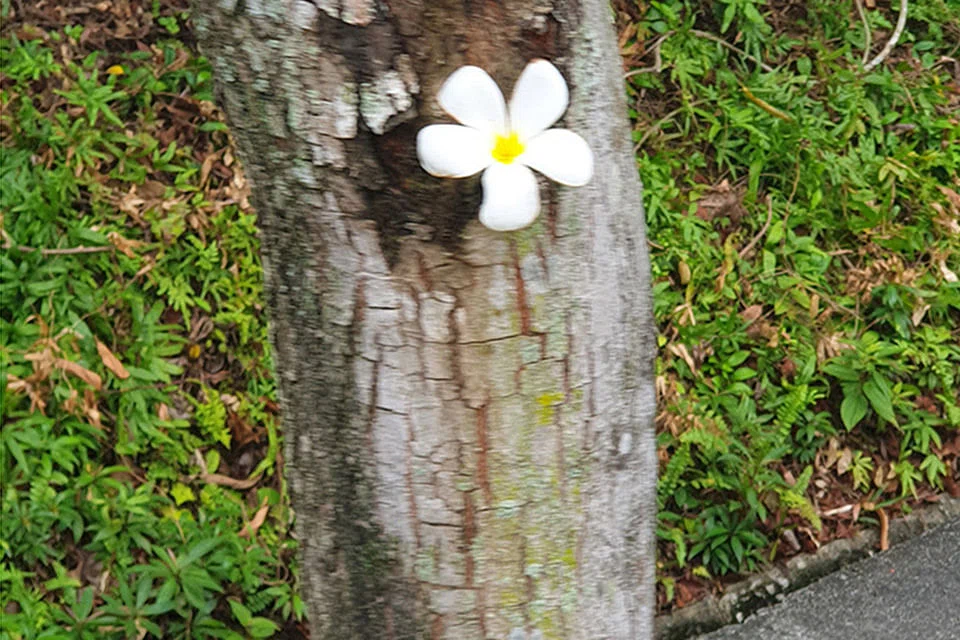
"I still pick weeds and fallen flowers and decorate tree barks when I walk in my neighbourhood. It sounds silly, but I think it reminds me that making life a little more beautiful does not have to be complicated, and it really is the small choices we can make every day that ultimately do matter. It's like that Emerson quote 'What is a weed but a plant whose virtues have yet to be discovered'. I love that."
The NVPC head honcho attributes her passion for philanthropy to her grandparents - Ms Kwee's maternal grandfather is George Tetsuo Aratani, the founder of Kenwood Electronics and Mikasa chinaware.
"I saw my maternal grandparents being very engaged in community always, and eventually making the decision to give pretty much all their wealth to the community."
In fact, Ms Kwee has just returned from visiting her 100-year-old maternal grandma overseas and is serving her two-week stay-home-notice in a hotel while "speaking" with BT. "I was most worried about having no fresh air (in the hotel room). To cope, I planned ahead, brought an exercise mat, lots of reading material and my favourite mini buckwheat pillow!"
Her enthusiasm and good cheer are evident over e-mail, which is how this interview is taking place.
What really matters
The Covid hiatus has given Ms Kwee some time to reflect on the pandemic, and what it means for businesses and their ability to give back to society.
A Toluna survey conducted with NVPC showed that during the pandemic, fewer people were willing to donate, with the percentage of Singaporeans inclined to give dropping from 32 per cent in April to 23 per cent in July.
Among those who contributed to charities and organisations in some way in the month of July, there was a sharp increase in monetary giving (77 per cent in July, up from 60 per cent in April). However, volunteering fell (33 per cent in April, to 24 per cent in July).
Commenting on the trend, Ms Kwee, who is also an alternate director of Pontiac Land Group, says: "While (Covid) has shone the light on the cracks in society, it has also brought out the resilience of Singaporeans and identified the areas in which we can work on across all sectors of society in order to build a better community.
"Volunteering rates dipped due to the circuit breaker and safe distancing measures. However, some organisations were able to transition their volunteering opportunities from the physical to virtual (that is, tele-befriending, virtual tuition etc)."
She adds: "NVPC's vision for a City of Good where people, organisations, and leaders give their best for others really came through in this period. Singaporeans from all walks of life gave their time, treasure, talent and voice. We saw an outpouring of generosity at the start of the pandemic in April, where over S$20 million worth of donations were channelled towards individuals and communities at risk, and to date, we have received over S$56 million worth of donations on Giving.sg from January to August 2020 (+254 per cent compared to January-August 2019)."
Organisations and ground-up movements have also stepped up to meet the overwhelming needs that emerged.
For example, volunteers built websites to translate medical instructions from English into native dialects for migrant workers, and NVPC has also designed a Stay Home Giving Guide to provide tips on how Singaporeans could still continue giving even as they stayed at home.
At the end of the day, says Ms Kwee, organisations need to understand that doing good is not a zero-sum game. "It does not equate to having less. It is about prioritising what really matters to the enterprise, its leaders, people, customers and investors."
Building social capital
The CEO says that starting a corporate giving journey can be as easy as taking the first steps to source from socially responsible vendors or social enterprises.
"If organisations can approach their business with the intent of not only maximising shareholder profits but also building social capital in the community that they serve, then CSR (corporate social responsibility) can play a more pivotal role in the organisation which has been shown to increase employee engagement and productivity, employer branding, talent attraction, and better reputation."
However, when it comes to doing good, there are naysayers who demur, saying that the motivations behind corporate giving aren't all altruistic, and that too much "preaching" on the topic may lead to "doing good fatigue".
Ms Kwee says: "What matters most and what ultimately shows is whether the efforts were really driven by self-interest, or driven by an understanding of the real needs, and responding with a smart and savvy solution. Social media can hold us to account and we also encourage citizens to be more discerning. In the end, if you are totally self-interested, people see through your facade and give you a big credibility discount."
CSR has been pushed into the spotlight, and charities in Singapore could be graded by next year under a new regulatory compliance initiative to help donors make informed choices and decide on which organisations to give to.
However, Ms Kwee is less than excited about the move.
She says: "I'm not a big fan of regulatory levers or penalties to drive behaviour. I think it skews incentives and attention towards the wrong things - like mindless 'box checking' behaviour. While helpful, it is insufficient and change must be led by leaders who galvanise the 'want to' passionate spirit versus the 'have to' compliance spirit."
She adds that reporting with transparency is however, a different story.
"With reporting, there is an opportunity to showcase and hopefully inspire others to see both challenges and possibility and encourage others to embark on the journey likewise. People want to work for and patronise companies they trust and admire - and that doesn't mean being perfect but it does mean being truthful and not wholly self-interested.
"One can argue that this only creates business for PR (public relations) and communication companies. There really isn't a quick fix. What's needed is genuine leadership - where our industry luminaries come forth and say what they stand for and hold themselves accountable. Leadership is ultimately what makes the difference.
"Hence, with NVPC, we have built the basic building blocks over the last few years: the digital giving infrastructure with Giving.sg, and we now plan to roll out a wider, more integrated giving ecosystem with government and community partners, including businesses who can connect through APIs and enable giving as part of their businesses - spare change 'round-up' features; Buy One-Give One; cause adoption and regular monthly giving; or highlighting causes through their marketing or communication channels; and offering ways to volunteer."
She adds that NVPC's focus going forward is on creating innovative collaborations to help every company, big or small, maximise their efforts.
"We anticipate lean times ahead and we can't forget to do good because now is the time when our efforts will be most needed. We just need to be smarter and we can do that together."
Covid-19 has brought out the "best and worst in us and we have realised our weakest links are really our most critical", says Ms Kwee.
"We cannot un-see what we have seen and we are each now confronted with the reality of a future that can either be for all of us or for none. Interdependency and connectedness has been a theme for Singapore but now we have to go deeper and dig beneath surface level transactions to build genuine resilience and strength in families, in organisations and communities. Doing good flows from being good; character matters before competence. The character of being other-centred and not entirely self-serving or selfish is a critical survival skill."
MELISSA KWEE
Chief Executive Officer National Volunteer and Philanthropy Centre
1972: Born in United States
1994: BA, magna cum laude, Social Anthropology, Harvard College, Cambridge, MA
1995: Fulbright Scholarship (Nepal) Institute of International Education, New York, NY
2008: MBA, National University of Singapore and UCLA Anderson School of Management, Los Angeles
1996 - 2000: Founder & Director, Project Access
2001 - 2002: Vice-President, Corporate Relations, Pontiac Land Group, Singapore
2002 - 2004: Director, Development, United World College of SE Asia, Singapore
2004 - 2005: International Youth Volunteerism Consultant, Ministry of Community Development, Youth and Sports, Singapore
2007 - 2010: Director, Good Company and Consultant to West Paces Hotel Group
Since 2014: CEO, National Volunteer and Philanthropy Centre
READ MORE: PVPA honours everyday heroes
TRENDING NOW

Indonesia begins cutting natural gas exports to Singapore from Oct 24: reports
Singapore’s central gas buyer affirms Indonesia’s role as ‘important partner’ amid export review warning
KKR founders among investors buying 42% of Peter Lim’s Valencia; club valued at US$1.4 billion

NEA issues notices to 10 Singapore-based companies, including Wilmar and APP, over haze

