

Network man
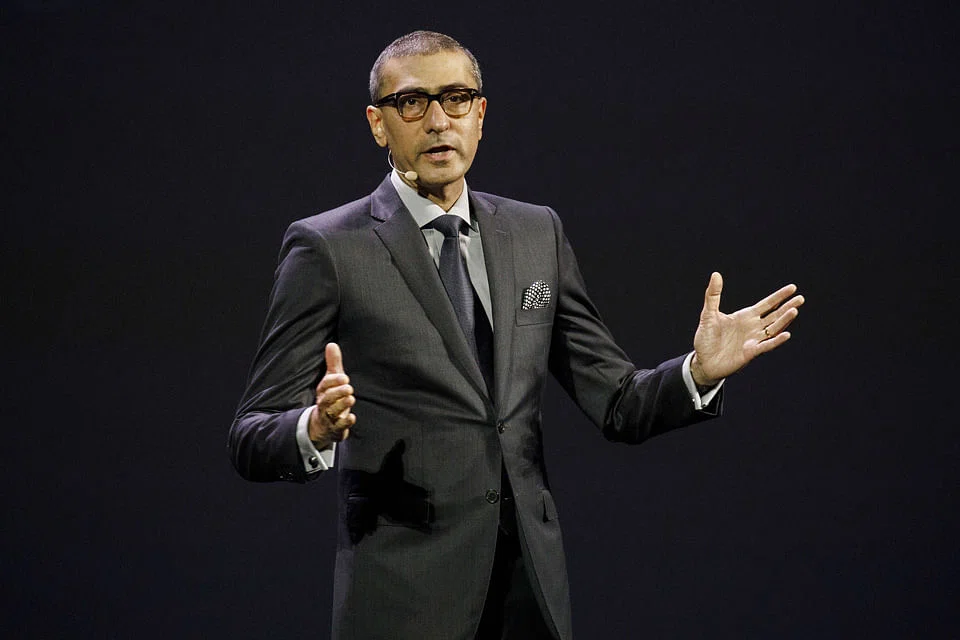
Rajeev Suri, Nokia's CEO, is on a mission to steer the iconic company back to its former glory.
IN JUNE 2007 this writer interviewed then Nokia CEO, Olli-Pekka Kallasvuo, on the completion of his first year as CEO. Nokia was at that time one of the world's top five brands, commanded a nearly 50 per cent share of the global mobile phone market, and was moving into new services such as music on demand, maps and a host of others. In the mobile telephony space Nokia was the top dog and so what its CEO said was news.
However, technology is a great leveller. Around about the same time as the The Business Times interview with Mr Kallasvuo, at an Apple event in the US, the late Steve Jobs used his famous "One more thing..." pitch to take out from his back pocket the first version of the iPhone.
The rest, as they say, is history. The new phone took the world by storm and Google came out with its rival operating system Android which it gave away for free to competing mobile phone companies such as HTC and Samsung. While the industry moved in the direction of multi-touch enabled devices and apps, Nokia virtually sat on the sidelines. Consequently, the Finnish company was quickly dethroned from its pole position in the mobile telephony business and by 2010, just three years later, Nokia's share of the global mobile phone market fell to the low single digits. Its brand value disappeared.
After thousands of retrenchments and plenty of attempted restructuring, including a change of CEO, Nokia finally sold its mobile phone business to Microsoft in 2014. Many analysts and reporters, including this writer, rued missed opportunities and wrote obituaries for this once great company. However, Nokia, with more than 150 years of history behind it, had no intention of fading into the sunset.
What the obituary writers forgot was that the Finnish company - which started life as a paper mill in 1865 - has a strong tradition of re-inventing itself. Over the course of its existence, Nokia has been in different businesses ranging from producing rubber boots and bicycle tyres to digital switches for telephone exchanges.
After its mobile division was sold, Nokia doubled down on its smaller telecom network equipment supplies business and also started to monetise its plethora of patents. Today, it is back on the world stage as the No 1 end-to-end telecom network equipment supplier and is a key player in the fifth generation (5G) mobile telephony business. More on how Nokia expects 5G to revolutionise the industry later.
Stabilising the company and taking it back to its former glory is still a work in progress, and the driving force behind this mission is Singaporean Rajeev Suri, Nokia's current president and chief executive, who took charge in 2014. "If you think about the last four or five years, there were several steps involved," says Mr Suri, speaking to BT about the ongoing transformation in Nokia. The first was the divesting of the mobile phone business to Microsoft in 2014.
"We then concentrated on our telecom equipment business, Nokia Siemens Networks, which by that time (2014) I was heading after leading the Asian Pacific business (out of Singapore)," adds the India-born Nokia veteran of over 20 years who is now based in Espoo, Finland.
As the name suggests, Nokia Siemens Network was 50 per cent owned by Nokia and German conglomerate Siemens AG. However, Nokia had the golden share, with the controlling vote in the company.
"We decided to acquire Siemen's stake to fully own the business. And that is when I became CEO of the new Nokia."
Future back
Nokia soon began to look at what it called the "Future Back" approach to strategy. "We began to ask ourselves what kind of company we want to be in 2025? Once we decided that, we looked back from there to see what we had to do to get there," Mr Suri says. Based on that, the company sketched out its strategy. "We had effectively, as Nokia Siemens Network, which became Nokia, become a combination of a mobile phone company (through our mobile phone licensing rights), mobile equipment and services player and a mobile broadband and services company.
"And we decided that we need to be more than that. Looking at the next 10 years, we imagined a world where we needed to be a converged end-to-end network equipment supplier that would be able to serve not only telcos, but also enterprise customers," says Mr Suri. Out of several options, Nokia decided to acquire Alcatel-Lucent, a French telecom equipment company formed in 2006 by the merger of France-based Alcatel and Lucent, a spinoff from AT&T. The acquisition deal was announced in April 2015 and completed some eight months later in January 2016.
Another part of the strategy, says Mr Suri, is building a standalone software business "that's (vendor-)agnostic and can sit over any telecom equipment supplier's network, be it in the enterprise or in the telco network".
The final part of the strategy, he adds, is to grow the company's licensing business. "We have the licensing business from the intellectual property (IP) that Nokia did not sell when it divested its devices business".
This is what makes us the new Nokia, Mr Suri says.
Interestingly, Nokia's current networks business has, apart from Alcatel-Lucent, parts of Siemens, Motorola, Nortel and Panasonic's Japan network business. The net result is that the number of telecom equipment suppliers in the world has gone down sharply. Outside China, the two big international players remaining in the game are Nokia and Ericsson, and to a lesser degree, Samsung.
Mr Suri says that only Nokia and Chinese company Huawei can today be considered as true end-to-end equipment suppliers that are capable of building all aspects of telecom networks. This point assumes importance given the current imbroglio involving Huawei's role in the 5G network buildouts in Europe and elsewhere.
End-to-end advantage
Why is end-to-end important?
Mr Suri notes: "I believe that the way to win in 5G and the world beyond will be 'end-to-end'. This is going to be our distinguishing advantage. Not everybody has 'end-to-end'. We are the only ones that have the 'end-to-end' portfolio."
According to Mr Suri, for a 5G buildout, all aspects of the network - from the radio, which captures and transmits the signal, to the underlying backhaul system that transports the information - will need to be built afresh in the network. During the move from 3G to 4G, only certain aspects of the network needed to be changed.
Comparing Nokia to its arch rival Huawei, Mr Suri says that while the Chinese company has the expertise and scale, it does not have Nokia's kind of reach. "We have (the scale) in all the countries in the world including the US, Japan, South Korea - the leading markets, so to speak. That, for me, is going to be differentiating," he says.
The key, according to the Nokia CEO, is his company's multi-business group which has the ability to build large networks for enterprises and this ensures that the company is not limited to working with telecom network operators.
"(With 5G) a lot of the interesting stuff is going to come out of the enterprise; you need to be able to leverage that. This is why it's our fastest growing business. It's now about 5 per cent of our overall revenue but growing very fast," he adds.
The advent of 5G will bring about a paradigm shift to the business model of telecom operators, says Mr Suri.
In the consumer segment, there will be new services that would be driven by technologies such as virtual reality (VR) and augmented reality (AR). With better connectivity provided by 5G there is also a possibility of cheaper data rates being offered to consumers that will increase data consumption, he notes.
While the growth in the consumer business will be exciting, the much bigger opportunity lies in industrial 5G services which Mr Suri reckons will account for "US$12 trillion of global economic activity by 2035".
"In the next 10 years, a telco can grow its enterprise business by playing in the industrial IoT (Internet of Things) space and this opportunity will come together with something called network slicing," he says.
In a 5G network the bandwidth can be divided (sliced) into smaller dedicated standalone networks for specialised services, he explains.
"This is not possible on 4G networks. So a telco with a 5G network can slice it into multiple pieces and give consumers a slice for, say, a dedicated VR streaming service for home use.
"Another slice could be given to a manufacturing company, say a logistics firm which wants a mobile virtual network (MVN) dedicated to its supply chain users. The logistics company operates as a private MVNO (mobile virtual network operator)."
Mr Suri adds that a telco could theoretically slice its network into a "thousand MVNOs" and lease out some of them to enterprises and sign a service level agreement (SLA) and charge for the service. Companies will essentially have a dedicated network for their own use and pay a charge to the telco.
While network slicing will be relatively common in 5G, Nokia has developed a technology that fully automates the process, he adds.
"It's a real opportunity for telcos to develop their enterprise business. Today most of the enterprise businesses that global operators have are essentially about wholesale SIM (sales) and there are some other things (like security) added on top of that.
"But this takes it to an altogether new level. Telcos will need to invest in their enterprise business just as Nokia is investing in its enterprise business. The industrial automation opportunity, the US$12 trillion business opportunity, will provide a productivity boost across countries.
"As the technology matures, 5G will become a general purpose technology similar to electricity, the Internet or even the wheel. So we shouldn't think of 5G as just a mobile network," Mr Suri says.
He shares an important data point: "There are seven million base station sites globally, in the telco world today. We expect that industry (enterprise) will have to build two times that amount.
"That's the opportunity on the enterprise side. And that is why we set up an enterprise business group, because we have a range of products, not just wireless, but other wire line products that enterprises need to get this solution in place."
Particularly for consumers, the nature of mobile communications and networks will undergo a major change in the 5G world.
"First of all, the mobile phone will not be your only device. You will rely on medical devices that you wear and these do your stress test, your ECG as well as measure your diabetes and all this will be FDA (Federal Drug Administration) approved medical grade.
"Think about a 5G-enabled ambulance. Somebody has had a heart attack on the roadside and the ambulance rushes in to pick the person up and move to the hospital. What happens today? You take the person to the ICU, then you figure out what's exactly gone wrong; a lot of time is wasted. With a 5G-enabled ambulance you can actually start to do the scans and tests in the vehicle itself and transfer the information to the ICU even before the patient comes in and you are already in a recovery mode. You can't do that with 4G, because it's too much capacity that needs to be transmitted."
The new 5G networks will provide speed, capacity and ultra-low latency, Mr Suri says, adding: "Let's think of a use case where low latency and capacity is important. You and I want to watch a football game during the next World Cup but we want to watch the match sitting in Singapore from the comfort of our homes. VR can change the experience and, over time, the form factor of the devices will change and they will become like normal glasses.
"So wearing these glasses, we would be able to sit in our living room and experience the thrill of actually being in the stadium and feeling the roar of 100,000 people because the VR coverage would be 360 degrees and in high definition."
With 5G networks, a number of operators will use VR and AR to drive more live entertainment and live sport, something that is not possible with today's 4G network, he adds.
Apart from entertainment, VR coupled with 5G can have an immense impact on education, says Mr Suri. "Imagine doing online courses using VR. One would not need to travel to California to do a degree from Stanford University. One could be stationed in Singapore and yet get the same level of learning as a regular student, thanks to VR."
All this will lead to disruption and the nature of jobs will change, he says. "Artificial Intelligence, robotics, VR and other technologies, many of which are possible only with 5G, are going to disrupt jobs.
"If you look over the past 20 years, digital companies have had much more productivity than physical industries but they have also generated more jobs."
So, he adds, that means digitalisation and automation do not necessarily result in job loss. "Occupations will change significantly over the next 10, 20 years. There will be new types of jobs and so, as a society, we have to deal with upscaling and reskilling.
"If you don't need a truck driver, what is the driver going to do? You need to reskill people like the driver. This is a challenge that society and governments will have to find a solution to."
One of the first things that Mr Suri did on becoming CEO was to articulate what he calls the cultural principles of the new Nokia - namely respect, renewal, achievement and challenge. These four principles will remain the basis of Nokia's "back to the future" journey to its former greatness, he says, adding that they are also the beacons that guide his professional life.
RAJEEV SURI
President and CEO Nokia
1967 Born in New Delhi, India
1985 - 1989 Bachelor's degree in Engineering (Electronics and Communications), Manipal Institute of Technology, India
1989 - 1990 Production Engineer, Calcom Electronics, India
1990 - 1993 National Account Manager, Strategic Planning, ICL India
1993 - 1995 Head of Group Procurement, Imports/Special Projects, Churchgate Group, Nigeria
1995 - 1997 System Marketing Manager, Cellular Transmission, India, Nokia Networks
1997 - 1999 Head of Product Competence Centre, South Asia, Nokia Networks
1999 - 2000 Head of Global Competitive Intelligence, Nokia Networks
2000 - 2001 Director, Technology and Applications, BT Global Customer, Nokia Networks
2002 - 2003 Sales Director for BT, O2 & Hutchison Global Customers, Nokia Networks
2003 - 2004 GM, Business Development, Asia Pacific, Nokia Networks
2004 - 2005 VP, Hutchison Customer Business Team, Nokia Networks
2005 - 2007 Senior VP, Asia Pacific, Nokia Networks
April - Aug 2007 Head of Asia Pacific, Nokia Siemens Networks
2007 - 2009 Head of Services, Nokia Siemens Networks
2009 - 2014 CEO, Nokia Solutions and Networks (previously Nokia Siemens Networks)
Since 2014 CEO, Nokia
TRENDING NOW
Singapore’s central gas buyer affirms Indonesia’s role as ‘important partner’ amid export review warning

Why the biggest business decision about AI isn’t which model to choose

Is Manila Asia’s new dining hot spot?
KKR founders among investors buying 42% of Peter Lim’s Valencia; club valued at US$1.4 billion

