

Playing to win
Family physician turned millionaire healthcare ceo Tan See Leng gives his take on the medical sector.
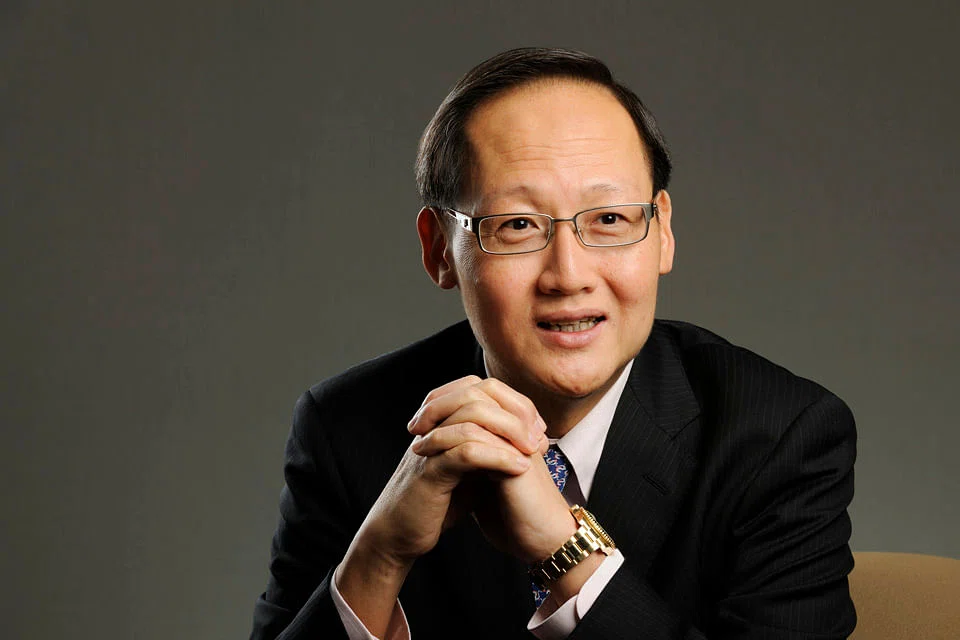
'I MAY not look like it, but I play to win," Tan See Leng says in an even tone, smiling slightly. The words may have rolled off his tongue with only a hint of firmness, but make no mistake, the down-to-earth doctor who now helms Asia's largest (and the world's second largest) listed private healthcare group, IHH Healthcare Berhad, is quite the go-getter. Beneath that tailored suit and genteel exterior lies a competitive streak - a trait that has stood the 52-year-old in good stead.
A family physician by training and the only child of a bus timekeeper and housewife, Dr Tan, at the age of 27, dived right into private practice after completing national service in 1992. He broke his bond with the Ministry of Health and took a S$90,000 loan to start Healthway Medical Group with three friends, one of whom became his wife.
Healthway Medical flourished into a network of more than 30 branches and was later sold to the British United Provident Association for an undisclosed sum. And like that, Dr Tan, armed with sharp business acumen, joined the millionaire club in his mid-30s.
Upon the invitation of then-head of Parkway Holdings, Lim Cheok Peng, who is now chairman of China Medical & Healthcare Group, Dr Tan joined Mount Elizabeth Hospital as chief operating officer in 2004, quickly rising through the ranks to become Parkway CEO in April 2010. The next year, after the group's restructuring, he took over as group CEO and managing director of Parkway Pantai, an indirect wholly-owned subsidiary of IHH. Under his watch, the average revenue per in-patient climbed steadily for Parkway Pantai's Singapore and Malaysian hospitals from 2012 to 2015.
Staff describe Dr Tan as a hands-on leader who has no qualms rolling up his sleeves and jumping right into multiple projects - a trait that has earned him their respect.
Observers, on the other hand, will point out that his predecessor had steered IHH during the run-up to its listing, while Dr Tan is overseeing the group in its growth phase.
In 2012 - the year IHH was publicly listed after a takeover fight - Dr Tan was appointed as its executive director before rising to the top as the group's managing director and CEO in January 2014.
In the past year alone, IHH - whose major shareholders include the investment holding arm of the Malaysian government, Khazanah, and Tokyo-based Mitsui Group - has been buying up hospitals in Eastern Europe and the Middle East, or building new ones in the region. As a result, its stable of hospitals has grown to 52 across 10 countries, with more than 10,000 beds and a global staff of over 30,000.
The upward trajectory has been impressive so far, with hospital operator Parkway Pantai contributing more than 60 per cent of total revenue for the third quarter of 2016. Its 60 per cent-owned Turkey subsidiary, Acibadem, accounted for more than 30 per cent, with the rest coming from its medical education arm IMU Health and real estate investment trust, Parkway Life Reit.
Between 2012 and 2015, net profit jumped 45 per cent to RM899.2 million (S$287 million), excluding exceptional items. For the first nine months of 2016, net profit stood at RM643.5 million.
Naturally, the share price and valuations have risen over the years despite concerns of steep valuations. IHH shares opened at RM$3.07 in Malaysia and S$1.22 in Singapore in their trading debut. The stocks are now trading at over RM$6 and close to S$2.
In the three to five-year horizon, China, a key market, and India, its fourth and newest home market, will continue to drive growth, outside of the existing core markets of Singapore, Malaysia and Turkey, says Dr Tan. The push to grow in the emerging economies of Vietnam, Myanmar, Thailand and Laos also continues.
And the group will grow its footprint in some parts of central Asia through its Acibadem platform, while the Indian operations will be the launchpad for further forays into the rest of South Asia, says Dr Tan.
Still, overseas expansion brings with it risks, particularly in times of uncertainty - something the group knows and prepares for.
For instance, Myanmar's lower house of parliament last April put a stop to the Parkway Yangon Hospital project, but the group is in the midst of resolving this. There were also concerns about the group's operations in Turkey as the lira now hovers at record lows against the greenback due to political uncertainties, rising inflation and terrorist attacks, but the group has a natural hedging system in place to mitigate foreign exchange volatility.
Moving with the times
As important as it is for the business to find growth at a time when governments around the world look to stretch their healthcare budget amid medical cost inflation and high drug prices, patients should not be overlooked. That's Dr Tan's standpoint.
Under his leadership, Parkway hospitals are taking steps to explore ways to improve patient care and staff productivity. To this end, he has set up a team to look into innovative disruption "that can help reinvent the group".
In the past five years, IHH has invested heavily in medical technology, the development of its intensive care unit (ICU), operating rooms, among others, to position itself at the tertiary level and beyond. In fact, about 18 months ago, IHH teamed up with IBM Watson, to tap artificial intelligence (AI) and the Internet of Things (IOT), to look at ways to harness and integrate data to produce electronic medical records. Through AI and IOT, the team can pull out from the best global publications the most well-prescribed treatments and decision-making processes for the nurses, explains Dr Tan, adding that "we're gradually rolling it out to all the hospitals in the group".
Digitalised information and data analytics are especially helpful for patients in intensive care, where real time data such as blood pressure, pulse, oxygen level and biochemical clinical indicators are a matter of life and death. And he wants to take this further - to manage patients by looking at the data through IOT and to connect patients, their caregivers and doctors.
About a decade ago, IHH made a conscious decision to build smaller hospitals. It moved away from huge hospitals to building those with between 250 and 350 beds. Hong Kong is the only place where the group is constructing a 500-bedder.
Says Dr Tan: "We find that the 200-300 beds are very efficient in terms of investigations being done, in terms of the type of services that we render to the patients and then after that they get discharged to either rest at home or rest in a rehab facility or community hospital."
In time to come, he says, the number of beds in hospitals will shrink even more with the trend towards minimally invasive surgery - which spells shorter post-op stays - and as healthcare providers increasingly tap the primary care sector (such as general practitioners) for patient care, especially for those with chronic diseases. Even as the giant healthcare provider prepares for the future, it is under pressure to deliver growth at a time when medical tourism in Singapore is on the wane, particularly as a third of its patients are from overseas.
According to Dr Tan, even though the "mass market" healthcare services such as health screenings and endoscopy - "the bread and butter stuff" - has seen a decline, "I think it's been more than adequately compensated by the upper end of the spectrum". At the tertiary care level and further up the medical services value chain, where Parkway and IHH are positioned, these segments still have room to grow, he says.
What Singapore has going for it is the high level of healthcare expertise and treatment protocols that are comparable to Western standards, he notes. But the republic is slowly losing this competitive advantage and Dr Tan thinks Singapore will probably have another 10-15 years before regional healthcare providers catch up.
One way to mitigate this is to ensure that there are no weak links in the entire ecosystem, he says. This means having not only top-notch doctors, but also excellent clinical nurses and ancilliary staff to support the delivery of healthcare.
But here he faces a big challenge - a shortage of medical talent. Says Dr Tan: "Our biggest drawback, from a broad perspective, is the fact that while healthcare is a sunrise industry, that level of potential acquisition, growth opportunity, is really disproportionately high compared to the human capital that we have to run and integrate all these assets and bring it to the next level."
It worries him that the healthcare sector does not have enough doctors and nurses trained to handle the future deluge of patients, driven by an ageing population and increasingly complicated diseases.
And while there are talented managers in Singapore, he finds it hard to deploy them.
"One of the greatest achievements of the (Singapore) government is that it has provided too much material comfort in this country, so for them to relocate to another country to work is hardship . . . that's what keeps me awake at night. How do I, with all these opportunities, find the calibre of people to come in to do this?"
Managing realities
What keeps some Singaporeans up at night, though, are rising healthcare costs - chiefly doctors' fees, compounded by consumption of services through private health insurance.
But the rise in healthcare costs is inevitable, Dr Tan says matter-of-factly. "What can be done is to manage the gradient of increase (to be) as gradual as possible."
From IHH's perspective, managing hospital charges is key to keeping a lid on healthcare costs.
Its business model is one where it owns the medical facilities and largely does not hire doctors. In Singapore and Malaysia, Parkway hospitals do not hire their own doctors, unlike their sister hospitals in India, China and Turkey. In Hong Kong, Parkway is testing a hybrid model.
To manage hospital charges, Dr Tan says there must be cost savings from procurement, improvement in productivity and service turnaround time. That aside, the hospitals also advocate fee transparency - pre-treatment, patients are given an estimate of the amount they can be expected to fork out.
"Now, if his doctor wants to charge way above, up to the 90th percentile, at least the patient knows. I think it's important because at the end of the day, the value really lies in your relationship with your doctors, the price of that confidence, the price of that ability, the chemistry that you have with the doctor, it is priceless and you feel that it's justified in paying that amount."
The Singapore Medical Council recently clarified its position on the new code of ethics for doctors following concerns that some managed care providers have tapped the Integrated Shield Plan market, a highly lucrative business. A group of private doctors also took issue with third party administrators' (TPA) fee models.
Weighing in on this, Dr Tan notes that in the short term, "there will be some pain for some of the managed care providers", but he believes SMC's move will benefit Singapore as a healthcare destination in the medium to long term. It also "bodes well for the entire medical community as a whole", he adds.
"I think it's timely that they look into these things at this point in time . . . look at the landscape and find a way to re-calibrate and re-equilibrate and then from there we grow again."
Asked about the Singapore Medical Association's push for TPAs to be regulated, he thinks that "some form of minimum set of standards should be adopted across the board by TPAs", as these managed care providers are managing finances for big corporates.
Remembering beginnings
True to his "people person" nature, Dr Tan makes it a point to pay tribute to his "unsung heroes". In his book, these are staff members such as the housekeepers, those who open the hospital doors, employees who sterilise instrument sets and handle simple menial tasks day in day out. The ability to help improve the lives of his staff - by making sure, for instance, that they get their bonuses so they can put food on the table or pay for their children's education - is rewarding for him.
These unsung heroes probably remind Dr Tan of his own humble beginnings. Now that he is in a position to influence and change things, he has also managed to persuade the Parkway Pantai board to offer scholarships to medical undergraduates at the National University of Singapore.
Indeed, success can beget a lot of good, but it is also a double-edged sword.
The worst thing about it is that "you do not know sometimes whether you're doing the right thing or not because when you're successful, people don't point out to you problems anymore, or your flaws", says Dr Tan.
So does he get this feeling all the time?
"In a way. Sometimes you keep thinking 'Is this right?'," he says, showing a hint of uncertainty.
In his case, a dose of doubt now and then perhaps is also what helps to spur him on to outdo himself.
TAN SEE LENG
Managing director and CEO, IHH Healthcare Bhd
Born on Dec 24, 1964
Education
1998 MBBS, National University of Singapore
1998 Master of Medicine, Family Medicine, NUS
2004 MBA (University of Chicago Booth School of Business)
2014 Fellow, Academy of Medicine, Singapore
Career
1992 Founding chairman and CEO, Healthway Medical Group
2004 Joined Mount Elizabeth Hospital as COO
2010 Became CEO of Parkway Holdings
2011 Became Group CEO and MD of Parkway Pantai
2012 Appointed executive director of IHH
2014 Became MD and CEO of IHH
Awards
2015 CEO of the Year, 2015 National Award for Management Accounting
2015 Asia Innovator of the Year, 14th CNBC Asia Business Leaders Awards
2016 Asia's Best CEO (Investor Relations), Asian Excellence Award 2016
TRENDING NOW

Once staunchly pro-China, Malaysian Chinese businesses are now distancing themselves from Beijing
Cliff Tan has 7 million followers and a 4-month waitlist. Why won’t he expand his business?

Grab CEO’s wife Chloe Tong on life with Anthony Tan and finding her purpose
Singapore F1 to proceed despite haze; no changes planned to outdoor entertainment

