

Sparking joy at work
As a leader, it's his job to create "circumstances for greater joy", which would ultimately translate to better client satisfaction, says Alex Liu, boss of management consultancy AT Kearney.
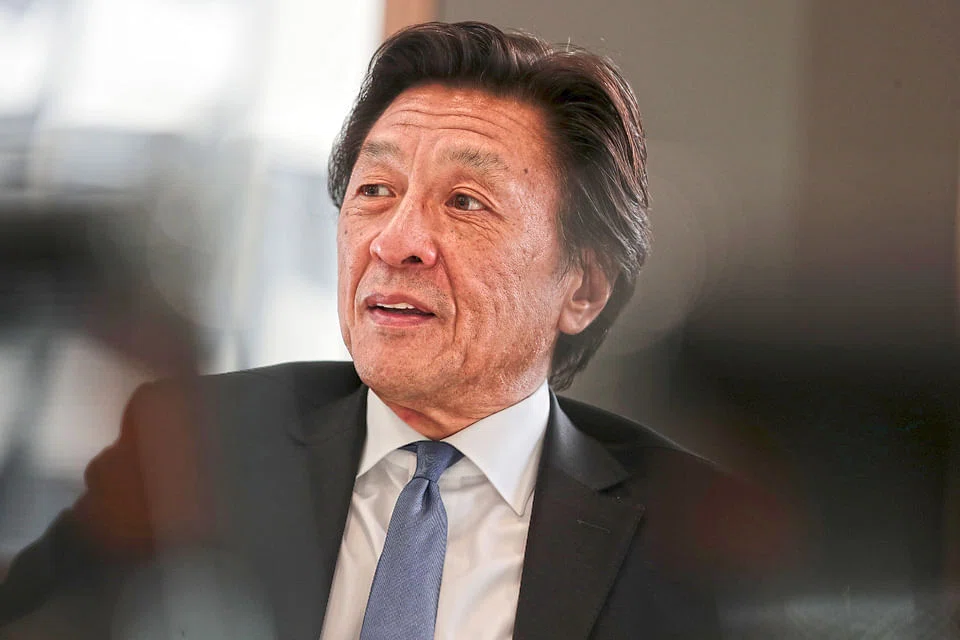
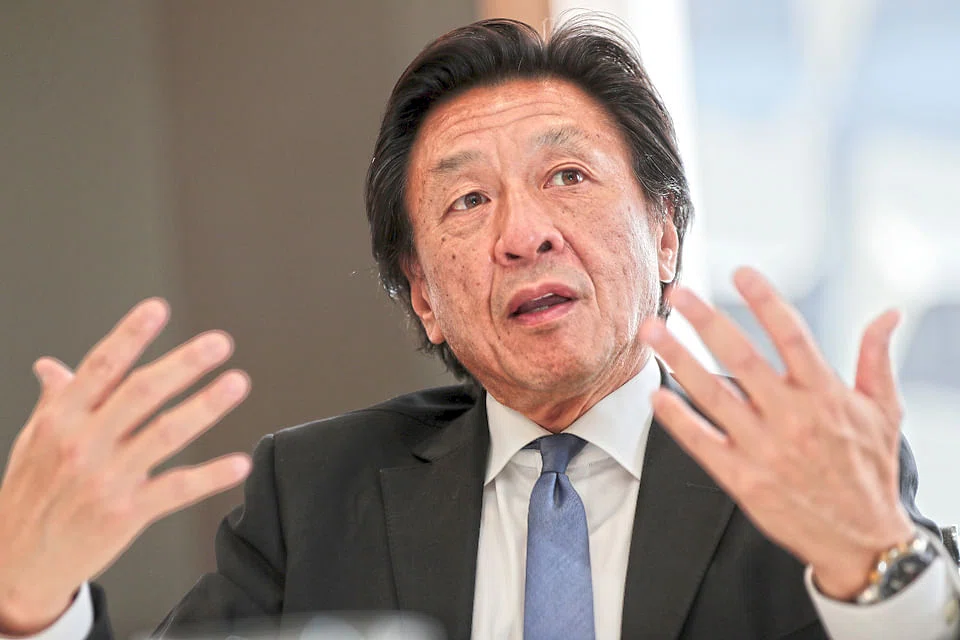
RUGBY may be the best sport in the world, but consulting is the ultimate team sport, declares Alex Liu.
Be it on the field or in the marketplace, no one can do it alone, the managing partner and chairman of global consulting firm AT Kearney points out.
"To me, the essence of a winning team is this: play hard, play smart, play together," he says borrowing a phrase from the late Dean Smith, a renowned basketball coach from the University of North Carolina Chapel Hill whom he looked up to.
From the outset, it is clear that sports have shaped the worldview of US-based Mr Liu, who still plays full-contact rugby with the Harvard Business School alumni team.
Throughout the hour-long interview, his remarks are peppered with sports analogies and references ("it's about team spirit," he advises) that leave little doubt where he gets his inspiration from.
"I'm the shortest guy on the team usually, but because I play a unique skill role, I could still be the most valuable," he says. "All these lessons add up to give you the self-confidence to make these pronouncements and to keep yourself aligned going forward."
"I think operating successfully in team environments is probably my best source of wisdom on how to get things done," he adds.
The three Cs
In some sense, Mr Liu's experience in rugby is very much a microcosm for AT Kearney itself. Started in 1929 in Chicago, the consultancy is now a mid-sized firm with about 300 partners and revenues of more than US$1.2 billion.
It is holding its own in the cut-throat world of consulting dominated by giants such McKinsey, Boston Consulting Group and Bain as the company plays to its strengths.
Mr Liu says the firm does not try to be everything to everyone. "We can be more selective of clients and situations - we are not this giant machine churning out solutions and trying to sell things."
The size of the firm also allows it to be agile enough to pursue new opportunities quickly and try different things, he adds.
The veteran consultant, who was elected as the ninth managing partner of AT Kearney at the end of April 2018, has also made clear his ambition for the firm. "My passion is to be number one for the clients we choose to serve," he declares.
Since he took over the reins, he has been focusing on three main sets of priorities: clients, capabilities and culture.
On clients, he says that the consultancy is emphasising deep client expansion and building loyalty. To measure success on this front, he has instituted metrics such as the client sentiment tool which is conducted after every project.
To better support clients, capabilities also matter. Mr Liu shares that the firm recently acquired a data analytics company in Boston - its first acquisition in 25 years. Overnight, the move doubled their number of specialists in the area of data science and strategy, which is much needed right now, he says.
Aside from technical capabilities in terms of technology and process improvements, getting the right people also matters.
"Not having enough focus on the people agenda, not getting the right people to join you - that's the biggest predictor of failure," he says. "It's about winning the war for talent."
He points out that the millennials of today have many options. Management consulting used to be the job that paid the highest by a fair margin, but now there are tech giants like Amazon and Google that are offering and promising better work-life balance and compensation, he notes.
Getting the right people in is one challenge, but so is keeping them there. "Many of my competitors are calling my people all the time, they know we have great people and ask them to jump over with all kinds of enticements," he says.
This is where culture comes in, which he says is the most important priority for AT Kearney.
To that end, he has instituted a people agenda in the last few months. Known as the DIAL agenda, it is an acronym for diversity, inclusion, apprenticeship and leadership.
"All those four things are important to glue people together, to feel like they can be team mates and be much more passionate and generous with the time they spend with their clients," he explains.
In a signal that he is walking the talk, Mr Liu appointed himself as the chief diversity officer to drive home the message that the company is serious about creating the right kind of environment for their talent to thrive in.
One thing he has done is to actively break down silos in the organisation to make sure that the different practice groups, units and regions feel like they are all part of a global team.
"If you are not bringing the best of the firm together, then you are not really being inclusive for the benefit of the clients," he says.
As part of their apprenticeship initiative, the firm is promoting mentoring to ensure that their staff can develop and feel that they are being seen and heard, especially by senior management, says Mr Liu.
A commitment to upskill the workforce is an imperative that he believes every company should have if they are serious about moving ahead.
"Companies can no longer guarantee lifelong employment, but they should be able to guarantee lifelong employability," he says. "Building skills and capabilities have to be key elements of the people agenda."
Managing millennials
Almost 100 per cent of the people AT Kearney hires every year are millennials, born between the early-1980s and mid-1990s, Mr Liu shares. And that's why there is a need for an apprenticeship culture in AT Kearney to train these young people in the problem-solving aspect of the business.
On managing millennials, he observes with a chuckle that they are "not easy to lead".
"You can make suggestions, but not recommendations," he says. "I say millennials have a great deal of ambition for this planet and for themselves.
"People want to be part of something bigger than themselves - they are very demanding as they want purpose, they want work-life balance, they want equal opportunity in the workplace."
Mr Liu accepts that this is his challenge as a leader to deliver in order to keep the best people motivated in the firm. In the past year, he has been busy putting together these key agenda priorities and getting the partnership around implementing and championing those initiatives.
He is a vocal advocate that work doesn't need to be a chore. In fact, he says, it should "bring joy".
"We spend so much time at work - why can't it be the most joyful and self-fulfilling time in the workplace?"
However, he notes that research shows the opposite. A survey that the firm conducted found that 90 per cent of workers want joy and expect it from work, but less than 50 per cent actually find it.
But there is a business case for having joy in the workplace, he says. "It makes teamwork come alive, and people feel like they have a purpose. If you have those - harmony, acknowledgement and impact - you have the basics of a championship team."
Mr Liu points out that the problem he sees with clients is what he coins the "big company disease".
Many large organisations have countless levels and hierarchies that result in people not understanding what their role is in the bigger picture, he says.
It's his job as a leader to create "circumstances for greater joy", by removing layers to enable more cross-fertilisation across the firm, according to him.
He quotes a phrase he heard at the World Economic Forum meeting at Davos earlier in January, where a speaker added an interesting twist to a phrase from the US Declaration of Independence.
Instead of "life, liberty and the pursuit of happiness" as unalienable rights for all, it should be about life, liberty and the happiness of pursuits, he cites.
"Whatever you pursue, it should be giving you joy," he says. "Work on the happiness of your pursuits, not the pursuit of happiness."
It is hoped that this joy at work would ultimately translate to an "irresistible" company culture, which translates to better client satisfaction.
"Being irresistible from a client perspective is treating them with respect," he says. "It's a service business and it is the person-to-person chemistry and spark that makes clients come back."
It is not just about dishing out expert insights from a distance, but also partnering clients to deliver results and build capabilities.
"If we are able to put that altogether, then I think that we also have an irresistible proposition," he says.
Leadership lessons
After decades in the management consulting industry, Mr Liu observes that leaders tend to have two blind spots.
The first is that they tend to think too short-term, he says.
Leaders should go beyond focusing on quarterly results to looking at the long-term improvement of the company instead, he explains. This is despite the fact that the CEO life cycle is shortening because of activist investors, business challenges, competition, and digital transformation.
The second related blind spot for leaders is that they tend to focus on pleasing shareholders rather than serving the needs of the broader community, he notes.
"There needs to be more focus on sustainability, circularity, responsibility and investing with a conscience," he states. "As leaders make business decisions, they need to look at the broader communities that they are affecting."
At the same time, as millennials increasingly prioritise firms with leaders who see beyond their financial bottomline, it inevitably results in a stronger push for them to consider their social impact, he adds.
And true to his sportsman background, Mr Liu's leadership advice for others is to "run your own race".
This means defining one's own definition of success instead of following the crowd, he says.
Leadership is also about inspiring followers. The best leaders, he says, lead by example. "This is not about leaders issuing orders like a military commander, but about being the kind of leaders that they want," he says.
To do that, they have to be their authentic selves so that the people under their charge will be inspired to follow. As he puts it: "You can't fake leadership and you can't fake who you are. So why not own that?"
ALEX LIU
Managing partner and chairman AT Kearney
Born in Taiwan in 1958
EDUCATION
BA, Yale University
MBA, Harvard Business School
CAREER
1985-1996 - Partner, BCG
2000-2001 - CEO, oCen Communications
Since 1997 - Partner, AT Kearney
2015-2017- Global Practice Leader, Communications, Media and Technology
Since April 2018 - Managing Partner and Chairman, AT Kearney
TRENDING NOW

Analysts cut DBS target price on lower 2027 earnings, but see buying opportunity after share price slide

China Investment Corp, PGIM’s 50% stake in Nex mall up for sale; asking about S$1.2 billion
Nvidia CEO Jensen Huang drops from world’s top 10 richest after chips sell-off

OCBC wealth clients turn defensive amid market volatility as Q3 profit rises 3%

