Time for change: Arthur Kiong, CEO, Far East Hospitality
Arthur Kiong, chief executive of Far East Hospitality, says it would be a travesty if the company emerges from the pandemic the same as before.

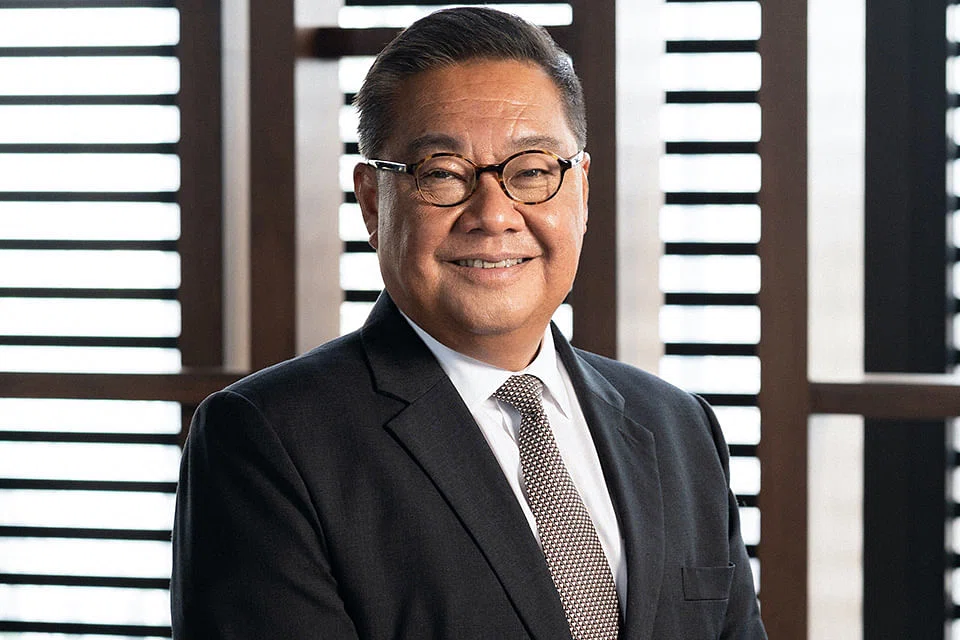
DESPITE having been in the hospitality business for over three decades, the ongoing pandemic still keeps Arthur Kiong on his toes. "Every day I put on my suit, it is like dancing on a minefield," says the chief executive of Far East Hospitality (FEH).
The days of dealing with the pandemic have been full of twists and turns, as well as constantly trying to understand protocol.
One thing he is focused on is making sure that the company emerges from the pandemic a changed one. "I don't want us to come out of the crisis as what we were before, because it would be a travesty," he says.
No doubt Covid-19 has hit the local hospitality industry, including FEH, hard but Kiong says that in his view, the past 18 months have been "a rather exciting" time.
Like how the pandemic has produced once-in-a-lifetime crises on the medical front, this is also a once-in-a-blue-moon opportunity for the company to shift in direction, Kiong says, from having been a "very successful mid-tier local hotel operator to a manager of world class lifestyle brands".
FEH is part of Far East Orchard Limited, a listed company under Far East Organization. Over the last nine years, FEH's portfolio grew from 18 properties in Singapore to 105 hotels and serviced residences in nine countries including Austria, Australia and New Zealand.
Kiong points out four opportunities that the pandemic has presented the company: marketing hotels based on new experiences; expansion into new markets; refurbishing its dated products and cross branding; and lastly, expanding into different segments of the hospitality industry, such as merchandising and spa operations.
While they are opportunities, they can also be risky moves for a company to take on during a pandemic. With no clear idea of when this crisis would end, some companies might choose to take a wait-and-see approach.
"But we decided to bet the farm. There will never be another opportunity like this again. The longer we are entrenched in our old business model which we were very successful at, the desire to change to anything else becomes even more difficult," says Kiong.
Creating brands that offer new experiences
As a mid-tier local hotel operator, FEH previously sold itself on delivering efficiency, but now it has to sellon offering new experiences.
At the start of the pandemic around January 2020, Kiong's intuition told him that the pandemic would last a long time, and recovery would be lengthy and uneven.
Before Covid-19 hit, Singapore drew visitors on, among other things, good shopping and great food. And the availability of budget flights meant that travel was inexpensive and visitors could make multiple trips a year.
Kiong foresees that travel to Singapore would become "more expensive, complex and risky". He questions why people would still want to come to Singapore as they discover the wonders and convenience of exploring their home hinterland, and whether or not there is really the need to travel?
"For the leisure travellers who now want to come to Singapore, we need to go beyond the last two waves of tourism and be serious about the third wave," he says.
Kiong describes the first wave of tourism that happened in the 1970s and 1980s, where Orchard Road was marketed as the equivalent of Tokyo's Ginza and New York City's Fifth Avenue. The late 1980s to early 2000s marked the second wave, where Singapore would outdo neighbouring countries in terms of offering better attractions.
"Now that we are in the third wave of tourism, Singapore has to focus on what's unique," says Kiong.
He gives the example of how FEH hotels in Singapore can no longer be all things to all people, where the only difference is the location and age of the property, which determine the resulting price point.
"We now have to be very clear of what each brand addresses," he says, using FEH's four hotels on Sentosa as examples.
Village Hotel Sentosa caters to young families from its room offerings to its amenities. An older couple is unlikely to be happy staying at Village Hotel unless they are with their grandkids, so The Barracks Hotel Sentosa, which has an heritage element, would appeal to them more.
For the younger childless couples who might be more into fun activities, The Outpost Hotel Sentosa would be their choice.
And "to cater to those who are big on wellness, a market that is growing, we created Oasia Resort Sentosa", says Kiong. He is quick to point out that FEH isn't the first to offer a wellness-focused resort, but says that their concept is "pragmatic, unpretentious and sustainable".
Guests don't have to make drastic changes to their lifestyle after leaving the resort, nor do they have to put up with exorbitant spa treatment prices.
Kiong believes there will be new travel trends ahead: room services and being able to cook in their apartments will be something that guests want; travellers will come less frequently, but are likely to stay longer; and travelling with the extended family will become more popular.
"These trends mean our hotels have to be reconfigured to create new experiences for the travellers, and not just be a place for sleep anymore," says Kiong.
Expanding beyond Singapore
FEH's expansion plans have continued amid the pandemic, and Kiong discloses where the company has set its sights on - Japan, Vietnam, and German-speaking European countries.
In Europe, FEH's portfolio includes Adina Hotels. "This is a very well regarded brand, so we thought expanding to German-speaking European cities is a good idea," says Kiong.
FEH sees Japan and Vietnam as the world's fastest growing travel markets, each with large and dynamic domestic offerings but also fascinating culture and ambitious tourism structure which can bring in international tourists. "The data shows Japan and Vietnam to be good opportunities," says Kiong.
He adds that the pandemic has also given the company "opportunistic sites" to look at, including China, Indonesia and Thailand.
The company has not had to let anyone go, as there was natural attrition, with some employees choosing to return to their home countries. Neither did its employees have to take a pay cut.
"We were clear that we didn't want to lose talent. Our type of operation is very process-driven and it is not easy to replace a person," says Kiong.
To keep the engine running smoothly while this transformation was taking place, Kiong split his team into two.
One team took charge of managing the crisis in terms of being compliant with regulations, sustaining the business, while still keeping employees safe. A second team led the company transformation. "The two teams had separate visions but had to work in synergy," says Kiong.
The company also found it an opportune time to change some of its operating procedures, such as the check-in process.
Guests can specify their desired check-in time, which allows the hotels to better allocate rooms and manage crowds. So instead of having hordes of staycationers filling the lobby at 3pm on a Saturday, they could check in at various times during the day.
Guests appreciate such flexibility while the hotel staff welcome the reduced stress. Indeed in doing this, FEH hotels have not had to deal with angry guests and chaotic check-ins.
"Being able to anticipate problems and solve them helps create a fantastic experience," says Kiong.
Leadership traits and grace
Kiong says that if there's anything the pandemic has reinforced about how a company can survive a crisis, it's that its leader must have the ability to anticipate, the courage to act, and be able to rally people behind him
All are traits that he possesses. But do these come naturally to him?
Kiong attributes it to having been through hardship. "Suffering provides me with humility because it is very easy for leaders to believe in their own hubris. It also brings clearly to my mind - grace - as we are sometimes blinded by the immense blessing that we have. Lastly, suffering strengthens my resolve in understanding what's my purpose," he says.
He adds that having the ability to anticipate, the courage to act, and being able to rally people, are variations of a philosophy that he has observed in successful leaders.
An ex-boss had told Kiong that what makes him different is his ability to conceptualise, the conviction to sell, and the courage to execute. He finds it sad that most leaders these days are lacking in these three Cs.
He also credits an "unwarranted grace" that has helped him tide over previous crises such as dealing with 9/11 and Sars.
"You've got to work hard, to plan, but at the end of the day, with all crises, there is a large element of grace. I believe there is something which is not human, it's divine, that watches over us all, whose intention we can't understand but it guides us, provided we do our part of the work," says Kiong.
"In the course of my life there have been many incidents that I think have been just too bizarre for them to be dismissed as random. So every time there is a crisis, I ask what's within my control and what can I plan based on the gifts that I have. What can I do? And then there will also be an element of unwarranted grace."
Future of Singapore tourism
That's not to say that Kiong has no worries about this pandemic.
Like other businesses, he worries about cash flow. But this issue has been addressed, when very early on, FEH decided to support the government in terms of providing a large number of its rooms for Covid quarantine purposes.
"We were able to manage our costs because these quarantine contracts do not require the usual hotel services, nor does the hotel require any marketing, advertising or commission so that was a huge help for us," he says.
His bigger worry is how will Singapore regain the 19 million visitors that it used to attract?
While it's a national issue - one that is "above his pay grade" to resolve, as he quips - he says there has to be "a major restructuring of our tourism offering". Having better malls or extra rides at the theme park is not going to cut it.
He suggests that a stronger local creative industry might be the way to go, as this "software" is as important as the tourism hardware. He cites the example of how bars could incorporate an interactive element, such as the bartender not only mixing drinks but also playing a character.
"We need people to be able to create a unique and quality product, one that cannot be easily copied," he says.
Kiong jokes that he has stayed in the hospitality industry for over three decades because no other industry wants him.
But he joined the sector not because he wanted to see the world but rather because he believed the industry "would give me an international perspective and appreciation of the more sophisticated culture and manners of the West than what I have been brought up with", says Kiong.
When he started out in the 1980s, he realised that hotel management was largely dictated by Western standards, as the majority of travellers were from the West.
That is no longer the case, with the dominance of Chinese travellers now. "We have to cater to a world of diverse travellers," he says.
"Singapore sits at the centre of it," adds Kiong. "And I've been given and blessed with the advantage of working with notable brands and it would be an incredible shame if I don't use this knowledge to apply and grow Singapore as a hospitality hub for the world."
He sees the Singapore-inspired brand of hospitality as one that "provides comfort without being excessive, provides aesthetics without being ostentatious, provides attentiveness without being pretentious, and provides things that are relevant but in an elegant way".
It would be "a brand that is our own and we don't have to apologise for it", he adds. "A brand that we are able to export and people appreciate - that's my driving force."
ARTHUR KIONG
Chief executive officer Far East Hospitality
1960: Born in Singapore
EDUCATION
1983: Higher diploma in hotel management, hospitality and tourism, SHATEC, in conjunction with Ecole Hoteliere de Lausanne
CAREER HIGHLIGHTS
1985: Regional sales manager, Westin Hotels & Resorts
1989: Area marketing communications manager, Hyatt Hotels
1991: Director of sales, Mandarin Oriental, Hong Kong
1993: Director for MICE, Tour East
1995: Director of sales marketing, The Ritz-Carlton Hotel Company
2002: Vice-president, sales marketing (Asia Pacific), The Peninsular Hotels
2005: Director of hospitality operations, Far East Organization
2008: Managing director - hotel operations/senior vice-president group marketing, Banyan Tree Hotels & Resorts
2012: CEO, Far East Hospitality Management
OTHER POSITIONS
2016: Member of sectoral tripartite committee, Singapore Tourism Board
2013: First vice-president, Singapore Hotel Association