
💀 To be, or not to be (an arts major)

- Find out more and sign up for thrive at bt.sg/thrive
😱 Oh, the humanit(ies)!
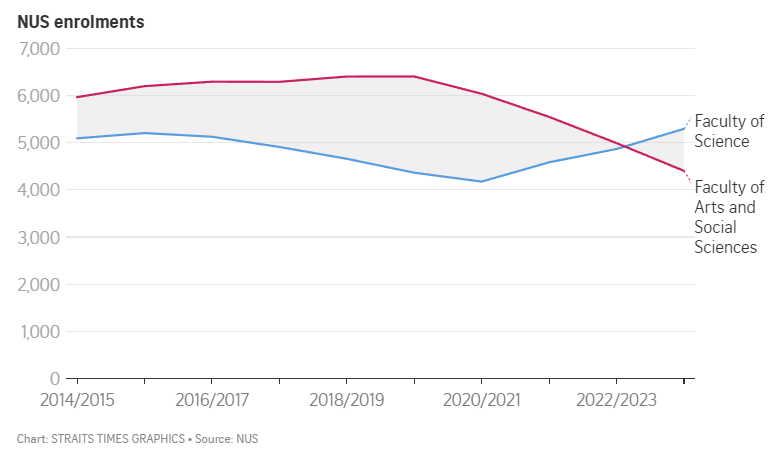
Falling enrolment numbers at the National University of Singapore’s (NUS) arts and social science faculty suggest that people may be valuing degrees in these areas less and less.
NUS’ Faculty of Arts and Social Sciences (FASS) has seen enrolment shrink by nearly a third since 2019, despite climbing steadily in the years before that.
The Straits Times (ST) reports: “The faculty had around 6,400 undergraduate students and was NUS’ largest during the 2019/2020 academic year – a number which fell to around 4,400 in 2024, enrolment records from the university’s website showed.”
Some reasons aren’t hard to guess – such as student demands and pressures to study subjects that will lead to better pay and career progression, according to students, experts and NUS staff interviewed.
After all, arts and social science students often have lower employment rates than their batchmates from the same university. Falling enrolment for the humanities is also happening at universities around the world 🌍.
With greater interest in programmes such as computing, artificial intelligence, data science and analytics, it is hardly a surprise that enrolment for arts and social sciences programmes has correspondingly fallen.
As much as we talk about how Singaporeans increasingly desire meaning and purpose in their jobs, we’re still a pragmatic bunch 💰.
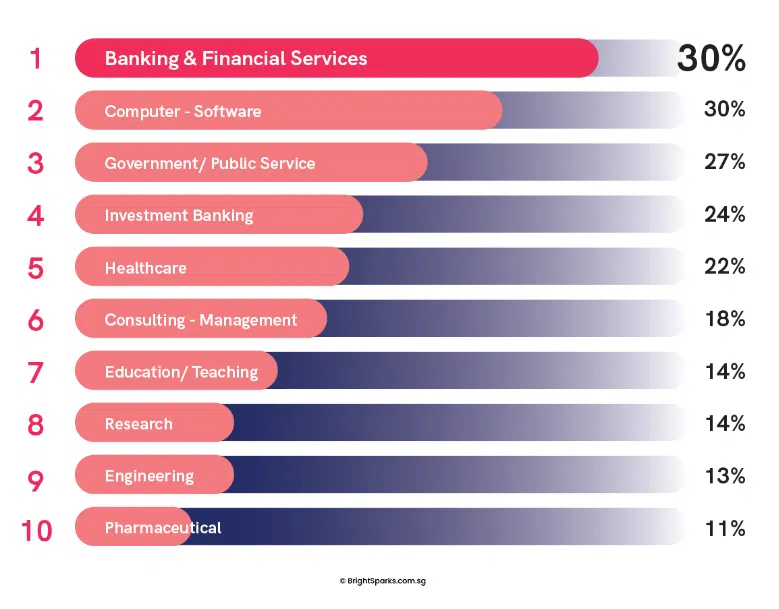
In an annual survey asking top-performing junior college and International Baccalaureate (IB) students which sectors they want to work in, those known for high-paying jobs still top the list.
But there’s one more reason for the falling FASS enrolment – it’s now harder to get in.
In 2020, NUS combined FASS with the Faculty of Science to form the College of Humanities and Sciences.
Before the change, A-level applicants needed a minimum of three Bs and one C – or about 75 rank points – to enter FASS. Now, it’s one A and three Bs, or about 78 rank points.
🎓 Passion or prospects?
Many students face a dilemma when applying for university: Should I pick a subject I’m passionate about or something that has better career prospects?
My parents used to say to me that it didn’t matter what subject I chose, as long as I had a degree 📜.
I don’t think that’s as true today as it may have been in my parents’ time, given that there are currently many more job applicants holding university degrees, so your choice of major is likely going to have more of an impact when applying for your first job.
But it’s far from the only thing employers look at when hiring. Several surveys suggest that companies are increasingly prioritising skills over academic qualifications.
As much as people might clown on arts degrees, the value of a humanities education cannot be understated.
“A lot of attention in the last decade may have been focused on science, technology, engineering and mathematics (STEM),” says Hwang Siew Ling, founder of interview and communication coaching firm Discovering Potential.
“But what many do not realise is that the arts and humanities majors offer students a wealth of skills that cannot be replaced by technology.”
These skills – critical thinking, logical debate, cultural understanding, communication, questioning and reasoning – are often underrated 🧠. However, they are also important in the workplace, says Hwang, who coaches students for their scholarship, internship and university entrance interviews.
If you’re a humanities student worried about your job prospects, there are plenty of industries that hire across all disciplines, including banking, business and tech. In fact, a survey of Singaporean university grads in 2019 found that more than half work in a job unrelated to their degrees.
And if you’re undecided on a major, consider that it’s going to be tough to find the motivation to complete three or four years of university and work in a field that you have zero interest in. Plus, you’re more likely to perform better – in school and at work – in an area you’re passionate about.
On the other hand, if the degree you’re interested in is in a niche field, be realistic about the career choices that will be available to you, especially if you’re taking a student loan and have an immediate need to pay it back.
TL;DR
- Enrolment at NUS’ Faculty of Arts and Social Sciences has shrunk by nearly a third
- The humanities have a reputation for poor employability after graduation
- But it can equip students with skills useful in the workforce, even if they are less marketable
- Picking a university degree solely based on your passion is as bad as choosing a course you hate because it promises better career prospects
Copyright SPH Media. All rights reserved.
TRENDING NOW

DeepSeek founder Liang Wenfeng becomes the world’s richest AI model creator

A new kind of ‘ceasefire’ between US and Iran where talks, strikes are part of the same process

Early payout from Philippines’ Maharlika Investment Fund raises eyebrows over its true nature

Family businesses fail when members overstep their roles


