
🐺 Beware the inflated job title

Straight to your inbox. Money, career and life hacks to help young adults stay ahead.
- Find out more and sign up for Thrive at bt.sg/thrive
💬 Corporate gibberish

The hilarious proclamation by a KTV lounge patron that “we aren’t gangsters, we’re ACS boys” got me thinking about how people working in dubious professions can learn to market themselves, and we took a dig at this on Instagram.
But even outside of dodgy jobs, isn’t that what everyone in the corporate world does? How many times have you read through an entire job description but still have absolutely no clue as to what the role’s about?
For example, take this job ad for the role of Project Management Office Lead, Customer Growth Engine at a tech company.
Leaving aside the mouthful of a job title, the responsibilities stated include owning “the pipeline governance cadence across CE, Sales, RSO, and Customer Experience” and establishing “regular roll-ups of business growth data and account insight”.
Huh?
To someone with 12 years of project management experience – for whom that hiring notice was written for – owning “the pipeline governance cadence” may be a perfectly comprehensible description.
Navigate Asia in
a new global order
Get the insights delivered to your inbox.
But we also belong to a world where fresh graduates are given fancy-sounding titles previously reserved for the top brass.
🕳️ A director of no one
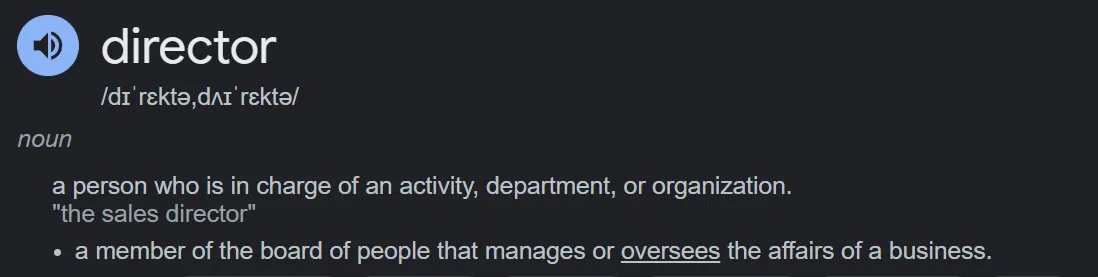
Three years ago, while my entire graduation batch struggled to find a job during the Covid pandemic, I found out that my friend got hired by a government ministry as an assistant director.
Director? As a fresh grad? Intrigued – and partly jealous – I asked him about it. It turned out that all 13 members of his team – mostly fresh grads – were given the same title.



It was a contract job that involved speaking to company executives about government grants. The ministry probably gave them a nice-sounding title so that these company bigwigs wouldn’t feel offended sitting through meetings with grunts, he tells me.
And no, the pay was nowhere near a level deserving of that title, he adds.
I e-mailed the Chief HR Officer of the Public Service Division (PSD) for comment on this earlier this week but did not receive a response. A spokesperson for the PSD did, however, tell The Straits Times that public agencies decide on job titles by taking into consideration the “operating and business contexts, and the relative job scope of the role compared with other positions within the same agency”.
Inflated job titles don’t just exist in the public sector. Last week, recruitment agency Robert Walters called out this seemingly growing practice, saying it may create problems for employers and employees alike.
In a statement last week, the company said it found a 24 per cent increase in the number of job positions with the words “manager” or “director” on LinkedIn for professional roles intended for those with just two years experience.
The practice of inflating job titles allows companies to compensate for inadequate pay or advancement opportunities and can be done to keep workers loyal to the company, says Robert Walters Singapore’s country manager Monty Sujanani.
“By promising a nice business card, organisations think they become more attractive to candidates,” he tells me in an e-mail interview.
👎 The downsides
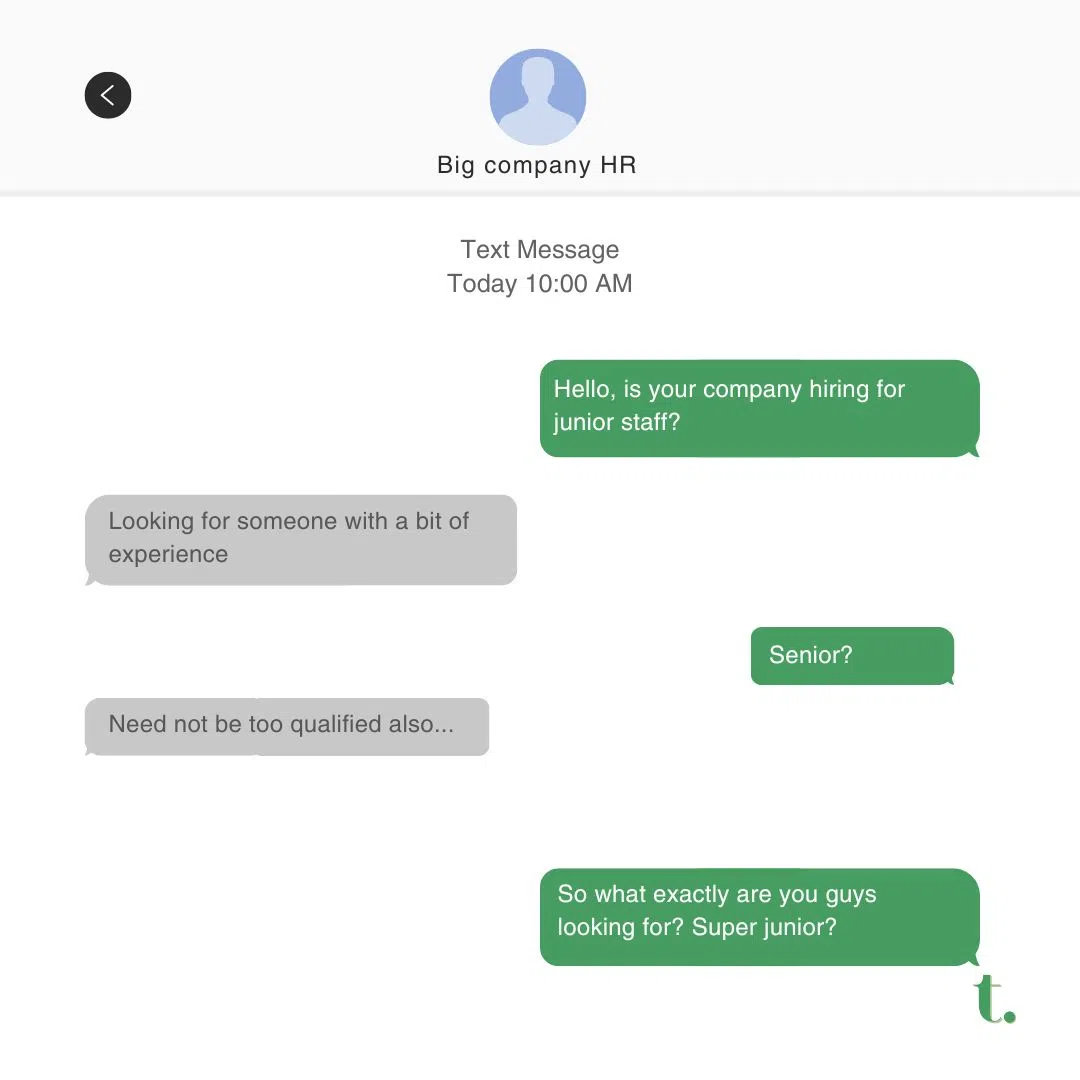
Still, the question remains: What’s the harm of this practice? Isn’t it a good thing for junior workers like us to have grandiose-sounding job titles to zh’ng our CVs?
Well, not really. Here’s why:
- Junior workers with high-level job titles may struggle to land a role appropriate for their experience at a new job if their prospective employer thinks they’re overqualified
- Offering better-sounding job titles can be a way for companies to appease workers without paying more, as I mentioned earlier
- This practice can lead to jealousy and resentment among colleagues, such as when a new hire comes in with a seemingly more senior position
Inflated job titles can even lead to workers being shortchanged.
In 2018, Member of Parliament Patrick Tay wrote about how some bosses inflate an employee’s job title to avoid paying them overtime. Such cases, however, are rare and whether a person is entitled by law to overtime pay depends on the scope of the job rather than the words in the job title, the Ministry of Manpower said then.
🤷 What can we do?

As junior workers, the reality is that there isn’t much we can do about it. If a job opportunity presents itself, I think it would be foolish to pass on the offer because the job title is overblown.
What we can do is to look beyond job titles when searching for jobs and to assess potential opportunities based on the job description, says Robert Walters’ Sujanani.
If the job description reads like the Project Management Office (PMO) Lead example above, you could get the company recruiter to explain the scope of the role to you in plain English if you get a call back after applying.
For those whose job titles don’t match their actual roles, Sujanani suggests not altering the job title in one’s CV. This is to avoid any potentially awkward situations that could arise should the prospective company decide to conduct a background check.
Instead, be transparent during your job interviews and highlight the scope of your work, rather than focusing on the job title, he suggests.
And if you’re thinking of embellishing your own job title to get a better chance at a new job, don’t even try. Interviewers can tell when your title doesn’t match your actual skills, Sujanani says.
Not to mention the fact that resume fraud is illegal.
TL;DR
- Looking at job titles alone, it is increasingly hard to tell whether a job is for a junior or senior role
- A recruitment firm found a 24 per cent increase in manager and director positions for workers with two years experience
- Inflating job titles can be a way for companies to appease workers without paying more and may cause confusion and resentment among employees
- In your job search, look beyond titles and be transparent with interviewers about your current scope of work
Decoding Asia newsletter: your guide to navigating Asia in a new global order. Sign up here to get Decoding Asia newsletter. Delivered to your inbox. Free.
Copyright SPH Media. All rights reserved.
DeeperDive is a beta AI feature. Refer to full articles for the facts.
TRENDING NOW

Shelving S$5 billion office redevelopment plan proved ‘wise’ as geopolitical risks mount: OCBC chairman
OCBC is said to emerge as lead bidder for HSBC Indonesia assets

Middle East-linked energy supply shocks put Asean Power Grid back in focus

Eurokars Group introduces rental car franchises Enterprise Rent-A-Car, National Car Rental, and Alamo to Singapore


