
🙋🏻♂️ Finding the right mentor

- Find out more and sign up for Thrive at bt.sg/thrive
✅ Mentor checklist 101
Few fresh joiners realise the value of a mentor – until they actually come across someone more experienced who can help them grow in their careers through their advice and guidance.
To be sure, there’s no one way to land a mentor. You might find yours at an internship, a job, or even in less formal settings, such as school.
A mentor doesn’t always have to be a superior or supervisor, either. Seniors from school, for instance, can often provide guidance that you may find more relatable without actually having to use the “mentor” label.
In the process of figuring out my career, I’ve been able to glean useful insights from peers at work who are three to four years ahead of me. It was nice that they were able to empathise with certain issues that I met with at work (that they did too years ago), and suggest constructive solutions that worked for them. This has helped me to navigate potential minefields and make decisions at work.
Be it formal or informal mentorships, it’s most important (as a mentee) to be clear about what exactly you are looking for, and who can best answer the questions you have.
“When looking for a mentor, it is important to consider what career needs you have at present,” says Saumitra Chand, a career expert from Indeed, in an interview with Thrive. “What qualities are important to you? What do you hope to gain from a mentoring relationship?”

Whatever your needs, though, there are some key qualities a mentor should have. Keep a look-out for these attributes as you embark on your search:
- Expertise in your domain: A mentor should ideally have proficiency in the field you’re enthusiastic about. This enables them to furnish relevant guidance and counsel tailored to your vocational aspirations.
- Supportiveness: A mentor should be supportive and uplifting. They should be an individual with whom you feel at ease discussing both hurdles and accomplishments in your career.
- Candour: Honesty and straightforwardness are important. A mentor should be able to provide constructive feedback that fosters personal and professional growth.
- Motivational essence: A mentor should be able to motivate, inspire and propel you towards accomplishing your career objectives.
On the other hand, some people might not be suitable mentors because of certain traits they have. “Not everyone possesses the aptitude to be an effective mentor,” says Chand. “Even with the necessary skills and time, some individuals may lack the inherent ability to mentor successfully.”
He adds: “For example, if the mentor in question tends to exert control instead of offering guidance in the relationship, effective mentorship could be compromised.”
In other cases, some mentors and mentees are simply a bad match. Some red flags 🚩 that a mentee-mentor connection is unfavourable include:
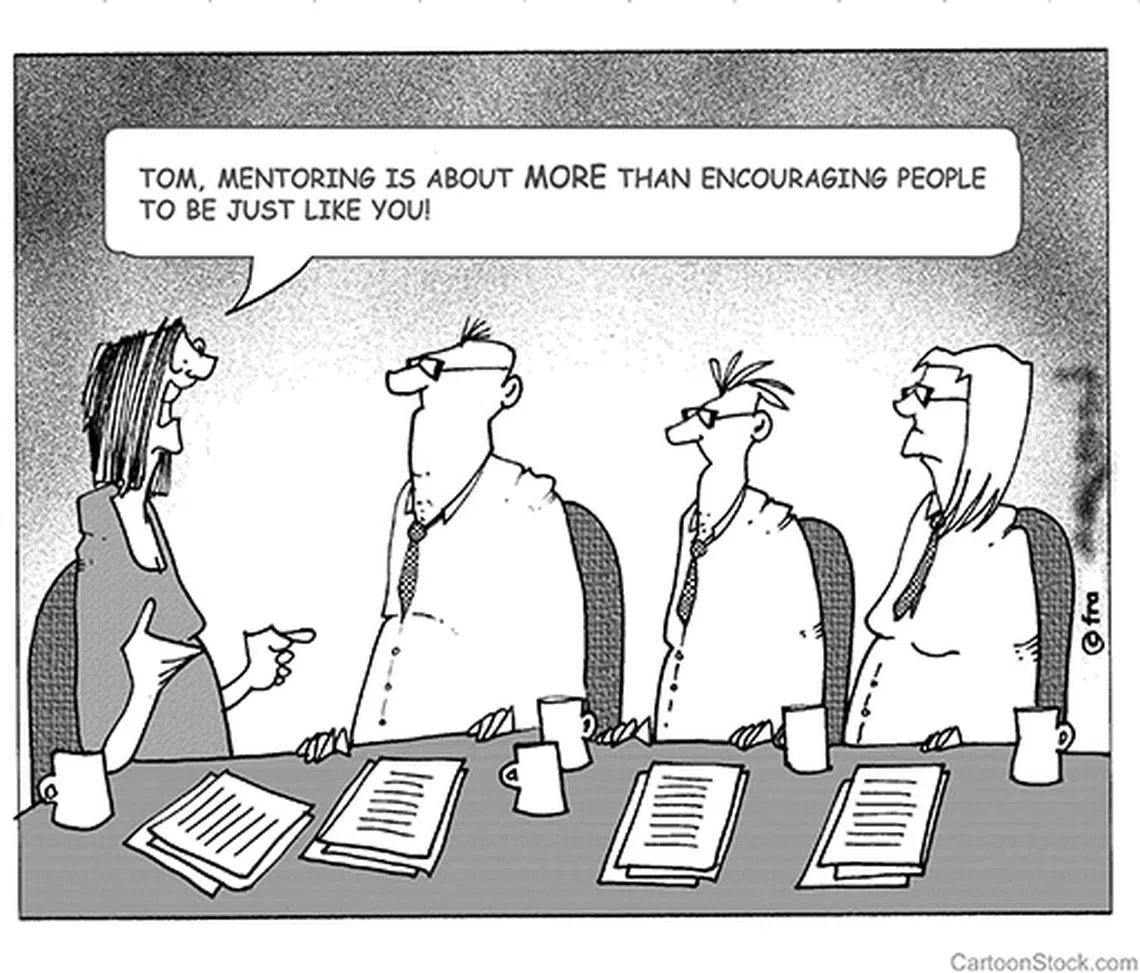
- Dominating conversations: While much can be learnt from a mentor’s sharing and experiences, a good mentor should listen to any queries you may have in your career journey to help you effectively.
- Unwillingness to adapt: Both mentor and mentee should be free to express their honest (but respectful!) opinions, including about the mentorship. As a mentee, it’s a given that your mentor should tell you how you can improve yourself. At the same time, you should have the space to provide feedback on how you may learn better from your mentor. If either party is unwilling to adapt, the mentorship is unlikely to be productive.
- Lack of respect: For example, a consistent emphasis of one’s superiority as a mentor over the mentee can disrupt open communication and mutual learning. Likewise, displays of defiant or rude behaviour by a mentee signal insubordination and disrespect.
- Incongruence of values between mentee and mentor would hinder a productive mentor-mentee relationship due to an incompatible outlook on growth. For instance, if a mentor does not believe in work-life balance but it’s a big priority for the mentee, it may be tricky to discuss how to progress in one’s career.
Sometimes, if conversations with a mentor feel a bit off, it’s okay to back away from the relationship. Ultimately, you should be choosing what advice and support works best for you and how you wish to grow in your career.
🧑🍳 Too many cooks?
Before you go off in search of all the mentors you need, it’s important to note that an excess of mentors can be counterproductive, which could lead to conflicting advice and a scattered focus in one’s career.
“Keeping multiple mentors may also dilute the depth of each connection and learning experience,” Chand explains.
However, having multiple mentors can be advantageous too, when managed carefully and chosen wisely. “Usually, each mentor will be able to contribute their own unique variety of insights, which emerges from their specialisations and individual experiences,” he says. While there is no magic number at play, one to two mentors should be enough for young adults getting started in their career. This would address the different key issues they face when starting out, without running the risk of mentor exhaustion and challenges in communication.
“Ultimately, it’s also on you to evaluate the guidance you need, manage the relationships you have with your mentors, and optimise their strengths and advice without overwhelming yourself,” says Chand.
TL;DR
- Be clear about what you want to achieve from your conversations with your mentors
- Sometimes, informal mentorship from seniors in school or work can offer varied and more personalised perspectives on how to progress in your career
- Quality > quantity; too many mentors could make you more confused about your career journey 😵💫
- Someone who is highly qualified or capable may not always be the best mentor!
- Good communication, empathy and positive guidance are more important qualities to look out for when it comes to mentorship
Copyright SPH Media. All rights reserved.
TRENDING NOW
Indonesian court upholds earlier dismissal of 2.28 trillion rupiah claim on Keppel unit’s land

Wilmar, Musim Mas among palm-oil firms in Indonesia under probe for suspected export under-invoicing
Xi Jinping has just rewritten the rules of US-China rivalry

China traders rush for exit after cross-border flow crackdown


