
What it’s like running a popular bag brand in your 20s

Straight to your inbox. Money, career and life hacks to help young adults stay ahead.
[SINGAPORE] I first got to know of the local bag brand Juno Jane when one of the co-founders reached out via e-mail.
Admittedly, I was impressed by their pitch: three undergraduates attempting to launch a startup, saved up five figures to kickstart their own bag brand. A year later, they hit six figures in revenue and now ship internationally.
But as inspiring as their backstory was, I’ve learnt from experience that some entrepreneurs can be great narrators.
So to get a more unfiltered look at what it’s like to run your own business, I decided to spend a day shadowing the founders.
I met them on a punishingly bright afternoon outside the National Gallery Singapore, where they were preparing for a product shoot later in the day.
Almost immediately, co-founders Kayleigh Low, 23, and Sophia Poh, 25, offhandedly told me that the freelance photographer they hired had cancelled on them about an hour and a half before our meeting.
Poh then casually reached for her own camera, announcing that she’ll be shooting instead.
Turns out, she had already been the team’s de facto photographer for their last five shoots. She tells me that photography is simply a hobby, and she has never undergone formal training.
A couple of minutes later, co-founder Li Wan Zhen, 23, joined us and we began talking about their entrepreneurial journey.




Our conversation drifted to the less visible parts of running a bag brand, from liaising with foreign manufacturers to stereotypes about goods made in China.
“When we started sourcing, we really ran straight for China,” Poh says. “A lot of the brands that we drew inspiration from, we actually peeled and looked inside the tag, it’s actually all made in China.”
“I think there’s a misconception that Chinese products are not of good quality,” she adds.
Early on, the founders switched between multiple manufacturers, many of whom failed to meet their product standards or were simply unresponsive.
“The very first (supplier) we worked with was actually through Alibaba, and it wasn’t great… so we shifted and found our own manufacturer through other means, and the (current) manufacturer is a lot more responsive,” Poh notes.
A week after our meeting, the founders made a trip to Guangzhou to visit their manufacturer.
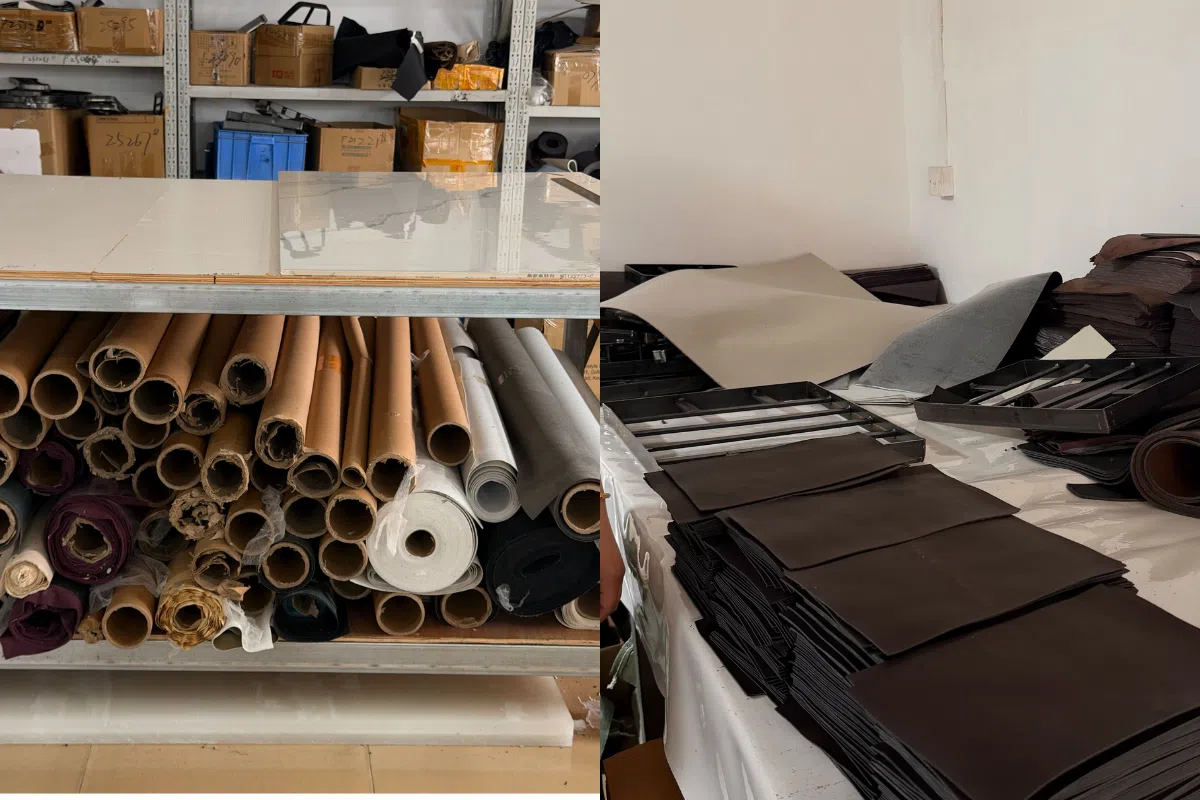
“Maintaining a good relationship with your manufacturer is quite important,” Poh says, adding that strong rapport tends to facilitate quicker implementation of product changes on the manufacturing end.
Later in the conversation, I brought up a review I had seen days earlier that had gone somewhat viral on TikTok, criticising Juno Jane bags for being too heavy.
A few people in the comments mentioned that they had intended to buy the bag, but would reconsider after seeing the video.
“Mentally, at first, we were a bit stunned because this is our first negative comment,” Poh says.
“I think the reason why the video gained so much traction is because we’re very big on TikTok… and people recognise the silhouette of our bag,” Low adds.
With more than 28,000 followers on TikTok, the founders say their strong social media presence has been key to growing their brand.
But having greater brand visibility online also has its downsides. Once a negative review – like the one I saw – surfaces, it can have a sizable impact on business sales.
Following the review video, the founders say sales from Singapore dipped for about two days, before recovering shortly after.
Prior to this, Juno Jane didn’t have formal complaint management protocols to fall back on. But this incident has since prompted them to create proper guidelines on how to handle complaints professionally going forward.
The shoot
The shoot itself began later than planned.
But once the model arrived, the founders sprang to their feet and our conversation came to a halt.
The model’s outfits were decided on the spot, locations were debated briefly, and props were occasionally abandoned in corners.
Poh handled the camera, while Low and Li filmed content for social media using their phones.
I noticed there was no formal division of roles, everyone did a bit of everything and worked with an unspoken understanding of who would do what. This experience vaguely reminded me of my university group project days.

The day went on in what I would describe as organised chaos. But I figured familiarity helped – knowing how your business partner thinks, and knowing when to step in or back, makes work more efficient.
Takeaways
There were longer stretches where nothing particularly noteworthy happened, just mundane tasks like packing and moving props or adjusting camera settings.
Turns out, most days don’t look like this. Outside of photoshoot days, the founders spend most of their time fulfilling orders or in meetings.
Seems like there’s no escaping this, even when you’re your own boss.
The difference is that when things go wrong, there’s often nobody else to fall back on.
What stood out to me was how adaptable the founders were. When something unexpectedly made a dent in their plans, they improvised and moved on.

For now, Low and Li plan to take on full-time jobs after graduating, while Poh already balances one alongside Juno Jane.
“As fresh graduates, we still feel like we have a lot to learn through our different careers that could also be relevant to our business. However, that’s not to say we won’t ever jump into the business full time,” Low says.
Looking ahead, Juno Jane’s founders plan to grow their team, and finally secure an office space, and eventually open a physical store in Singapore.
And perhaps by then, Juno Jane would no longer just be a side hustle.
Decoding Asia newsletter: your guide to navigating Asia in a new global order. Sign up here to get Decoding Asia newsletter. Delivered to your inbox. Free.
Copyright SPH Media. All rights reserved.
TRENDING NOW

LTA proposes combining car COE categories, adding rebate-surcharge system

StarHub to acquire MyRepublic’s mobile business amid ongoing telco consolidation

DBS, OCBC, UOB rout lops billions off STI as inflation, rate concerns spook investors

Grab CEO’s wife Chloe Tong on life with Anthony Tan and finding her purpose


