
💬 Why we keep using corporate jargon (even though we hate it)

Straight to your inbox. Money, career and life hacks to help young adults stay ahead.
[SINGAPORE] I’ve never been one to use much office lingo. Maybe it’s the journalism training. Back in school, my professor made us read On Writing Well, in which author William Zinsser rants about jargon before writing:
“Good usage, to me, consists of using good words if they already exist – as they almost always do – to express myself clearly and simply to someone else. You might say it’s how I verbalise the interpersonal.”
Or as Kevin Malone from The Office put it a little more bluntly:

Recently, a colleague who joined us from an ad agency has been catching me off guard with her fluent corporate lingo, which she uses so unironically. This week alone, I learnt: “sense check” and “touchpoints”.
And just a few days ago, I came across a press release about the National Healthcare Group renaming itself to NHG Health. (Do yourself a favour and skim it if you get the chance – it’s a jargon gold mine.)
These episodes led me down a rabbit hole: Where did all such corporate lingo come from?
🎖️ Military origins
A lot of the jargon we toss around today traces back to the end of World War II. As factories swapped tanks for cars and soldiers returned to the workforce, military lingo followed. Words like “strategy”, “tactics” and “logistics” came straight from battlefields into boardrooms.
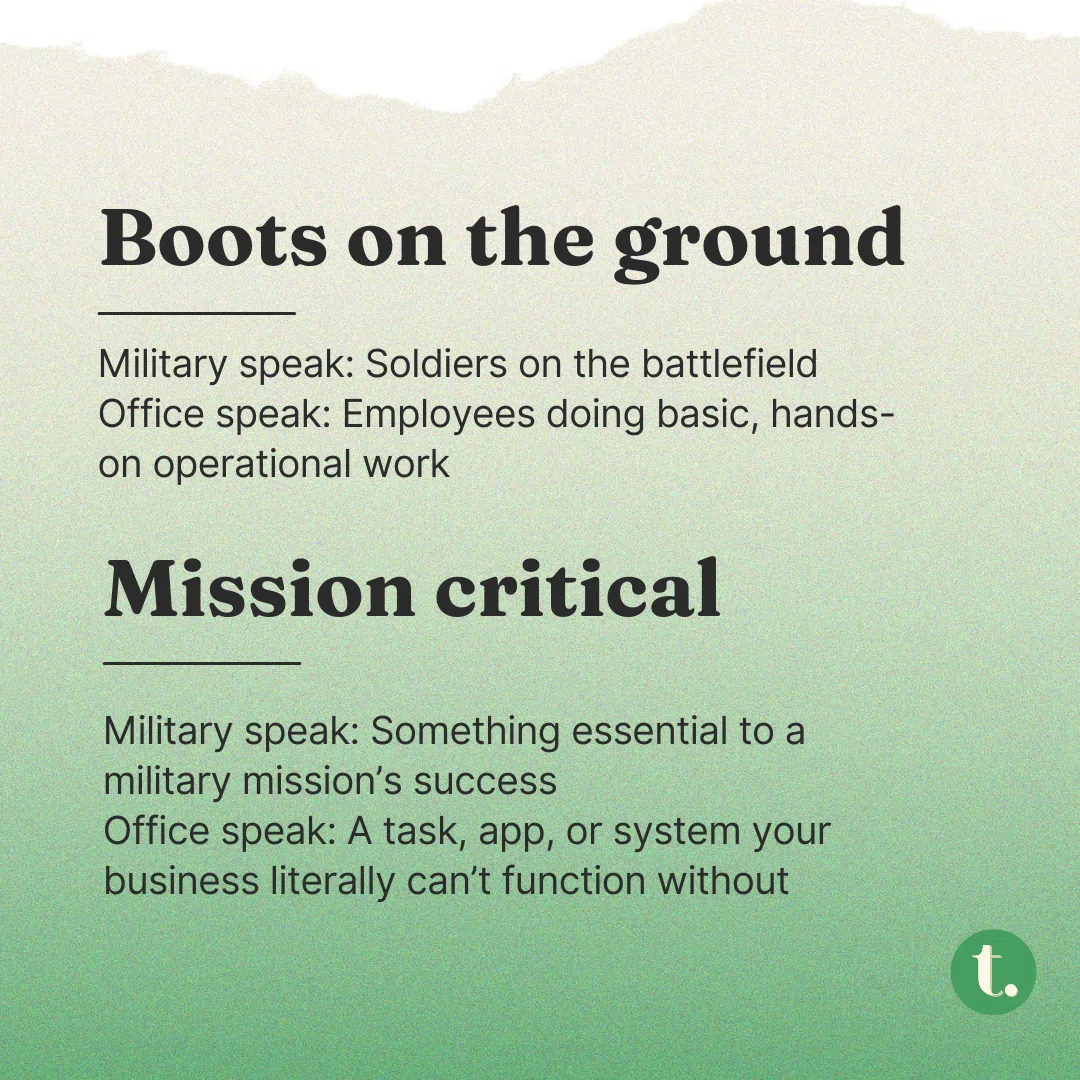
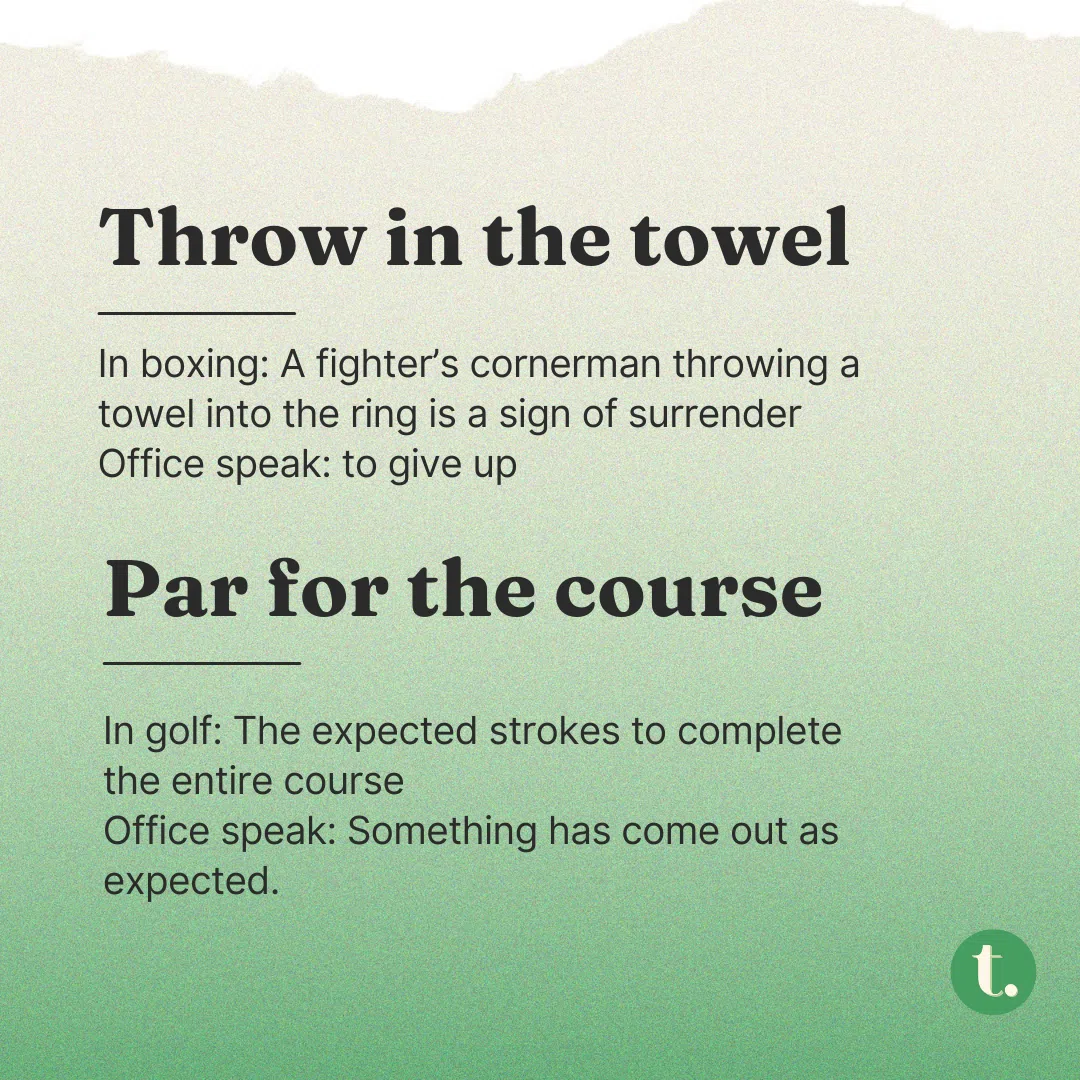
The competitive nature of business made it a natural fit for other sports terms, too.
🧑💼 Borrowed prestige
Linguists have observed that we often adopt language from whatever industry is the most glamorous at the time. These words become fashionable and influence mainstream business language.



1960s: The Mad Men era
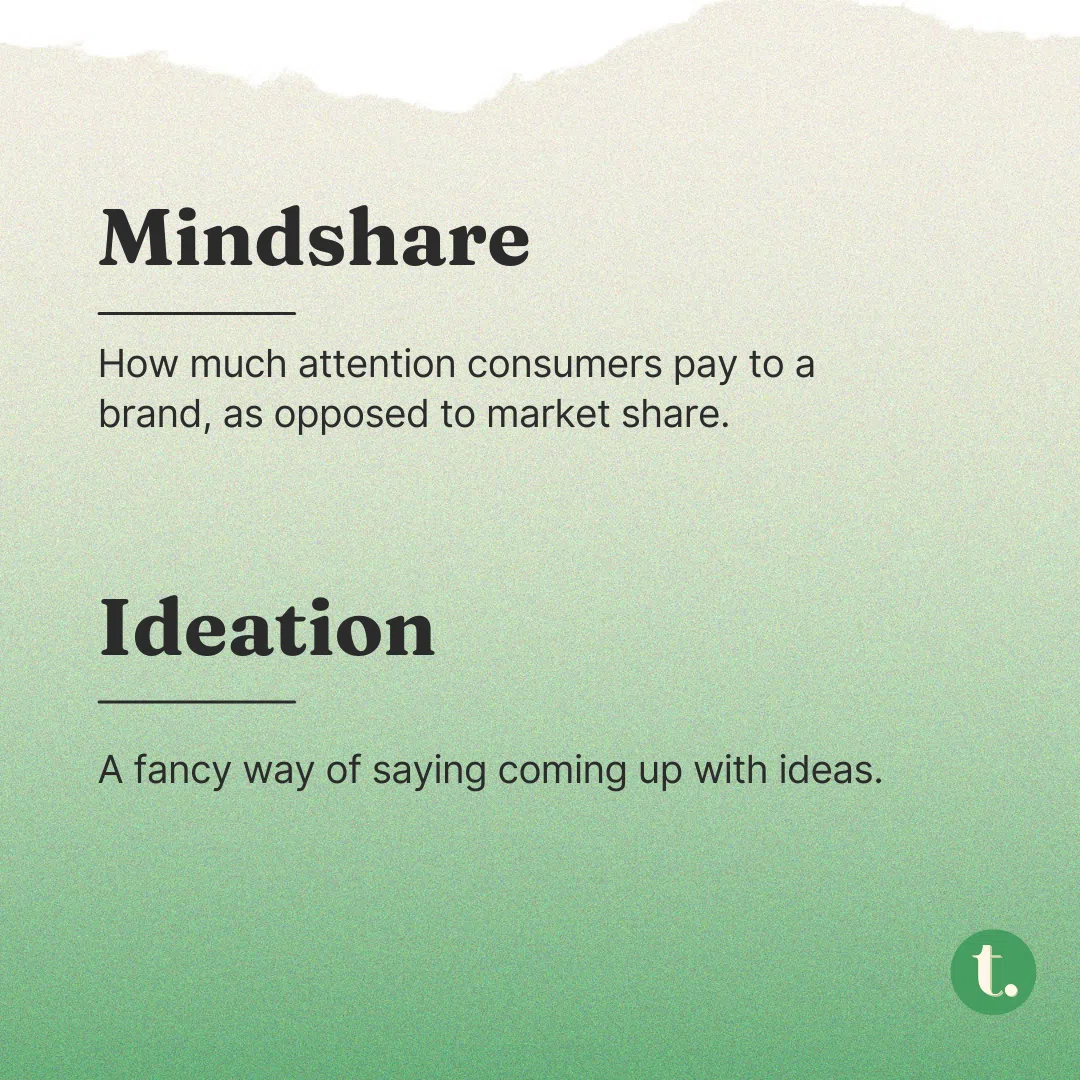
The golden age of advertising brought us phrases like “hard sell”. Advertising gurus later came up with more:
1980s: Wall Street’s heyday
Bankers and stockbrokers were seen as high-status figures and became symbols of wealth and power in Western pop culture (e.g. the film Wall Street).

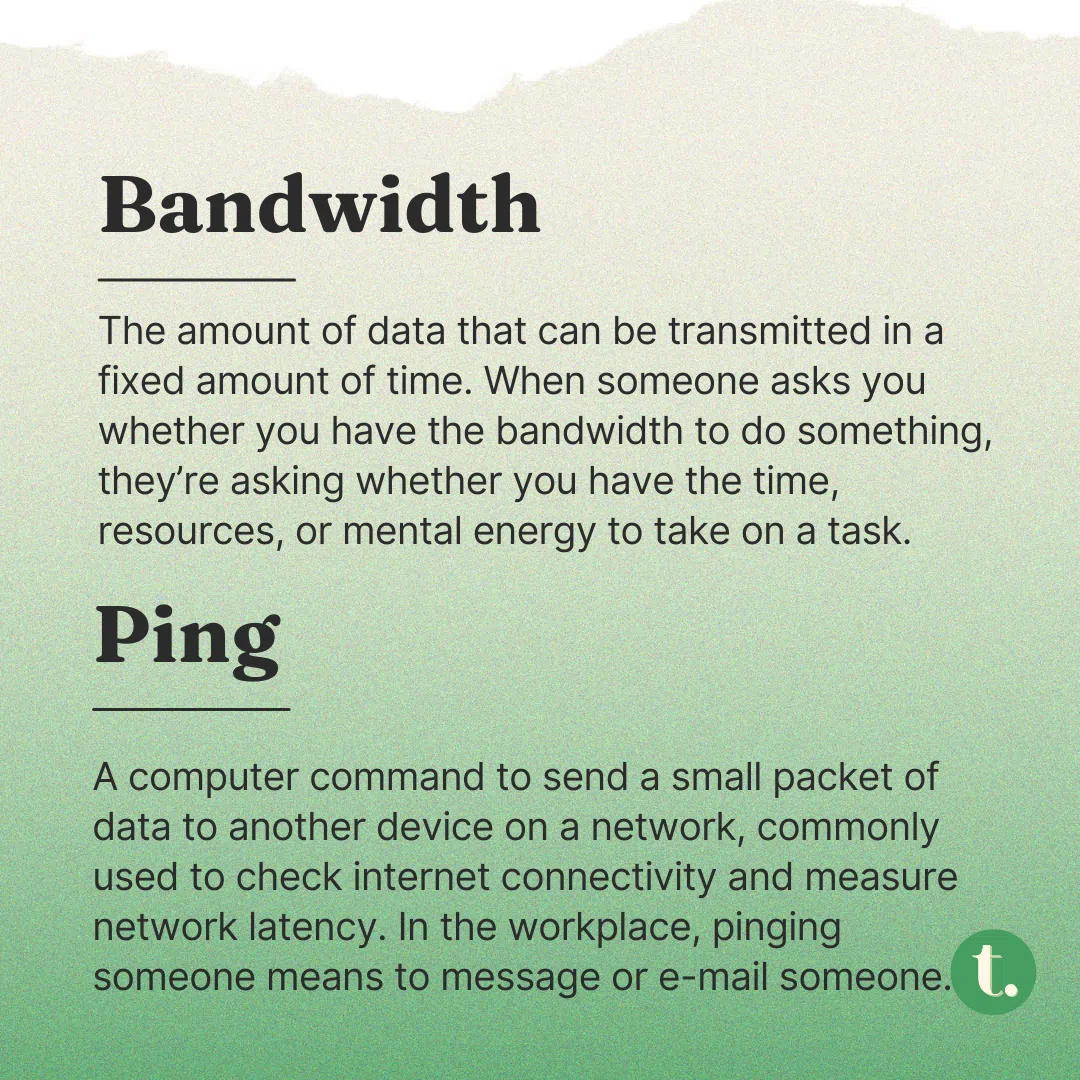
2000s onwards – The tech boom:
Tech and IT slowly shed their nerdy image, and everyone wanted to be a start-up founder.
🤷 Why do we use jargon anyway?
Jargon acts as a linguistic shortcut, allowing people in the same field to communicate quickly without spelling everything out.
It also signals belonging. Knowing when to drop a “sense check” and “circle back” can be a sign that you’re part of the in-group, and that you know how things work around here – or, crucially, pretend that you know.
That’s not necessarily a bad thing, but it can get problematic when jargon is used to exclude people who aren’t familiar with the lingo. Or, worse, when it’s used to mask uncomfortable truths.
Take this inexhaustive list of euphemisms the consulting industry came up with to describe firing people: Cut some capacity, restructure, streamline operations, create operational efficiencies, redundancies, reducing capacity, managed attrition, optimising headcount, rightsizing and resource action.
🤬 Should we use jargon?
Proponents of office lingo may argue that using it helps you seem more professional and less crude or direct. While I disagree, I believe there’s a difference between being clear and being brash.
For example:
- Instead of “Let’s take this offline”, saying “Can we deal with this later?” might sound too abrupt. Try “Let’s discuss this after the meeting.”
- Or say a colleague pitched an idea and you want to ask: “What’s the value-add?” Asking “What’s the point of this?” can seem dismissive of the idea, instead of a more neutral phrase like “How does this benefit the project?”
Jargon isn’t evil. Sometimes it really is the quickest way to get a point across.
The problem comes when it becomes a shield: to sound clever, avoid hard conversations or to make yourself feel like you belong.
The best communicators aren’t the ones who memorise the most buzzwords, but the ones who can explain things so clearly that even the most clueless nepo hire can understand.
So yes, it’s good to learn what “circle back” or “low-hanging fruit” means so you don’t get left behind in meetings. But you don’t have to pepper your emails with them to sound smart.
TL;DR
- A lot of corporate jargon was borrowed from battlefields, boxing rings and golf courses
- They also often get borrowed from the industry that’s the most glamorous at the time
- People love jargon because it makes them feel like part of the in-group
- It’s good to learn the lingo, but you don’t have to use it to sound smart
Decoding Asia newsletter: your guide to navigating Asia in a new global order. Sign up here to get Decoding Asia newsletter. Delivered to your inbox. Free.
Copyright SPH Media. All rights reserved.