
AI can now access your brokerage account. Should you let it?

Straight to your inbox. Money, career and life hacks to help young adults stay ahead.
[SINGAPORE] Last month, popular brokerage platform Interactive Brokers (IBKR) introduced a feature that lets users connect external AI tools – such as ChatGPT, Claude or Grok – directly to their trading accounts.
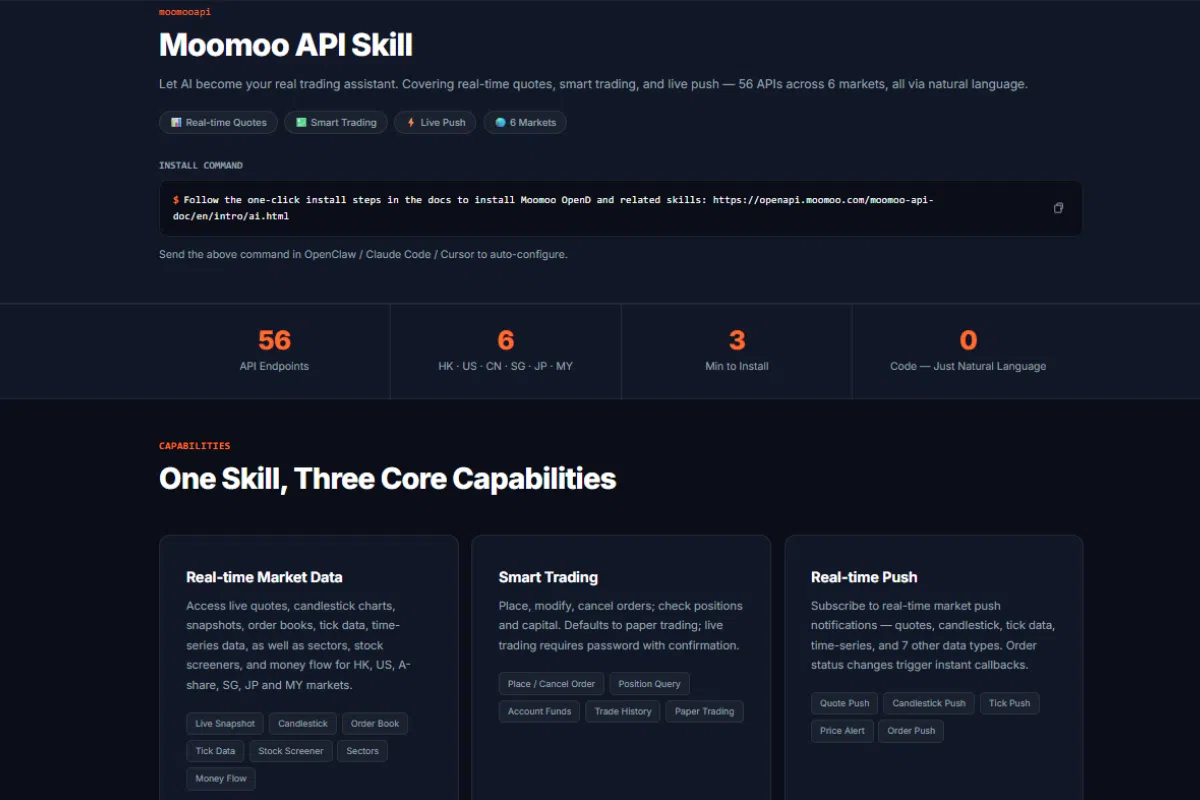
Earlier this year, in April, Moomoo launched a similar feature called Moomoo Application Platform Interface (API) Skills.
In a blog post, the company writes: “Instantly, your AI gains ‘eyes’ to watch the market, ‘ears’ to catch the news, and ‘hands’ to execute trades – transforming from a simple chatbot into a real digital trader working for you.”
At a time when many young investors are already turning to AI for investment advice, these features make the process more convenient. They no longer need to manually paste portfolio data into online chatbots or build their own integrations.
The upsides
Linking an AI tool to your brokerage account allows it to analyse and work with more data from your live portfolio in real time.
“Once linked, it can hold your full account picture alongside broader market context in a single conversation,” Bryan Chan, solutions lead at wealth advisory firm Providend says.
In the case of IBKR, your AI assistant can access your positions, cash balances, trade history, margin availability, and risk exposures, to name a few.
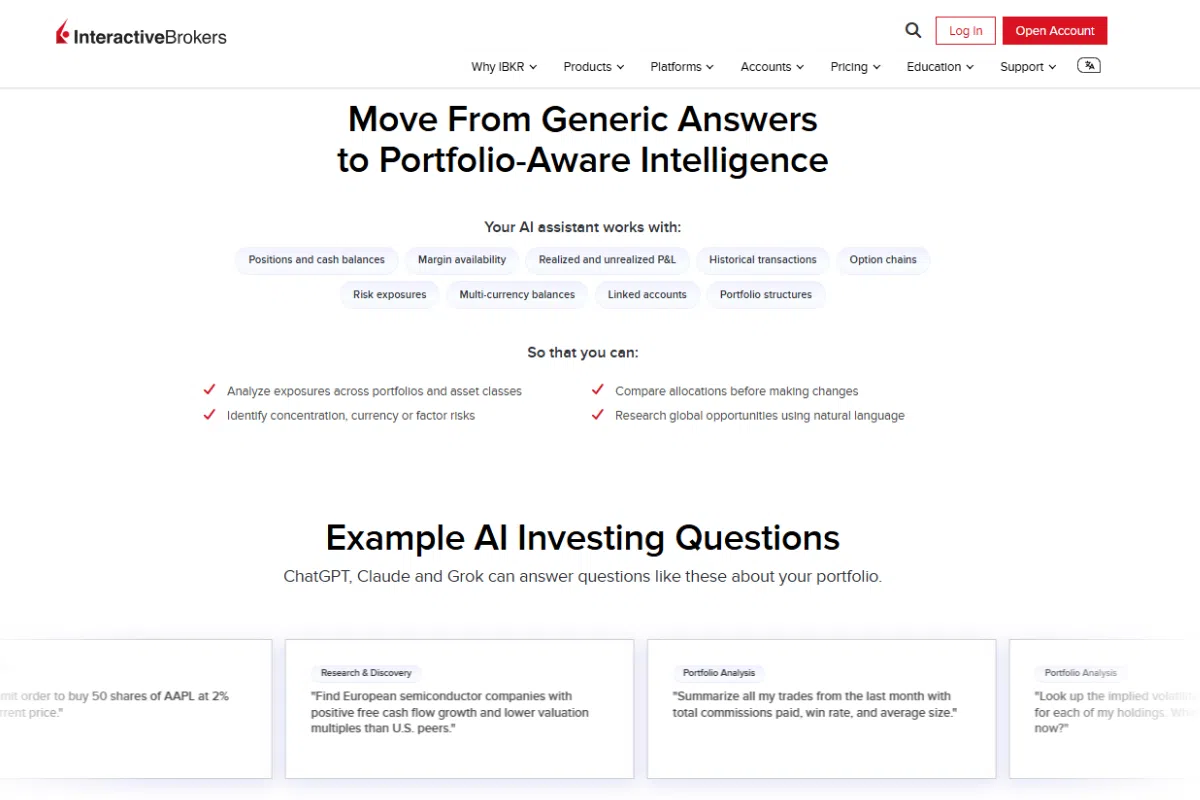
“An external AI can engage with the specifics of your situation more directly,” Chan says. Users can ask questions and receive more personalised answers.
While AI can prepare trade instructions on your behalf, IBKR and Moomoo both require your confirmation before any trade is placed.



And of course, the usual benefits of using AI for research also apply – whether they are completing heavy research legwork in seconds or connecting broader and deeper market developments and trends.
Unforeseen risks
Sure, these tools give retail investors access to something once limited to experienced developers and traders.
But it also removes some of the friction that may help investors slow down before making a trade.
Experts who spoke to The Business Times have warned that AI tools may amplify the risk of overconfidence and overtrading, particularly among less experienced investors.
Because AI tends to be agreeable in nature, younger investors may be more inclined to chase market trends or trade more than necessary, especially when they do not have a clear investment strategy or understanding of the risks involved.
Providend’s Chan advises investors to take all AI-generated recommendations with a pinch of salt.
Even with direct access to one’s trading account, AI still lacks the broader context needed to provide truly personalised financial advice, he says.
“AI tools are not licensed financial advisers. They do not know your income, obligations, risk tolerance, or life stage, and a response that sounds well-reasoned can still be completely wrong for your situation,” Chan adds.

In fact, AI may not always be able to provide an actual investing edge.
As large language models draw largely from publicly available information, AI often relies on insights that the broader market has already priced in, Chan notes.
Gary Ang, former AI risk lead and investment risk head at the Monetary Authority of Singapore, adds that the bigger danger isn’t in the “obviously dumb answers”, but “wrong ones that sound plausible”.
For example, AI may reference outdated financial statements, pull figures from the wrong year or fabricate information – mistakes that may be difficult to spot when they appear credible at a glance, says Ang, who is now the founder of Quaintitative, an AI advisory firm.
This becomes even riskier when an AI agent is given permission to act on behalf of investors.
“The moment you connect, a company that isn’t your broker can see your holdings, your balances, and your trades. And if you give it permission to act, it can do more than look,” Ang says.

AI is also prone to prompt injection attacks, where hidden malicious instructions embedded within websites or e-mails are used to trick it into executing unauthorised actions, he adds.
A checklist of precautions
So, before granting an external AI tool access to your live trading account, experts recommend:
- Using AI to understand, not to trade – unless you are a professional algorithmic trader
- Keeping yourself in the loop: Check whether every trade requires your approval or whether the AI can act independently
- Choosing reputable providers: Verify whether the tool and its provider are regulated, and understand how it handles your data
- Granting the least access necessary: Where possible, give AI read-only access or limit it to a small account
- Minding what you paste: Avoid sharing personal or account information and assume anything you enter may be retained
- Turning on security safeguards: Enable two-factor authentication
- Verifying everything: Treat every AI-generated figure, recommendation and analysis as unverified until you’ve checked it yourself
Decoding Asia newsletter: your guide to navigating Asia in a new global order. Sign up here to get Decoding Asia newsletter. Delivered to your inbox. Free.
Copyright SPH Media. All rights reserved.







