
Spending whey too much? A protein shortage could cost you more

Straight to your inbox. Money, career and life hacks to help young adults stay ahead.
[SINGAPORE] Over the past few months, I’ve noticed high-protein products creeping onto the shelves of my neighbourhood supermarket.
Then, seemingly overnight, an entire section of the dairy aisle was overtaken by high-protein everything.
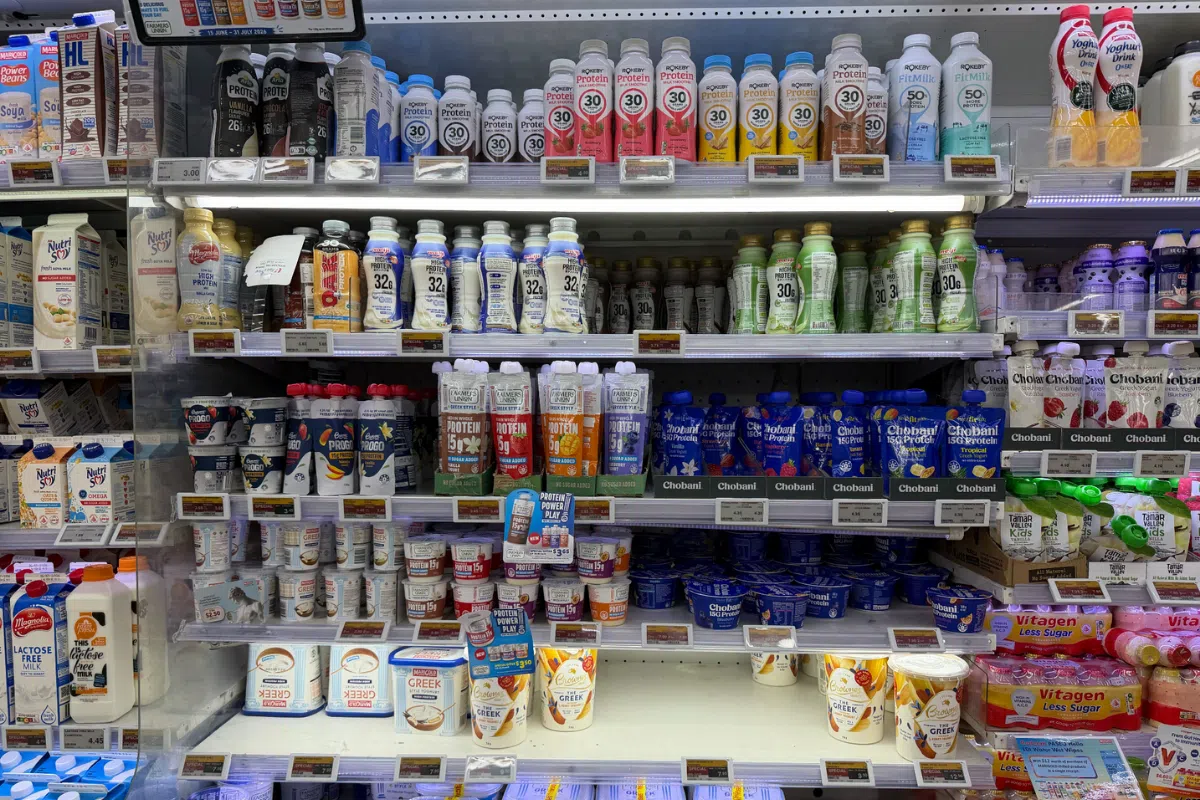
Across the island, FairPrice now offers more than 20 types of high-protein beverages and 20 varieties of high-protein yogurts across their retail and online platforms, a spokesperson for the supermarket chain tells me.
To meet the steady rise in demand for high-protein products, FairPrice Group has more than doubled the range of high-protein products over the last three to five years.
Anushree Khosla, managing director of 7-Eleven Singapore, says three in five of the 460 7-Eleven stores in Singapore now have dedicated protein-themed bays.
Two standout products are Rokeby’s protein shakes and CP-Meiji’s Low Fat High Protein Milk.
CP-Meiji’s high-protein milk, despite being launched only in February, has contributed to a 20 per cent overall growth in sales for the brand’s authorised distributor, Crown Pacific Beverage, says general manager Joseph Long.
Besides dairy, seemingly everything now has a high-protein option, from potato chips to popcorn and bread.
But as demand for protein-rich offerings grows, availability of whey protein – an ingredient widely used in protein shakes and snacks – is running out globally.



And if that squeeze reaches our local shelves, Singaporean consumers may soon have to pay more for high-protein alternatives.
A pricey diet
Consumers worldwide are actively increasing their protein intake, with Gen Z and millennials leading the trend, a report by consulting firm Bain & Company found.
But eating more protein doesn’t come cheap.
Protein-enriched products typically carry a premium over their regular counterparts. Despite the higher price, some also come in smaller portions.
A 350 ml bottle of high-protein Meiji milk costs S$4.95. That’s double the price of a larger 450 ml bottle of regular Meiji milk, which costs S$2.47.
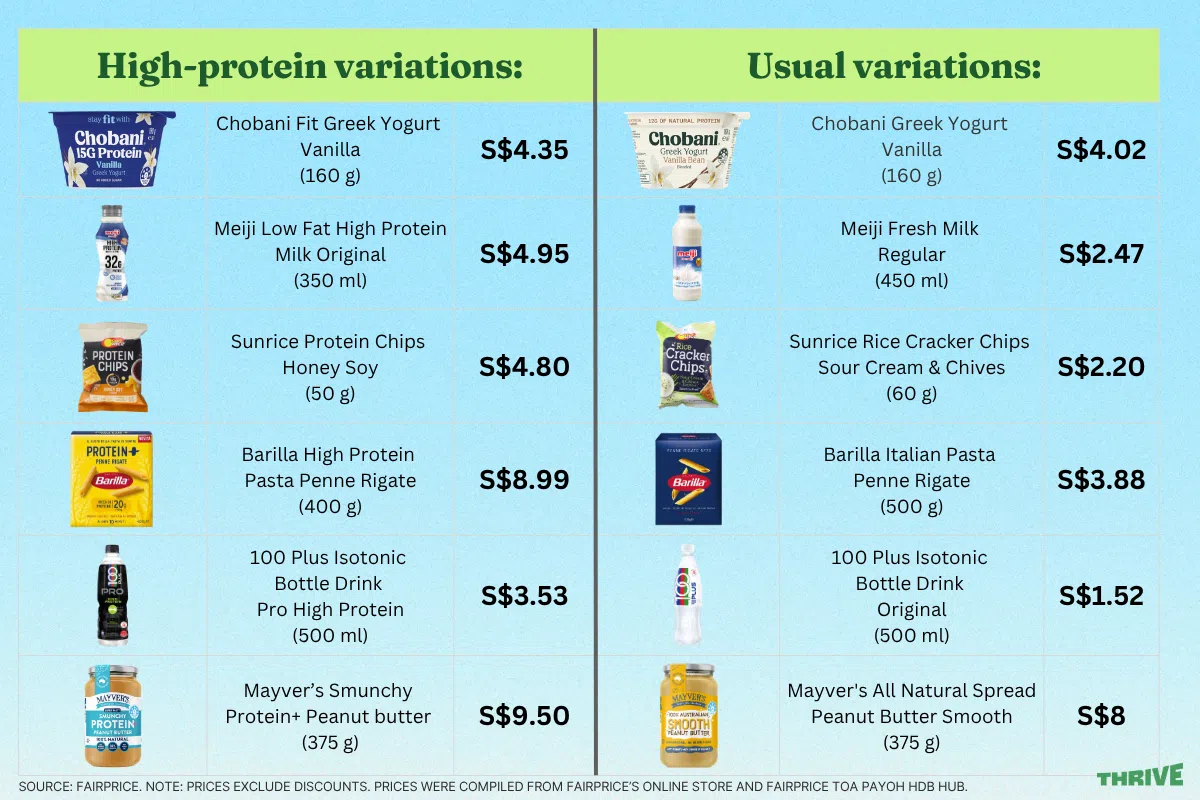
For consumers trying to chase their protein targets, these price differences can add up.
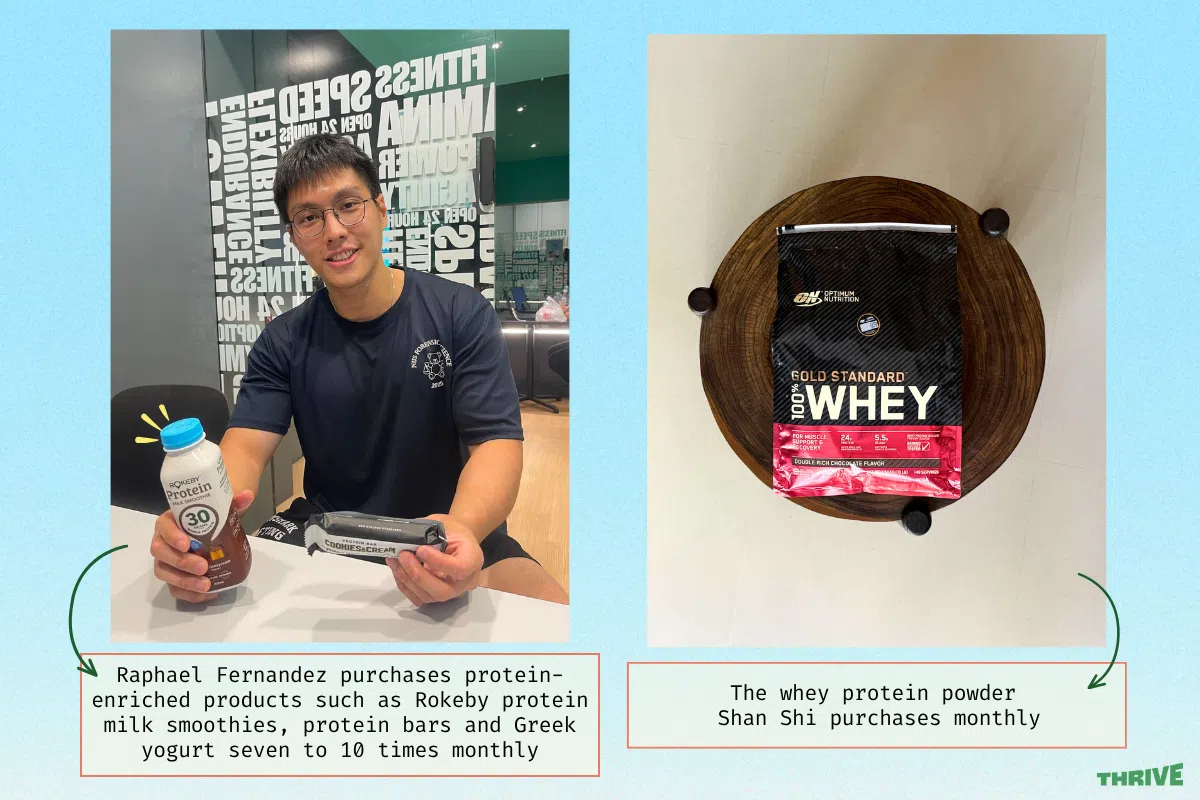
Raphael Fernandez, 25, spends up to S$180 a month on whole protein foods and protein-enriched products.
“Since I started to focus more on strength training and strive to hit my daily protein intake goal, my grocery bill has increased by roughly S$50 to S$80 per month,” he says.
Many fitness enthusiasts also turn to protein supplements as a relatively cost-effective and convenient way to boost their intake, but these too have become more expensive.
“I used to buy a 2 kg whey protein tub from Optimum Nutrition Gold Standard for S$85, but ever since the retail price of it inflated to S$100 to S$110, I had to switch to Muscle Tech instead,” he says.
Similarly, Shan Shi, 29, says a 4.5 kg bag of whey protein powder that he goes through every month used to cost about S$160 five years ago, but now costs about S$190.
“My benchmark is if it costs more than S$5 for 30 g of protein, then it’s too expensive,” he adds.
In total, Shi spends up to S$220 a month on protein products, which include occasional ready-to-drink protein beverages to make up for meals that are short on protein.
Global whey shortage
This may, however, just be the start of rising prices.
Whey, a byproduct of making cheese, is often used in protein supplement powders and protein-fortified foods in the form of a concentrate or isolate.
The sports drink 100Plus Pro High Protein, for example, gets its protein from whey protein isolate.
Globally, suppliers are struggling to keep up with demand, driven by healthier eating trends and growing use of weight-loss drugs. Users of GLP-1 drugs are encouraged to eat more protein to preserve muscle mass as they lose weight.
In the US, a significant exporter of whey, some suppliers have already sold out of whey protein concentrate for the rest of the year.
And prices of whey protein in the US have shot up more than 40 per cent on average in recent months.
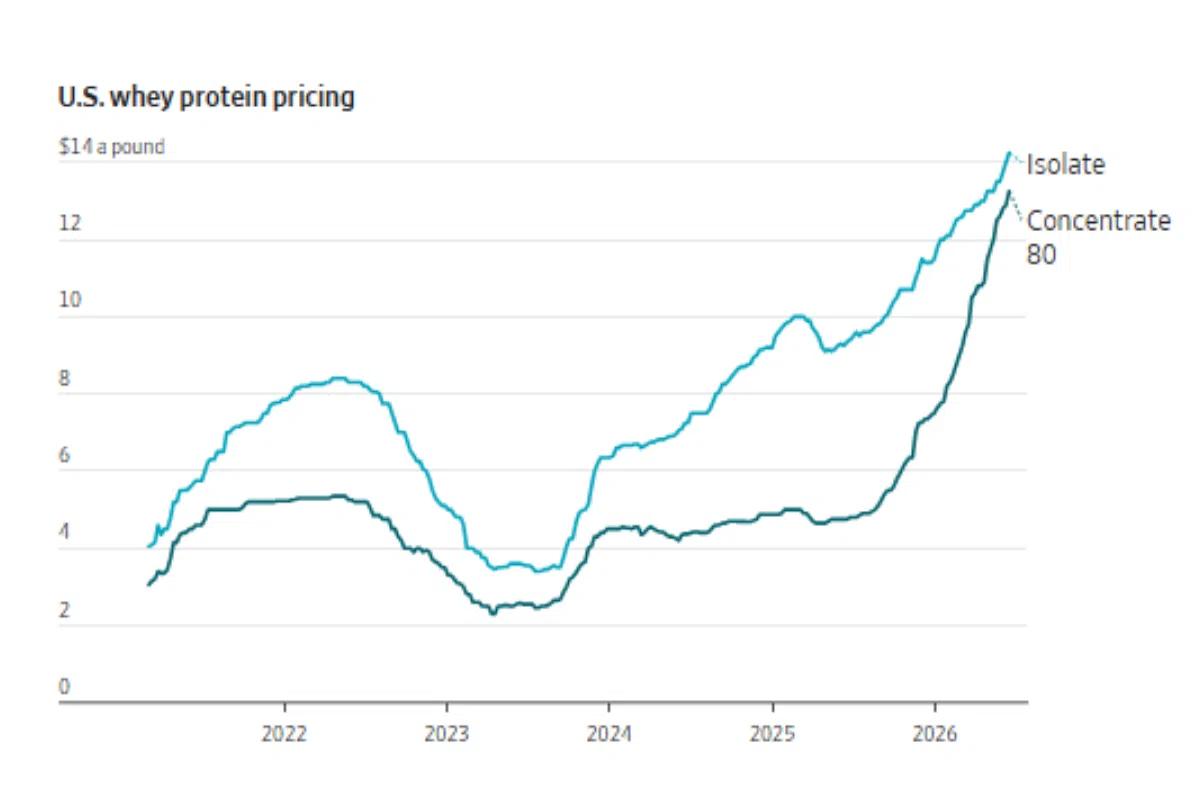
Across north-west Europe, food-grade whey protein prices have also climbed to record highs.
Some companies have started to move away from whey to milk proteins instead. But those prices have reportedly gone up too.
Tighter global constraints and higher costs may eventually filter through to Singapore consumers.
In 2025, the prices of protein powders brought in by Singapore-based distributor Woah Group rose by about 20 per cent. But just in the first half of 2026, prices have gone up by as much as 50 per cent, says chief executive officer and founder Edward Foo.
Woah Group distributes and sells brands such as Myprotein, Grenade, Labnosh and Ghost.
So far, the price increases have been contained to protein powders, but Foo expects prices of protein snacks and ready-to-drink beverages to increase too.
“As much as we try to mitigate the cost by delaying (price increases), it’s hard for us to sustain for a longer period.”
As for the popular Low Fat High Protein Meiji Milk, the price has remained unchanged since its launch in February and is expected to remain stable over the coming months, says Crown Pacific Beverage’s Long.
“However, continued increases in raw material costs amid global uncertainties may lead to a review of pricing next year,” he adds.
FairPrice Group says prices of its protein products have so far remained largely stable, while 7-Eleven Singapore says it is keeping a close eye to ensure supply remains steady to avoid price increases.
Look beyond the protein label
Still, a dietician tells me that shoppers should look beyond the protein label before assuming these products are the healthier choice.
“Protein‑enriched foods can help people hit their protein targets, but they are not automatically ‘health foods’,” says Diane Seto, senior dietician at Novi Health and a Singapore Nutrition and Dietetics Association accredited dietician.
Many high-protein products, particularly protein-fortified snack foods like chips, cookies, ice cream, or processed meats that are high-protein products may still be ultra-processed and contain higher added sugars, sodium or saturated fat, says Seto.

Packaging can also be misleading. Some highlight the total protein per pack on the front of the package, rather than per serving or per 100 ml.
This makes them appear significantly higher in protein, when in reality, the protein content may be similar to comparable products, Seto notes.
While high-protein milk can be a useful replacement for regular milk in certain situations – as a post‑exercise drink or for someone with a small appetite – these products are still best treated as part of a varied diet rather than a complete substitute for whole protein foods.
“Whole foods bring a wide range of nutrients that these products may not fully provide,” Seto says. For instance, fish offer omega‑3 fats that support heart health, and eggs and meat provide iron, zinc and vitamin B12.
Besides, if global whey shortages do end up causing the price of protein-enriched products to increase, whole foods may also be a better-value option.
Seto gives a few tips to keep in mind before splurging on protein:
- Most adults need about 0.8 g of protein per kg of body weight each day. Those who do regular resistance or endurance training may need about 1.2 to 2 g per kg per day
- Compare protein content per 100 g or 100 ml, rather than relying on the protein amount per package, to judge whether a product is truly higher in protein
- For everyday staples, choose minimally processed products with a better overall nutrient profile, instead of focusing on protein alone
Decoding Asia newsletter: your guide to navigating Asia in a new global order. Sign up here to get Decoding Asia newsletter. Delivered to your inbox. Free.
Copyright SPH Media. All rights reserved.