
Three young investor portfolios, reviewed by experts

Straight to your inbox. Money, career and life hacks to help young adults stay ahead.
[SINGAPORE] I recently asked a friend what his investing strategy was.
He thanked me for being so generous as to assume he had one.
Apart from putting 10 per cent of his salary into his company’s share plan, my friend doesn’t invest at all.
Another friend, meanwhile, holds most of his investments in tech stocks, hoping to earn big returns.
The contrast made me curious as to how other Singaporeans my age are investing.
So, I spoke to several investors in their 20s. Among those with an emergency fund and no major debt or financial commitments such as a mortgage, three broad investing styles emerged.
I then turned these into three hypothetical portfolios and asked two personal finance experts to rate them. Here are their responses, which have been edited for brevity.
The cautious starter
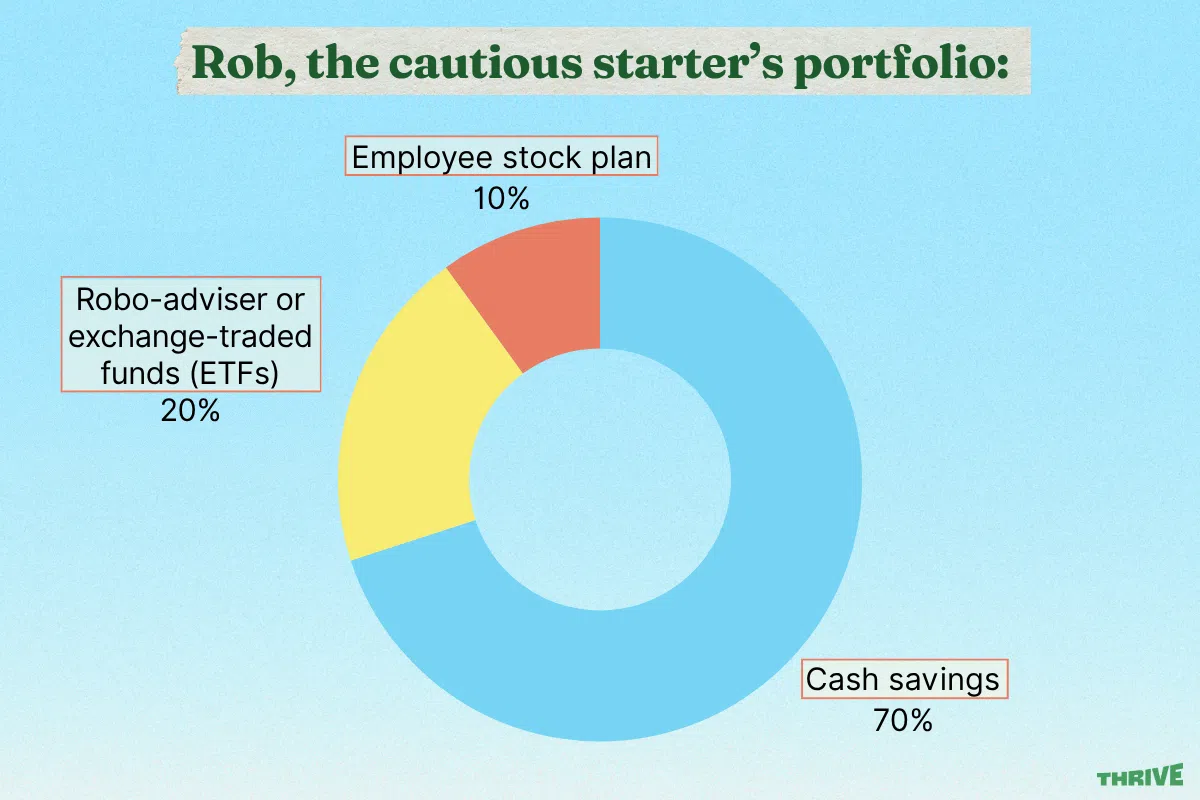
Rob prefers the security of keeping most of his money in the bank. He knows investing is important, but tends to follow the path of least resistance.
He puts 10 per cent of his savings into his company’s employee share plan because it is easy to set up and he does not have to think much about it. Another 20 per cent goes into a robo-adviser that invests in exchange-traded funds (ETFs), as he would rather leave the investing to someone else.



Nicole Ng, content strategist and client success lead, Beansprout:
This investor has a savings habit and has started investing, which is already a strong foundation. The portfolio is also simple and easy to maintain.
Diversified ETFs help reduce research time and lower the risk of picking the “wrong” stock.
However, holding 70 per cent in cash may be too conservative for someone in their 20s with decades before retirement.
Rating: 7/10
So Sin Ting, chief client officer, Endowus:
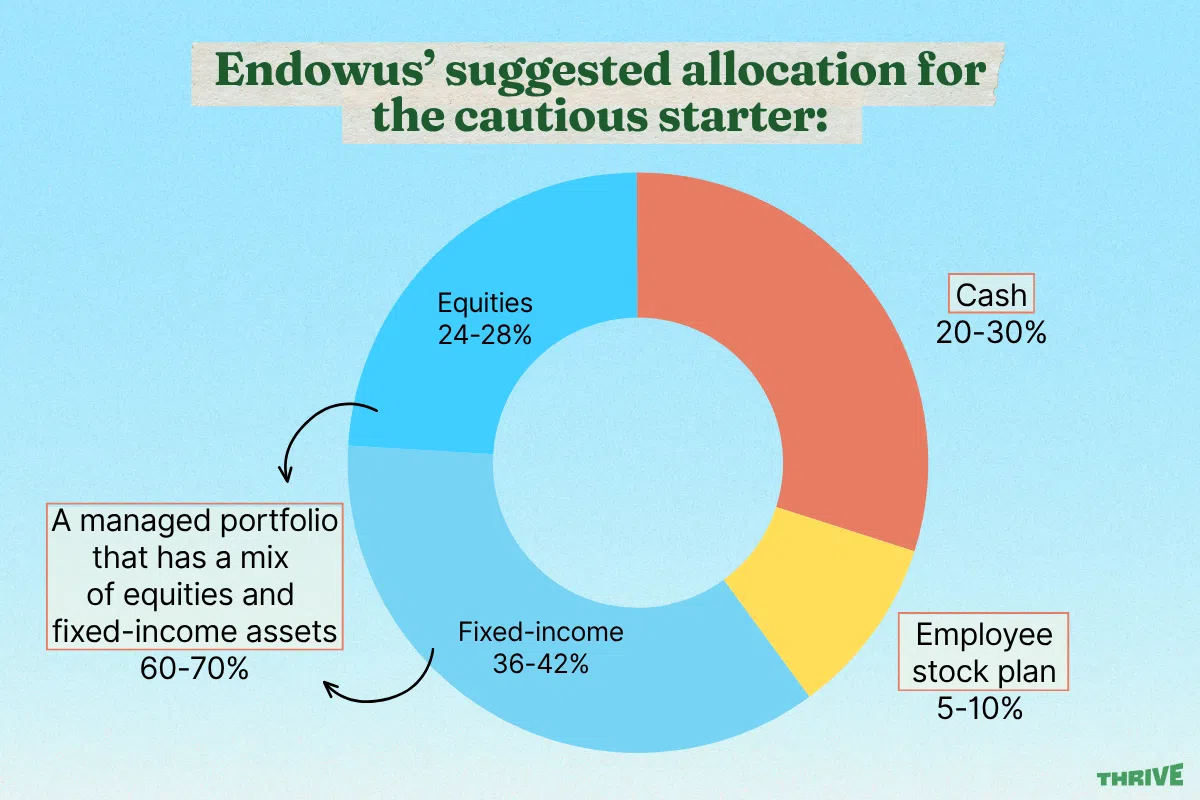
The employer stock allocation introduces a form of concentration risk that is easy to overlook: if the company underperforms, both his income and investments are affected simultaneously.
Meanwhile, keeping 70 per cent in a savings account means the majority of this investor’s wealth is quietly losing purchasing power to inflation.
For more risk-averse investors, a better starting allocation could look like:
Endowus declined to rate the portfolios.
The trend-follower
Jessica knows it’s important to diversify her investments, so she keeps most of her money in globally diversified ETFs and bonds.
But she also suffers from a mild case of fear of missing out, also known as Fomo. She sets aside 30 per cent of her portfolio to chase the latest “hot stock” she hears about on social media, and sometimes buys and sells depending on her mood.
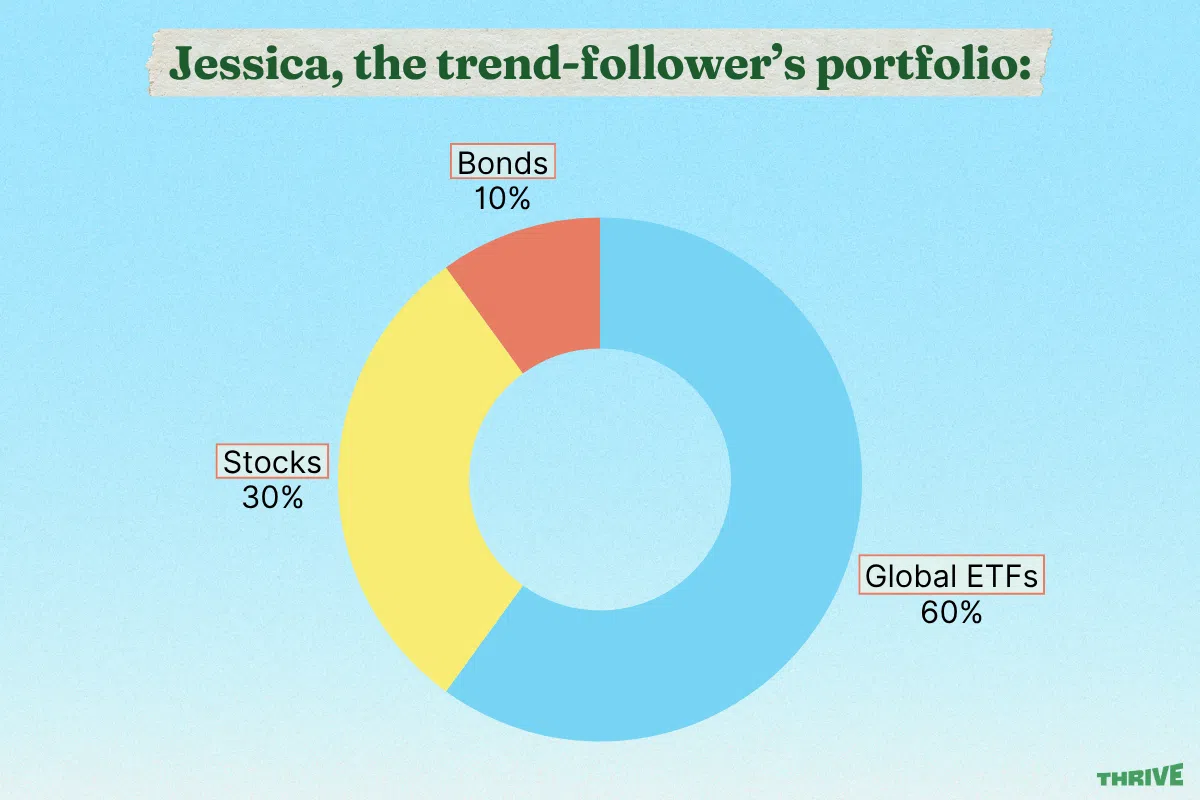
Ng: The overall structure is fairly sound. But if the stock picks are driven more by emotion than discipline, this could undermine the benefits of the diversified core.
Instead, set clear investing rules, such as limiting individual positions to a certain percentage of the portfolio or setting target entry and exit prices.
Rating: 8.5/10
So: This portfolio has a globally diversified core allocation with bond exposure that provides some cushion against volatility.
The risk lies in the 30 per cent in active stock picks driven by sentiment.
Stock-picking isn’t inherently wrong, but buying into or selling based on what everyone else is doing is one of the most costly behaviours in investing and tends to erode value over time.
If the investor is chasing trends because they’re unsure what to invest in, they could instead:
- Redirect most of that 30 per cent in stocks into a globally diversified managed portfolio that doesn’t require a view on which sector or country will outperform
- Hold a smaller allocation of about 5 to 10 per cent in a diversified technology or innovation fund, rather than concentrated single-stock positions
The high-conviction investor
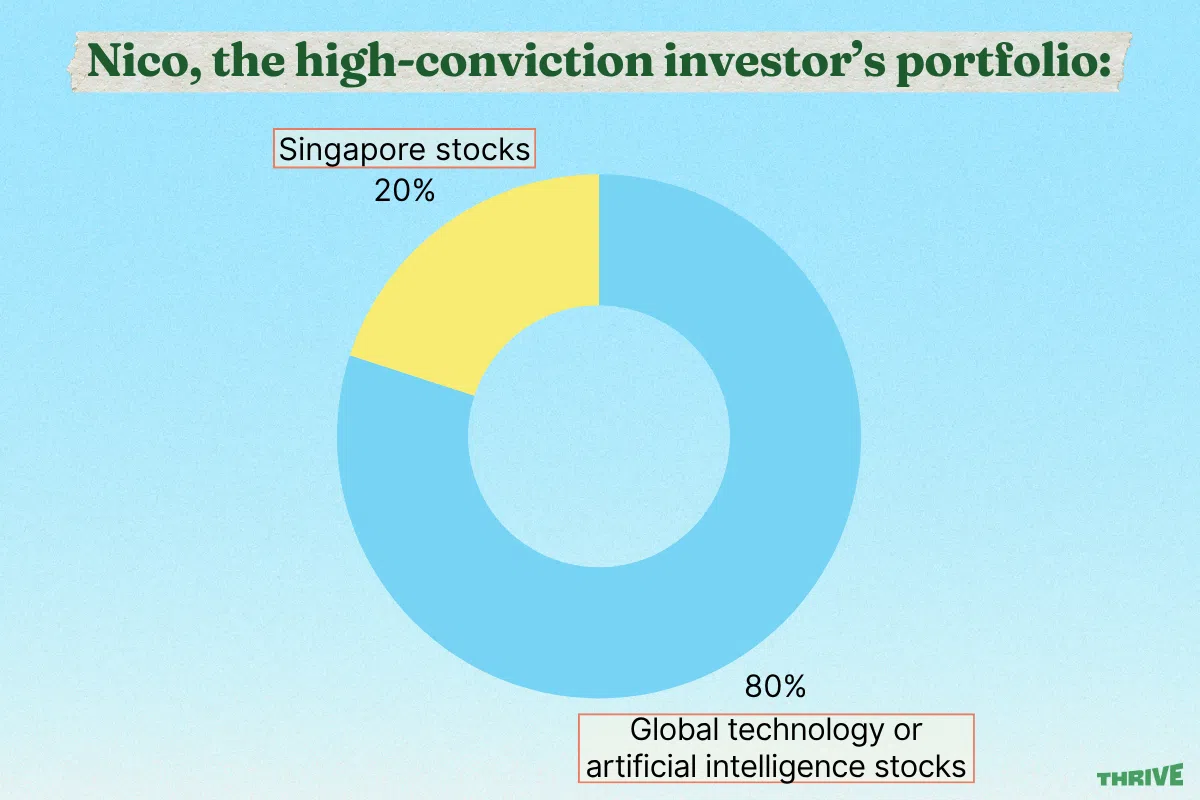
Nico has a high-risk appetite, watches the market almost daily and invests heavily in tech and artificial intelligence stocks. These tend to be names consumers are familiar with, such as Google, Nvidia, Spotify and Reddit.
By focusing on high-growth companies, he is hoping to earn big returns and accepts the rollercoaster that comes with it.
Ng: Young investors have longer investment horizons and can afford to take more risks. Following companies closely could also encourage deeper learning about investing and businesses.
Still, allocating 80 per cent to global tech stocks creates concentration risk. Even if the companies are individually high quality, many of these companies are influenced by similar macroeconomic factors.
And if prices fluctuate greatly, the portfolio may see swings in value that the investor may not be able to stomach.
Rating: 5.5/10
So: A large concentration in global tech and AI stocks reflects a strong conviction view.
But the portfolio has very little cushion and may potentially see large losses as a single sector downturn could significantly set back years of investment progress.
Daily tracking of positions can also be time-consuming and may work against long-term outcomes.
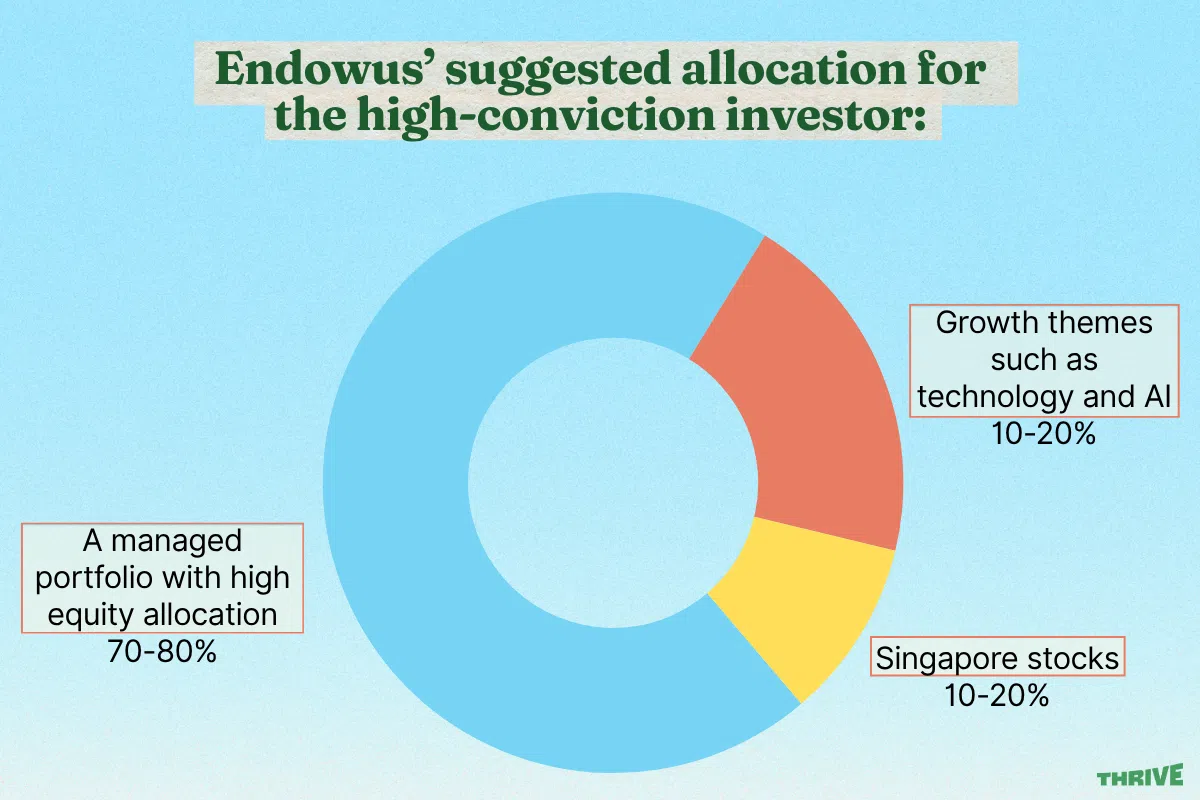
Diversifying globally and beyond the tech sector could help reduce volatility and add protection against any single-name blow-ups. For investors chasing returns, a more resilient allocation could be:
Do higher returns equal a better portfolio?
It is tempting to judge these portfolios by which one could deliver the highest return. But returns alone do not tell the full story.
Returns should always be considered alongside the risks taken, time horizon and whether those returns are sustainable.
“A portfolio that earns 20 per cent one year but loses 40 per cent the next may not be better than one that compounds steadily over decades,” Beansprout’s Ng says.
Ng adds that successful investing is having a portfolio you can consistently stay invested in through market cycles.
“There is no one-size-fits-all portfolio. A better portfolio is one that is designed to meet your personal goals and deliver the returns you need at a level of risk you can actually live with over time,” Endowus’ So says.
What’s worse: A bad portfolio or not investing at all?
Both experts agree that not investing at all is almost always worse.
“Even an ‘imperfect’ portfolio that is invested and stays invested will, over time, compound in a way that cash cannot,” So says.
That said, investing without understanding what you own or taking on risks you can’t tolerate can also lead to poor outcomes.
Ng recommends starting simple, with a diversified portfolio, then refining it as one’s confidence grows.
“A portfolio can always be improved as your knowledge and experience grow,” Ng says.
“But delaying investing means missing out on time in the market and the power of compounding, which is one of the biggest advantages young investors have.”
Decoding Asia newsletter: your guide to navigating Asia in a new global order. Sign up here to get Decoding Asia newsletter. Delivered to your inbox. Free.
Copyright SPH Media. All rights reserved.







