
Can you replace doomscrolling with learning?

Straight to your inbox. Money, career and life hacks to help young adults stay ahead.
[SINGAPORE] Most, if not all, of my attempts to replace doomscrolling with something more productive have failed miserably.
Case in point: I visited the Botanic Gardens a couple of weeks ago in an attempt to have a picnic and finish a book I’ve been putting off for months. Instead, I spent half my time at the park scrolling on TikTok.
Until recently – by some divine intervention – my editor tasked me to test a new app that’s supposed to be like TikTok, but only has videos that’s supposed to make you smarter.
So for two weeks, I engaged with Ollie, a new artificial intelligence-assisted micro-learning app built by online learning platform Coursera.
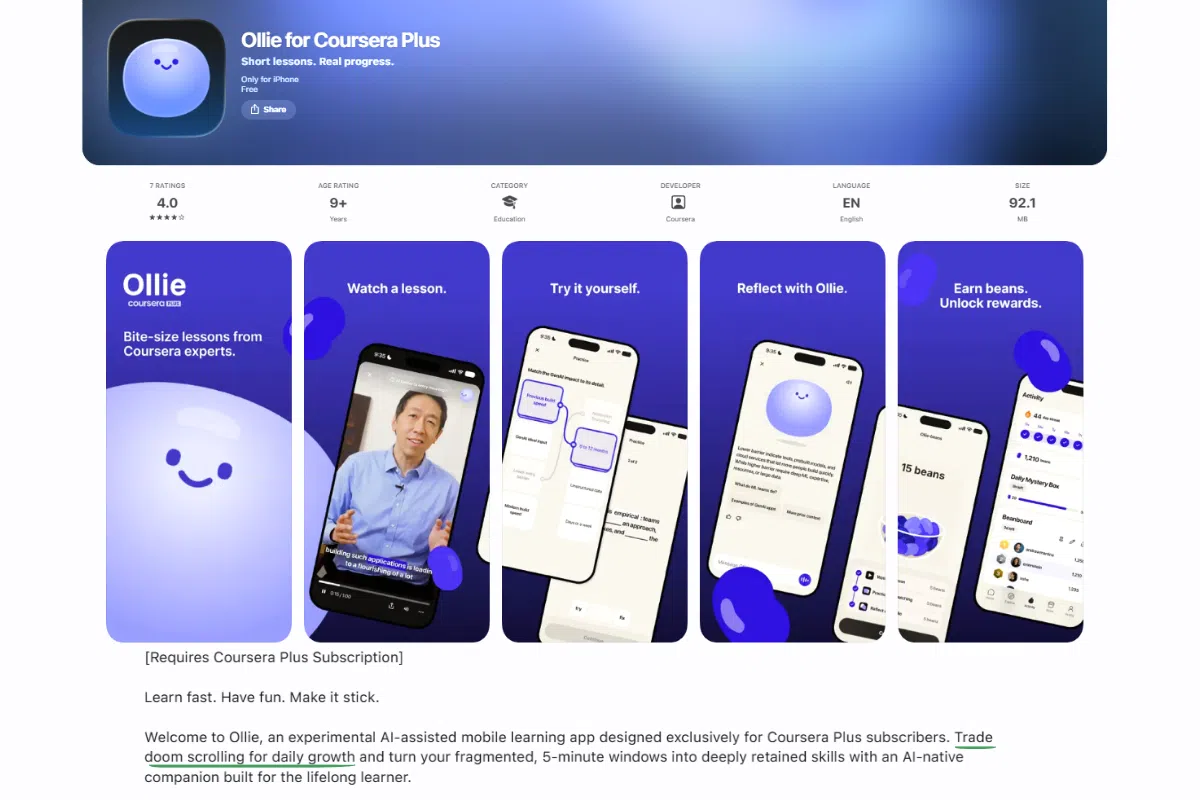
Before experimenting with the app, I spoke to Coursera’s global chief technology officer, Mustafa Furniturewala, to understand why the company created Ollie in the first place.
“Ollie is an early, very early experiment,” Furniturewala says. The app was launched in June this year, and is currently available only to Coursera Plus subscribers.
Ollie was created partly in response to how AI is already changing education, Furniturewala tells me. The team wanted to cater to modern learners, many of whom may have shorter attention spans and consume short-form content.
To be sure, Coursera is not the first to embrace bite-sized, gamified learning. Apps such as Duolingo and Brilliant have long used features such as quizzes, streaks and leaderboards to keep users learning.
What sets Ollie apart is the wealth of topics available to learn and the ability to freely learn without having to commit to one subject.



“We wanted to make sure that… people are not spending time and just engaging because of doomscrolling tactics, and (that Ollie) is actually useful for skills growth,” Furniturewala says.
Coursera was unable to share how many users are currently on Ollie, but noted that their most active users log into Ollie to learn for three weeks straight.
Getting to know Ollie
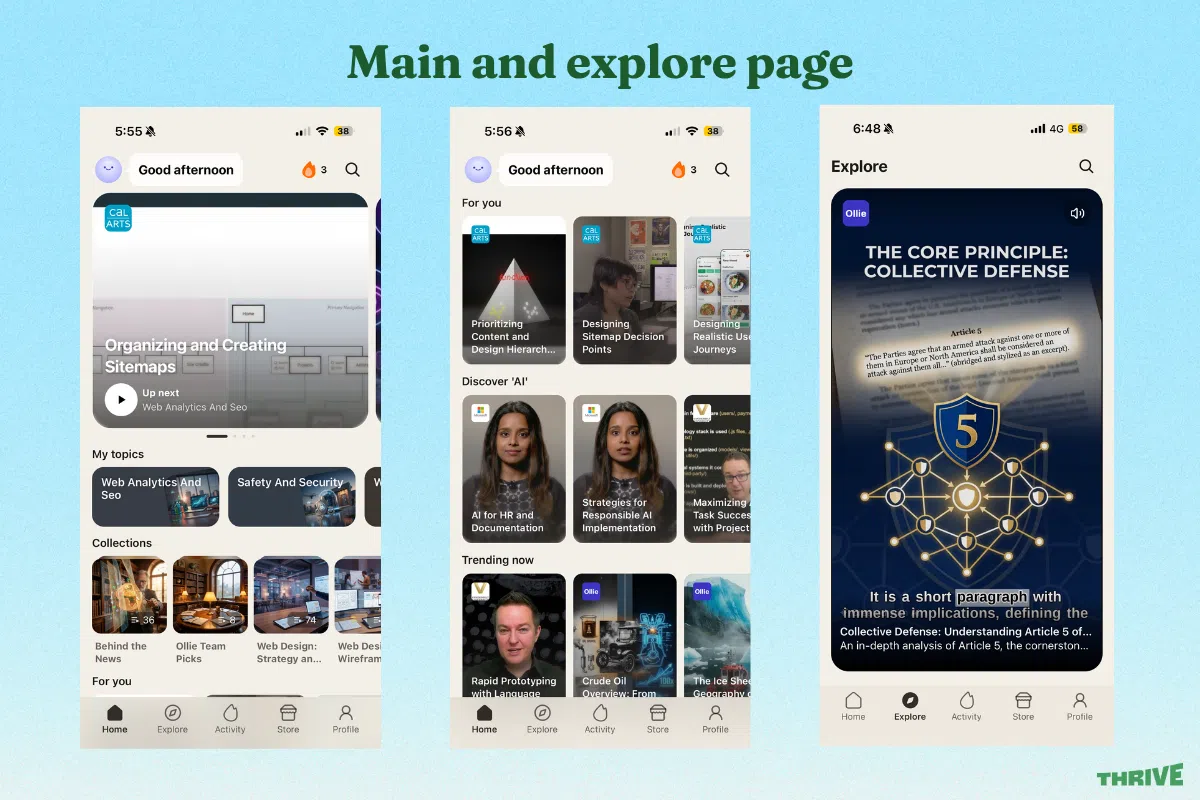
Ollie’s interface is pretty easy to navigate.
An explore page that runs on an algorithm serves you a seemingly endless stream of bite-sized videos, much like TikTok’s For You page. After two weeks, mine had learnt that I gravitate towards topics such as AI, design and Web analytics.
These videos are clipped from partner-approved Coursera courses that have been edited with the help of AI, which cover topics such as psychology, engineering and coding, to name a few.
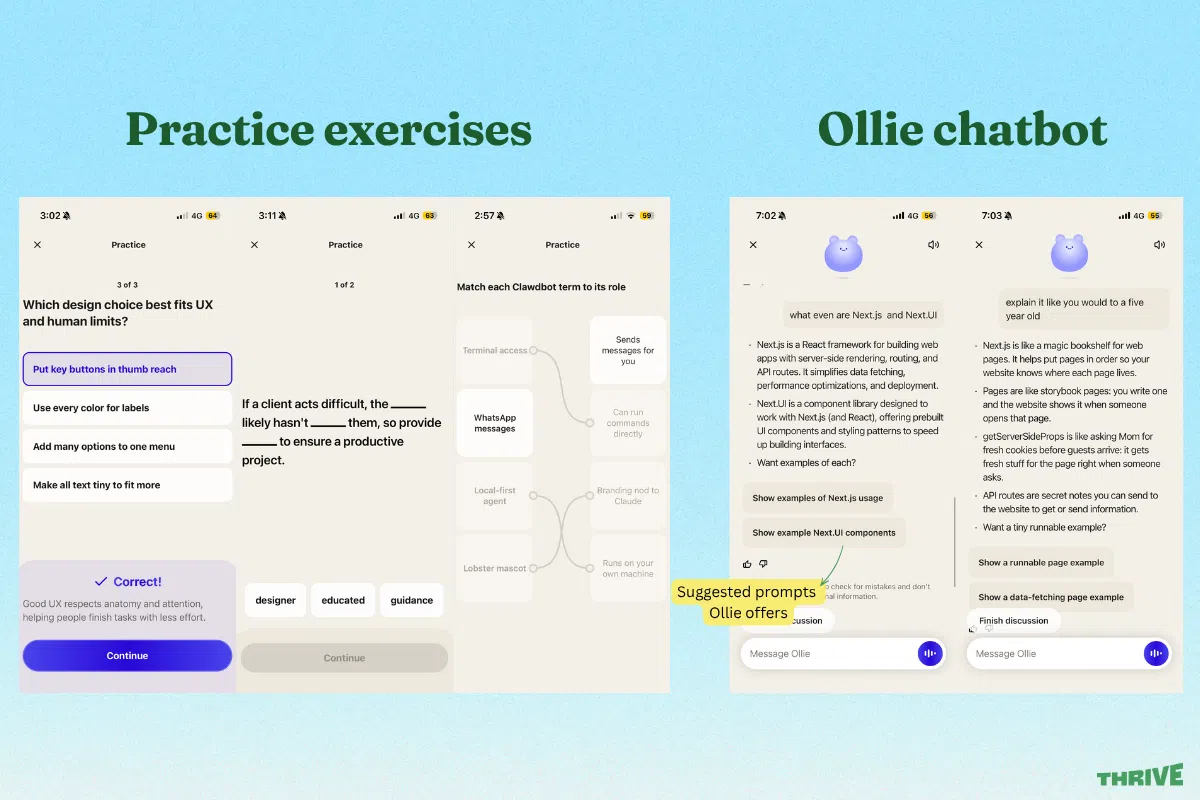
Following each clip, typically about a minute long, you’re served three short quizzes testing you on what you’ve just learnt. Practice quizzes are authored by trusted partners, a spokesperson for Coursera says.
After the practice exercises is where the interactive AI element of this app comes in. You are given an option to chat with Ollie, where you can ask questions about the clip, go over mistakes you made during the quizzes or have it generate more practice exercises.
Then there’s Behind The News, a whole section of AI-generated clips that are supposed to “help you make sense of today’s headlines”.
While testing, I saw videos about US tariffs and agentic AI tools.
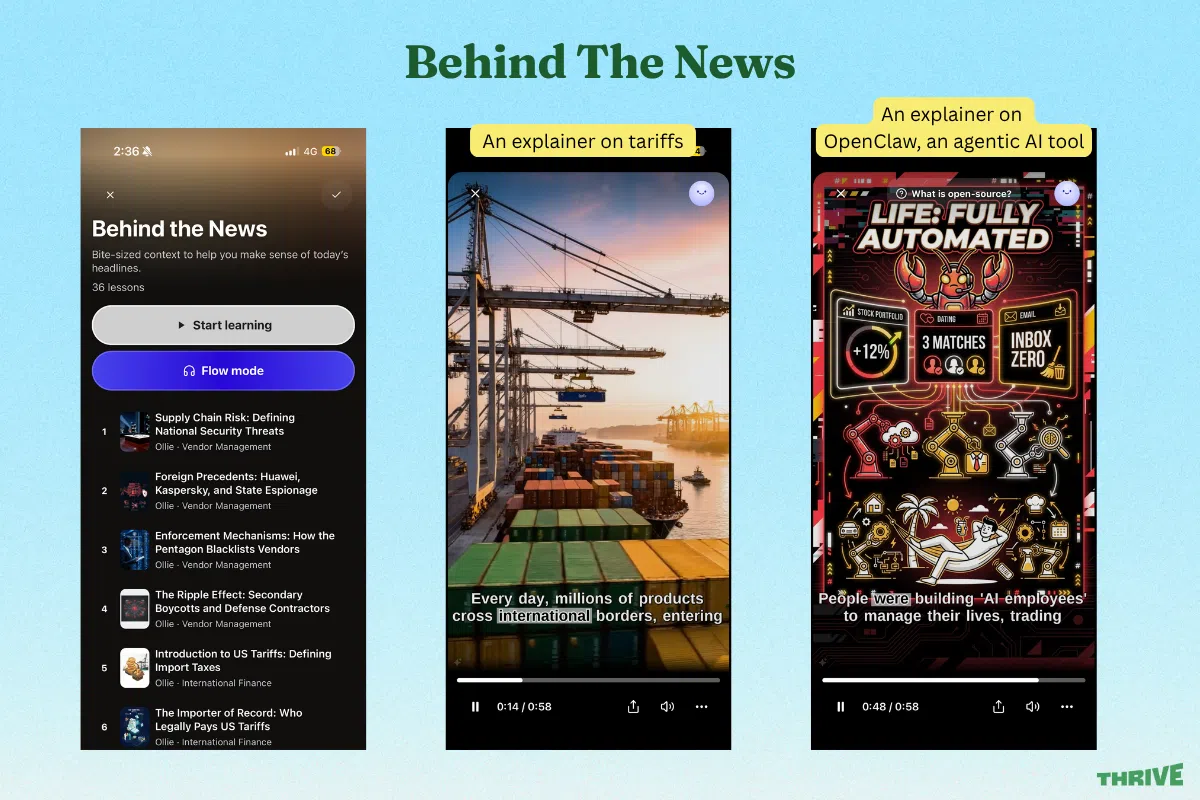
Personally, I felt that the unnatural-looking visuals did not make the watch enjoyable, given how closely it resembled AI slop on TikTok or YouTube.
They do their job in explaining current events, but I found myself second-guessing the credibility of what I was watching.
Furniturewala tells me that the AI-generated content draws on trusted sources and publicly available information, and there are iterative large language model checks in place.
“There is also a… human in the loop as well, to make sure that the content is pedagogically sound,” he said.
Can I actually learn something?
After a week of jumping between topics on Ollie, I decided to settle on learning more about one subject: user experience (UX) design.
I mostly watched videos on the go, and the bite-sized lessons were engaging enough to keep me hooked throughout my commutes.
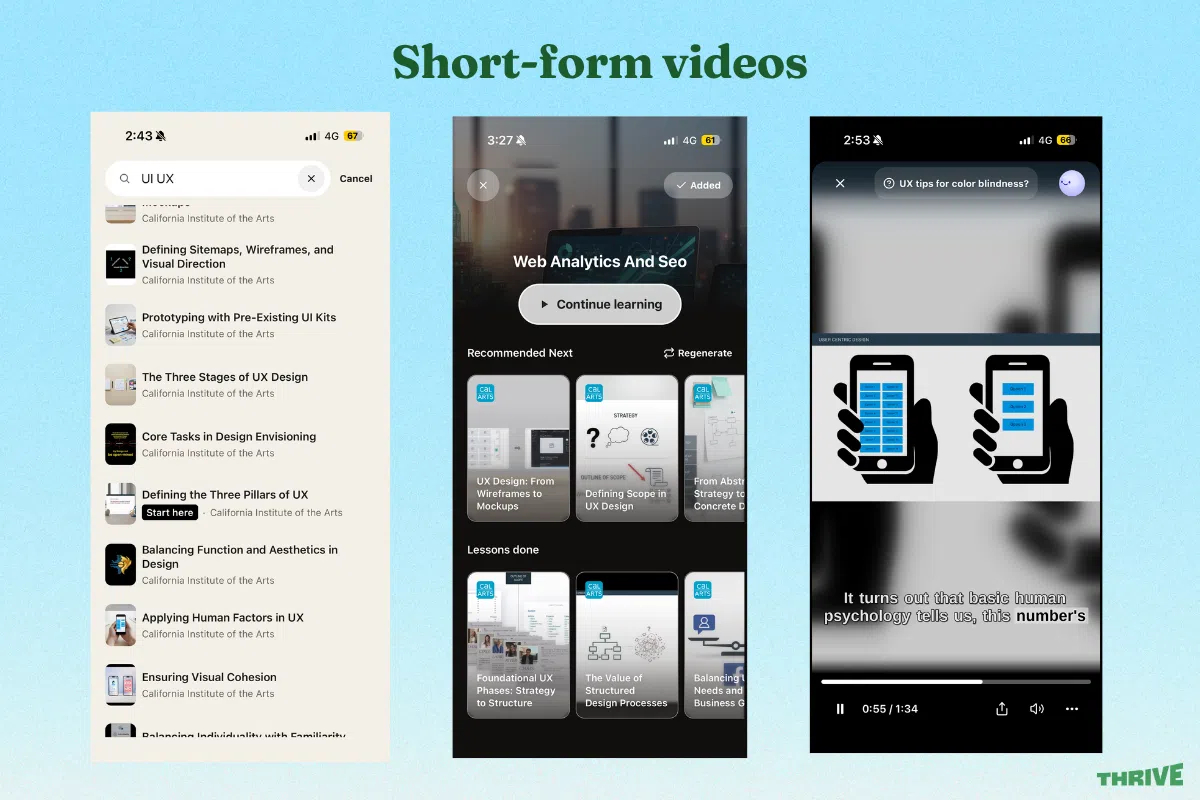
Unlike how I often passively consume videos on social media, the interactive quizzes between videos forced me to stop and think before moving on to the next lesson, breaking the cycle of mindless scrolling.
Gamification elements kept me engaged too. During a 30-minute walk, I found myself climbing to the top of the global leaderboard, and even unexpectedly entered a competition with another user to claim first place on the “beanboard”.
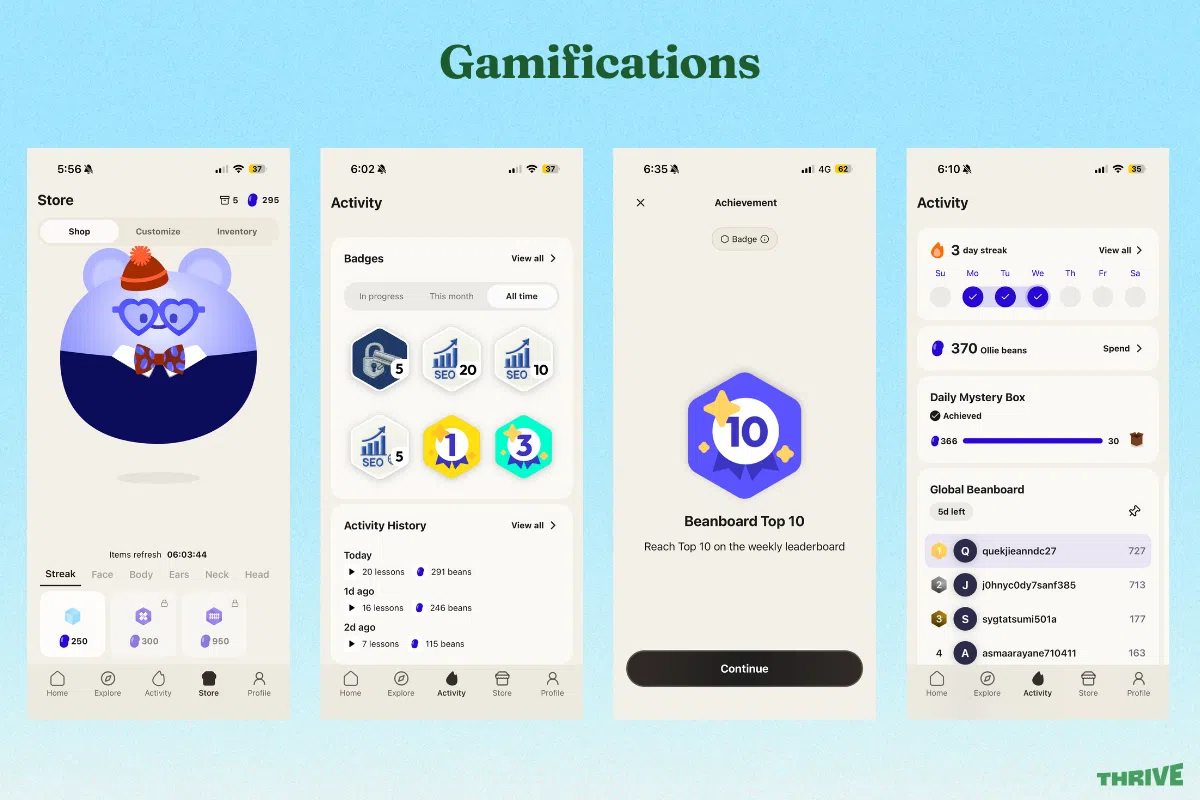
I ended my second week with a better understanding of UX concepts such as wireframes and visual hierarchy. And now, I’m probably able to hold a very basic conversation about Web analytics and UX design, or at least throw some fun facts your way.
Still, I am far from being able to apply any of this surface-level knowledge into real practice.
The bite-sized videos were helpful introductions. But such a complex topic needed far more context and deeper-level exercises than these lightweight lessons could provide.
And while I did rely on the chatbot feature to explain concepts in greater detail, I felt that the information presented was still limited. Unlike many other AI chatbots, Ollie can’t search the Web and can only reference content the user has already viewed.
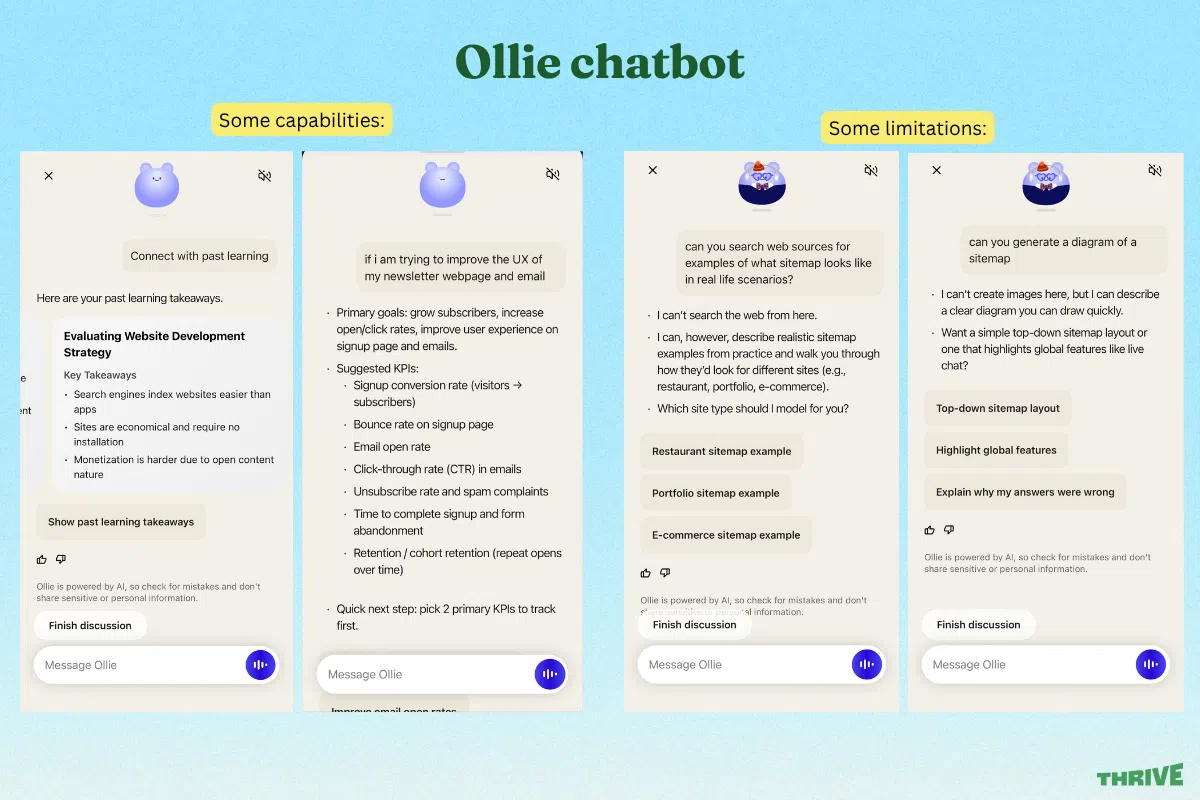
So, while Ollie was able to answer most of my follow-up questions, I still found myself looking to Google for deeper explanations and examples.
My takeaways
Of course, I wasn’t expecting to become a UX designer over the span of two weeks.
Yet I am content that I now know more about UX design than when I started, and developed enough interest that I am considering taking a full course on UX design in future.
But was I truly able to trade doomscrolling for learning? No.
I’ll admit that on several occasions, I’ve caught myself mindlessly switching between Ollie and TikTok to kill boredom.
It made me realise that doomscrolling can happen on any platform. Any feed can become another form of mindless consumption, and replacing entertainment with educational content doesn’t automatically mean you’re learning.
In my experience, when I opened Ollie with a goal in mind – in this instance, to learn more about UX design – I retained far more than when I mindlessly flicked through videos on the same app.
In other words, scrolling more “productive” content is still doomscrolling if you’re not actively engaged or applying critical thinking.
I’ve also always thought that learning only counted if it led to a certification or some tangible outcome. This experiment challenged that mindset.
I may not have a certification to prove I have some amateur knowledge of UX design, but I did become a more curious learner and discovered a new subject I’m keen on exploring further through a proper-length course.
The inertia to start, though, has only slightly reduced, and I wonder if I’ll ever find enough will to enrol for a course while juggling full-time work.
If nothing else, I spent a little less time doomscrolling on social media, which I’ll count as a win for me.
Decoding Asia newsletter: your guide to navigating Asia in a new global order. Sign up here to get Decoding Asia newsletter. Delivered to your inbox. Free.
Copyright SPH Media. All rights reserved.
TRENDING NOW

DBS, OCBC, UOB rout lops billions off STI as inflation, rate concerns spook investors

Grab CEO’s wife Chloe Tong on life with Anthony Tan and finding her purpose

OCBC sheds S$8 billion in value as shares close nearly 6% down; analysts cautious on banks

Deal between tycoon friends sparks scrutiny of Philippine power sector


