
I tested a networking expert’s tips at a ‘third place’

Straight to your inbox. Money, career and life hacks to help young adults stay ahead.
[SINGAPORE] One of the perks of being a journalist is that I occasionally find myself in places I would never voluntarily visit.
Recently, that landed me at After Hours, Slow House, a monthly pop-up “third place”, where I interviewed its founder, Ren, 24, for a separate story.
There’s been talk lately about how young people lack a third place – a physical location outside of one’s home (first place) or workplace (second place) where people can gather, socialise, and build community.
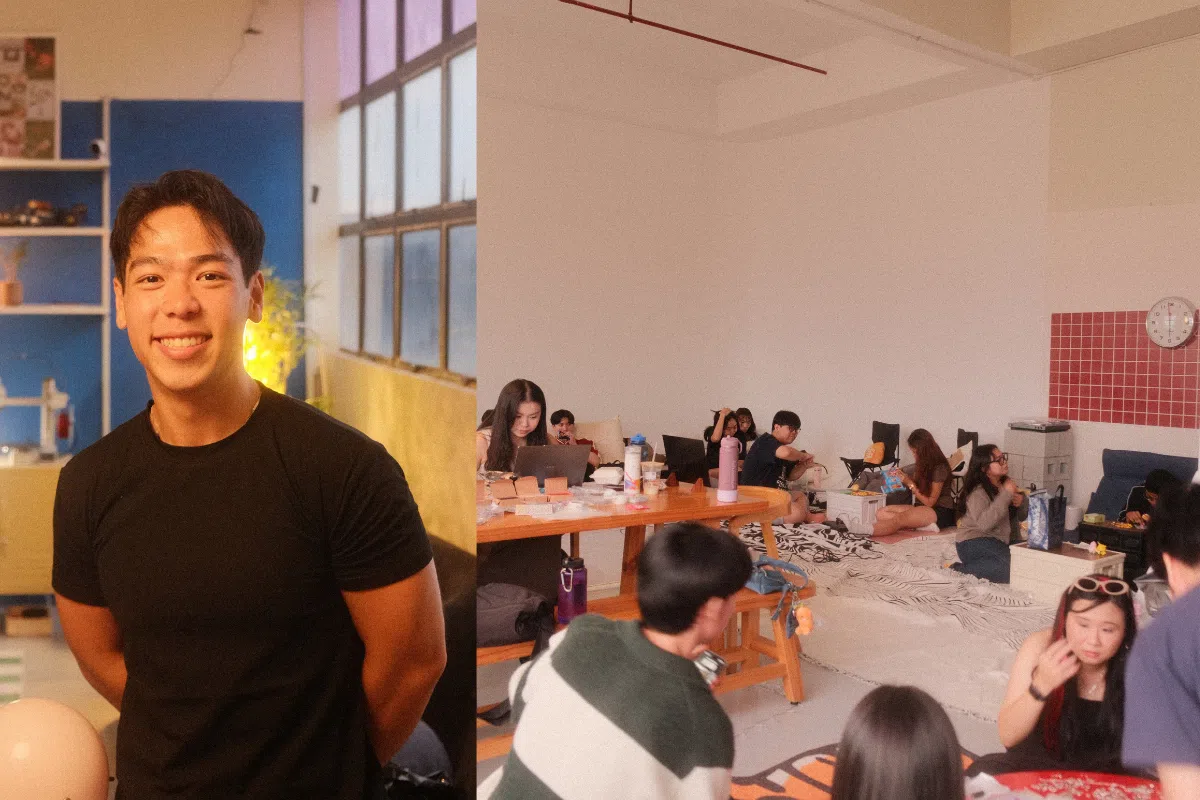
In Singapore, malls, pubs, and bars used to be the default place to linger on weekends or after work. But these days, going out often feels like it needs a purpose.
At After Hours, Slow House, that purpose is specifically for visitors to unwind and find a moment of respite from the responsibilities of work and life.
My experience, however, was quite the opposite.
The obvious irony was that I was there for work. But apart from my interview with Ren – who asked to be identified by his first name – the next longest conversation I had with another patron turned into a business pitch.
Upon learning that I was a journalist, that patron began introducing her startup in hopes that I would feature it in a story.
It would be unfair to judge the entire place by one conversation. Still, the interaction made me wonder whether many of these curated places designed for connection are simply networking events dressed up in softer lighting and better branding.



To test my theory, I decided to give third places another shot. This time, I wanted to practise intentional socialising without putting my professional identity on overt display.
Starter kit for networking
To stress-test my plan, I sought advice from someone who thinks about human connections for a living.
Ryan Lim, founding partner of the think tank QED Changemakers and author of Business of Networking, writes in his book that “networking is relational, not transactional”.
That idea stood out to me because it challenged the stereotype I had of networking – that you enter a room with a goal and something you want from the people you meet.
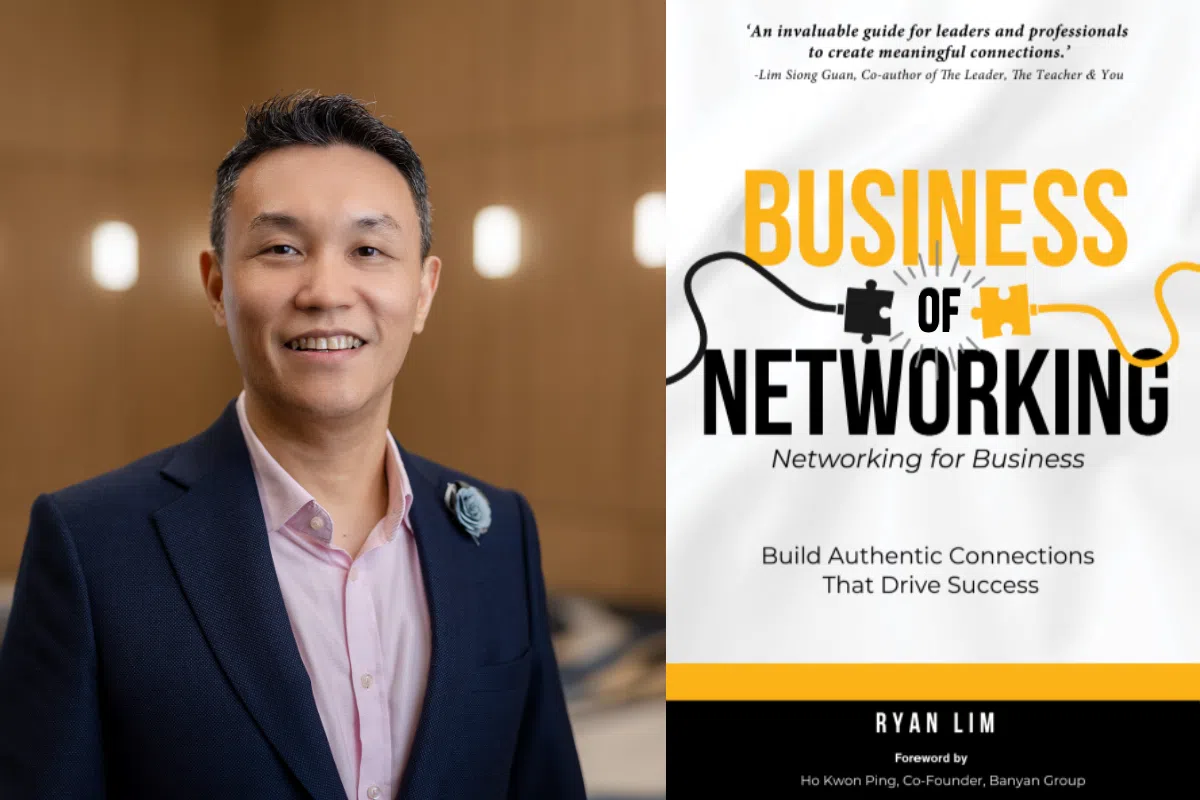
When I asked him for practical advice on striking up conversations with strangers – not to network for work, but simply to make friends – he suggested that the two may not be so different after all.
In fact, the three tips he gave sounded a lot like the advice in his book, where he writes about professional networking:
- Approach conversations as though you’re asking for directions.
- Be genuinely interested in the new person, instead of trying to be interesting.
- End the conversation on a high. Thank the person, or close with: “Let me ask you one final question before we part”, then ask for their contact or where they’re headed next.
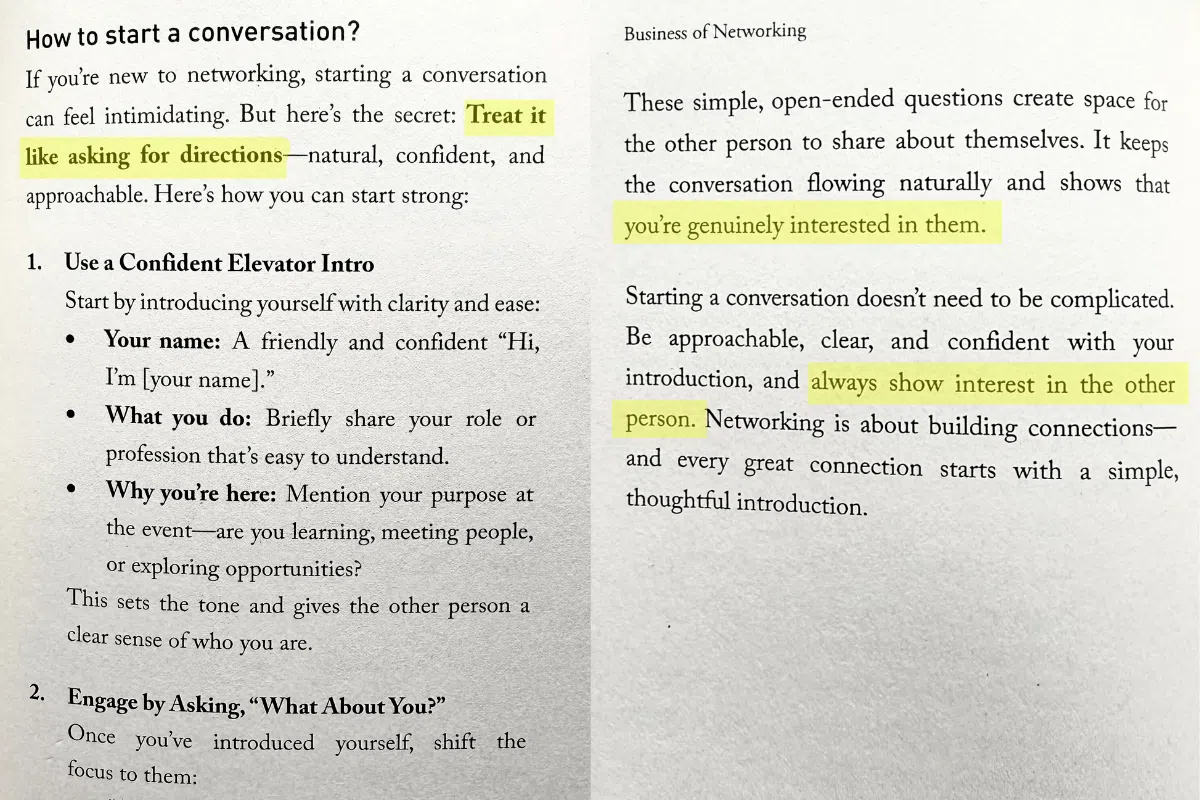
In other words, bad networking feels transactional. Good networking looks surprisingly similar to making friends.
Put into practice
I figured I’d have better luck at making genuine connections in a place that aligned with my interests.
So, I visited the Casual Poet Library, a community-funded shared library tucked away in Bukit Merah.
Unlike traditional libraries, the shelves here are rented out to individuals for S$45 a month on a year-long lease. Bookshelf owners curate their own collection of books and often add handwritten notes introducing themselves and the titles they recommend to the community.
Visitors are free to browse and read the books within the library, but I spent the better part of my first hour at the place trying to muster up the courage to speak to the only other patron there.
When I finally did, I leaned on Lim’s first tip and went with the reliable compliment-plus-question starter: “Your shoes are really nice, where did you get them from?”
Not groundbreaking, but it worked.
From there, our conversation flowed, and I followed up with further questions.
Are you a regular here? Do you own a shelf? What genre of books do you enjoy reading?
Coming up with questions came naturally to me because that’s a large part of what I do at work. But I was genuinely interested in getting to know my new acquaintance, which made following Lim’s second tip easy.
The topic of work eventually entered our conversation, as it often does in adulthood, where careers play a big part of our identities.
But it came up only briefly, as part of a broader conversation about why we read to unwind from work during our free time.
Unlike my experience at After Hours, the conversation did not feel transactional. Our professional identities were not driving the interaction.

Admittedly, when I first read Lim’s advice about closing conversations with the scripted “one final question” and asking to exchange contacts, I cringed. It sounds effective in theory, but in practice, I couldn’t see myself saying it aloud in a casual setting.
Turns out, I didn’t need to. My newfound friend initiated the exchange of contacts before we parted ways.
My takeaways
Technically, I could apply Lim’s tips at any park, cafe, or hawker centre.
But many of us no longer treat these places as venues to meet new people or find a community – to the point where striking up a conversation with a stranger can feel strange, or even rude.
My experiment also made me realise that attendees of these third places have more in common with avid professional networkers than I initially thought.
Both are willing to step outside of their comfort zones and build new relationships because these days, meaningful connections rarely come by chance.
Besides, the best networkers – social or professional – aren’t working around the room with an agenda. They focus on building relationships first, and treat any opportunities or benefits that emerge later as a happy side effect.
In my experience, I left the library with more happy “side effects” than expected: a new contact, an invitation to join a book club, a memorable conversation, and a potentially lasting connection.
Decoding Asia newsletter: your guide to navigating Asia in a new global order. Sign up here to get Decoding Asia newsletter. Delivered to your inbox. Free.
Copyright SPH Media. All rights reserved.
TRENDING NOW

DBS, OCBC, UOB rout lops billions off STI as inflation, rate concerns spook investors

Grab CEO’s wife Chloe Tong on life with Anthony Tan and finding her purpose

OCBC sheds S$8 billion in value as shares close nearly 6% down; analysts cautious on banks

Deal between tycoon friends sparks scrutiny of Philippine power sector


