

Another Tesla comes to town, powered by S$10k rebates
Singapore
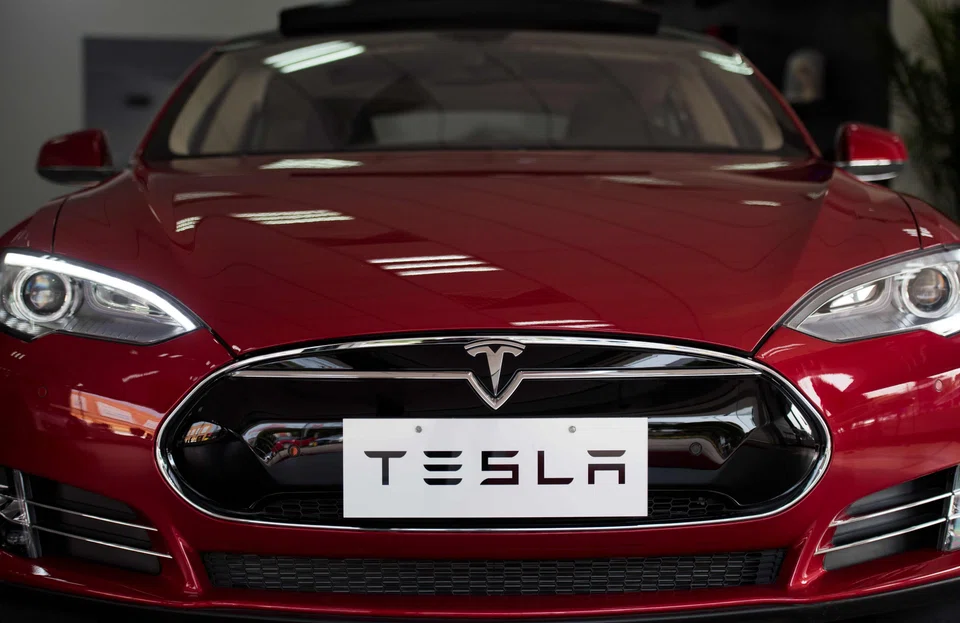
ANOTHER Tesla car is coming to town, this time powered by rebates - The Business Times understands that a brand new Tesla Model S variant is expected to be introduced soon, only the second Model S to run on Singapore's roads.
But unlike its predecessor that had to undergo more emissions tests and was slapped with a surcharge just months ago for its noticeable carbon footprint, this latest car does not need to be tested again, and qualifies for S$10,000 in rebates for efficiency.
A Land Transport Authority (LTA) spokesman confirmed the arrival of the new Tesla car.
"LTA has given the importer of an imported new Tesla Model S the go-ahead to send the vehicle for a pre-registration inspection before it can be registered for use in Singapore," said the spokesman.
This latest imported Model S is a P85D variant that comes with two motors for greater performance and consumes more energy than its more popular cousin the P85 that has only one motor.
"Based on its energy consumption values, this vehicle falls into band A3 and qualifies for a S$10,000 rebate under the current Carbon Emissions-based Vehicle Scheme (CEVS)," said the LTA spokesman.
The car's energy consumption was determined from its Certificate of Conformity that was submitted for evaluation. As the car is brand new, the spokesman said LTA has "accepted the energy consumption values as stated".
If it gets registered, this latest Tesla car will be only the third ever to run on Singapore's roads, the first being a Tesla Roadster which was deregistered in 2012.
The second was a used Model S - that was slapped with a S$15,000 surcharge - that was imported and registered earlier this year.
The surcharge made it the first tailpipe emission-free vehicle here to be penalised this way.
LTA had said that in factoring 0.5g/watt-hour (Wh) of carbon dioxide emissions from powering an electric car, a new Model S of energy consumption at 181 Wh/kilometre can yield emissions of 90g/km. This qualifies it for S$30,000 in rebates under the current CEVS, the maximum possible.
But Vicom Emission Test Laboratory (VeTL) tests showed that the used Model S had a power consumption of 444 Wh/km, resulting in emissions of 222g/km.
This put it in the CEVS S$15,000 surcharge band. Its owner Joe Nguyen, senior vice-president at an Internet research firm, had paid the surcharge.
News of the surcharge ignited a debate over why an electric car should be charged for carbon emissions. Elon Musk, chief of the car's manufacturer Tesla Motors, had even called Singapore's Prime Minister Lee Hsien Loong to discuss the issue.
LTA and Tesla had said then that they would look into retesting the car, though this position has now changed.
"Following discussion between LTA, Tesla as well as VeTL, the independent accredited laboratory that had tested the car, it was concluded that a retest will not be meaningful as the condition of a car changes over time with use and with level of maintenance," said LTA.
A Tesla spokeswoman did not respond directly to BT's queries on the retest, but instead said that Tesla was looking to enter the Singapore market.
This is because Singapore is where "a forward-thinking government and population are environmentally conscious and receptive to new technologies".
The fact that the latest imported Model S can qualify for rebates, and that the used Model S will not undergo retest can be seen as nods to Singapore's policy approach to carbon emissions, said Ashish Sethia, head of India and South-east Asia for gas and power at Bloomberg New Energy Finance.
He noted that states have the final say in drafting policies. "But will an electric car deteriorate over time? Direct and indirect emissions should both be considered, and also the whole life cycle assessment of a product should be factored in."
Hannah Chang, assistant professor of marketing at Singapore Management University, said that Mr Nguyen's Model S being levied a surcharge had raised awareness on how consumers, companies and governments pursue environmentally conscious decisions in terms of purchasing, manufacturing and drawing up policies.
This latest case of the imported new Model S will refocus their attention on how a balance can be struck between these stakeholders, she said.
"Policies have been drafted for a reason. And how they respond to technological advancements is crucial to helping companies develop and protecting consumers' interests," she said.
READ MORE: Tesla staging comeback in Singapore
TRENDING NOW
Prima to move out of historic Keppel Road flour mill building in 2028

Grab CEO’s wife Chloe Tong on life with Anthony Tan and finding her purpose

OCBC sheds S$8 billion in value as shares close nearly 6% down; analysts cautious on banks
As Asia’s food delivery giants rejig the pie, who will win the market?

