

Balmy Q4 for sea freight as importers try to beat new tariff deadline
But higher bunker costs taking some shine off upside from Transpacific box traffic surge
Singapore
THE final quarter of the year is expected to yield bumper freight volumes and rates for box lines as importers and shippers race to beat additional tariffs in the new year arising from the US-China trade war.
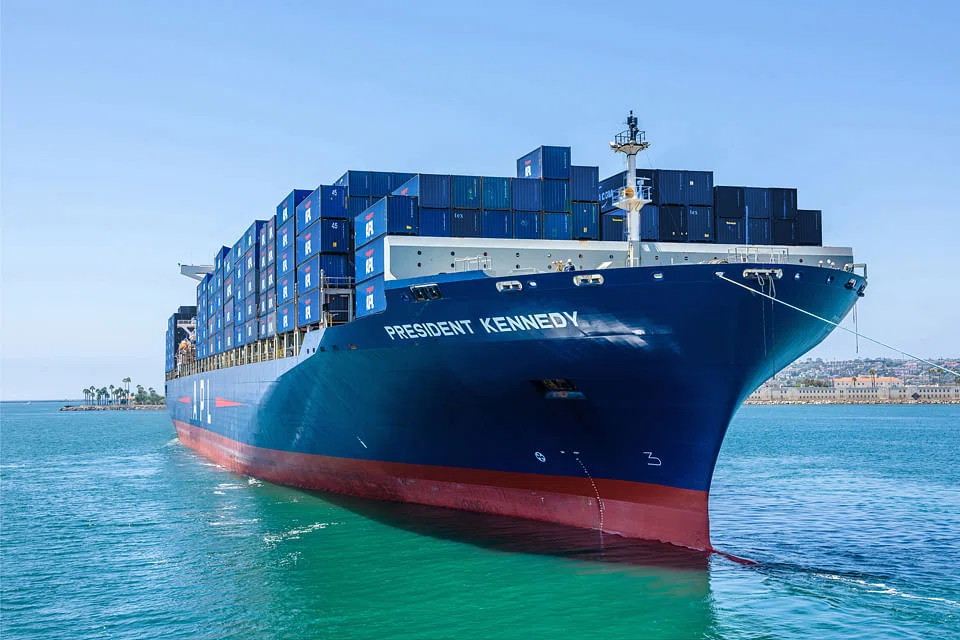
Those that will reap the bounty will include APL, a leading line on the Transpacific trade whose parent company CMA CGM is one of the top three shipping lines in box trade.
APL CEO Nicolas Sartini said in an exclusive interview with The Business Times: "We are preparing for a busy fourth quarter when it's usually a slack market this time of the year."
The main driver for the surge in activity is a further US tariff hike on Chinese imports expected in January, which would push shippers to bring forward orders before the year ends, he explained.
And volumes are not the only thing looking up for freight lines. After the first waves of tariffs went into effect in the ongoing US-China trade row, freight rates have been rising since July. For the three months to the end of September, Transpacific rates were up by 30 per cent, the Shanghai Containerised Freight Index showed.
Apart from the trade tension between the two economic superpowers, Mr Sartini flagged two other factors that have also helped lift freight rates.
On the supply side, the withdrawal of three services back in the second quarter by shipping companies concerned with low freight rates and the then-imminent fall-out from the US-China trade war, has reduced capacity on Transpacific trade routes. Yet, US imports have climbed on the back of an improving economy, with the expansion of its gross domestic product outstripping unemployment rate.
All in, these resulted in a capacity squeeze on the Transpacific trade, which was good news for APL as it had launched a new express US-China service in February, just months before the Trump administration raised tariffs on imports from China,
Mr Sartini noted that its new Eagle Express X Service, which offers an 11-day fast transit between Shanghai and Los Angeles, has drawn business away from air freight for goods like electronics and garments.
Together, these factors helped lift revenues in the second quarter for APL and its French parent CMA CGM. While expansion in the transpacific trade has lifted revenues, higher marine fuel or bunker costs have hurt the bottomline. Group net profit of US$22.7 million for the three months ended June 30 was just over a tenth of earnings in the year-ago period.
Mr Sartini noted that fuel costs in September have gone up by US$90 per tonne compared to the start of the year, suggesting the group will continue to face cost pressure in the third quarter. Bunker prices have risen because Brent, the crude benchmark, has already surged past US$80. This trend may well continue with some analysts predicting that Brent could hit US$100 in the near future.
The enlarged CMA CGM group has looked at re-introducing the bunker adjustment factor (BAF) into its shipping contracts. BAF is a mechanism that lets shipping lines automatically pass on fuel costs to their clients, and has been commonly used in shipping contracts before the global financial crisis in 2008 changed the rules.
Just as drivers have to pay higher petrol prices during times of higher oil prices, shippers should also do so for freight rates when bunker costs go up, Mr Sartini said.
Ocean Shipping Consultants director Jason Chiang said that once CMA CGM, as one of the top three shipping lines in box trade, re-introduces BAFs into its contracts, the rest of the pack is likely to follow suit.
Mr Chiang also said that the jump seen in Transpacific trade that has bolstered APL's freight volumes may not be sustainable if it stems from re-stocking brought forward by merchants. If the US-China trade war persists, there's no saying if importers in the US may switch to alternative sources in South-east Asia, he added.






