

China's Geely invests US$326m to build satellites for autonomous cars
 Add BT as a preferred source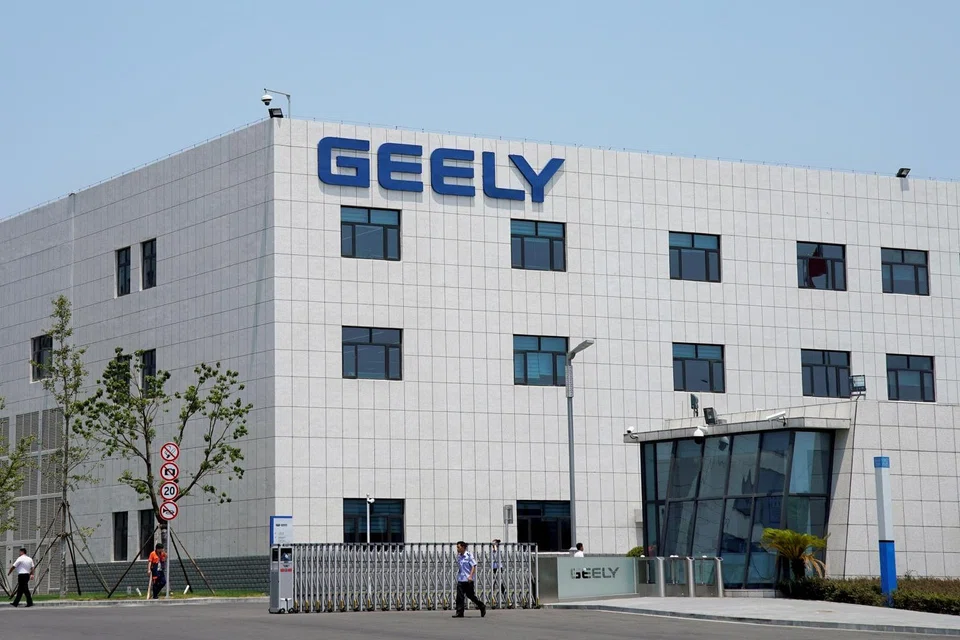
DeeperDive is a beta AI feature. Refer to full articles for the facts.
[BEIJING] China's Zhejiang Geely Holding Group said on Tuesday it was investing 2.27 billion yuan (S$453 million) in a new satellite manufacturing plant, where it plans to build low-orbit satellites to provide more accurate data for self-driving cars.
Geely, one of China's most internationally-known companies due to its investments in Daimler, Volvo and Proton, is building the facilities in Taizhou, where it has car plants. It aims to produce 500 satellites a year by around 2025, with around 300 highly-skilled staff, it said in a statement.
Geely's technology development arm, Geely Technology Group, launched Geespace to research, launch, and operate low-orbit satellites in 2018.
Geespace will begin the launch of its commercial low-orbit satellite network by the end of this year, Geely said.
Geely said low-orbit satellites would offer high speed internet connectivity, precise navigation, and cloud computing capabilities to cars with autonomous driving technology.
Geely, which sold 2.18 million cars last year, is among global automakers from Tesla to Toyota to pursue autonomous driving technologies.
Navigate Asia in
a new global order
Get the insights delivered to your inbox.
It is building low-orbit satellites to meet demand for high-speed connectivity capabilities that can deliver fast software updates. From around 2025, Geely's cars will have more functions to connect to the satellites.
REUTERS
Decoding Asia newsletter: your guide to navigating Asia in a new global order. Sign up here to get Decoding Asia newsletter. Delivered to your inbox. Free.
Share with us your feedback on BT's products and services
TRENDING NOW

China pips the US if Asean is forced to choose, but analysts warn against reading it like a sports result

Beijing’s calculated silence on the Iran war

Shelving S$5 billion office redevelopment plan proved ‘wise’ as geopolitical risks mount: OCBC chairman
Vietnam formalises new state leadership, redefining ‘four pillars’ power balance

