

Covid-19 to accelerate shifts in global supply chains but Singapore can still play to strengths

Mindy Tan
Singapore
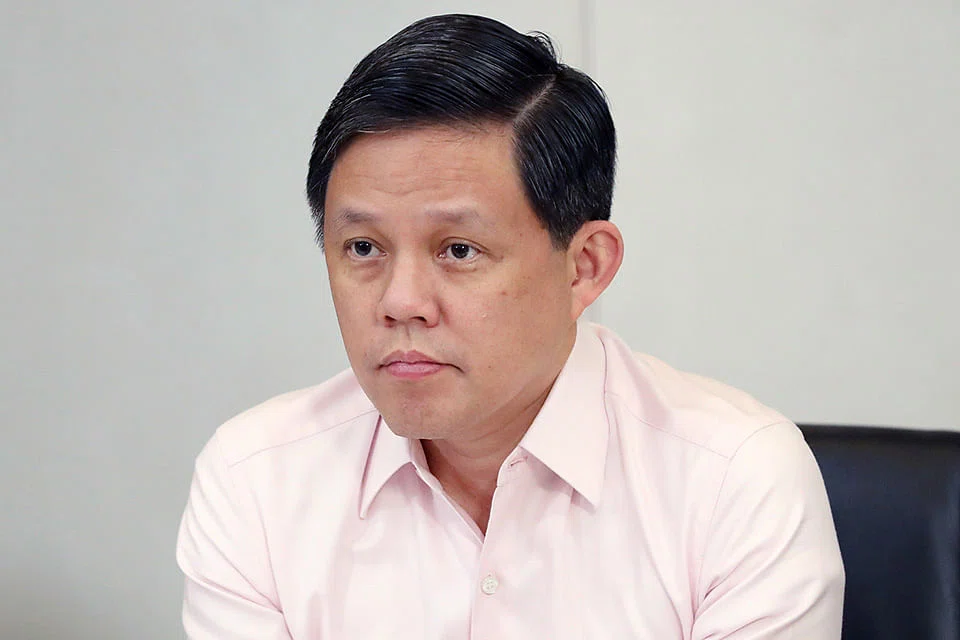
THE COVID-19 pandemic will accelerate shifts in global supply chains; and while there is no telling how supply chains will eventually be reconfigured, it is likely that they will be relocated nearer to final demand markets, said Minister for Trade and Industry (MTI) Chan Chun Sing.
The outlook for outward-oriented sectors - such as manufacturing and those related to trade and logistics - remain weak, adversely affected by the sharp slowdown in many of Singapore's key markets, he noted.
That being said, as we adjust to the new environment, there will be opportunities to fill unmet demand and participate in new supply chains that are formed, said Mr Chan in Parliament on Tuesday.
He added that in the past, most companies and countries took efficiency as the primary consideration when designing their supply chains. But many more now appreciate the need to balance efficiency with resilience.
"They are looking for places where their IP (intellectual property) can be protected, where their talent can come together to perform product design and services. They are looking at trusted hubs where exports are not restricted because of policy-induced choices," he said.
"So as people diversify their supply chains and look for such trusted and safe harbour, I think there are many opportunities for Singapore to play to our strengths and to continue to strengthen our role in the global supply chain."
Separately, Mr Chan also outlined three ways the government is helping companies and workers prepare.
The first is by continuing to boost connectivity to the region and upholding Singapore's status as a financial and logistics hub. This includes the network of Digital Economy Agreements that Singapore has started to build with partners such as Australia, New Zealand and Chile.
Singapore has also been working with other like-minded countries to ensure supply chain connectivity. In addition to the Joint Ministerial Statement issued with 10 other countries to affirm Singapore's commitment to ensure supply chain connectivity and to refrain from imposing export restrictions on essential goods, the republic is also working with other Asean countries to ensure continued supply of essential goods, and remains fully committed to signing the Regional Comprehensive Economic Partnership this year.
"Doing so amidst the pandemic would also be a strong signal of our continued commitment to free and open trade, as well as unlock further economic opportunities," he said.
The government has also rolled out programmes such as the Research, Innovation and Enterprise Plan to deepen companies' research and development (R&D) capabilities in Industry 4.0 supply chains. Earlier this year, the government also introduced Grow Digital under the SMEs Go Digital programme to help small and medium-sized enterprises (SMEs) seize business opportunities in overseas markets through e-commerce platforms.
Mr Chan also said that the government has introduced enhanced training and re-skilling programmes, including the new Redeployment Programme for Supply Chain and Logistics Coordinators, to help firms reskill and redeploy existing rank-and-file workers to take on new or redesigned job roles as companies digitise or transform their business processes.






