

Etihad Airways says US carriers got US$70b in government aid
 Add BT as a preferred source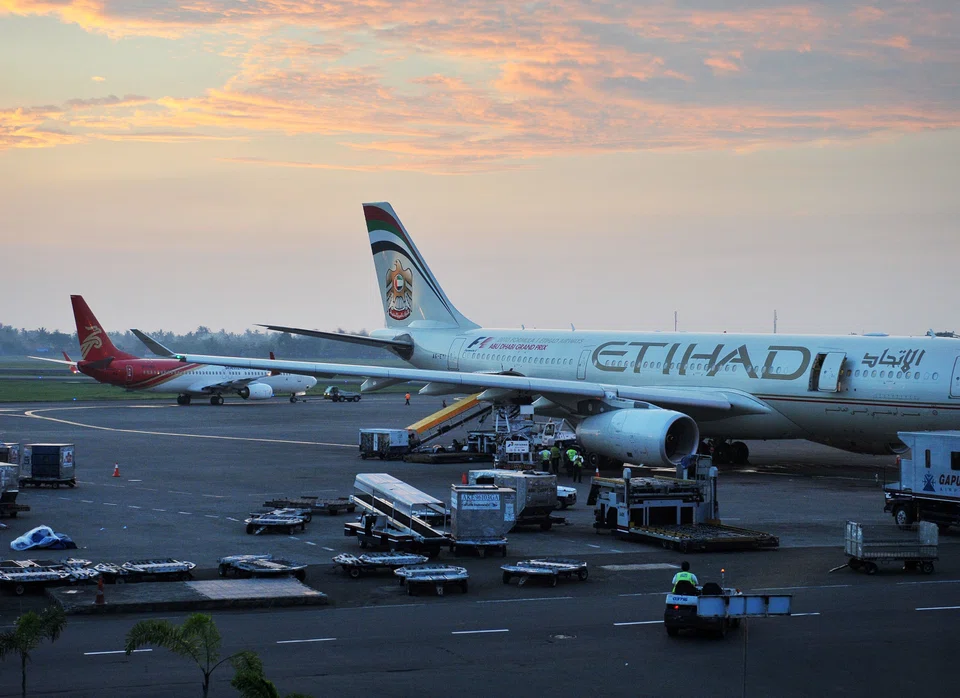
DeeperDive is a beta AI feature. Refer to full articles for the facts.
[NEW YORK] Etihad Airways on Thursday answered US airlines' claims that the Abu Dhabi-based carrier benefits from subsidies, alleging that those airlines received more than US$70 billion in government support since 2000, largely via bankruptcy protection and pension guarantees.
Etihad presented its subsidy claims as the Obama administration is slated to broaden its review of US carriers'allegations that Etihad, Emirates and Qatar Airways have received more than US$40 billion in Gulf-state subsidies, letting them lower prices and push US competitors out of certain markets.
The Gulf carriers have denied the subsidy allegations. Rather, Etihad says it has received equity and loans from its sole shareholder, the government of Abu Dhabi.
Risk Advisory Group Plc, hired by Etihad, reviewed public data on Delta Air Lines Inc, United Continental Holdings Inc, American Airlines Group Inc and the companies with which they have merged to arrive at the US$70 billion figure. "We simply wish to highlight the fact that US carriers have been benefiting and continue to benefit from a highly favourable legal regime," Etihad's General Counsel Jim Callaghan said in a news release.
US airlines have dismissed similar charges. "The Chapter 11 (bankruptcy) process is not a 'subsidy,' as established by international trade law," Jill Zuckman, spokeswoman for a US airline-union coalition known as the Partnership for Open & Fair Skies, said on Thursday.
"In addition, US taxpayers are not liable for any restructuring of airline pension plans in bankruptcy."
Navigate Asia in
a new global order
Get the insights delivered to your inbox.
REUTERS
Share with us your feedback on BT's products and services
TRENDING NOW

Shelving S$5 billion office redevelopment plan proved ‘wise’ as geopolitical risks mount: OCBC chairman

Eurokars Group introduces rental car franchises Enterprise Rent-A-Car, National Car Rental, and Alamo to Singapore

20 photos that show how dramatically Singapore has changed in two decades
Singapore’s key exports up 15.3% in March from electronics surge, exceeding forecasts

