How Singapore has remained a world-leading port despite the pandemic
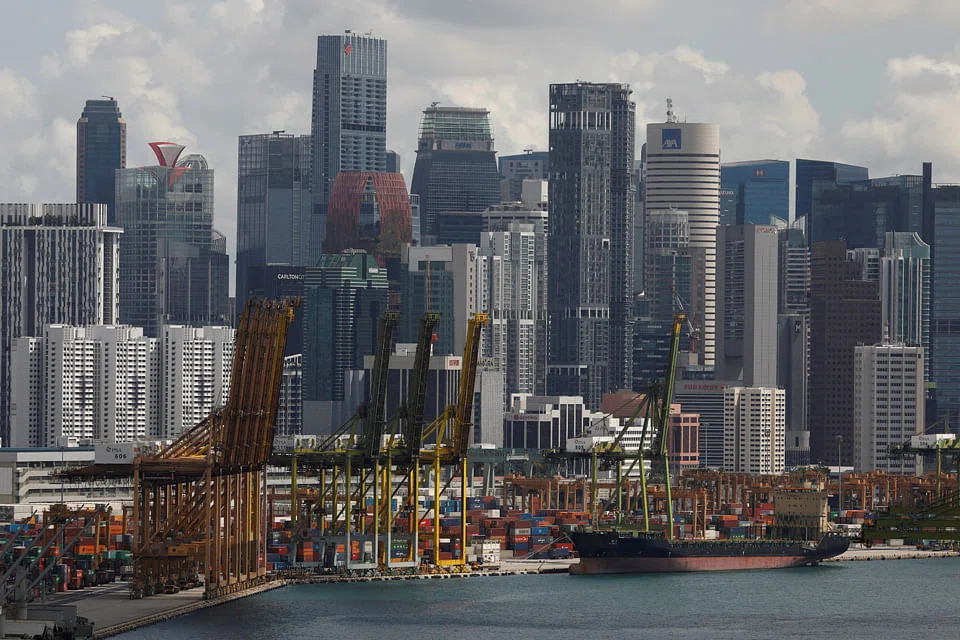
WITH a world-leading port, excellent shipping services and supportive shipping business environment, Singapore has maintained its lead in the Xinhua-Baltic International Shipping Centre Development Index as the world's top maritime centre for the eighth year running.
The index is an independent ranking of the performance of 43 cities offering port and shipping business services.
Under the support and leadership of the Maritime and Port Authority of Singapore (MPA), the island-state has continued to develop its maritime industry with backing for technological advances in future shipping fuels, innovation, safety improvements, nurturing young talent, and maritime workforce transformation.
Singapore's government has played a vital role in facilitating the development of the country as an international shipping centre.
The government provides forward-looking planning and guidance in many aspects, including the integration of the shipping industry chain, harbour industry development and intelligent and green port technology, which is instrumental in promoting Singapore's development as an international shipping centre.
Singapore's favourable business environment, supportive tariff policy, flexible and user-friendly registration and management system regarding ships and crew, as well as a variety of shipping-related incentive policies, all foster positive conditions to attract a large amount of shipping resources.
The Malacca Strait, along which Singapore is situated, connects the Pacific Ocean and Indian Ocean. Known as the "lifeline" of maritime shipping, it is a shipping passage connecting countries in East Asia, Oceania, South Asia, West Asia, Africa and Europe.
Being situated near the Malacca Strait is Singapore's most significant geographical advantage.
Since 2000, emerging economies in the Asia-Pacific region, most notably China, have developed rapidly, with the sophisticated manufacturing industries in China, Japan, South Korea and Asean supporting the boom in global trade.
This has in turn spurred strong shipping demand in the Asia-Pacific region, which makes Singapore's geographical advantage even more prominent.
Relying on its distinct geographical advantage and building on the development of the traditional freight sector, Singapore has attracted a variety of maritime enterprises, and gradually built a comprehensive shipping industry ecosystem.
It has not only successfully congregated the greatest number of the world's international shipping groups, but has also attracted international commodity traders, which enriches its shipping and trade business network.
The concentration of players with respect to shipping insurance, maritime law and arbitration, shipping financing and shipping brokerage has strengthened Singapore's shipping services sector.
The scientific research strength of universities, research centres, technology companies, startups and other institutions based in the country has injected innovation capabilities for future shipping development.
Singapore's maritime sector employs 170,000 people, contributes 7 per cent of the country's GDP, and is home to over 5,000 companies.
Singapore has also played an active role in proposing pathways for the decarbonisation of the industry and has worked to protect seafarers caught up in the crew change crisis resulting from the Covid-19 pandemic.
Its drive and activity on these many fronts have kept it at the top of the rankings.
Despite the pandemic, Singapore port handled its second-highest ever container throughput at 36.9 million TEUs. According to MarineTraffic, 33,133 vessels exceeding 5,000 gross tonnes arrived at the port in 2020. Singapore also retained its position as the top bunker port, registering 49.83 million tonnes in 2020, its second highest bunker sales ever and up 5 per cent on the previous year.
According to MPA chief executive Quah Ley Hoon, 17 international shipping groups either set up or expanded their operations in Singapore in 2020.
Singapore is also pushing its credentials as an arbitration centre and saw an increase of 5 per cent in the number of cases handled.
But Singapore is not resting on its laurels and continues to plan for continued growth.
Looking forward, MPA says that as its next generation port in Tuas gradually begins operations, much of which will be digitalised and automated, more skilled jobs will be created in the port ecosystem with more systems engineering professionals needed to design and maintain complex automated systems.
MPA is targeting more investments and hoping to bring in US$15 billion in business spending commitments from shipping companies between 2020 to 2024.
MPA also notes that as part of its strategy to identify and adopt new technologies, it will support more maritime R&D projects, and aims to triple the number of maritime technology startups supported under its programmes by 2025.
- Cao Zhan Zhong is Head of Indices Department, China Economic Information Service. Lu Su Ling is Head, Baltic Exchange Asia.