

OW collapse shocks industry; damage limitation top priority
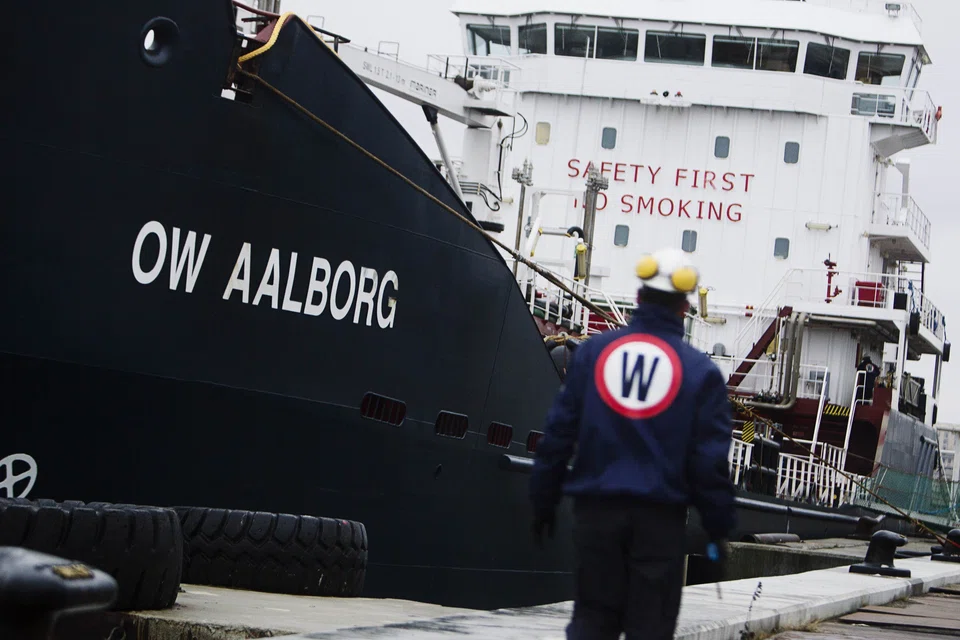
Hamburg
JUST as the International Bunker Industry Association (IBIA) was winding up its annual convention in Hamburg on Wednesday evening last week, the news that OW Bunker was in deep trouble started to filter through.
The convention had been a success with a range of useful presentations. The emphasis had been very much on the impending 0.1 per cent sulphur in marine fuel regulations that will come into force in designated Emission Control Areas (ECAs) on Jan 1 next year.
It is true that somebody attending the Hamburg gathering from Singapore had a word in my ear on Tuesday evening. The message was that OW was on its way out. Frankly, I thought the person in question was overstating the problem.
Of course, the whole bunkering industry was aware that a bad-news announcement from the company was expected, against a background of falling oil prices. Nevertheless, few realised how serious the situation is. So, when the company's global sales director Steve Leonard stood in for its vice-president, physical distribution, Soren Meyer, on Wednesday morning to present an overview of the price implications of new fuels entering the market, no alarm bells rang in delegates' minds.
Mr Leonard gave a workmanlike overview of what was likely to happen in the New Year. He predicted that there would be enough marine gas oil, complying with the new sulphur limit, to satisfy demand. He thought there would be a temporary spike in prices after the deadline. Ironically, he confidently told delegates that they could be assured that OW Bunker would have plenty of the new ultra low sulphur fuel oil, which has just been developed by several oil companies.
The news that the global bunker player was in really deep trouble and had been hit by an alleged fraud in its Singapore operation started to come in late in the day. Mobile phones in Hamburg were very busy into the small hours as bunker industry executives frantically tried to find out what their company's exposure to an OW collapse might be.
There was just one topic for discussion over the breakfast tables at Hamburg's Grand Elysee hotel on Thursday morning as the enormity of what was happening started to sink in. One senior London-based bunker said that the implications of collapse could be massive due to the company's large market share and global operations. He added that he understood many of the barges used by OW for its large physical supply operation were chartered in.
On Wednesday, OW Bunker disclosed a US$125 million "fraud loss" in a Singapore subsidiary and also "risk management" (futures trading) losses of US$125 million and said that it was trying to secure an arrangement with its bankers. That attempt failed and on Thursday the company said that it was filing for restructuring in the Danish courts.
However, by Friday the company's board of directors announced that it had "not been possible to find a sustainable solution" and the main operating companies of the OW Bunker Group were filing for bankruptcy. Early on Friday evening an official notice of bankruptcy was posted on the OW website.
Company chairman Niels Henrik Jensen said in a statement that a sale as a going concern was not a realistic option. The company also said: "As a result of the internal investigation it has been decided to report two key employees in the Singapore-based subsidiary Dynamic Oil Trading (DOT) to the police pursuant to Section 299 of the Danish penal code and to relieve them of duty immediately."
The speed with which this catastrophe hit a bunker trader and supplier that, some reports say, accounts for 10 per cent of the market, was breathtaking. There are of course some echoes of Nick Leeson and the Barings collapse nearly two decades ago.
But this latest disaster has some interesting differences, apart from occurring in an industry that usually remains well away from the public's gaze. For one thing, actual fraud is being alleged, rather than just keeping rogue trading a secret from the employer.
Interestingly, the massive futures trading losses were incurred by the company's Danish-based risk management section. Just about the last action of the OW board was to dismiss its executive vice-president who ran its futures trading operation.
The repercussions of the OW bankruptcy will take some time to become really obvious, but there must be a lot of very worried people in many bunkers-related firms around the world. Even those with no connections with OW may well be looking very closely at their risk management policies.
No doubt there will be lessons to be drawn, but for now damage limitation will the top priority.
TRENDING NOW

‘My grandfather’s legacy’: Sherman Kwek lays out three-year plan for CDL to drive returns

He built the Vingroup empire. Now South-east Asia’s richest man is handing some key roles to his sons
Canada is upping oil flows to Asia, but South-east Asia’s refineries aren’t ready to handle them yet

Deal between tycoon friends sparks scrutiny of Philippine power sector

