More help for aviation industry, plus tourism, hotel, convention sectors

Singapore
HARD hit by the Covid-19 pandemic, aviation firms are receiving an enhanced support package and wage offsets to retain employees, which should help to address the immediate challenges facing these businesses.
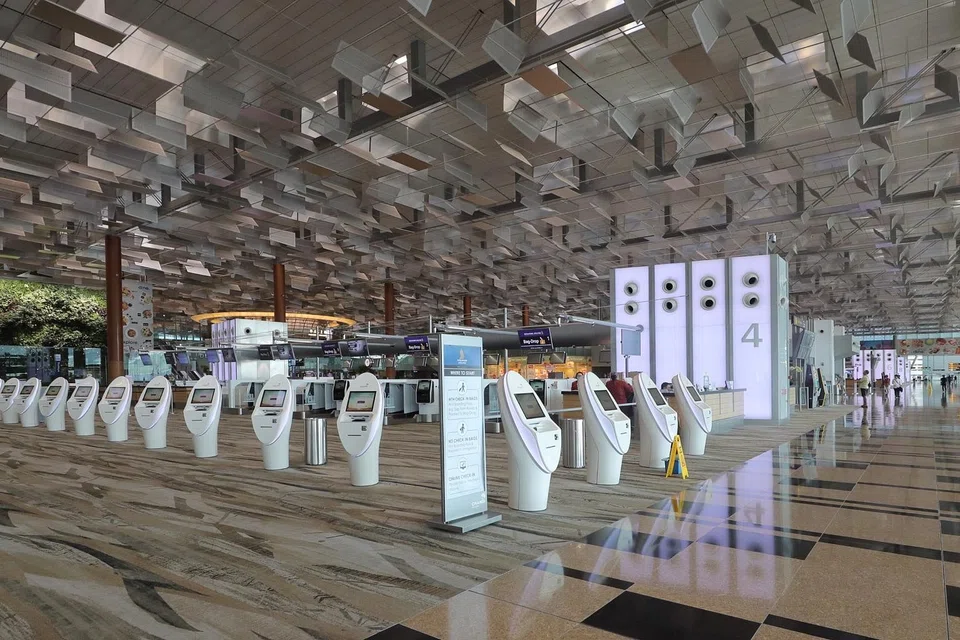
Singapore's air hub, which has no domestic market to fall back on, has seen daily passenger traffic fall by over 90 per cent. A key pillar of Singapore's economy, the Changi air hub - along with adjacent industries - accounts for over 5 per cent GDP and employs some 192,000 people.
Speaking in Parliament on Thursday, Deputy Prime Minister and Finance Minister Heng Swee Keat said: "Our aviation sector has significant linkages to the rest of the economy. If it collapses in a crisis, it will be very hard for the aviation industries to rebuild after the crisis is over, and the recovery of the rest of the economy will be impeded."
To help the aviation industry fend off its biggest challenge, the government is enhancing the Jobs Support Scheme, under which it will provide a 75 per cent wage offset for the first S$4,600 of monthly wages for every local worker. To be paid in the same months as the main Jobs Support Scheme pay-outs, the enhancement will cost over S$400 million.
Aside from the aviation industry, the enhanced scheme will also apply to hotels, travel agents, tourist attractions, cruise lines and cruise terminal operators, as well as purpose built MICE venues. Qualifying commerical properties - including hotels, serviced apartments, tourist attractions and MICE venues - will also receive a property tax rebate of 100 per cent. Meanwhile, the government is setting aside S$90 million to support the tourism industry's recovery, "when the time is right".
In addition, the government will roll out a S$350 million enhanced aviation support package, which will incorporate rebates on landing and parking charges as well as rental relief for airlines, ground-handlers and cargo agents.
Mr Heng highlighted that the support package would help Singapore maintain minimum levels of connectivity so that Singaporeans can return home from overseas and essential goods can be brought in.
Under the package, airlines will receive a 100 per cent rebate on parking charges at Changi Airport up until Oct 31, a 50 per cent rental rebate for airlines' lounges and offices at Changi Airport's terminals between April 1 and Oct 31 as well as an extension of the 10 per cent landing charge rebate for scheduled passenger flights until Oct 31.
Similarly, the cargo sector will see an extension of the 10 per cent landing charge rebate until Oct 31; 20 per cent rental rebates for cargo agents at Changi Airfreight Centre between April 1 and Oct 31; as well as an additional six month waiver of the planned 1 per cent annual increase in landing, parking and aerobridge charges for freighter flights.
Ground-handlers will get rental rebates for their lounges and offices at Changi Airport.
Alex Hungate, president and chief executive of ground-handler SATS, said the level of support significantly increases its capacity to protect jobs during this downturn and preserves its organisational capabilities.
Aviation analyst Shukor Yusof at Endau Analytics said: "The government has been quick to respond to this crisis, and the funds will go some way to alleviate or delay job losses. This would depend on how long the virus persists. The longer it goes, the less effective the package becomes."
To help with cashflow, the Civil Aviation Authority of Singapore (CAAS) will allow Singapore carriers and airport operator Changi Airport Group (CAG) to partially or completely defer the payment of S$140 million in certain fees, such as for new and renewed Certificates of Airworthiness for airlines and the airport licence fee payable by CAG. The fees, which are for the period April 1, 2020, to March 31, 2021, can be pushed back by up to a year.
The Maritime and Port Authority of Singapore will - among other measures - extend the 50 per cent port dues concession for passenger vessels till the end of the year, and work with terminal operator Singapore Cruise Centre to help regional ferry operators.
Dr Wong King Yin, a lecturer in tourism and digital marketing at Nanyang Business School, reckons that the Resilience Budget addressed the greatest challenges faced by businesses in the tourism industry now - cash flow and retaining employees.
Noting that it will now be harder for the tourism industry to rely on the domestic market after stricter safe distancing measures were announced this week, she suggested that the industry may also need to look at how to position themselves for future crises, such as training employees to better multi-task.
Aloysius Arlando, chief executive of SingEx Holding, said: "We welcome the additional relief measures in the Resilience Budget that will help address both immediate and urgent challenges, as well as strengthen long term capabilities. The full property tax rebate for 2020 will go a long way in helping us to manage our cost considerations."
With all events at its venues Singapore EXPO & MAX Atria cancelled until April 30, both business activity and foot traffic have been impacted.
KEY POINTS