

Virus sends Changi passenger numbers down 70% in March
In Q1, aircraft movements shrank 20.1 per cent to 75,900; airfreight throughput fell 8 per cent to 453,000 tonnes
Singapore
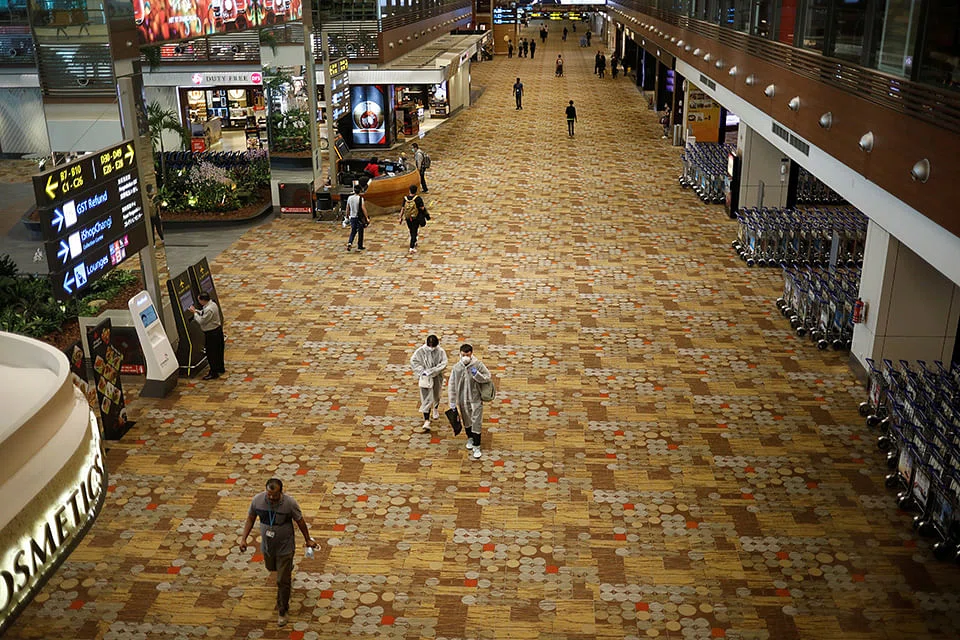
CHANGI Airport reported a drop of 70.7 per cent in passenger numbers last month from a year ago, as the coronavirus pandemic continued to pummel global aviation.
The airport handled just 1.65 million passengers in March, compared with 5.63 million in the corresponding month last year.
During the month, aircraft movements declined by 49.9 per cent to 16,200 landings and takeoffs; airfreight throughput fell by 19.1 per cent to 149,000 tonnes.
"Air travel demand remained significantly impacted by the Covid-19 pandemic, with all regions recording steep declines in March," Changi Airport Group (CAG) said in a statement on Friday.
During the last seven days of March, the airport said, passenger movements plunged 98 per cent from the year before, in line with an 87 per cent drop in flights as governments worldwide walled off their borders.
On March 23, all short-term visitors from anywhere in the world were disallowed entry or transit through Singapore.
Overall for the first quarter of 2020, Changi Airport handled 11 million passengers, a year-on-year fall of 32.7 per cent.
In the same period, aircraft movements shrank 20.1 per cent to 75,900, while airfreight throughput fell 8 per cent to 453,000 tonnes.
The decrease in passenger flights corresponded with a dip in airfreight throughput, with both import and export flows slumping.
The CAG noted that for April, the number of scheduled flights at the airport is 96 per cent fewer than originally scheduled.
Brendan Sobie, independent analyst of Sobie Aviation, said the numbers were "nothing surprising" amid the worsening crisis.
"For the near future, we can expect a prolonged trough, with Changi passenger traffic down 98 per cent and the number of passenger flights down 96 per cent."
He noted, however, that there was an uptick in freighter flights at Changi.
Due to low numbers, Changi Airport Terminal 2 will suspend operations on May 1 for 18 months, which Mr Sobie said is a "sensible" move but which also highlighted the expectation that it will "likely be a couple of years" for the aviation market to fully recover.
He added that Terminal 4, which now has virtually zero traffic, could be temporarily closed and then reopened when aviation begins to recover. That is dependent on when AirAsia - the airline with the most flights in T4 - resumes services, he said.
If so, just T1 and T3 would remain open. "While it is possible to handle the very limited number of current flights in just one terminal, keeping two terminals open is sensible, so that the facility is ready for the initial recovery phase. Having two terminals open also gets around too many inconvenient terminal switches for airlines," said the analyst.
The Covid-19 pandemic is expected to radically transform the aviation industry, and while governments worldwide are taking action to help domestic airlines weather the storm, the "when" and "how" of recovery is uncertain at best.
In its latest estimate, the International Air Transport Association (Iata) predicted the coronavirus pandemic will hit global airline passenger revenues by 55 per cent, or US$314 billion (S$447 billion), in 2020, compared with a year ago.
"The scale of the crisis makes a sharp V-shaped recovery unlikely," said Iata director-general and chief executive Alexandre de Juniac, adding that the industry's outlook "grows darker by the day".
It will be a more gradual U-shaped recovery, with domestic travel coming back faster than the international market, he noted.
Further Iata analysis said 25 million jobs in aviation and related sectors worldwide are in danger, with 11.2 million of them in Asia-Pacific alone. THE STRAITS TIMES
TRENDING NOW

Fed hike throws Singapore banks a margin lifeline; UOB most likely to feel impact

He built the Vingroup empire. Now South-east Asia’s richest man is handing some key roles to his sons

Real-estate veteran Desmond Sim quits from CEO roles at Realion, ETC

Chagee, Mixue and Luckin won the market. Sustaining their edge is the harder part

