

Volkswagen scandal unnerves markets, threatens economies
London
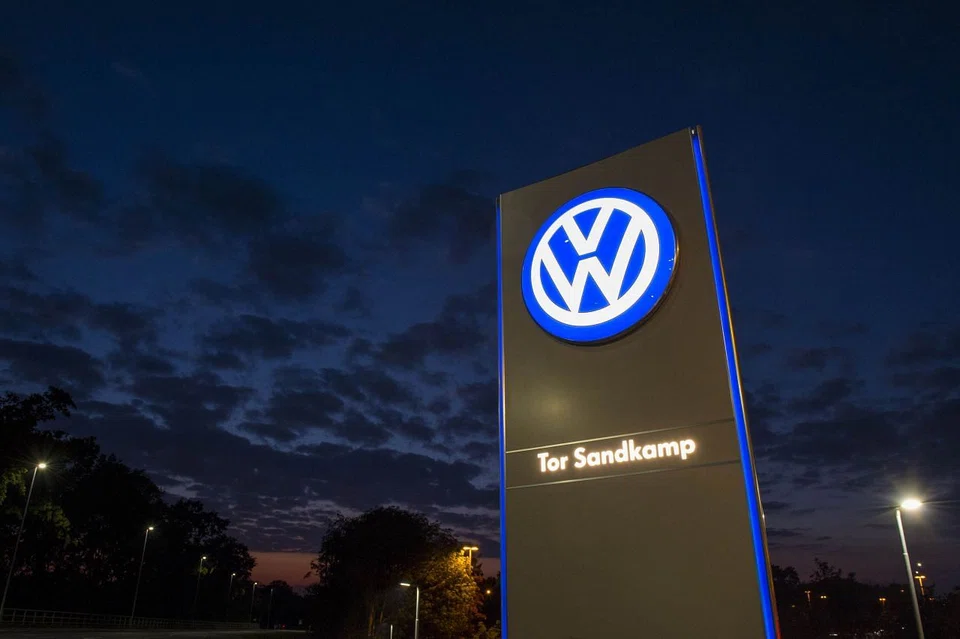
THE Volkswagen diesel emissions scandal is not only raising questions on chicanery in other motor companies but has shamed European anti- pollution regulators and their governments.
The fines and legal costs of Volkswagen and other errant motor companies are forecast to reach billions of dollars, which will have a negative multiplier impact on parts suppliers and auto retailers, employment and the European economy, especially Germany.
Reflecting negative expectations, Volkswagen's shares have slumped 58 per cent from their 2015 peak a few months ago while the prices of its bonds have also tumbled. According to bond traders, the annual cost to insure 10 million euros (S$15.9 million) of Volkswagen debt against default for five years has soared almost three times to junk bond pricing of 214,000 euros. Owners of Skoda, Seat, Audi and other Volkswagen brands may be forced to have their cars retested and adjusted for pollution as the company has acknowledged that it tinkered with smaller 1.2-litre diesel engines as well as 1.6 and 2-litre models, sold in both Europe and America.
The steep slide in European motor shares (see table) illustrates market worries that several other motor companies' profitability will be damaged by costs of diesel vehicle returns, retesting, large potential legal bills and settlements, and a steep downturn in sales. The German stock market has slumped on fears of a downturn in export orders for German manufactured goods. Switzerland announced last Saturday that it would block sales of new Volkswagens with suspect emissions. Norway may follow suit and Asia-Pacific nations from Australia to Korea and India are demanding to know whether any of the 11 million cars that Volkswagen tested falsely were sold in these countries.
The European Parliament's environment committee voted last week for realistic air pollutant emissions tests to begin no later than 2017, but clean air campaigners who warned about excessive noxious motor fumes a year ago want governments to move a lot faster.
"For too long, European carmakers have been ducking the EU's rules to enable them to keep their highly polluting cars on the road," said Keith Taylor, Green member of the European Parliament (MEP) for south-east England. "The huge scandal with Volkswagen on car pollution rules must focus the minds of EU politicians and the British government. Air pollution kills tens of thousands in the UK every year. With the added unchecked emissions from Volkswagen cars, I worry about how much worse the situation actually is."
European environmental legislation and regulation and corporate control are much more lax than in the US. Environmentalists are outraged about unconfirmed reports that former chief executive Martin Winterkorn could receive a resignation payoff of up to 60 million euros. In the US, however, Volkswagen chiefs and other executives face criminal charges for cheating in diesel emissions tests.
Bill Nelson, the Florida Democrat senator, said in a scathing speech that the scandal should result in criminal charges and regulatory reform.
"I lay this not only on the corporate culture, I lay it at the feet of the US regulatory agencies who ought to be doing their job, ought to be doing it in a forceful way, and then there ought to be some prosecutions and corporate executives who knew this and have done it ought to be going to jail," Senator Nelson said. "What is the Obama administration doing about this? Why are they not dropping the hammer on corporations and corporate executives that are purposely deceiving the American people about faulty automobile products that cause the loss of lives and property?"
Environmentalists contend that the response of European regulators and governments to the dangers of nitrogen oxide emissions in the past has been shameful. Norman Baker, the Liberal Democrats' former transport minister, alleged that German Chancellor Angela Merkel had leaned on UK Prime Minister David Cameron to delay new emission limits in Britain so as to protect the German car industry.
A UK Sunday Times article last September had a headline, "Diesel cars built to cheat test for toxic fumes". That article reported findings by Dutch researchers that onboard car computers were being programmed to fool emissions testers. A year later, US officials managed to obtain an admission from Volkswagen that its diesels were fitted with "defeat" cheating software. These sensed stationary test conditions and reduced emissions that in normal driving proved up to 35 times more noxious.
Matthias Müller, the head of Porsche who is the Volkswagen group's new chief executive, promised "even tougher compliance and governance standards in the company".
Independent environmental and safety experts, however, are sceptical. "I don't see them changing this behaviour unless criminal penalties are enacted into laws that allow (prosecutors) to put the executives in jail," Joan Claybrook, a former US highway safety administrator, told The New York Times.
According to the Sunday Times, "the roots of the diesel scandal stretch back to the early 1990s when European governments were beginning to worry about greenhouse gases and climate change. In the rush to reduce carbon dioxide (CO2) emissions, diesel was seen as a potential saviour".
"Fuel economy tests in favour of diesel were quite strong," said Martin Williams, former head of the government's air quality research unit. "If we had had the evidence (that) we have now, then things might have been very different."
A 1993 Department of the Environment report commented that "the impact of diesel vehicles on urban air quality is a serious one . . . any increase in the proportion of diesel vehicles on our urban streets is to be viewed with considerable concern unless problems of particulate matter and nitrogen oxides emissions are effectively addressed".
Seven million premature deaths are caused by air pollution each year, according to the World Health Organization (WHO). The causes include motor fumes, as well as indoor and outdoor pollution such as smoke from cooking stoves in developing countries. About 80 per cent of deaths related to outdoor pollution are linked to heart disease and strokes, 14 per cent to lung or respiratory diseases, and 6 per cent to cancer, says the WHO.
READ MORE: Mueller starts damage control as new VW CEO
TRENDING NOW

He built the Vingroup empire. Now South-east Asia’s richest man is handing some key roles to his sons
China’s Pinglu Canal likely to benefit Singapore, other South-east Asia ports in the long term
Suntec Reit to increase Singapore focus, sell three Australia properties
Despite the de-dollarisation debate, demand for dollar liquidity in Asia is growing

