Burn not out
THIS WEEK'S TOPIC: How do you, as a business leader, cope with or, better yet, prevent burnout at work?
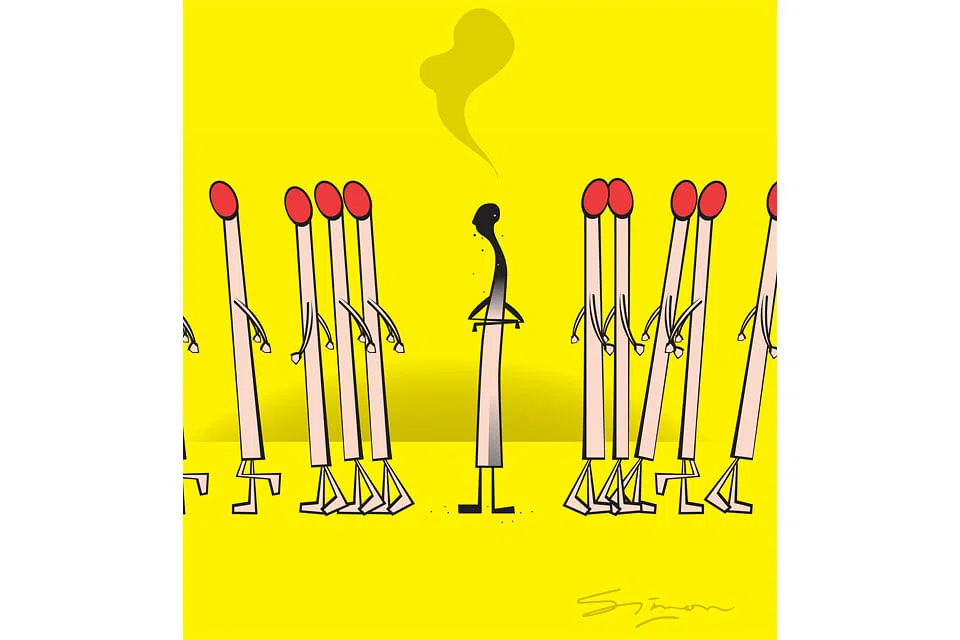
THIS WEEK'S TOPIC: How do you, as a business leader, cope with or, better yet, prevent burnout at work?
Chris Riley Chief Executive, Singapore Ogilvy Singapore
A CAREER is a marathon, not a sprint, and managing it requires a delicate balancing act to lead by example with diligence and passion, while at the same time, being able to delegate effectively. We need to support and show others that a healthy work-life balance in today's always-on culture is not elusive.
In a disrupted advertising industry where clients come first, there are a few observations and antidotes I've used to prevent burnout. Leadership requires mental and physical stamina, a clear purpose and mission, a strong sense of (self-deprecating) humour, the ability to avoid playing politics and the need for brilliant team play.
John Bittleston Founder and Chair Terrific Mentors International Pte Ltd
MOST people assume burnout at work is always due to having too much work to do. I disagree. An employee's burnout results either from lack of confidence at work or from crumbling relationships at home. So the first thing to do when signs of burnout appear is to get the home picture clear. If home is the problem you may yourself want to help, or to refer or to simply give time off.
I prefer to help unless a psychiatric analysis seems essential.
If work is the problem, carefully review the employee's scope of work, routine systems and relationships with peers, subordinates and bosses. Too many bosses is often the fault in today's matrix-driven world. Where there is unmanageable workload, reduce it. Where systems are inefficient, change them.
Cheung Pui Yuen Chief Executive Officer Deloitte Singapore
WITH smart technology, it is almost impossible for us to disconnect completely from work. This makes good time management skills very important to achieve good work life balance. It boils down to our ability to take control of our own mental and physical health. Beyond work, I prioritise good nutrition and regular physical activity, such as clocking steps daily.
I also make it a point to spend quality time with my family. At the workplace, I believe in the power of open communication - the ability to share ideas and concerns and have fun at work helps prevent burnout.
Callum Laing CEO MBH Corporation plc
RECOGNISING burnout exists is the first step but critically it is understanding that people handle and process stress differently. Individuals also unwind and relax in very different ways.
Trying to mandate that everyone de-stresses in the same way is almost guaranteed to fail.
At our company we don't track holidays; people are encouraged to take as much time off as they need.
However, we realised that even that didn't work in this "always on" environment. One strategy that we are now exploring is to shut the entire company for a week, twice a year, to force ourselves and our teams to properly switch off.
Lionel Lim VP and MD, APAC and Japan Pivotal
TODAY'S fast-paced environment has no doubt elevated stress levels across employee levels. Nicely decorated office spaces and well-stocked pantries are amazing perks, but may just be hidden trade-offs for long working hours - a key factor to employee burnout.
Creating a psychologically safe workplace is one way to improve employees' wellbeing. At Pivotal, employees are encouraged to be comfortable in voicing their opinions and even failures.
Our employees learn and grow together - regardless of their positions. This collaborative culture allows every individual to be appreciative of everyone's role, fostering strong emotional support and bonds across teams which in turn, reduces burnout.
Tan Ming Wei Deputy Physician Manager WhiteCoat
AS a designated workplace doctor, my training in occupational medicine has trained me to be cognisant of symptoms of burnout so that I can make an accurate diagnosis and provide timely help to those in need.
The World Health Organisation's recognition of burnout creates awareness about the condition and available options to manage it.
I often advocate to my team and patients that managing stress levels, recharging and having proper support, are key to preventing burnout and maintaining a healthy and meaningful career. Given that at-risk individuals often have hectic schedules, telehealth is a convenient way to obtain medical support if needed.
Khor Hock Seng Group CEO Great Eastern
IN Singapore's fast-paced working environment, it's easy for us to forget to take a break. As a Life Company, we enable our employees to live life to the fullest. We encourage our employees to champion a healthy work environment with the shared values of integrity, initiative and involvement.
Under our LIFE Programme for employees - which includes regular health checks and company-wide exercise challenges and incentives - we seek to empower them to make positive lifestyle changes and cope with daily "stressors". Moreover, we encourage our employees to "fully unplug" during weekends and vacations - allowing them the rest they need to continue performing at their best.
Suganthi Shivkumar Managing Director, Asean Qlik
IN a time of unprecedented change, burnout can happen more easily as you are required to do more, accomplish more and do all this while constantly upskilling and staying relevant. To be successful in the workplace, having a functioning team aligned to the same goal is critical.
A collaborative culture allows employees to support each other in an ebb and flow of "give and take" as they move their team, department and organisation forward. The feeling of going at a task alone is not only exhausting but also takes a toll on your personal life and ability to recharge.
Cheong Hoe Wai President, Oil and Gas Business Black & Veatch Group
STRESS at work is not necessarily a bad thing. Most people function better under some amount of stress and pressure from deadlines - it often brings out the best in us.
But prolonged stress and long hours at work signal an undesirable situation that will have negative health effects on us. One very useful way to counter stress at work is to effectively delegate tasks to subordinates, allowing one to prioritise time towards higher-level strategic decision-making. Needless to say, the effectiveness of any delegation depends on the capability of subordinates and how much you trust them to make the right decisions with minimum intervention from you. Engaging in hobbies outside work is another effective means of relieving stress.
For example, I enjoy fishing, fresh and saltwater. I'm not your regular weekend angler but a fairly intense enthusiast who analyses fishing methods, water temperatures, feeding habits, different types and colour of bait/tackle, etc etc. I read widely and treat it as a challenging art form - how to locate and entice fish to take my bait. The point is, one has to totally engage and immerse oneself into a hobby for it to be effective as a stress reliever.
The ultimate goal is for the mind to be so totally immersed that you forget about work completely, for a short duration. It can even be something as fun as a family vacation, but the criteria must be total immersion - no emails, no texts/phones, no office contact.
Victor Mills Chief Executive Singapore International Chamber of Commerce
BURNOUT at work is caused by one of two things: a toxic workplace usually, because of toxic bosses, or a feeling of inadequacy or a skills gap for the job.
The cure for the first is to move on if the company is unwilling or unable to help. If you like the job, the cure for the second is to ask for help from your colleagues and your boss. Most times you'll be supported. If you don't like the job, leave. In either case, never suffer in silence. Take action. You'll feel better and perform better.
Matthieu Imbert-Bouchard Managing Director Robert Half Singapore
RESPECTING work-life balance goes a long way towards preventing burnout. Leaders need to serve as a model by leaving work on time and disconnecting from work after business hours. Being fair and setting realistic goals and timelines are crucial as well.
During busy times, help employees understand the extra work is not the norm. Leaders should also recognise the signs that might indicate burnout and address those by - for example - assigning a mentor or hiring temporary support. Providing an employee helpline should they need to speak to someone to destress is also helpful to prevent burnout in the workplace.
Mike Davie CEO Quadrant
THE best way to avoid burnout at work is to keep a fit body and mind. To ensure my body is able to handle the stress of running a startup, I compete in Xterra (off-road triathlon) and run races all over the region, including Malaysia, Thailand and the Philippines. In the past I have also run the DMZ Half Marathon along the border between North and South Korea.
Training for these races forces me to get out of the office and push myself mentally and physically. Most importantly, it allows me to step away from the phone and computer and think of the bigger picture and prioritise my tasks.
Furthermore, such intense physical exercise encourages me to eat properly and drink plenty of water. It also helps me sleep well and generally reduces my own stress levels. By staying mentally and physically fit, I can handle better what stresses our startup throws at me.
Tony Lombardo Chief Executive Officer, Asia Lendlease
WHAT enables me to operate sustainably at a high level is having a team that I can trust and rely on for mutual support. My focus is on building a great culture in which my team can thrive and do their best work.
I believe that creating a culture of care in the workplace contributes to our sense of wellbeing. Our health & wellbeing framework helps colleagues find the support they need, improve stress management and inculcate mindfulness. At Lendlease, we also offer flexible work to better accommodate our employees' lifestyles. All these contribute towards a better quality of work life and enables all of us to manage work stress better to prevent burnout.
Motohiko Uno President, Singapore Fujitsu Asia Pte Ltd
EACH of us should be free to embrace infocom-tech solutions to make our lives and work easier, including to prevent burnout. Employees are one of our valued assets, and we respect diversity and support individual long-term growth as part of our corporate philosophy.
I am conscious to walk the talk by setting a corporate culture that improves the worklife balance and productivity of employees, such as tapping on mobile technology to cater to varied work styles and needs. In addition to participating in initiatives such as not scheduling meetings after working hours, I balance my work commitments with my personal pursuits. From taking part in marathons and playing golf, to making time to meet friends over a meal or drinks, it is a proactive commitment every day to take charge of me and my team's mental health.
Chris J Reed Global CEO and Founder Black Marketing
BURNOUT is a myth. Is Cristiano Ronaldo at 35 years old burnt out? Nope. He's still scoring hatricks and leading his team to titles while playing 60 games a season, never having a break for 20 years. As a leader you are in charge of how you deal with challenges, the ups and downs of business, people. Blaming burnout is lazy and an easy excuse.
When you have a passion for what you do and love what you do, funnily enough you never feel burnout. I've run Black Marketing for six years and never taken a proper holiday.
I never feel like I need to. I cycle and do weights daily, live life to the full, work hard and play harder seven days/nights a week. If you feel burnout you really need to look at changing your country, environment, company. . . entire outlook. Maybe become an entrepreneur and live your life how you want to; not how your bosses want you too . . .
Jayajyoti Sengupta, Head of Asia-Pacific and Japan Cognizant
DISCIPLINE is key to managing work-life balance. To me, preventing burnout is about everything from recognising triggers and determining priorities, to making room for downtime, recreation and hobbies by dropping off the grid. Stress is as much about work pressure as it is about one's ability to deal with that pressure.
The mantra is to enjoy work, but not let achievement and ambition become one's nemesis. My advice is to establish boundaries, stop looking at inhuman responsibilities as badges of honour, break work into smaller, more manageable tasks, and make self-care more proactive than reactive. Not being connected to what truly matters to you aggravates stress. Leaders must therefore create a culture of engagement, empowerment and learning.
Dileep Nair Independent Director Thakral Corporation Limited
FINDING passion in my work has been my personal mantra over the years. As the saying goes, "Do what you love and you'll never work a day in your life". Even so, burnout has always been lurking because of excessive or prolonged stress. My safety valve has been meditation, almost daily - finding quiet time for silent contemplation. Even the workaholic that he was, Lee Kuan Yew practised meditation and found solace in it.
As a leader, one also has the responsibility to avoid burnout amongst your staff. For many, finding passion can be hard, and doing it even harder. In my interactions with my colleagues, I have always encouraged them to have a life outside work. Helping them to achieve a balance in their lives has been the best way of ensuring their loyalty and performance in the firm.
Violet Lim CEO & Co-Founder Lunch Actually Group
I START off my day with 10-10-10 - 10 minutes of gratitude, 10 minutes of learning (reading or podcast) and 10 minutes of journaling. This is followed by either seven minutes or 30 minutes of exercise depending on time availability. This gives me a good foundation to start off my day. Whenever I practise my morning routine, I feel energised and pumped up for the rest of the day.
I also manage stress separating the emotions from the event.
By taking a step back and evaluating the situation objectively without the emotions, it helps me to come up with a strategy and plan to deal with the situation, rather than get sucked into the potentially negative energy of the situation.
At our quarterly town halls, I often share my personal experiences and coping strategies to help my associates prevent burnout at work.
Mitch Young SVP, Asia-Pacific and Japan ServiceNow
BUSINESS leaders must set an example to their employees. Long hours have proven to lead to physical and emotional exhaustion, and lower productivity levels. The rise of technologies such as connected devices, Artificial Intelligence (AI) and cloud infrastructure means that businesses have new ways to modernise routine processes, streamline workflows, and foster greater collaboration among teams.
We have a responsibility to lead by example.
As a leader, one of the greatest gifts we can give is to free up our employee's capacity to focus on more meaningful work from which they derive meaning and fulfillment. Building an infrastructure to support employees in their working environment leads to greater levels of job enjoyment that mitigate chances of burnout.
Ian Lee CEO, Asia-Pacific The Adecco Group
WHAT is important is to do what you love and pursue a career that you are passionate about, one that gives you a sense of fulfillment.
Then build a strong team with the right skillsets that you can trust to get the job done. Take vacations to fully unplug and recharge. As a senior leader, we need to set the tone for the rest of the team. Set clear goals/expectations for the team; performance should be measured by outcomes rather than number of hours clocked. Unnecessary processes that kills productivity should be eliminated.
At the Adecco Group we encourage individuals to pursue interests outside of work and arrange company events and sports activities regularly. This fits with our global Corporate Social Responsibility initiatives.
Brendan Daly General Manager YOTEL Singapore
AT YOTEL, we have robust workplace policies to combat burnout. Our crew is given more control of their work hours with our flexible shift system and we have enlisted innovative technology to lighten workload and reduce stress.
Our self-check-in kiosks, for hassle-free registration, allow our crew to interact more positively with our guests while our amenity robots, programmed to autonomously navigate and deliver guest-requested items to rooms, remove mundane tasks, which allows more meaningful professional development of our crew.
Providing staff with training options and clear career progression paths is essential to creating a vibrant working environment. We believe in curating holistic learning pathways for our employees by equipping them with lifelong skills to keep them satisfied, motivated and energised.
Ronnie Tan President Franklin Covey Singapore Pte Ltd
EACH day brings a new wave of urgencies which leaves us feeling burned out and unfulfilled. To prevent burnout, live a life in balance by taking the necessary time to renew ourselves in each of the four dimensions -
Sharing Dr Stephen Covey's wisdom: "The single most powerful investment we can ever make in life is investment in ourselves, in the only instrument we have with which to deal with life and contribute. We are the instruments of our own performance, and to be effective, we need to recognise the importance of taking time regularly to sharpen the saw in all four ways."
Jane Prior Partner Rapzo Capital
IN many ways this follows on from last week's discussion on culture and it is important to recognise that all aspects of "self" need to be nurtured, rewarded and given some sort of recognition quite apart from the usual responsibilities at work and home. If we recognise what is personally important - and dare I say it, what makes us happy - then we must make the time and effort to make sure that every day includes some aspect of this self-fulfilment.
On a personal basis, being "creative" is vitally important for my peace of mind and I will ruthlessly work towards finding some "me" time to paint while listening to music. Both bring equilibrium to end a day - however challenging that day may have been. Conversely exercise is a horror although a necessary evil that actually makes me feel good but I used to do anything to avoid it. The answer has been to make it very public and schedule and share my sessions in the office calendar and so if I let myself down, then it's very common knowledge and I have to live down the consequences, especially when I am known to never miss a meeting!
As a leader I feel it is imperative the culture within the organisation celebrates and respects the multiple facets of our teams and doesn't allow this personal space to be undermined against the work agenda.
Knowing there's a budding Picasso in the finance department and Ronaldo is kicking around in HR brings enormous opportunity to build a far more robust and supportive team and if I can "show and tell" my ridiculously amateur painting, then everyone should be confident to bring more aspects of themselves to work - in this way we can inculcate equilibrium which is surely key to coping with anything.
Vincent Sim General Manager, Singapore Karcher Singapore Private Limited
AS a leader in business, the daily work is filled with urgent requests, unexpected issues and demands from various stakeholders and various parts of the business. It is important to manage the stress factors that come with such a demanding routine, and upkeep one's motivation and excel in the daily work.
My strategy to cope with stress and the demanding routine involves having time to unwind, and to maintain optimum energy: I keep a positive attitude by accepting that that there are situations that I cannot control; I also play tennis and run weekly because a healthy body responds to stress better; saying no to some requests allows me to manage my time effectively. Lastly, sufficient rest and sleep is needed to let the body recuperate from the daily grind.
Alice Bentinck Co-Founder Entrepreneur First
THE journey towards success for an entrepreneur is very long and has many knocks along the way. Building Entrepreneur First over the last eight years has been hard work - whether it was the early days when we didn't know if it would work or the challenge of growing to six countries.
Building resilience is one of the key ways to prevent burnout. I've had to work hard to maintain and nurture my resilience over the years. There are a couple of things that really help me. First, I am lucky to be surrounded by an incredible group of ambitious and talented individuals on the EF team who inspire me every day. Second, I draw a lot of strength from our mission "to transform the lives of the most impactful people".
Working on something that you deeply believe in carries you through the hard times. And lastly, looking after yourself - taking a holiday, exercising and spending time with friends and family to recharge your batteries.
Grace Ho Area VP Asean and Chief of Staff APAC Commvault
IN my busy and intense work-life, my simple formula of "3 Daily Doses + 1 Booster Shot" has served me well:
Narinder Kapoor Managing Director Hewlett Packard Enterprise Asia-Pacific
WHEN you focus on the wellbeing of your employees, they contribute better and are more productive at work. At HPE, we consider our people to be our most valuable asset; they fuel the innovative solutions and services that enable us to maintain our position as a leader in technology. That is why we recently announced our global "Work that Fits Your Life" programme, which supports our employees to better manage their personal lives while continuing to contribute meaningfully to their careers.
In addition to enhanced benefits like six months of parental leave, the "Work that Fits Your Life" programme also saw the introduction of our monthly "Wellness Friday", which we just kicked off last week.
It encourages employees to leave work three hours early to focus on something important to them outside of the office - like exercising or spending time with family. Through these initiatives, we are building a supportive work culture that attracts and retains a dedicated workforce.
Stephen McNulty President, Asia-Pacific and Japan Micro Focus
IN the era of smartphones and 24/7 emails it's becoming difficult to switch off from the workplace. At Micro Focus, operating a global organisation involves working closely within the business to define high-impact, long term strategies at all levels of the organisation. Our teams collaborate and support each other to tackle day-to-day challenges.
This "People First" strategy ensures we outline a clear set of expectations, and enforce worklife balance policies to support health and wellbeing for our employees to ensure that they are, in turn, able to create great value for our customers. Personally, I advise my colleagues to build resilience by learning to switch off outside office hours and value their vacation time. The ability to switch off and enjoy their personal life will ensure that they come back to office refreshed and inspired.
Helen Ng Chief Executive Officer Lock+Store
I ADOPT a two-pronged strategy to prevent burnout. At work, I delegate day-to-day operational matters to the chief operating officer. He is the first point of contact for personnel and administrative matters, and ensures the smooth running of our facilities.
This gives me the time and energy to focus on long-term, sustainable, profitable growth. I also follow a strict workout routine at the gym five days a week. Each hourly session comprises exercises such as deadlifts, squats, walking lunges with weights, pull-ups with cardio and agility exercises incorporated in between. The combination of effective delegation and regular physical activity has helped me stave off burnout at work.
Benjamin Low Vice-President Sales, Asia-Pacific Milestone Systems
FOR me, preventing workplace burnout starts at the top.
Stress and burnout can be combated by cultivating a positive work environment to help people thrive in their role - leading to happier employees, better retention rates and increased productivity. At Milestone Systems, we achieve this by instilling values of openness and empowerment across the organisation.
Openness in communication helps to build trust among staff and allows greater transparency in decision-making. This has tremendous effects on morale both among employees and business leaders, since everyone is operating with confidence, and with the same understanding of their individual roles.
Similarly, burnout can also be prevented by creating an environment where leaders and employees feel empowered. This gives each staff member - not just leaders - the freedom to challenge the status-quo, make mistakes and learn from them, and do well through augmented expectations that go beyond what's dictated. These can work to not only contribute to the company's strategic success, but are well-suited and achievable by every person.
leLainya Koutereba Managing Director Otis South-east Asia & Singapore
FEELINGS of fear or discomfort may be deemed by some people as signs of weakness. Perhaps we forget that we are all human and it is normal to have such emotions. By acknowledging and accepting these emotions, we can better direct our thoughts and behaviour, thus giving us greater emotional control. Everyone experiences and handles stress in their own ways - for me, being involved in a company-sponsored mentorship programme allows me to coach colleagues and receive valuable insights and encouragement from them which applies to my daily life, both personal and professional.
Cindy Leong Founder Relationship Studio
SPENDING time around positive people and meaningful relationships help. Giving back to society helps. Taking time off to pamper myself in spas, facials, is also important.
Personally it's about exercising wisdom in time management, to deliberately allocate time to rest. Even during business trips, I can take out pockets of time to rest and indulge. I also learn to seek spiritual guidance to recognise the time and season for me to respond appropriately. There is a time to rest, a time to fight, a time to relax, a time to push things through - it takes discernment to recognise when to do what.
Joanne Wong Senior Regional Director for Asia-Pacific & Japan LogRhythm
AS a cybersecurity and AI (artificial intelligence) advocate at LogRhythm, I'm always inspired as I get to witness first-hand the innovations that we design to help our customers defend their networks against cyber criminals. I attribute this to our culture, where we do serious work but also know how to have serious fun. Employee wellness is important - we compete against each other to log the most steps in an eight-week race.
For me, I take my mind off work by going for swims and pilates. I am also passionate about community outreach and regularly participate in company-sponsored volunteering opportunities. Each year, we embark on a few LoGiving projects, where we volunteer our time and provide financial support to communities.
Toby Koh Group MD Ademco Security Group
BURNOUT happens when one is under extreme pressure for prolonged periods. I enjoy my work which gives me more pleasure and excitement than stress on most days. Enjoyment is a great stress reliever.
I also take time to enjoy both small and major victories with my team which keeps a positive spirit in the air. I also try to surround myself with positive people from whom I get energy. Lastly, I take time out to travel with my family and go scuba diving. It is incredible how diving 20 metres deep and swimming among marine life help provide a full recharge.
Lim Soon Hock Managing Director PLAN-B ICAG Pte Ltd
TO manage and prevent burnout, I follow a regime of family space, work space and personal space.
Family first is my norm. The happy moments that we share, especially with my grandchildren, are a great source of stress relief. I always feel on top of the world, indulging in their innocence and precociousness.
For work, I always prioritise, attending to urgent and important matters first, and only during week days. There is nothing so earthshaking as not to be able to defer such matters to the next working day, so no email access or answering Whatsapp or SMS during the weekends.
For my personal space, I exercise on alternate days without fail to de-stress. Often, I found solutions to problems or new ideas during my walk or jog, much to my great relief. I also travel at least twice a year for vacation just to relax and to take in the cultures, history, gastronomical delights and places of interest. It is another exhilarating and rejuvenating escapade for me from the rat race.
It all boils down to being adept at managing time. I will turn 70 next year, and am blessed that I can continue to remain active, even finding time to regularly contribute to BT's Views from the Top; to author four books with two more in the works; to mediate in the State Courts, and to lecture in the National University of Singapore as an adjunct professor in leadership and entrepreneurship.
When we enjoy what we do, we can keep burnout at bay.
Paul Henaghan SVP, Data Centre Solutions, APJ Dell Technologies
STRESS is inevitable in the workplace, and in life, but I believe that it doesn't need to be pervasive. I'm glad that at Dell Technologies, people are one of the most critical assets to our long-term success. We believe in developing our talent and creating an environment in which everyone can do their best work.
From an organisational perspective, policies can help foster a healthy work-life balance. Our Connected Workplace programme allows team members to flexibly choose the work style that best fulfil both professional and personal needs, and our Employee Assistance Programme enables access to counselling across a broad range of issues for both work and home.
With work today no longer being confined to the physical office, it's important that as a leader, I make sure that my team is aware of the company's policies, and can readily turn to them in times of need. I believe that with this understanding, and also ensuring that everyone dedicates enough time to recharge away from work, we can tackle burnout together.
Victor Khoo Managing Director Core Concepts
BURNOUT has been a longstanding problem, and both leaders and employees have a shared responsibility in effectively managing workplace stress. Taking a holistic view of our physical and mental wellbeing can enhance the quality of our work lives. At Core Concepts, our workplaces are designed with ergonomics in mind, so employees can carry out their work in a comfortable environment that promotes productivity.
Nevertheless, organisations and employees should also look beyond the hours spent at work to consider how they can use their time strategically on tasks with greater impact, freeing up the time and headspace to recharge. After all, doing more doesn't necessarily equate to achieving more.
Kunalan Chakravarthy Chief Executive Priority Consultants
A CLEAR set of goals and objectives to guide one's daily actions leading to weekly, monthly and quarterly results and outcomes is fundamental to building a confident work environment. Communicate this well and often so that colleagues and partners can align and run with you. This creates a collegial environment and spark creative problem-solving and deep camaraderie that lasts beyond the workplace surroundings.
We are very focused on measuring ourselves and constantly applauding the achievement of or higher goals from the team. We work to be ahead of challenges, often spending time to communicate and listen to our people's fears, doubts and uncertainties, to ensure that as leaders and coaches we educate and renew our people's vigour for the mission.
Fears, concerns, doubts, worry have a way of entrenching and reducing our ability to function at higher levels, and can be toxic and spread like wildfire. We want to nip this in the bud and promote a more collegial, supportive work environment where everyone wins.
Vivek Nath Head of South-east & South Asia, and Country Head, Singapore Willis Towers Watson
AT Willis Towers Watson, well-being is a core part of our "colleague value proposition". The programmes are steered by a Wellbeing Committee. We organise regular health clinics and checkups for colleagues; take part in badminton matches, participate in national running events, weekly pop-pilates, yoga and Zumba classes in the office after work.
Staff can also take a break in our wellness room for a short massage or power nap in between work. We encourage work-life integration by allowing colleagues the ability to work from home when required. This is how we promote wellbeing at Willis Towers Watson.
Vijay Sharma General Manager of South-east Asia Club Med
AT Club Med, we pride ourselves on being genuine happiness makers. The very nature of working in Club Med features intense life experiences, rich in exchanges, all in a diverse, international environment. I strive to strike a good work-life balance as an extension of this philosophy and encourage my team to do the same.
Among our benefits is travel to Club Med resorts, which enables our team members to go on holiday and relax, and come back to work feeling rejuvenated and inspired. Though international in nature, there is a sense of community throughout the company and additionally, employees are encouraged to voice opinions and issues, which allows us to work on any challenges quickly.
Peter Young Co-Founder and CEO Q Investment Partners
MY simple equation is that burnout is the outcome of significantly more negative than positive experiences. Managing burnout requires a significant flipping of the equation the other way.
In my organisation, we aim to maximise positive experience and minimise negative ones and set a clear framework to foster values that are meaningful to all of us. Behaviours that focus on individuals being happy at work; for the company and the individual to have a clear vision of personal improvement and personal professional desires (not simply towards company goals); to enjoy the intellectual rigour, challenge and the emotional learnings of the work process, and lastly (probably most significant) to not stress about uncontrollable factors. If we fail because of uncontrollable factors, that is OK.
Management takes the first responsibility of deeply instilling this spirit, demonstrably executing this policy, and over the medium term our employees across all functions have provided material input around specific work policies and put their personality and values into the overall company value framework. For us, this value framework is critical to foster positivity that has longevity and to manage root causes that often lead to burnout.
Laletha Nithiyanandan Managing Director Behavioural Consulting Group
BURNOUT is a symptom of our fast-paced world. Self-awareness and self-management is key - making space to just breathe, take a walk in nature or just switching off for a while from technology are simple and effective strategies.
It's not good enough to talk to employees about self-care and work-life balance; leaders need to take a holistic view of their employees and demonstrate this in their actions by setting up processes to manage the workload, encourage employees to take time off when needed and make available programmes that encourage a balanced approach to work.
Bobby Sheikh Asia-Pacific Head Johnson & Johnson Human Performance Institute
EACH person is unique, so it is important to look at burnout as a "human" issue, instead of solely from a "business leader" viewpoint. Wellbeing is multidimensional - comprising physical, mental, emotional and spiritual energies. Burnout - characterised by low energy, negativity and reduced efficacy - can occur for different reasons: physical exhaustion, emotional disconnection, mental opacity.
We all need to recognise our individual realities and make conscious decisions on how we manage our holistic lives, including work and home. At J&J, we provide employees with energy management training through the Human Performance Institute where we teach them the principles of recognising their reality in each dimension. Upon completing the programme they take away their own personalised rituals/actions with accountability mechanisms in place.
Ambica Saxena Head YSC Singapore
BURNOUT - or preventing it - is a matter of building resilience to prepare for stress before it hits, knowing how to deal with it when it does, and learning from it so we become more adaptable for the future.
The YSC Consulting model of resilience helps leaders grow through stressful periods instead of just surviving them and feeling burnt out at the end. We look at five key resources which can be used to create positive habits and manage one's energy. These resources are the support systems in a leader's life; awareness of one's abilities; knowing when to persevere with something and when to use a different strategy; ability to recover during a stressful period and learning to adapt through stress and understand the past and present assumptions so we know what needs to change in the future.
Business leaders would be better equipped to cope with stress if they worked on these resources by building them in as habits and rituals not just for themselves but also their teams.
Tan Mui Huat President and CEO, Asia International SOS
GIVEN the increasing internationalisation of businesses, it is also important to understand that the workplace is not rigid, but instead a dynamic, complex and ever-evolving one. I travel extensively for work and this constant change of environment stretches my physical and psychological wellbeing.
In a study - by the International SOS Foundation, Kingston University and Affinity Health at Work - to reveal insights into the health and psychological implications of international business travel on the traveller, it was found that 31 per cent of business travellers experience emotional exhaustion, a core feature of burnout, on a weekly basis.
While the individual employee can avoid burnout by taking up a more active lifestyle, it is just as important that the organisation provides the appropriate support and flexibility in work arrangements, and engages employees in health and wellness. This approach allows organisations to maintain their competitive edge in today's aggressive market by enhancing the health and fitness of employees which ultimately improves productivity, staff retention and business continuity.
Leonard Cheong Managing Director AdNovum Singapore Pte Ltd
STRESS is inevitable in the workplace but it should not be pervasive or prolonged. It is important for leaders to create a conducive work environment with flexibility and motivation in mind, where efforts are recognised and one that employees can thrive in.
In AdNovum, there is a tool that enables employees to register their working hours, and have their workload and working hours analysed. The management regularly monitors this to ensure that employees are not overworked over a prolonged period and award off-in-lieu or increase resources when needed.
Employees also have the flexibility of arranging their daily work schedules, including working from home. With the ability to reinvent the way we work, stress can be managed, along with improving work-life balance while at the same time serving clients and meeting their expectations.
David Leong Managing Director PeopleWorldwide Consulting Pte Ltd
CHRONIC workplace stress is attributable to misguided work momentum equating intense work to professional well-being. This is a myth. Burnout with energy depletion and physical exhaustion are symptoms. It's like the mice running in a wheel. The repetitions and intensity of work arising out of work commitments may not add to professional betterment, performance or outcomes.
At the end, it's all about setting an equilibrium of fair work and rest. Not over-working and running against time as work never ends in the continuum of time. Set discrete goals, triggers and stops so that there can be intervals of rest and silence for the body and mind to reset and recharge.
Beautiful symphonies have different notes and pitches interspersed with silence. Without the silence, the music will be just jarring meaningless sounds, hurtful to the ears. Getting work done is like orchestrating a piece of good music - we need periodic rest, a break or silence.
Lars Voedisch Managing Director PRecious Communications
ONE of the biggest dangers to an organisation is burnout within the team when we push our bodies and minds to the limit. At PRecious Communications, we have put in place measures that look out for the teams' wellness. These include a well-stocked pantry, a recreational pool table and several employee support systems such as flexible working hours and weekly one-on-one catch-ups. These efforts go a long way in preventing work-related issues, giving the team space and allow them to recalibrate and straighten out their thoughts. We can only look after our clients if we are ourselves well taken care of.
Annie Yap CEO AYP HR Group
THE first point is getting out of a difficult situation for a moment to refresh and think as any rash decision will affect my professional efficacy. Secondly is to pinpoint issues that will stress me and work around it with a solution as every challenge is an opportunity. Thirdly, take positive steps to spend more time with my family as they are my source of motivation to keep going. Lastly, I enjoy trekking or taking part in marathons to keep fit and break the chain of everyday thinking.
It's important that one finds what replenishes their own spirit.
Henry Tan Group CEO Nexia TS
IN Singapore the pace and demand of work is huge. Most of us expect our tasks to be done instantaneously or urgently. This creates an environment that is rather toxic. For me, having a good sense of when is time for work and when is time for rest or other pursuits and interests is crucial.
I have been able to know the mission of my life purpose and this helps me to have a clear compass of what I do and how much I do in each area. Having adequate support and knowing how to delegate helps me from burnout. I also try to sweat over the majors but not worry too much on the minors.
Keeping a exercise regime like walking and hiking helps me to take my mind off work.
Zaheer K Merchant Regional Director (Singapore & Europe) QI Group of Companies
WE recognise burnout to be a subjective issue affecting specific individuals. We next consider the factors which cause or contribute to burnout, such as being under appreciated, over-expectations or feelings of inadequacy or incompetence. We then have the redress mechanism but not a "one size fits all" approach as different employees have differing needs. We have a flexi-work time culture, ongoing training and personal development, games rooms, vibrant spaces and office gardens for employees to have some downtime in, as well as communal meals, transparent communication and performance management processes, and crucially of late, the concept of "radical candour" which shows care yet allows an effective point to be made.
That said and done, realistically we have to recognise work stress is present everywhere. Oftentimes it can manifest itself in a work environment even though other personal, non-work factors are also involved. I hope we balance burnout management without feeling short-changed for the paycheck.
Maren Schweizer Director Schweizer World Pte Ltd
Employee burnout is mostly a deeper organisational problem with the company, not the person.
To resolve the problem right I recommend:
Firstly, have an eye on collaboration : More collaboration would seem like a laudable goal. After all, two heads are almost always better than one. But left unchecked, calls for greater collaboration can lead to a culture of "collaboration for collaboration's sake", undermining productivity. It manifests itself in endless rounds of meetings and conference calls to ensure that every stakeholder is heard and aligned. Some corporate cultures require collaboration far beyond what is needed to get the job done.
Secondly, simplify the operating model that encompasses the organisation's structure, complexity, accountability, and ways of working. It determines how many nodes need to be activated in order to make and execute critical decisions. A complex operating model produces too many nodes and collaboration overload. I believe in a purpose-driven operating model that significantly reduces unproductive collaboration while liberating organisational time and reduces wasted time.
Thirdly, train your leaders in
A: Communication & Transparency, that involves the clear exchange of information and transparent discussion of what a talent needs to do to achieve success. B: Problem solving, that involves supporting and requiring consistent, respectful, and effective discussion and resolution of issues. C: Recognising signs and symptoms of burnout.
Fourthly, create a culture of recognition: By encouraging people to simply say "thank you" when jobs are done well.
The lesson I have learned is to also have a close eye on my own behaviour in the sense of "We don't want to do more things, we want to get things more done".
Hope Liu CEO Eximchain
THE demands of working in a startup that has locations across different regions, the US and Asia, tend to affect my lifestyle. Juggling my role in the technology industry that is up-and-coming and ever-changing, with employees located across the globe, naturally takes a toll on my health.
To balance work and life, I create pockets of time in my schedule dedicated to a mixture of activities such as yoga and playing the ukulele. The one-hour daily routine recharges my mind to tackle the workload and provide directions to the team, with a greater sense of clarity.
Vikram Natarajan Country Director Pure Group Singapore
EVEN though it may be the last thing you feel like doing when you're tired and stressed, exercising is one of the most powerful tools to combat burnout. From high-impact exercise to just 20 minutes of yoga or meditation, being physically active can improve your state of mind and diminish stress.
The concept of wellness has evolved, and more people are working towards a holistic state of being where their physical, mental and emotional state is in sync. I have found the best way to achieve this is incorporating an element of wellness into all different aspects of my life - whether fitness, diet and even sleep.
Hari V Krishnan CEO PropertyGuru Group
FOR me, work is an important part of personal purpose and my life, but it is not everything in my life. I maintain a sustainable drive by carving out time to think and allow the brain to "cool off" during the workday. This discipline allows me to put things in perspective and acts as an enabler to make smarter decisions.
Another key element especially for leaders is to focus on outcome-driven (rather than input-led) metrics for themselves and their organisations. When the results and the quality of performance have superior weightage over metrics such as time spent at work or the day-to-day activity tracking, it gives the team the freedom necessary to thrive.
Building the company culture with these tenets allows the organisation to attract better talent who will also be more loyal and have longevity themselves - an element not to be overlooked.
Chia Ngiang Hong President Real Estate Developers' Association of Singapore (REDAS)
IN today's challenging, competitive and disruptive environment, we are continually exposed to stress and anxiety. If left unchecked, they can interfere with work performance and productivity, affecting staff's physical and mental health and even home life. Early detection and intervention will help to lessen and ward off potential burnout.
Many companies are aware of such risks and some are adopting good employment practices to identify signs and symptoms of pre-burnout and provide the necessary support for vulnerable employees at workplace.
Apart from supportive leadership and role models of senior management, a healthy physical working environment that is safe, clean and conducive will help to boost performance of employees and help them better manage stress, hence lessen possible burnout. Organising team-bonding activities to promote healthy lifestyle and implement peer support scheme as well as meaningful CSR programmes to forge a culture of giving and caring will make a marked difference on the wellbeing and behaviour of employees - and speaks volumes of good corporate leadership.