CBD reimagined and repurposed
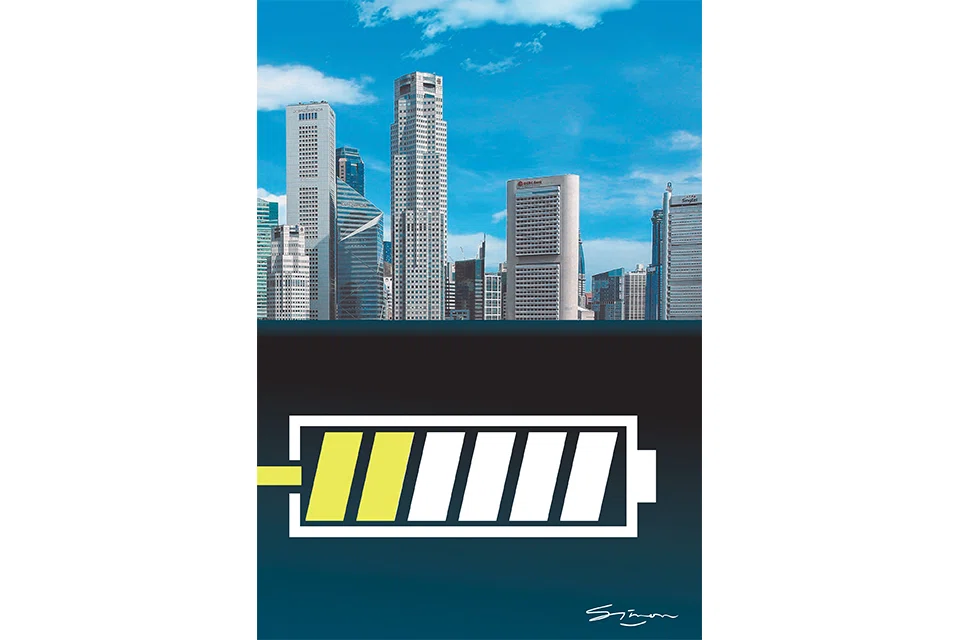
THIS WEEK'S TOPIC: Given current work trends and the shift towards decentralised offices, how might we ensure the vibrancy and future of the Central Business District?
THIS WEEK'S TOPIC: Given current work trends and the shift towards decentralised offices, how might we ensure the vibrancy and future of the Central Business District?
Valerie Wong General Manager, Asset Management GuocoLand
The future of CBD will no longer be defined by high-rise office towers, but one that harnesses great potential as a vibrant and sustainable district for work, live and play. This pivotal transformation will be made possible by integrating more mixed-use developments to provide diversified offerings beyond high quality offices. The mixed-used concept is people-centric - incorporating elements like residential housing, parks, recreational and retail spaces, F&B outlets and even community spaces for social and lifestyle events.
Together with the highly connected transport network and ease of accessibility, we envision the increase in more well-planned, mixed-use projects to reinvent the CBD for broader communities other than the office crowd. The new sense of community will keep the precinct relevant, inclusive and resilient.
Lawrence Loh Director, Centre for Governance and Sustainability NUS Business School
A CBD provides the economic advantage of more revenues and lower overall costs. But the cost of physical space will now more than outweigh the benefits of physical proximity. The ongoing pandemic provides an accelerated stress test for the continued relevance of a CBD, particularly with the work-from-home or work-from-anywhere imperative.
However, a CBD will still be relevant in a new dual form: (1) providing a core but minimalist nerve centre for coordinating planning activities, and (2) fostering work processes across multiple decentralised localities. While these duplex-like functions can technically be located anywhere, there are merits of convenient access and outreach to other business entities. The new CBD will thus be a Coordinating Business Duplex.
Victor Mills Chief Executive Singapore International Chamber of Commerce
The vibrancy and future of any CBD needs people. Businesses may need or want less office space than before the pandemic as more people choose to work from home for at least some of the time each week. That suggests there will be current office space available to be repurposed. The only way to attract more people to city centres is to provide cost-effective housing, more open spaces and facilitate all the businesses and services needed by people to lead fulfilling lives. Those open spaces can also be used for emergency use such as field hospitals to manage future pandemics.
Wendy Johnstone SVP & COO APAC Zendesk
When the global pandemic began, it uprooted everything we knew to be ''normal'' - but also showed us we are capable of adapting. Flexibility is key in the future of work, and the same applies to the physical CBD of the future. A truly vibrant business district should be a reimagined space that enhances discussion, creativity and innovation - but must be created from a deep understanding of the demands of those who will live, work and play there. Whether this looks like multi-functional spaces for work and recreation or integrated mixed-use developments, the vision must arise from looking at reliable trends in data and surveying the community to unlock the emerging needs of the Singapore workforce.
Dennis Yeo Head, Investor Services, APAC Cushman & Wakefield
The CBD can no longer rely on office workers who were previously ''forced'' to show up for work. With work-from-home and e-commerce, destination competition has increased, and the CBD needs to reinvent itself to remain relevant. The current perception of the CBD is as a place for work and it is expensive, with limited retail options and high parking costs. This needs to change. The CBD will need to evolve into an inclusive and diverse destination for work, live and play. Live-in population in the CBD should be increased, to create the regular footfalls and vibrancy necessary for retail and entertainment concepts to succeed. With lower office demand, building owners should be incentivised to convert underperforming and ageing office buildings into mixed-use developments. Perhaps mass market co-living spaces or even public housing should be explored to ensure that the CBD is inclusive to all.
David Kuo Co-founder The Smart Investor
The CBD did not happen because of conscious planning from the outset. It came into being because businesses wanted to be closer to other businesses as it was easier to trade. The Internet has changed that. Consequently, the CBD needs to get back to its roots, which was a marketplace where trading took place. The operative word being ''market''. It needs to be a destination of choice where people go for entertainment, food and beverage, hospitality and to live rather than just situate their offices. Let the people build a better mousetrap and the world will beat a path to their doors.
Ong Pang Thye Managing Partner KPMG in Singapore
As a critical economic space, a vibrant CBD represents the face of business in Singapore moving into the future. It is also a magnet for top talent. Hence, it should evolve from an agglomeration of office spaces into a safe and sustainable community - flush with outdoor spaces that complement office workspaces in fostering collaboration and innovation.
Beyond that, the image of the CBD as a weekday work zone needs to change, with a business model rethink to pull in the crowds over weekends and evenings. This warrants an urban lifestyle mix from regular mass-market events to offering family shopping and learning needs, as well as residential and entertainment options. The URA's CBD Incentive Scheme can help reposition the CBD to realise its full potential as a central and well-connected location. Re-purposing rather than redeveloping can also minimise embodied carbon while maintaining the familiar landscape.
Charles H Ferguson General Manager, Asia Pacific Globalization Partners
Singapore's CBD epitomises the city-state's progress over the years through commerce, innovation and entrepreneurship. As we embrace decentralised offices, revitalising the CBD into a safe and culturally vibrant urban space that inspires business and drives social interactions will be essential. Singapore entrepreneurship and the startup scene has thrived precisely because of those social interactions.
I anticipate a further reimagining of current CBD spaces to blend enterprises and startups, as well as more mixed-use developments for work, learning and leisure. With travel still limited, reinvigorating the city by bringing global experiences and cultures into Singapore through food, games, fashion and the arts will help bring excitement back to the CBD. A mix of live and virtual concerts, sustainability-themed fashion shows, open air movie screenings, weekend markets and culinary events, and holding traditional Asian games, are a few ideas that would help to jazz up the scene in Singapore's CBD.
Andrew Thompson Chief Executive Officer Go-Ahead Singapore
Adaptive reuse of spaces in the CBD can trigger creativity in urban planning, breathing new life and vitality to the area. However, the vibrancy of any place must be supported by unparalleled public transport options. We have seen how a public transit system strategically integrates communities and connects people.
Singapore is well poised to reshape its public transit in the CBD, leveraging technologies like artificial intelligence and Internet of things that will have scores of benefits in public health, security, passenger flow and fleet maintenance to increase mobility. Go-Ahead Singapore is ready to contribute our part to the transport landscape, an integral part of reimagining and remaking the CBD.
Justin Gabbani Chief Executive Officer, Asia Lendlease
Looking beyond the current disruption of Covid-19, the future of our cities resides in liveability. The successful CBDs of tomorrow will provide great places to live, visit and work. Increasingly, cities that are mixed-use, healthy and promote an active seven-day vibrancy will attract the best talent.
Around the globe, Lendlease is contributing to cities and creating new workplaces. Whether in CBDs or decentralised, the best workplaces must provide green space, recreation, F&B, retail and connectivity - places that people want to be and that encourage collaboration and wellbeing. Both CBDs and workplaces of tomorrow need to reward their residents, workers and visitors with a quality experience.
Chris Archibold Country Head JLL Singapore
The CBD has always been and will remain the beating heart of Singapore's economy. Given the volume of local and multinational businesses located in the CBD, it will always be a focal point for enterprises. To further foster a vibrant city centre, the CBD has to become more of an integrated ecosystem where people live, as well as work. There needs to be both an ample supply of residential units, and a strong draw for residents to want to live in the CBD. The supply piece can be dealt with by land releases and the government could consider introducing more incentives for redevelopment that includes residential use. Driving the desire to live in the CBD is the more challenging piece and would likely entail a thorough review of the retail and leisure amenities available to attract residents to the area.
Kong Wan Sing Founder and CEO JustCo
The move towards having more integrated and mixed-use developments in the CBD over the last two decades has created positive results in intensifying land use and increasing CBD vibrancy. In the next phase, businesses will increasingly choose flexible and hybrid work arrangements over having fixed CBD offices, in light of hybrid's emerging dominance as the future way to work. Existing rules on zoning and occupancy density in CBD buildings will need to be reviewed to accommodate these changes.
Eileen Chua Managing Director SAP Singapore
Workplaces are evolving towards new, hybrid models. Accelerated by digitalisation and shifting employee mindsets amid the pandemic, remote working, coupled with the blurring boundaries of physical and virtual, is a new reality that businesses must adapt to.
By understanding the needs of their customers and employees, businesses in the CBD can re-design physical spaces that remain relevant in a digital future, with the digital employee or consumer in mind. Experiences at these physical spaces directed towards connecting a disconnected world need to be socially purposeful, experience-focused, and serve as unique points of interactivity and hyper-personalisation, which will then draw footfall and vibrancy.
Kannan Chettiar Managing Director Avvanz
Our Avvanz office is in the CBD and I absolutely miss the pre-Covid buzz and bustle. There ought to be more incentives for employees to work in town since the heartlands now can provide co-working spaces, multi-purpose malls and recreational facilities. We can have outdoor events like farmers' market with standing cocktail bars; lunchtime concerts and night arts performances (which will be a great opportunity for artists to showcase themselves); street sports try-outs; business pitching events; and even international cultural festivals bundled with virtual reality where we can experience the five senses of other cultures without having to travel out. All these should of course be conducted with Covid-19 safety measures in place.
Toby Koh Group MD Ademco Security Group
Do we still need a CBD in tomorrow's Singapore? Perhaps not. Singapore is a small island, and with dynamic work locations as a norm moving forward, business can be conducted everywhere and anywhere. Spreading out the commercial activities islandwide will help reduce unnecessary travel and traffic, and support our green initiatives. How about meeting pods along the Punggol Waterway or co-working spaces next to childcare and educational institutions?
The current CBD will be kept vibrant with events, arts, cultural activities and hopefully a pulsating nightlife. New residential housing in the soon-to-be-redeveloped Tanjong Pagar PSA port will introduce thousands more people into the CBD area and no doubt keep it bustling.
Dileep Nair Independent Director Thakral Corporation Limited
The traditional CBD risks becoming a relic of the past. There is little need to have concentrations of core commercial and business functions tightly located causing big transient weekday commutes of people. The pandemic has made this obvious. Allowing more mixed-use development is key. We need to rethink zoning regulations. To encourage innovation and diversity, there should be less micro-planning and more ''white space'' development that will promote leisure and lifestyle.
Allowing such creativity also contributes to urban resilience to future shocks. Critically, housing for locals must be encouraged in the area at affordable property values and rentals, to make it a lived-in ''neighbourhood'' with the various attendant amenities. The future for today's CBD is to become tomorrow's Central Social District.
David Jacob Chief Executive Officer Marsh Asia
With more firms adopting hybrid working arrangements, office buildings can remain relevant by becoming centres for collaboration. This is especially important due to the flight to quality in real estate as tenants seek more sustainable and resilient buildings.
When pandemic-related health and safety concerns are no longer deterrents against returning to the office and CBD, workplaces can offer more facilities like meeting rooms, breakout zones, project huddle spaces, and even dining areas. These incentivise employees to return to the office, and by enhancing the work experience, firms gain an edge in attracting talent.
Service offerings around offices can also be designed to support this collaborative environment. For example, F&B outlets can be outfitted to facilitate business discussions.
The CBD and offices have a place in the new normal, especially considering their potential for fostering creativity, innovation, nurturing corporate culture and bringing people together.
Paul MacAndrew Country Manager, Singapore & Hong Kong IWG plc
With remote working policies becoming a mainstay, the hybrid working model is set to make up the future of work. This means the future workplace is no longer a single venue, but an ecosystem of several locations and experiences, as companies re-think and reorganise their property needs in the CBD and beyond. With the rise of decentralised offices to support hybrid work arrangements, flexible work spaces have now emerged as a de-risking solution for commercial real estate players to stay ahead.
Complementing flexible work spaces is the rise of mixed-use developments, which would also allow for greater convenience, and place world-class flexible workspace facilities in the CBD to deliver greater work life balance. This is a concept which IWG has started to roll out globally this year with the launch of Spaces Napa Valley, California, which aims to accommodate a blending live/work/play environment.
Alvin Ng VP & GM, Digital Solutions, APAC Johnson Controls
Digitalisation, resiliency and sustainability continue to be major drivers in our urban transformation. For the CBD to remain vibrant, urban planning and space design need to be more access-focused, as well as human and community-centric, in different scenarios including pandemic and extreme weather conditions. To achieve this, the CBD should evolve to be more adaptive and flexible, accommodating a variety of functionalities within a given space. Also, there could be more, and more innovative, mixed-use developments in CBD, for example with in-situ energy or resource generation.
At Johnson Controls, we have taken a human-centric approach to building dynamic and resilient spaces. Our OpenBlue Innovation Center, which is aimed at sparking greater innovation within the built industry, embodies this approach.
Donald Han Chief Executive Officer Sabana Real Estate Investment Management Pte Ltd
The shift towards decentralised offices points to the urgency of creating more spaces for living and community activities within the CBD. Introducing more mixed-use elements and conveniences will raise the appeal of living in the city centre. Residents can live, work, play and entertain all within convenient boundaries - the entire week.
Reducing vehicular traffic into the city centre is another important consideration. This will free up more areas for social amenities and green public spaces, improve environmental quality and enhance liveability. The fluidity of current work trends suggests there is no one right mix of work, residential and play components. Instead, spaces must be adaptable and flexible to accommodate for future changes.
Helen Ng Chief Executive Officer Lock+Store
The idea of a decentralised CBD has taken root since the pandemic outbreak. In the past having an office in the CBD was considered prestigious. As business parks proliferated in Changi, Jurong and other areas, it became more ''acceptable'' for businesses to be located outside the CBD. In order for the CBD to regain its allure, it needs to be more than just a place for people to connect professionally; it should also be an integrated entertainment, dining, arts, science and even watersports hub. It needs to offer unique experiences that will make office workers want to stay on after work and attract families over the weekend too.
Jeffery Tan Group General Counsel Chief Sustainability Officer Jardine Cycle & Carriage
City planning has traditionally focused on a clear demarcation of areas for specific activities - be it work, living or play - in an effort to have synergy, efficiency and optimisation. As the pandemic has shown, these ''lines of orderliness'' no longer hold true and where one works, lives and plays can all be co-located and co-mingled.
In the CBD, this will see the need for greater mixed-use to ensure that valuable space is still utilised even when work-related activities are significantly reduced. Planners of our future CBD will need to be more fluid in designing spaces that can easily pivot in usage and have sufficient open ''unplanned'' spaces that can be quickly deployed for purposes that have not previously been anticipated or imagined - much like how we have utilised the Tanjong Pagar port to house temporary dormitories and the HDB void decks as Covid-19 test centres.
Mario Singh Chief Executive Officer Fullerton Markets
The key decision that policymakers have to make is around the projected volume of footfall in the CBD. Granted, this is no easy task, but it has repercussions on the broader planning landscape. This is because the CBD itself has morphed into an ecosystem that supports the wider needs of the people who work there.
Besides F&B outlets, other businesses like supermarkets, dry cleaners, pharmacies and hundreds of other small businesses exist because of the people who work in the CBD. If footfall ceases, it will only be a matter of time before all these businesses go belly up as well. Hence, the question of ''ensuring vibrancy and future of the CBD'' is one that needs to start from the projection point of footfall numbers.
Depending on this forecast, other measures can then follow. Examples include government tax breaks for businesses that need to be based in the CBD, flexible leasing options for tenants, and finally re-zoning land parcels for residential purposes.
Sanjeev Kumar Singapore Senior Country Manager and Head of SE & South Asia Natixis Corporate and Investment Banking Asia Pacific
While the pandemic period has proven that working remotely functions very well when the set-up is right, at Natixis we believe it will still be important for us to be in the office - especially when it comes to welcoming newcomers, acclimating junior teams members, and retaining company culture.
That said, for CBDs to remain an attractive proposition, we will need to ensure that our offices are less one-dimensional workspaces, more authentic, and reflect the changing needs of the people working in them. Amenities will be key. Technology will surely play a key role, and as people are much more mindful of their health, options to ensure balance between wellbeing and a good working environment will also be important. In this regard, Natixis is working to make sure that our offices across Asia-Pacific are more vibrant and have collaborative functional spaces.
Celine Tang Group Managing Director SingHaiyi Group Ltd
The trend towards a hybrid work model amid the Covid-19 pandemic has transformed the way businesses view CBD office space. There is a need to transform it into a neighbourhood with multiple uses to ensure vibrancy and business sustainability. Having a diversity of mixed-use developments (residential, offices and retail) in the CBD brings convenience with everything within reach, and also creates a larger resident population which will benefit and rejuvenate businesses. This is what we envision the future Maxwell House to achieve - an innovative development that caters for ''live, work and play'', injecting vibrancy and life into the CBD while bringing people together to build a dynamic and inclusive community.
Lex Lee Chief Strategy Officer TOP International Holding
The CBD has always thrived on being a one-stop hub that provides opportunities for business connections and social interactions. The shift towards decentralised offices and the rise of remote work are going to create a number of challenges for the CBD. The question should not be how to mitigate the effects of decentralisation on the CBD, but how to embrace it.
We can take advantage of this trend by transforming the CBD into a more flexible, accessible and inclusive space. This would mean developing residential buildings, retail spaces and offices to coexist side-by-side, enabling the CBD to evolve into a meeting point for physical interactions, be they social or business.
The shift towards decentralised offices will reduce commuting time, and traffic will not be concentrated towards one zone. With less travel and idling of engines, it will also be greener. No matter where the office is physically located, it is more important to cultivate the intangible space - a collaborative and welcoming work environment.
Stephen Hamill MD & VP, ASEAN & South Asia Genesys
The balance between work and personal life is no longer a question of how we allocate hours but about experiences and choices around work. This is not just about the digital-first millennials but applies to the working community across all age groups. The requirement for seamless access and connectivity, demand for organisations to champion sustainability values and social responsibility, and the desire for flexibility in working locations is driving fundamental changes. To remain relevant, the CBD must seamlessly integrate with the community's working and personal lives. This means support for more integrated work and non-work options and a departure from the 9-to-5 mindset to an environment built upon the foundation of empathy, engagement, flexibility and sustainability.
Chia Ngiang Hong President Real Estate Developers' Association of Singapore (REDAS)
The pandemic has brought about a drastic lifestyle change for many, in particular the working class, but I believe many still desire to work in the office if we can offer a vibrant environment. Hence, we need to inject life and improve connectivity within the CBD so that people are attracted to spend more time there. New thinking and bold ideas are crucial to kick-start and expedite the transformation of CBD. Key stakeholders could get together to create focal points or iconic landmarks linked to social and recreational facilities with exciting night life activities. For instance, create street art corridors with changing themes and fascinating colourful building facades. We need heavy doses of visionary injections to rejuvenate the CBD with bold integrated developments. Substantial and collaborative efforts are needed to bring the many stakeholders, both public and private, together to push the renewal process and we have to start with out- of-the-box ideas.
Moray Armstrong Managing Director CBRE Singapore
The evolution of Singapore's CBD has primarily been driven by the changing needs of business, in spite of aspirations to provide greater variety. The pandemic has brought into even greater focus a need to accelerate outcomes that deliver a 24/7 mixed-use district where people can work, live, play and learn. CBRE opines that the CBD will remain relevant as a focal point of activity due to its centralised location, extensive access infrastructure and cultural heritage.
To ensure its vibrancy, the district needs to provide for diversity of employment opportunities, sectors with integration of homes and hospitality assets, and an abundance of lifestyle and recreation choices. The latter component offers opportunities around the undeveloped land plots in Marina Bay that could, for instance, be extended to sports grounds for football, rugby, cycling, outdoor fitness and alike, while they await medium term sale via the Government Land Sales programme. How about The Float @ Marina Bay, which surely could have served the CBD and wider community better?
Beyond the new downtown, things are moving in the right direction with some of the older buildings introducing more diverse uses, and developers leveraging the CBD Incentive programme to reposition and repurpose obsolete office stock. These schemes will witness the transformation of older buildings into energy-efficient, green developments, with focus on wellness and active mobility. Let us aim for sustainable and meaningful CBD transformation that will serve a new generation of users.
S Nasim Group Executive Chairman Meinhardt Group International, Singapore
Covid-19 has changed how we live, work, socialise and play beyond anyone's contemplation. Climate change is posing different challenges in tandem to complicate the equation. Clearly, Singapore will need game-changing ideas to maintain its lead for the future.
We need to re-think our entire strategy from masterplan to development guidelines to infrastructure planning and operational strategy. These need to factor in the lessons learnt from the pandemic which conceivably is here to stay for some time. One thing is clear - our living style will need to change and technology will be an inherent part of our lives and systems. A single office-only CBD would be a reminiscence of the past.
We should think in terms of multiple decentralised CBDs, offering all types of buildings - including mixed-use office, residential, hotels, entertainment, F&B and retail - to make it self-contained and 24/7 vibrant. This will inherently reduce traffic, optimise energy use (with different peak loads mix) and indeed facilitate a more efficient working environment.
This will require higher plot ratios, much taller buildings and centralised services over the entire CBD. This will facilitate operations and maintenance and minimise disruptions. ''Rome was not built in one day'', but we can lay the groundwork, for the future.
Maren Schweizer Chief Executive Officer Schweizer World Group
The high streets of the future will need to become multi-purpose locations, combining retail and hospitality amenities with residential, education, healthcare, culture, technology, community and more. Office space will need to be transformed for three primary purposes: collaboration, creativity and culture, with less space devoted to tasks that can be done remotely. Transport links have to be reconsidered, as well as additional infrastructure needs. The pandemic has made it essential for places to galvanise their centres for a new way of living. Buildings should be flexible enough to allow a range of use cases and adapt as individual living and working situations change.
Ku Geok Boon Chief Executive Officer SG Enable
The key to meaningful and purposeful public spaces lies in meeting evolving social, physical and environmental needs. It will be useful to incorporate universal design in the development of all new infrastructure, as well as inclusive connectivity in the CBD - such as transport services and barrier-free connections between amenities - to make the future of work inclusive for everyone, including persons with disabilities. As the future of work will see persons with disabilities increasingly valued as a talent pool in the workforce with their resourcefulness and resilience, it is important to include universal design during the land planning stage to ensure that we minimise barriers for everyone, including those with disabilities, to move independently.
Henry Tan Group CEO Nexia TS Group
When we look at preparing for a post-pandemic world, we need to start thinking strategically, as well as sustainably for the future. First of all, the CBD will not be a CBD alone; it is not going to be the same. I envisage and hope that all major buildings and malls will be converted to lifestyle centres where we live, play and work in. It will not be simply a corporate working space where the focus will still be on work. Where we should not shift our focus is on the object - that is people, the users.
The CBD will be a place where one can live, work and play in. I imagine living on, say, the 23rd floor of the building; I go to the sky garden with a gym on the 69th floor, and have my retail and lifestyle therapy and food on the fifth floor. Can I play at the golf simulator with VR-enabled experiences on another floor? Will there be interactive labs where I can put to practice my latest innovation ideas and share with a community on the 25th floor? Perhaps the 50-60th floors house retirement homes where I can visit my parents or friends. There could be, on the 61st to 64th levels, an eco-garden and sustainable farm where we get our produce. Can a building become a mini-city of its own? Not all buildings need to be the same, but they should have elements to maximise the UX.
Lim Soon Hock Managing Director PLAN-B ICAG
The current work trends and the shift towards decentralised offices have inadvertently pushed for better use of our limited land. In the new normal, future home designs will have to incorporate their use for work and home-based online learning. We can therefore expect CBDs to pivot more and faster towards more vibrant and lively choices for entertainment, gastronomical indulgences, recreation, relaxation, and essential shopping, where most of it can be round the clock. What can be achieved with this inevitable transformation is limited only by our imagination. The office will increasingly be designed for teamwork or activities where employees need to interact face-to-face, rather than for an individual's work, as is the status quo.
CBDs will expand virtually to integrate the home as workspaces while opening up for non-work activities, becoming one larger creatively designed and cleverly conceptualised habitat for all to live, work and play seamlessly.
Zaheer Merchant Director - Corporate Affairs QI Group of Companies
With the decentralised office shift, creating places of interest, culture, history or anything which adds to an overall ''experience'' will be how vibrancy in the CBD may be created. Hence blended housing projects within the CBD (for instance The Sail in MBFC) add human-footfall during off-peak times and days, aside from being convenient in the new normal for both work-from-home or going to a physical office. Coupled with F&B outlets, they add to create the ''want'' to be in the CBD even on weekends. With redevelopment of buildings, change in use, conversion to fresher concepts such as art museums or such, these will all add to attracting people while enhancing the CBD.
David Leong Managing Director PeopleWorldwide Consulting Pte Ltd
A vibrant and lively CBD is still needed for its centrality, as a city's commercial and business centre. CBD is often synonymous with the city's financial district and in Singapore, it is our downtown core which is an urbanised central area. Adding more residential space (such as SOHO ''small office, home office''), theatres, entertainment venues, can re-curate the CBD to a fashionable district with business in the mix. This will bring human traffic flow to the central core. SOHO is in line with the ''work-from-home'' trend. The CBD should not be a dead town at night or over the weekend. Our downtown central core should be a bustling core gravitating business and fashionable living all in one place.
Royston Liew Chief Executive Officer Amplefresh Pte Ltd
Amid the hustle and bustle in Singapore, our concrete jungle has a promising future of becoming a green city through modern urban farming - starting right from the CBD. Our patent-pending urban farming system named SUFFICIT (Sustainable Urban Farming For Interconnected City-like Industrialised Terrain) combines technology and sustainability to enhance greenery - by growing leafy vegetables on the walls of office buildings. Growing food crops on walls also has the benefit of cooling the building down. With SUFFICIT, Amplefresh, an agritech startup, aims to meet Singapore's food security while adding vibrancy into the CBD of the future.
Samer Halabi Executive Vice President KONE Asia Pacific
The vibrancy and future of Singapore's CBD lies in new digital solutions. There is a need for more flexibility and intelligence that is integrated into the office space so we can have an office that services the user in the background. With the adoption of digital solutions, the office will transform into a space that enables highly personalised experiences, thereby boosting productivity.
As we shift towards a more digital future, the office's role will evolve from a static asset to an active resource that helps users achieve goals and foster better collaboration and innovation.