

Championing gender equality
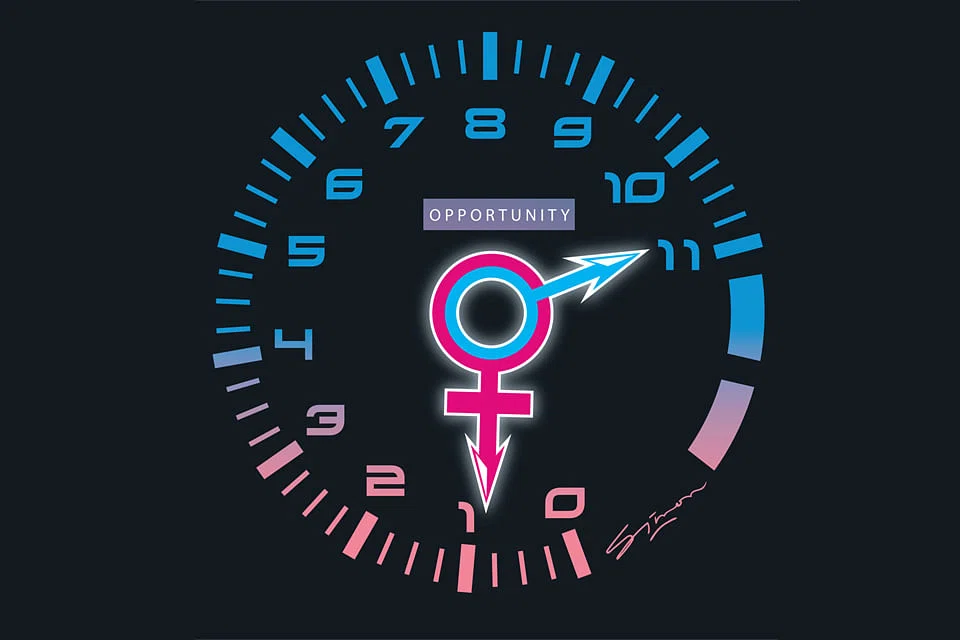
THIS WEEK'S TOPIC: Why do women still lag the men at work today, in position and/or pay? How can organisations do their part to bridge the gender gap, in the digital and other areas?
THIS WEEK'S TOPIC: Why do women still lag the men at work today, in position and/or pay? How can organisations do their part to bridge the gender gap, in the digital and other areas?
Tripti Lochan Co-Chief Executive Officer VMLY&R Asia
THE truth is there is no single reason - it is a combination of various causes, from cultural norms and access to education, to organisational rules such as low paternity leave, and self-inflicted expectations. If left unaddressed, we're going to see lower numbers of women in the talent pipeline. But it's not all doom and gloom - the number of women leaders in the ad industry is proof that women are gaining ground, and a lot of this starts with culture.
At VMLY&R, gender doesn't come into the hiring equation; we make decisions based on an individual's merit and skillset. This extends to pay, as well as the roles we hire for, including digital and tech.
Dolly Goh CEO Singapore National Co-operative Federation (SNCF)
THERE is a place for women leaders in every industry, but organisations need to recognise that gendered discrepancies exist in order to initiate meaningful transformations in the workplace. Societal pressures, cultural norms, and structural barriers must be shifted to enable the advancement of women and societies. Co-operatives have been progressive in promoting gender equality and empowering women to establish better livelihoods for themselves as co-operative principles are open membership and equality. Globally, co-operatives support women in work-life balance, providing quality and economic opportunities. Women are also a driving force in the co-operative movement, with a strong female presence at the international helm. In Singapore, we have women entrepreneurs forming co-operatives such as Silver Caregivers and Silver Horizon Travel Co-operatives to address social issues for the ageing population at the community level. It is essential that we build inclusive, participatory, and integral processes within the government and organisations to create policies aimed at achieving gender equality.
Teo Lay Lim Senior MD, ASEAN Country MD, Singapore Accenture
BRIDGING the gender gap must be a strategic priority for all organisations. Unfortunately, a large percentage of the workforce still hold traditional attitudes about women and their roles in the workforce. To address this, organisations should actively advance workplace equality by creating an environment for all employees to communicate and collaborate freely.
At Accenture, our goal is to have a workforce of half men and half women by 2025. We believe that women, as much as men, bring value and creativity to the workplace. This builds on Accenture's 2018 research, which identified 40 workplace factors that contribute to a culture of equality, and grouped them into three actionable categories: Bold Leadership, Comprehensive Action and Empowering Environment.
Companies can tackle the gender gap by having a diverse leadership team, and a working culture where employees experiment without the fear of failure or judgement. Prioritising this will present equal opportunities for all within the workforce.
Yeoh Oon Jin Executive Chairman PwC Singapore
ONE of the biggest challenges is to change mindsets and eliminate stereotypes. In our workplaces today, gender bias, whilst mostly unconscious, is still a reality. Leadership commitment and accountability are key to drive this change and make real progress in diversity and inclusion. Using data and transparency are also areas organisations can focus on to accelerate change. A data-driven approach enables assumptions to be challenged, the right actions to be taken to solve the identified problems and progress to be tracked. Additionally, offering strategic support - role models from both genders who develop, promote and champion women as they pursue their career aspirations - helps to bridge the gender gap. In PwC, we support the United Nations HeForShe campaign, driving awareness and action through our employees, clients and within our communities.
Ankiti Bose CEO and Co-founder Zilingo
GENDER inequality in the workplace will persist so long as voices go unheard and opportunities are not granted. The expectation for women leaders to make economies more gender inclusive goes beyond creating just a balanced headcount - what truly matters is how we can breed a culture of inclusivity and empowerment. It begins with the individual, and we must be cognisant of the fact that every person plays a part.
To achieve true balance, organisations need to start open conversations, to educate and offer equal opportunities, and, of course, to cultivate equality as a way of life.
Adrit Raha Co-Chief Executive Officer Vivant
ORGANISATIONS are made up of individuals. As a leader of a digital business and father of two girls, I believe the responsibility lies with each individual, whether in a leadership role or not, to constantly advocate for women in our lives to reach their full potential. While progress has been made, aided by growing conversations and awareness in recent decades, factors including entrenched cultural biases and inadequate policy support continue to reinforce the gender divide in areas such as pay and access to senior leadership roles. At Vivant we take pride in having strong women across our business and it is up to each of us to have the courage and initiative to speak up, recommend, mentor and sponsor women we know into opportunities they may not ordinarily seek out or have access to, but that would help propel them forward in their chosen fields and endeavours.
Ong Ai Hua Company Group Chairman, Asia Pacific The Janssen Pharmaceutical Companies of Johnson & Johnson
FOR any business to successfully foster diversity and inclusion it must first recognise the positive impact that a diverse workforce has on innovation, talent retention and the services/products a company provides to its customers. Whilst there is no denying that there is still work to be done in closing the gender gap and ensuring meritocracy in the workplace, we can be sure that women with agile minds and strong problem-solving skills will always be in demand.
At Johnson & Johnson we have been championing women and giving us the tools, resources and opportunities to succeed since our founding more than 130 years ago. Today, we continue to work to ensure all employees feel a deep sense of belonging and have equal opportunity to excel. While diversity and inclusion at J&J means much more than gender equality, we are proud of our initiatives that create inclusive environments enabling women to thrive.
Max Loh EY Asean and Singapore Managing Partner Ernst & Young LLP
MANY organisations advocate gender diversity but fail to build a culture of inclusion and belonging that truly enables women to thrive. The key is to move from rhetoric to action. Some argue that women can do better at advocating for themselves and building stronger networks, presence and influence. Whether this is true remains debatable, but corporates can help by creating career paths and supportive work policies and environments. Given the male influence in leadership roles, men should recognise that unconscious bias exists and make gender parity both a personal and corporate commitment. Talent analytics can help drive targeted intervention programmes and address the data disconnect that exists today. Organisations will first need to overcome the struggle in articulating clear metrics for gender diversity and ensure that the right and usable data is captured for mining insights.
Michelle Ho President for South Asia District and Diversity & Inclusion Ambassador UPS Asia Pacific Region
WORKING in logistics, a stereotypically male-dominated field, I couldn't agree more that tolerating women's continued under-representation in key industries endangers our future. At UPS, we're bridging the gender gap in two ways: first, creating a supportive work environment where women can learn and grow, professionally and personally; and changing perceptions that certain industries, like logistics, are only for men. Our global Women's Leadership Development programme is a platform for employees to connect, network, and learn from others with whom they have much in common, outside of normal work teams. UPS also approaches staffing at our organisation with diversity in mind, so that we may make decisions that better serve our broad customer base.
Philip Yuen CEO, Deloitte Southeast Asia and Chairman, Deloitte Singapore
THE move towards greater gender parity in leadership is happening but there is still a long way to go. There are more than enough women with the competencies needed to rise through the ranks but we must ask if businesses and society are doing enough to give them the chance.
International Women's Day is a good reminder that we need to continue to nurture talented women - not just mentoring them, but overtly sponsoring them as future leaders. Cultivating gender-diverse teams and in particular supporting more women leaders in areas like technology can also help combat the gap, and businesses must focus on areas like equal pay, flexible work arrangements, female mentorship programmes and ensuring a safe environment for everyone, men and women, to fulfil their full potential.
Pascal Lambert Group Country Head, Singapore Head of South East Asia and India Societe Generale
DIVERSITY remains an important issue for both ethical requirements and performance in Societe Generale. With our Diversity Board and strategic talent pools, we make it a priority to promote women and international profiles to positions of responsibility and senior management roles. In Singapore, women comprise nearly 50 per cent of the workforce and make up over 40 per cent of the bank's managerial roles. While ensuring our people are evaluated based on meritocracy, we have specific measures to facilitate a more balanced workplace for our female employees, namely an increase in maternity leave from 16 to 20 weeks, enhanced adoption leave, flexible work arrangements and development opportunities for female talent.
Serina Tan Managing Director, APAC General Manager, Singapore Allison+Partners
VARIOUS factors are keeping talented women out of the boardroom, including unhelpful stereotyping, unconscious biases, cultural traditions, a lack of role models and aspirational gaps. To bridge these, attitudes need to change. Organisations can nurture the pipeline of female leaders by offering flexi-work arrangements, extended parental leave and mentorship or sponsorship programmes. True meritocracy should determine the path to leadership. Organisations that cultivate diversity of leadership at the highest levels - with regard to gender, race and perspective - will be critical to achieving this change. Women will need to push past their challenges to balance their multiple roles to achieve success, at work and at home.
Tirupathi Karthik CEO Napier Healthcare
GENDER disparity in Asia is partly cultural and a result of past practices. For example, a man sitting at home attracts social stigma while it is quite acceptable for a woman to be a home maker. An "ambitious woman" tends to be labelled as "aggressive" whilst a highly driven man would be seen as desirable sometimes. Such cultural mores are the stereotypes that need to be broken. One sure way is for men to take equal responsibility of household responsibilities including parenting. Organisations can do their part by recognising this need and equally accept a man's need to leave early to "pick up kids" or "take them to enrichment classes".
John Bittleston Founder and Chair Terrific Mentors International Pte Ltd
HAVING fought and won three serious battles for women to be treated fairly at work over the years 1968 to 1990, I concluded that several of my male colleagues were honestly frightened for their jobs when women reached good managerial levels. I think many still are. They see containment as the only practical course of action. The answer is for CEOs to treat women in business in the same way that they treat their male colleagues and subordinates. Men and women should be complementary, not competitive. This applies regardless of the type or size of business. Get the junior people present to retrieve the coffee, not the women.
Victor Mills Chief Executive Singapore International Chamber of Commerce
THE fact that women performing the same job as male colleagues are paid less is downright unjust. It happens because some men think all men are better performers than women. Most men know this biased assumption has no basis in fact. All companies should ensure their employees receive the same salary for doing the same job, whatever their age, gender, race or sexual orientation. All companies should ensure they open all careers to all qualified candidates regardless of age, gender, race or sexual orientation. All employees and unions should make sure they do. Accepting and practising inequality is equally wrong.
Ang Shih-Huei CEO and co-founder Klareco Communications
WE still live in a paternal-based society where cultural norms cut into how businesses are run in Singapore. This impacts succession planning and talent building at board and management levels.
Much as we tell women to "lean in" and step up to these roles in the office, we need to revisit our understanding of gender diversity at home. To support women in their careers, we should also support men "leaning out" by sharing homemaking and caregiving responsibilities.
Companies themselves should re-energise their diversity efforts, shift away from the "gentlemen's club" mentality, and commit towards selecting board members outside of safe networks to create diversity and strengthen their business.
Chris Riley Chief Executive Ogilvy Singapore
THE gender gap in career progression is partially caused by incorrect assumptions that women become less focused, committed or ambitious after they become parents. These statements are never made about male colleagues, and it speaks to an outdated view of gender roles both at work and at home. Technology enables workers today to be more connected than ever before; there is no reason why starting a family should be a career drop-off point. We have the power to drive change: as the lead agency behind the MeWeWPP initiative, we are championing equality and inclusion, tackling unconscious bias, and modelling new ways of working to empower people in Ogilvy and our industry in Singapore.
Michael Correa General Manager, Asia Pacific Westpac Banking Corporation
WE are entering what is perhaps the most exciting time in history with digital transforming the way we work and live. We see digital technology as having a positive impact. It has enabled our women at Westpac to work flexibly, balancing their work and home commitments, whilst moving their careers forward and helping to bridge the gap. Organisations and leadership need to continue to champion policies, practices and tools that enable this flexibility.
In 2012, Westpac was the first bank to publicly commit to an aspirational target of 50 per cent of our leadership roles to be held by women, which we achieved in 2017 alongside our 200th anniversary. This didn't happen by accident and is a direct result of a leadership decision and commitment taken over the long term, and an internal culture of diversity which is paying off.
Andrew J Calvert Managing Director APAC AchieveForum
AS the gender division of labour has existed for centuries, it's not surprising that historic patriarchal structures haven't yet been overturned. Career success still comes much easier when you have a non-working partner to look after the home and family, and you demonstrate stereotypical 'masculine' leadership traits.
Organisations need to make gender equity a strategic priority and involve everyone in building a culture that ascribes equal value to 'feminine' and 'masculine' qualities. The workplace must be re-designed for the new digital age in order to become a place of diversity, inclusivity and flexibility that allows people to bring their true selves to work and fulfil their potential.
Candice Ong Chief Commercial Officer ShopBack
WE occasionally invite team members to observe our board meetings. I noticed that male observers are eager to sit closer to the boardroom table while female observers tend to form the backbench. When I ask why, the ladies share that they may not have earned "the right" to sit at the table. Perhaps society still views a man as being "proactive" in such a situation, while a woman might be seen as "aggressive", and therefore hang back to avoid that label.
What the ladies may not realise is that these behaviours also reinforce the perception that they do not have the confidence to make the step up.
So when I see a female colleague remaining in the back, I say to her: "Come, sit at the table."
Violet Lim CEO & Co-Founder Lunch Actually Group
IN our company of 100 associates, close to 80 per cent are women. Our senior management team consists of 60 per cent women. Throughout my 15 years of management, I have observed that women tend to ask for more only after they feel they have proven themselves. Men have less qualms about asking for more even when they have not been tested. Women are less likely to take on higher positions or bigger responsibilities as they take family into consideration eg newlyweds who want to start a family, or looking to spend more time with school-going children, etc. Men are generally laser-focused on getting ahead in their career when given the opportunity.
As a female business founder and CEO, I hope to help bridge the gender gap by being a mentor to my younger associates, by showing them that it is possible to integrate work and family by offering flexi work arrangements and constantly encouraging them to take on bigger roles and to learn to delegate effectively so they can focus and prioritise.
Anneliese Schulz Regional President, Asia Pacific and Japan Software AG
WHILE the last few years have definitely seen improvements in female employment, gender biases still remain prevalent in fields such as IT today, resulting to occupational inequality.
Great strides should be done to rework the narrative of women in leadership positions. It is imperative for organisations to recognise gender diversity as a key enabler in performance and creativity, and implement women empowerment programmes. In Software AG, for instance, we have been striving towards a balanced mix of male and female talent across the sales function and have been implementing campaigns such as #beyourbestyou.
Joanne Wong Senior Regional Director, APJ LogRhythm
A BIG inhibitor of true workplace parity is unconscious bias - that of the workplace towards women, and of women towards themselves. Hidden bias can hinder gender fairness at work because of, for example, deep-seated assumptions about their abilities in male-dominated fields, such as tech. On the other hand, women may also have imposed glass ceilings on themselves due to social stereotypes about their abilities. To bridge the gap, the boardroom's endorsement and advocacy of gender fairness is instrumental. While pushing for artificial intelligence to be a business enabler, organisations must believe and emphasise the importance of human instinct including women's intuition, which would also give a different, yet vital perspective based on their life experiences and wisdom.
Axel Berkling Executive VP, Asia-Pacific KONE Pte Ltd
AT KONE, providing equal opportunities and taking care of our employees' welfare is our priority. We support women in their careers by placing fair recruitment, advancement and retention programmes. Taking maternity and childcare leave does not hinder our employees' career progression and we strive to provide flexible arrangements for working mothers to care for their children. We embrace diversity and foster inclusivity in the workplace; women bring in a new perspective to the business that helps us understand and serve customers better. This has helped us improve diversity in the organisation - in Singapore, women constitute about 30-35 per cent of our workforce.
Jayne Plunkett CEO Asia Swiss Re
AT Swiss Re, women make up half of our Asia management team. This comes from a conscious effort to ensure that we have as diverse a representation as possible because having diverse teams will lead to better decision making. I've observed that women in general are not as likely to apply for roles that come up, and often we have to tap these women on the shoulder and encourage them to apply. Sometimes women may not have enough encouragement; at other times, perhaps they don't feel they have the support system to apply for new roles.
It's a fact that women tend to leave the workforce, and often do so at a critical point in their career. We've seen women leave their jobs due to family situations, especially if their jurisdiction or community identifies a woman as the main caretaker for the family. This is difficult to change quickly, but being conscious of the gender gap, discussing this topic regularly within your organisation, especially at critical times like annual compensation reviews or when a new role opens up within the firm, have to become part of everyday conversations in the office.
Nilesh Mistry VP, Head of APAC World Wide Technology
THE tech sector has long been a male-dominated industry. At WWT, diversity and inclusion are part of our core values and we strive to create an environment that allows all employees to perform to their fullest potential. Since 2015, we initiated the Women's Leadership Forum as a mentorship programme to empower more women to take up leadership positions in the company.
In order to further bridge the gender gap, we urge companies to proactively implement initiatives aimed at empowering women. In addition, measures must be taken to ensure equal pay and opportunities for all, regardless of gender.
Alex Jeffrey Head of Asia Pacific M&G Asia
THIS has to start from the top. People at all levels of an organisation need to know that the leadership is committed to change. There are inherent biases in all of us, it's just human nature, and the first step is for us all to appreciate and recognise that fact. The second is to correct it, and research is producing more and more effective ways to do so - in recruitment and appraisal processes, and in corporate culture. I believe deeply that investment and business decisions are better when made by diverse teams. So this is not just the right thing to do - it's also eminent business sense.
Seah Kian Peng CEO NTUC FairPrice
THE question of gender parity is not a matter of numbers but to put the question of gender at the core of an organisation's HR policies. As I look at my leadership team, it so happens it comprises an equal number of men and women. It is not by design but what guided us was that we appointed the best person for the role.
But yes I do generally see fewer female talent in the digital space. Indeed, there are some fields (eg marketing, HR, finance) where women are better represented and others (engineering, IT, operations) where men tend to outnumber women. To put gender at the core of our digital policies does not mean a shallow quota system which benefits no one. Rather we should allow everyone, men and women, to venture into areas where they have interest, to play to their strengths. At the same time, we should make sure that we remove all obstacles that stand in the way of women who want to go into a certain field but face hurdles either because of bias or lack of awareness of opportunities.
Ivy Lai Country Manager Philips Singapore
GENDER balance is essential for economies and communities to thrive, which Singapore has made great strides in. To truly make a difference, organisations should look beyond just gender equality and prioritise nurturing a culture of inclusion and diversity. Championing this requires policies that support all individuals - regardless of gender or background - and valuing the diversity in perspectives, skills and talent they bring. Fundamentally, this calls for individuals themselves to recognise and set aside personal biases. In doing so, everyone can help build an inclusive, gender-balanced society and be our best and unique selves.
Eddie Ang General Manager Lenovo Singapore
NAVIGATING through diversity and inclusion is an ongoing journey and we're still seeing gaps, with organisations playing catchup - largely due to values, beliefs and behaviours disparities. At Lenovo, women make up 34 per cent of our employees, and despite this being higher than the tech industry standard of 25 per cent, we can - and must - do better.
From the perspective of a tech company, diversity and inclusion generates new ideas, creates business solutions and sparks innovation. Without a diverse and inclusive workforce, we cannot innovate with a purpose. If we want our innovations to be intelligent and purposeful, our workforce must reflect our marketplace.
As a leader, change will only be taken seriously when we set the examples to break down barriers. Apart from initiatives and programmes, we need to ensure that the organisation advocates inclusive behaviours; fosters inclusion in polices, practices and procedures; creates accountability and becomes proactive in sharing stories.
Zoë Hubbard Group Chief Operating Officer Crossbridge Capital
WOMEN face a whole array of work-life challenges different to that of men and these need to be openly acknowledged and embraced. Statistics show that women are more likely to prioritise family needs over career opportunities, but supportive work environments should enable them to have both. Progressive businesses and leaders have led this change the last few years, but more can be done. For example, providing mentorship to build women leaders, practising transparency when implementing promotions and pay raises, and observing gender parity in hiring policies, especially in the tech industry. Moreover, these practices need to start at the C-suite level so that they are translated throughout the organisation.
Karl Hamann CEO QBE Singapore
COMPENSATION policies that are strictly meritocratic often reward experience over more implicit qualities. This can be disadvantageous to women who have spent time out of the workforce. Instead, companies should encourage and embrace the diversity that women of all stages of life can bring to their culture and business performance. Tactically, salary audits can help obliterate pay gaps but, strategically, leadership needs to show commitment to improvements to the work environment. This means implementing career development and welfare measures that help create parity, while integrating digital systems that make it easier to contribute at work without always being physically present.
Kate Lauer VP, Chief Risk and Compliance PayPal Pte Ltd
IN many places around the world, there are significant efforts to achieve gender parity. Gender parity in the workplace is possible and PayPal is devoted to achieving it. Today, 43 per cent of PayPal's 20,000 employees and 37 per cent of vice-president appointments are women. In January 2019, the PayPal Inc Board of Directors is 50 per cent diverse in terms of gender. Since 2017, PayPal has achieved 100 per cent pay equity across gender on a global basis. And we are reaching outside of PayPal to promote women's interests and futures in tech through programmes such as Girls in Tech, which teaches girls as young as eight years old how to solve real-world issues through coding.
Vikas Nahata Co-Founder and Executive Chairman Validus Capital
THE workplace gender gap today could be attributed to the STEM gender gap in higher education and subsequently various industries. We can only close this gap by actively encouraging young women to pursue education and careers in these fields. At Validus, we pride ourselves on having a 'gender-blind' approach when it comes to hiring - we hire based on merit, skills and experience. A third of Validus' management team consists of women, including our Chief Data Officer, while at a company level, we have equal representation of both men and women.
Winnie Tan CEO & Founder TripZilla.com
AS an employer in the digital industry, I feel that women tend to have more self-doubts in the workplace. It could be because we are competing in a male-dominated field, or that we are burdened by stereotype-driven expectations, or sometimes it is just a part of our psychological makeup. Regardless of the cause, many leaders (both male and female) conveniently brush this insecurity aside as a personal issue that the woman will need to overcome on their own.
While women need to take ownership of their anxieties, organisations too should question their workplace culture and recognise that this insecurity is often a by-product of gender bias and insensitivity.
Thomas Holenia President Henkel Singapore
AT Henkel, the share of women in management positions has steadily increased over the past ten years to 34.7 per cent at the end of 2018, with Henkel Singapore reaching a high of 42 per cent. Gender is an important dimension of our diverse and inclusive corporate culture, where our more than 18,000 female employees around the world contribute to Henkel's success through their experiences, talents, knowledge and creativity. Therefore, we actively promote the importance of gender diversity among our employees, raise awareness, and foster a supportive environment. In Singapore, we take all necessary steps to enable all our employees, both male and female, to accommodate their private and professional life. This includes flexible work arrangements and providing equal opportunities in terms of assignments and exposure for career development.
Lionel Lim VP and MD, APAC and Japan Pivotal
IN the pursuit of an inclusive culture, workplaces need to look beyond the physical environment and factor in employee psychology. For example, many do not realise that they could be unconsciously propagating gender bias in their actions. As such, organisations and employees need to continuously self-reflect and create a fair workplace that respects every individual. In line with our mission "Always Being Kind", Pivotal bridges the gender gap by fostering a psychologically safe workplace. This enables employees - regardless of their positions and genders - to feel comfortable voicing their opinions, admitting failures and stepping out of their comfort zones.
Tony Lombardo Chief Executive Officer, Asia Lendlease
TODAY, 38 per cent of the Lendlease Asia workforce is female, with a 42 per cent representation of female in our regional leadership team. Apart from increasing female representation across the organisation, we are also committed to gender pay parity and have been conducting annual pay review since 2015 and have closed the gap last year. Ideally, businesses should aim to provide a level playing field for all employees, giving everyone the same chance to succeed because we know this has not always been the case in our industry and society. We all have a role to play to create an inclusive and diverse workplace, where everyone can thrive.
Ella Mesenas Co-founder MagicMon
TIMES have changed and capability instead of gender, is a more reliable indicator in any industry for development and growth, both for the professional and the organisation. Despite manufacturing being a traditionally male dominated industry, I am surrounded by strong women in key positions on both client and supply side, which shows that organisations are doing their part to demonstrate transparency within the ranks. Companies can continue to bridge the gender divide by providing an open platform of opportunities for all employees to influence and implement decisions.
Alice Bentinck Co-Founder Entrepreneur First
DIVERSITY and inclusion are part of Entrepreneur First's (EF) founding DNA. From hiring to looking for founders, we strive to create an environment where the most talented individuals, regardless of gender, always feel welcomed and set up to succeed.
As a talent investor, over 800 people around the world join EF each year, making it our responsibility to build as diverse a cohort as we can. Female founders of deep tech companies continue to remain a minority so we are taking active steps to address this. Through efforts such as setting application targets for underrepresented groups and organising offline events and resource groups, we hope to bring a greater diversity of the best applicants and employees into EF offices around the globe to help us, and others do better.
Peter Hamilton VP & Regional Director, APAC Kelly Outsourcing and Consulting Group
BUSINESSES perform better when men and women contribute equally at senior levels, yet less than one-third of senior roles in Singapore are held by women. It is often assumed that women need work-life balance to excel at work and home, but this is no longer exclusive to women.
Our research shows that men are more likely to leave an organisation due to inflexible working arrangements. Enabling flexible work arrangements would support this group of workers. Businesses should also review talent programmes to ensure that women have equal opportunities to receive career support, and to address problematic areas in retaining and promoting women. Striving for gender equality is not just a feel-good, reputational issue; it is about competitiveness, productivity and performance.
Alan Watts President, Asia Pacific Hilton
IN the workplace, considerable cultural barriers, societal glass ceilings and traditional gender expectations of women still persist today. Breaking down these barriers cannot happen overnight - collective effort is required to change mindsets around women's priorities and expectations of themselves. In line with our Great Place to Work agenda, we provide a supportive working environment for women Team Members at Hilton with our culture of diversity and inclusion. We are proud to be a Singapore IMPACT Champion in support of UN Women-led solidarity movement HeForShe, and have tripled women leadership in hotels across APAC since 2012. This is just sparking the momentum as we strive to keep growing a culture of progress.
Ko Hui Yen General Manager, Asia Pacific HireRight
A LARGE part of the challenge is that the gender pay gap is systemic. Think, for example, what happens when a recruiter asks a woman for her salary history? If this is used as the basis to determine what a company is willing to offer in remuneration, you end up perpetuating any pre-existing pay gaps, reinforcing gender inequality.
Perhaps the simplest step organisations can take to bridge this gap is to cut salary history out of the equation. At HireRight, we've actually modified our screening services to ensure that's the default. Instead, switch to asking about salary expectations, and price the job, not the candidate, by setting strict salary ranges. According to the World Economic Forum, we're still 200 years off gender parity - surely we can shorten that?
Sng Khai Lin Chief Financial Officer Fundnel
PERSPECTIVES and expectations around gender may have persisted throughout generations, becoming a deeply rooted part of corporate culture in some instances. As such, it is important to recognise that any significant shift requires time for tangible results to be achieved. Although notable strides have been made towards gender parity in Singapore, areas where organisations could contribute to the creation of a gender-balanced workforce include assessing prospective and current employees solely based on merit. Gender-balanced teams can also benefit from a diverse set of perspectives, enabling them to create well-rounded customer experiences as this will be paramount in meeting the varied preferences of a global audience.
Kong Chee Min Chief Executive Officer Centurion Corporation Limited
FOR Centurion, International Women's Day is an opportune time for us to reflect on how far the workplace has evolved to empower and integrate women. This also gives us the opportunity to commit ourselves afresh to advancing gender equality in our workplace. Our CFO (Ms Foo Ai Huey) and Head of Human Resource (Ms Janice Lee) are two such experienced, empowered and award-winning female professionals. Last year, we also invited an experienced female independent director (Ms Tan Poh Hong) to our Board. Down the ranks, 42 per cent of our middle management and 44 per cent of our executives are women.
We believe that we can actively put in place HR policies and practices to ensure that we play an active role to recognise, reward and empower our women colleagues to contribute equally to the performance of the company.
Imad Abou Haidar Managing Director Finastra APAC
IT is said that the "confidence gap" may be the last missing part to the gender equality equation. Common belief holds that women in general feel less confident than men in their own abilities and are therefore less likely to push themselves forward for career advancement opportunities in the workplace. At Finastra, we believe organisations have a key role to play in addressing this gap - it comes down to creating environments where all employees, no matter what gender, feel safe to contribute and build their confidence.
It is vital that both men and women in the workplace encourage women to progress and open opportunities for them to excel. This is not only a vital component for long-term success but, more importantly, enables us to truly reflect and serve the diverse views, beliefs and cultures of all our stakeholders.
David MH Tan Managing Director of Singapore Hewlett Packard Enterprise
We know that business and society thrive when there is gender balance. At HPE, we believe that we need a diversity of perspectives in our teams in order to continue to drive innovative solutions for our customers. That is why Inclusion and Diversity are fundamental to our company culture and why our leadership is so focused on supporting a culture where employees feel valued for their uniqueness. We strongly believe that inclusion and diversity is not just the right thing to do, but brings real value to our business. Our Board of Directors is chaired by a woman, Patricia Russo, and five out of our 12 directors are women. Over 2018, we saw an increase in the number of women across our global workforce-including women in leadership. And, while we are recognised by third party authorities as a corporate diversity leader within the tech industry, we are still striving to further expand the number of women at HPE and within our leadership ranks.
Anders Liss Country Manager Scania Singapore
RESPONSIBLE businesses must adopt policies for non-discrimination and inclusivity, removing outdated stereotypes in their people practices to focus on skills and competencies. Diversity in the workplace - not just in gender, but in age and culture - is an imperative if we intend to capture the aspirations and needs of global markets. It should be a business priority, constantly discussed in boardrooms, with actionable plans and measurable targets.
We are encouraged to see more women succeed in different industries, but there is still room for improvement. To address wider issues, businesses can also support efforts to improve work-life balance, childcare resources and access to education, which could bring more gender equality to the workforce.
Isabel Chong Country Manager for Indonesia, Malaysia and Singapore, Electrical Sector Eaton East Asia
THE engineering sector continues to be dominated by men. Despite having been a minority throughout my career, I often encourage other women in STEM fields to pursue their passions and to never feel intimidated. Fortunately for myself, the support from Eaton has allowed me to be part of a brilliant community of female colleagues in the power sector. It is important that companies of all sizes recognise success, regardless of gender, and strive for more balanced representation. This needs to be the norm, not an exception. Businesses should also leverage digital transformation to enable women to contribute on par with their male peers and empower them to become industry champions.
Jayaprakash Jagateesan Chief Executive Officer RHT Holdings Pte Ltd
IN our professional services industry at least, there is much less disparity than before. Equal opportunities are open to all based on skills, merit and leadership qualities. Ladies are in the majority at our largest subsidiary, RHT Corporate Advisory, including its leadership team.
As the push for progress continues, a cultural and policy shift is needed to address the unequal distribution of daily unpaid care work. As women are typically expected to take on more unpaid care, their paid work lives can become limited, while men continue to rise through the ranks. With the support of equitable workplace policies, men's caregiving must become the new normal to avoid a parenting penalty which contributes to the gender gap.
Laurens Koppelaar Head of International Symbo
AT Symbo we're excited about the digital economy and the myriads of opportunities it will bring for businesses and individuals to prosper. In today's increasingly digital landscape, organisations can no longer afford to ignore gender parity as a business imperative. As women continue to lag statistically behind men in areas such as board and leadership representation, pay and digital skills, businesses must actively bridge this gap by creating an internal culture and mandate that challenges traditionally held biases, and inflexible policies and styles of work that are no longer reflective of the dynamic times we live in. Setting balanced targets in leadership planning, investing in training, creating best-practice benchmarks for pay and promotion, and celebrating the successes of all individuals - male or female - are just a few examples of how we can progress towards #BalanceforBetter.
Melissa Ries General Manager, Asia Pacific and Japan (APJ) TIBCO Software
WOMEN are still significantly under-represented in corporate leadership. They are left behind from the beginning. Women earn more bachelor degrees than men but are less likely to be hired into entry-level jobs or promoted, and men still hold by far the majority of management positions. The World Economic Forum says it will take 100 years to gender parity and 200 years to gender pay parity.
Nonetheless, we have seen an increase in initiatives in the region that inspire women to pursue careers in data and technology. TIBCO recognises the need for diversity and the value women bring to the technology sector, particularly in the field of data analytics.
Bindu Bhatia MD, Asia Pacific CWT
RESEARCH published in recent years has shown that when comparing men and women in similar roles at similar companies, there generally isn't a significant difference in salaries. But when you compare the overall median salary of men and women across organisations - or across the economy - that's when you see a big pay gap. This suggests that men still occupy a much larger proportion of the more senior, higher paying jobs than women.
Not discriminating based on gender during the hiring process is an important part of achieving equality and narrowing the pay gap - but it doesn't end there. Creating an inclusive workplace where women are empowered to do their best work and have the opportunity to take on leadership roles is equally important. As Verna Myers said, "diversity is being invited to the party; inclusion is being asked to dance".
We've made a conscious effort to create this environment at our company. We have an almost equal gender split in our Asia Pacific leadership team, and our last three managing directors in this region have been women.
Rosaline Chow Koo Founder and CEO CXA Group
WE have fewer women entrepreneurs and leaders, so those who have experienced success must embrace being role models. A Silicon Valley investor told me that he would typically multiply female founders' estimates by ten as they often underestimate their business potential. We want to demonstrate that a female-led startup can succeed in male-dominated fintech and healthtech industries.
Organisations must look at equal pay and opportunities, while offering flex options like part-time and work from home for mothers. Workplace benefits that consider personal wellness are important for talent retention. At CXA, we have a 50/50 gender mix, but the industry's broader talent pool of female software engineers is limited. Diversity makes us more people-oriented in design thinking, so we must sow the seeds early to inspire women into STEM-related fields and promote the possibility of upskilling to pursue something enterprising based on one's interests.
Nirvik Singh Chairman & CEO, Grey Group Asia Pacific, Middle East & Africa
EVEN though companies often make the effort of creating the policies, these do not always advance or translate fully into gender equality. Championing policies such as flexible working hours, longer maternity leave and working remotely, without engaging in the deeper transformations that are necessary to enable women to thrive in the workplace, is not enough. For true equality to exist a cultural shift is required across companies, industries and geographies.
At a micro company level, such a shift has to be driven from the top down, and technology enabled. It needs to be so ingrained into a company's DNA that recruiting, retaining and advancing women is instinctive and not just a temporary measure. Finally, auditing these policies to ensure that they are effective is an ongoing process and is crucial to help narrow the gender gap.
Terry Smagh Senior VP, Asia Pacific & Japan BlackLine
THE technology industry is traditionally male-dominated. Women are often reluctant to join an already pro-male sphere or, if they do, may not feel comfortable speaking up. In order to move forward from this Jurassic way of thinking, women must feel welcomed in the industry. Companies must ensure they start with the basic recruitment processes, where gender and pay equality are openly recognised, thus paving the way to attracting more applications from female talents. But a culture of equality and inclusiveness doesn't just happen by chance. It must come from a company's top leadership. Thankfully at BlackLine, we are led by a super-woman, Therese Tucker, whose hard work, persistence and vision for modernising accounting processes led her to become one of the few female founder/CEOs running a public technology company. She has achieved far beyond what most men have, and I believe that the industry can nurture many Thereses, if they are given the chance.
Ho Yat-Wai Singapore Country Manager American Express
AMERICAN Express is committed to gender equality. In Singapore, women make up more than half our colleague base with equal representation in senior leadership roles. Through our Global Diversity & Inclusion strategy, we are implementing policies to develop a diverse talent pool including empowering women. Our job is to help our colleagues excel at theirs. And we do this by embracing an inclusive leadership and embedding this into our DNA. In addition, since 2015, we started training colleagues on ways to identify and break unconscious bias when making key people and business decisions. To celebrate International Women's Day, we launched the "I AM _____" campaign to celebrate diversity to encourage our colleagues to be proud of who they are because who we are as individuals defines who we are as a company - one that values in particular, contributions women make each day. To us, we are not just supporting our women colleagues but also women-led businesses because the best way to back our customers is to back our people and when they thrive, so do we.
Jacinta Quah Founder & CEO JQ Coaching & Consulting
AS a society, we have made a lot of progress over the years. At the same time, I feel women are still one step behind men at work when it comes to the positions offered to them, as well as in terms of remuneration. To achieve true equality of CHOICES, we must be brave to talk about the conscious and unconscious biases that influence the way to select, develop, promote, and reward talents in the workplace. We need to put in place meaningful measurements to track the progress not only in women representation, but also participation across functions and strategic initiatives. And I strongly believe we need to promote leadership behaviours that encourage an inclusive culture that invites diverse perspectives.
Zhou Junjie Chief Commercial Officer Shopee
BASED on the Korn Ferry Gender Index, males are often in higher-paying jobs compared to women due to a lack of representation, not capability. This is evident across most industries, including jobs within the Design, Science, Technology, Engineering and Mathematics (STEM) fields. In order to tackle the root issue, Shopee is dedicated to introducing STEM to females at a younger age. Last year, we partnered with CodingGirls to inspire young women to code and to interact with leading females in STEM. In Shopee, many key leadership positions are held by women as we believe that the workplace should be diverse and inclusive, so that greater change and innovation can be achieved together.
Celine Landie Managing Director Novartis Singapore and emerging Asian countries
BEING aware of gender inequities that exist is the first step of changing things for the better. Organisations can bridge the gender gap by instilling values that promote diversity and be more intentional in supporting women to help balance their roles at home and at work. At Novartis, our goal is to achieve gender balance in management by 2023. We believe in fostering an inclusive and open culture that empowers associates to speak up, challenge the status quo and work collaboratively together regardless of their background or gender.
Karen Hoong Head of Inside Sales, Asia Pacific Japan Pure Storage
AS a working mum, time is my biggest challenge. I am always looking to strike a balance between the demands of my family and my workplace, and hitting the sweet spot isn't always easy. It helps that I work in a supportive environment at Pure Storage that promotes inclusion and diversity. This of course needs to come right from the executive management but the culture at Pure has also been very conducive for this balance. Everyone is treated fairly no matter what gender, race or group they belong to. I believe change also needs to stem from within women themselves. I was brought up with a certain notion of how a woman should behave but I've learnt to adapt, and become more confident and assertive at the workplace. Data shows that there has been some progress in gender diversity at the workplace, but more can be done if organisations commit to change, and individuals commit to overcoming cultural barriers.
Renzo Taal Head of Asia Salesforce
AT Salesforce, equality is integral to our culture. We are committed to ensuring equal rights, pay, education and opportunities, to truly be a great place to work. For a start, women need to be paid equally and every CEO can make that happen. For the past three years, we've spent close to US$9 million to ensure women are paid equal to their male counterparts.
Our high potential leadership programmes and family support policies are some ways we champion gender equality in the workplace. It is our belief that championing equality is not only the right thing, but also the smart thing to do - to attract and retain the best talent and encourage sustainable success. This starts with our organisations building workplaces that reflect our diverse society and driving positive change in our world.
Jessica Simpson Human Resources Director Amgen Singapore Manufacturing
WOMEN make up less than a quarter of STEM positions worldwide, and at the executive level, female representation drops further. Amgen is passionate about ensuring strong inclusion within our company, and we're proud that women make up 51 per cent of staff globally, 20 per cent of our board positions and more than 30 per cent of senior executive roles. To grow the number of women on the payroll, particularly in leadership roles, companies should make specific and timebound objectives to address gender and other diversity gaps. Gaining organisational alignment and committing to these goals increases accountability to ensure real change occurs.
Jennifer Martineau SVP, Research, Evaluation & Societal Advancement Center for Creative Leadership
THE gender gap starts at a young age - when girls are made to think that roles in technical fields and in leadership roles are more suited for boys. We need encourage them to pursue their interest in these fields, from early on.
Organisations should then make sure they are recruiting, developing, and promoting women purposefully, with an eye toward increasing the representation of qualified women in both technical and leadership roles at all levels of the organisation. Senior leaders need to sponsor high-potential women to help them gain exposure and experiences critical for advancing into more senior technical and leadership roles within their organisation.
Joanne Flinn The Business Growth Lady, CEO Unicorning with Project Wings
BUSINESS leaders and boards are waking up to the business advantage that women and their different perspectives bring to innovation, business sustainability and shareholder value. Proactive organisations include women in AI, technology and business leadership as a competitive advantage. They invest in integrating women and men for high performance.
In Singapore, national service helps men develop leadership skills earlier than women. Organisations can act to bridge this with programmes to actively mentoring younger women for leadership skills. Leaders can also review their data annually to ensure pay for equal performance is embedded in their organisation.
Takaki Hibino Executive Chairman Dentsu Aegis Network Asia Pacific
COMPANIES need to play a proactive role in developing tomorrow's changemakers by investing in and building a diverse leadership. We undertake a talent planning review and identify our top 10 female leaders to ensure they receive development and training to transition into their next roles, with a leadership team of female-male ratio 1:2. Championing digital engagement will also ensure everyone is well-equipped to embrace the new economy with optimism and confidence. Our 'Female Foundry' initiative is an example of empowering female entrepreneurs through mentorship in the context of innovation, technology deployment and disruption. Go beyond just having conversations and take action to make gender balance a reality.
Monica Long SVP Marketing Ripple
DIVERSITY should start at the top - companies should strive for diversity on their leadership team and in the boardroom. To bridge the gap, leadership needs to first lead by example and build teams with more women executives. Research shows that companies with diverse teams are smarter, more creative and produce better business results. The very presence of women - and that of diverse voices across the spectrum - and perspective in the room is what advances historically male-dominated industries by leaps and bounds.
Jayajyoti Sengupta Head of Asia-Pacific and Japan Cognizant
GENDER diversity is imperative to meeting the complex demands of a dynamically changing business environment - studies underscore diversity's direct correlation with improved performance, productivity and profitability. But for inclusion to deliver real results, it must go beyond mere tweaking of workplace policies and increased hiring of women professionals. We have made great progress in closing the gender gap, but there is more to be done. To make gender diversity truly inclusive, employees must be exposed to a range of realistic experiences via augmented or virtual reality technologies for them to gain empathy and adapt to gender-sensitive situations. Inclusion must become a "competency-driven" - rather than a "programme-driven" - essential skill. Unconditional and demonstrable leadership commitment to making gender diversity work is another prerequisite.
Kevin Chow Country Director and CEO Thales in Singapore
THEORIES abound on why the gender position and pay gap still exist but it's worth noting that initiatives like pay transparency in some countries have helped to narrow the gap. While policy and regulation may help, organisations can do their part through fair hiring and retention policies, training on unconscious bias, and job flexibility. Thales today recruits and rewards its employees based on competence and merit, regardless of gender. With our broad range of business activities in Singapore, including Digital Factory, we look for the best digital and engineering talents and we recruit from a gender-diverse candidate pool each time. Thales also promotes STEM (Science, Technology, Engineering and Math) outreach in schools, to encourage students, especially girls, to pursue STEM topics as Singapore moves towards building a digital and smart nation.
Paul Henaghan VP, Data Centre Solutions, APJ Dell EMC
A COMBINATION of factors contribute to existing gender parity issues, such as stereotypes influencing career choices for women and challenges of returning to work after maternity leave. At Dell, we focus on various programmes addressing barriers preventing women from achieving success and accelerating their leadership development. For instance, mentoring programmes that connect mentees with senior executives, and provide training and networking opportunities for participants.
Leaders in organisations must recognise that bridging the gender gap is a journey, not a sprint. It's important to bear in mind that team transformations take time, and must involve the entire organisation - men and women alike. Awareness must translate into action, and leaders must be drivers of this change. Identifying KPIs will help ensure diversity and inclusion programmes are embedded into business practices and more likely to be championed, elevated and well resourced.
Chris Burton MD, South-East Asia Vistra Group
BUSINESSES with management teams that lack diversity ultimately will make suboptimal decisions that compromise their competitive position. As such, promoting capable women to senior roles is an existential issue, not a "nice to do". I do not think intervening formally, eg to insist on quotas or similar, is the solution to the problem: rather I think that the market will ultimately drive out these underperforming businesses. Vistra Singapore's overall staff comprises 78 per cent women, and our management team of eight includes six highly professional, knowledgeable and very hardworking women, all of whom have fully earned their seat at the table. I hope that Singapore can reverse the recent widening of the gender pay gap to fully engage (and properly remunerate) the many positive qualities women bring to the workplace.
Bicky Bhangu President British Chamber of Commerce Singapore
IN today's world it is rightly considered inappropriate for women to be unfairly treated in comparison to their male colleagues at all levels. As a Chamber working closely with successful businesses in various industries, we have seen how difficult it continues to be to bridge the gap in traditionally male-dominated sectors, and across the board at the most senior levels. We take hope from the increasing attention paid to the topic, with senior leaders keen to learn from each other's successful - and less successful - initiatives. We host activities and events throughout the year around this and other diversity topics including a major International Women's Day discussion for several hundred guests this month, running a social media Celebrating Diversity photo contest for all ages and the wider local community, and encouraging organisations to take the social media #GenderPledge to make a commitment to gender quality - an initiative championed by various Missions in Singapore, among other partners.
Justin Chiah Senior Director and GM, SEAsia and Taiwan Aruba, a Hewlett Packard Enterprise company
SOUTH-EAST Asia currently has a female workforce participation rate of 42 per cent, higher than the global average (39 per cent); however, there are still some gaps in diversity resulting from differences in values, beliefs and behaviours. My take is that diversity is not the end goal, but a means to a more inclusive, fair and efficient workplace.
As a technology company, we prioritise innovation and believe that empowering diverse teams allow for greater collaboration and creativity in solving business challenges. As such, we believe that change starts from the top and are grateful to have key woman leaders across various departments, such as Marketing, Sales, and Innovation, that set the tone in our organisation. In fact, some of our largest teams are led by women!
Sandie Overtveld VP Asia Pacific Zendesk
WE still have a lot of work to do in order to overcome both conscious and unconscious gender bias, which is still commonplace both in the community and our workplaces. At Zendesk, diversity and inclusiveness has been a core part of our business since day one. We believe equal access, opportunity, and belonging are necessary to cultivate a sustainable and meaningful culture.
In addition to taking measures to reach gender pay parity globally, one of our highly successful policies in helping bridge the inequality gaps is the provision of universal, fully-paid 16-week parental leave, which is extended to new parents, both male and female, across all our offices. The benefit also applies to surrogacy and adoptions by straight and LGBT couples, as well as single people.
As part of our hiring process, we do not ask people to divulge their previous salaries. Instead, we ask them to suggest what they would believe is fair compensation based on what they know of the role they are applying for, and the skills and experience they will bring to the business. We believe this approach particularly gives women a platform to ask for what they are worth, not what they might have been paid previously, which is a significant step in helping bridge the pay gap.
Dev Dhiman MD, SEAsia and Emerging Markets Experian
DIVERSITY and inclusion are key to the success of the Experian business. Our focus has been to build a diverse workforce and to create an inclusive environment that allows us to capitalise on the strengths and unique values that we all bring to work - no matter male or female. Through implementation of programmes and enhancements to staff benefits such as female talent programmes, flexible work arrangements, and recent enhancements to maternity/paternity leaves, employees are more encouraged to have a balanced lifestyle. We strive to build a culture of belonging and empowerment to press for progress!
Chia Ngiang Hong President Real Estate Developers' Association of Singapore (REDAS)
WITH opportunities for meaningful participation in the workplace and awareness among business and political leaders for stronger gender diversity, we see active advancement of women to executive positions and leadership roles in the real estate business and eco-system.
While the real estate and built environment industry is still traditionally male-dominated, many companies are recognising the inherent multi-tasking abilities, empathy and persistence qualities in the DNA of women that enable them to cope with challenges more resiliently.
Women are now better educated, more experienced, and better suited for leadership positions than ever before. With the emergence of new technologies, and changing demography, forward-looking companies have programmes in place to support female employees and a work culture that embraces gender diversity.
As the nation embarks on its smart digital journey, REDAS sees the potential of technology to expand options for a new wave of women leaders to manage their family commitments while pursuing their professional aspirations to greater heights.
Steve Wang Managing Director, Asia Pacific Talent Plus Pte Ltd
We believe that to narrow the gap, organisations ought to move away from applying conventional metrics, such as time clocks, and being in the office (to provide parity for women who balance between family and work), and embrace digital work environments and performance metrics based on achievement, to prioritise the employees' individual strengths and aspirations.
Beyond giving flexibility for working mothers or supporting them on resources, equality is also about creating cultures of opportunity and empowerment to ensure that women can reach leadership positions. Today's workforce is more about inclusion than diversity.
As a recent study states - "diversity is being invited to a party; inclusion is being asked to dance."
Kunal Chatterjee Country Manager for Singapore and Brunei Visa International
OPPORTUNITY and pay inequality continue to be a serious issue stemming from lingering biases in education and corporate culture. We can change the status quo by creating an inclusive environment where all employees are recognised for their contributions and can thrive.
At Visa, we respect and value the contributions of every employee, regardless of sex, age or background. We provide growth opportunities through progressive HR and training programs such as Executive Edge, to nurture the next generation of management. This year, we reinforced our dedication to women empowerment with the launch of the first Visa Everywhere Initiative: Women's Global Edition. In addition, the company is dedicated to creating a level playing field through our inclusion programmes such as She's Next, empowered by Visa, a global initiative to help female entrepreneurs fund, run and grow their businesses.
Only through real inclusion programmes and practices can gender inequality be eliminated.
Sheena Chin Country Director Veritas Storage Singapore
MY journey as a woman in tech is filled with much adventure. Contrary to popular belief, studies have shown that both genders are far more similar than different, in terms of inclinations, attitudes and skills. However, the gender gap still persists for several key reasons. First, well-meaning interventions that focus on accommodating women - such as encouraging women to assume less demanding roles - without addressing the confirmation bias that gives rise to gender-stereotypical behaviours exacerbate the perceived differences. Second, women might not be given the same level of access to networks/information in view of cultural norms. The fact that women are outnumbering men in roles or industries that pay lower salaries further widens the gap. To bridge the gender divide, organisations could do more by reviewing the organisational structures, policies, resources and norms that undermine gender equality. It is also important for women to embrace continual learning, upskilling and digital literacy to level the playing field.
Maren Schweizer CEO Schweizer World Pte Ltd
WOMEN have been doing their part for three decades, while earning more degrees than men and asking for promotions and negotiating salaries at the same rate as men. At odds with conventional wisdom, women are staying in the workforce at the same rate as men.
Now companies need to take more decisive action. This starts with handling gender diversity as a business priority it is, from setting targets to holding leaders accountable for results.
It requires closing gender gaps in hiring and promotions, especially early in the pipeline.
It really comes down to protecting our employees and making sure that they feel safe and secure in the workplace and in their communities. I believe in equality, and that manifests itself in education, the environment and in gender equality - and we live and breathe it in our 170-year old family businesses.
Equality not only means equal opportunity; it also means equal pay.
Getty Goh Executive Chairman CoAssets
MY company practises "blind" hiring. We practise vetting resumes and interviewing candidates blind to whether they are male or female. And to make sure this is enforced, we have a slightly higher than industry pay level because we always take the higher pay grade of any position. This ensures that regardless of your gender, when you are hired you are paid fairly. I think part of bridging the gender gap is to put in place good HR practices that ends gender inequality. Our company example proves that it can be done. Besides having a pay scale blind to an employee's gender, we also practise strong family-friendly policies so as to encourage the males in our company to take time off (or even paid leave) to care for their kids and parents. This takes the burden off their spouses. I could not run a successful business without the capable members of my team - both women and men - and I hope all business leaders would take the first step to end gender pay gaps.
Kelvin Chin Regional Director ForeScout
IT'S NOT just a women's issue but everybody's responsibility to be mindful of unconscious bias in the words, deeds from young right up to the workplace.
In a Sylvia Ann Hewlett study, 77% of female employees surveyed said hard work, long hours and education were what fueled promotions, while 83% of men said "who you know" counts as much as your job performance. "Mentors advise, sponsors act", it's said. If we are to make significant progress toward gender parity in the workplace, I encourage women to seek out more sponsors. Men and women in leadership roles should actively look to broaden their networks and ensure talented women are considered for different roles. We are more similar than we think. Our intentional diversity hiring has fostered a 50:50 ratio of gender parity. I especially encourage every woman in tech to raise your hand, be confident and advocate on your own behalf.
Lee Siang Chief Executive Officer Dyslexia Association of Singapore
AT the Dyslexia Association of Singapore (DAS), five out of our seven most senior managers are women. Our Educational Technology Team is led by four women who have delivered outstanding results. While our female staff ratio is high with DAS being an educational organisation, it is true and clear that women are the equal of men in their ability and digital prowess. Everyone, regardless of gender, can excel when given the stage to perform. An open awareness and active encouragement of an employee's strengths and abilities, a recognition of diverse staff needs and a flexible culture have empowered the women of DAS to excel and move our association forward.
Chris J Reed Global CEO and Founder The Dark Art of Marketing and Black Marketing
THIS is not rocket science. Leaders (who in Singapore are mostly male) simply need to employ the best person for the job and not pick people because they are men. I employ 35 people in Singapore and we've been going for six years and I've always had a majority of women. It's not hard. Women generally are better workers, therefore employ the best person and you'll employ more women!
You just enable your working environment to be welcoming to all sexes with things like flexible working and promoting the best person - more often than not this will be a woman. The only thing stopping women getting the rightful position and pay is men employing men because they are men, not because they are the best person for the job. I say this as a male CEO in Singapore who employs mostly women. Not hard is it?
Mario Singh CEO Fullerton Markets
RECENTLY, management consulting firm Korn Ferry published an article called "The gender pay gap: myth vs reality and what can be done about it." The gist of the article concludes that the actual gender pay gap narrows drastically when comparisons are done at the same job level, in the same company and in the same function.
Part of the reason why the gender pay gap may look significant could be due to the simple average of all male salaries versus all female salaries globally. Men tend to dominate in higher-paid sectors while women tend to dominate in lower-paid sectors.
Having said that, a working paper published by Peterson Institute in 2016 strongly suggests that gender diversity in the workplace boosts corporate profitability. Organisations can certainly play a part by ensuring that recruitment drives and subsequent promotions within the company are fair to both men and women.
Sam Fischer President, Greater China and Asia Pacific Diageo
CELEBRATING gender diversity is core to our inclusive purpose of "celebrating life every day everywhere" and we recognise that for our business to succeed, we need diverse talent with a range of backgrounds, skills and capabilities. No one person in our organisation has all of the answers, so it is natural that we draw upon our talented employee base to unlock business opportunities, particularly as we navigate a fast-changing landscape with millennials and generation Z consumers, e-commerce and digital channels and the primacy of convenience. We need to adapt and respond to the market and our employees are the best assets we have as we gauge the changing trends.
At Diageo, we treat diversity goals with the same importance as our financial goals. We have a target to have at least 35% female participation in our top four management tiers by 2020, and 40% by 2025 globally. Globally, we have consciously and deliberately made diversity and inclusion a business priority while all our markets have built-in diversity and inclusion plans within their talent and organisation strategies. We have regular reviews at a senior level and we have given ourselves stretching targets to deliver. Ultimately we are driven by belief that diversity in every sense delivers better outcomes and stronger performance.
Rob Bryson Managing Director Robert Walters in Singapore
DEVELOPING a workforce of the future starts from hiring talent with diverse skillsets. Creating the right environment for talent to thrive, regardless of gender, starts from the recruitment process. Identifying what drives employees early will allow organisations to better assess the resources and training required to empower them. Harnessing the strengths of a more diverse group of employees can potentially improve team performance and success. Putting in place mentorship, flexible working options for both genders, and equal opportunities to take on high-visibility initiatives will encourage women to showcase leadership. Top executives should also take the lead in ensuring the views and needs of all employees are well-represented.
Jasie Fon General Manager, ASEAN Workday
WHILE it is widely proven that gender diversity reaps huge benefits, progress has been slow when it comes to implementing change within organisations. Business leaders must recognise the importance of driving diversity initiatives and focus on hiring employees based on their capabilities to achieve financial success.
Leveraging technology is one way that companies can bridge the gender gap by being intentional with their data. Workday's diversity dashboard for example can turn employee data into insights where companies can evaluate gender diversity within the organisation, identify issues and devise targeted solutions to support women in the workplace. Eliminating unconscious bias from the hiring process through actions such as masking the bio data of interviewees can also be taken so that candidates are recruited based on their suitability and not gender.
Lim Soon Hock Managing Director PLAN-B ICAG Pte Ltd
THERE will be a generational change on this chronic gender gap issue for the better. Future generations, including that after mine, would have seen and witnessed the outstanding, valuable, indispensable and unique contributions of women. The younger generations will have a more enlightened, open and inclusive mindset to advance gender parity and equality.
Technology will empower women. This will compel more women to enter the STEM fields. One outcome of the tech-enabled age is the reconceptualisation of the roles of men and women. For example, through robotics and automation, both men and women can share the mundane domestic chores. Increasingly, we are also seeing more men doing their part in raising the children, complementing their wives, who can now devote more attention and time to their careers.
That women will have fewer balls to juggle to concentrate on their careers and to achieve their aspirations will provide the necessary impetus for more gender equality. A more equitable deployment of this invaluable human capital can only be a boon to society.
Ling Fang Senior VP, Asia Pacific Alstom
ALTHOUGH today's workplaces are generally more equal, engineering has traditionally been seen as a male preserve. There is an inherent bias against certain professions that are perceived as more appropriate for one sex than for the other.
Alstom is committed to correcting this imbalance, and has set itself the goal of achieving 25% female managers and professionals by 2020 through advocating policies that attract and retain woman professionals across the organisation and our factories in the region. Arguments against equal treatment for female employees have been shown to be hollow. When organisations set clear goals for gender equality, they will find that diversity makes for a stronger, more productive and more innovative workforce.
Mark Billington Regional Director ICAEW South-East Asia
ONE contributing factor that hinders gender diversity in the workplace today is the prevalence of traditional gender roles and norms. This can often mean that women are almost always "obliged" to take a break from their careers to raise a family, while male employees can gain more experience and opportunities. As such, until these cultural norms around childcare responsibilities are fully addressed, we are unlikely to see significant progress.
Companies have the responsibility to go beyond legislation to build a diverse and inclusive culture at work, such as having progressive HR policies in place that benefit both working parents as well as support initiatives for women transitioning back to work. These include fair and non-discriminatory recruitment processes, truly flexible working arrangements - outputs-based, not office hours; and top-down support and attitudes. At ICAEW, we are an ardent advocate of gender diversity and are proud of our longstanding Women in Finance network, Women in Leadership programme and Career Breakers Community, which provide opportunities and personal development support to enable women across industries to achieve their full potential and lead a career without limits.
Jessie Xia MD, Southeast Asia ThoughtWorks
GENDER pay gap and the lack of diversity in many industries have become topics of a growing conversation on many platforms. The fact that more people - including in government and industry - are talking about it is a positive reflection of the increase in awareness and drive to make a change. Adopting specific goals are the first step in bridging the gender gap as organisations need to establish clear diversity goals, and take active and conscious steps to hire for diversity. I believe that every organisation has a role to play in this, not only within their organisation but to support the growth and development of women, particularly in the STEM fields by creating and investing in programmes that support them in building successful careers. ThoughtWorks JumpStart! programme is one example of a coaching and mentoring programme that this.
Helen Ng Chief Executive Officer Lock+Store
WOMEN continue to be underrepresented and underpaid in STEM industries despite efforts to redress the imbalance such as mandating equal pay and equal representation on corporate boards of directors. The problem is not so much the lack of participation in these industries but more the lack of opportunities for women executives to shine and showcase their talents. The burden tends to fall, unfairly, on the shoulders of women leaders to set the tone for gender equality as "brand mascots", and create equal opportunities for everyone. It is time for male leaders to step up to the plate.
Frankie Chia Managing Partner BDO LLP, BDO Raffles
WOMEN are much better off today but we still have a long way to go to achieve parity and equal treatment as men. Their attitude and aptitude is not in question, but it is an immutable fact that many women take time off or seek flexible arrangements to have and raise children.
Here at BDO, 61% of our firm and half our leadership team are women, and each and every single one receives the same opportunities as their male colleagues, on a merit basis. We value and appreciate everyone equally, and gender plays no part in our professional decisions.
Liz Kim General Manager Philip Morris, Singapore
THE reality remains that various factors - occupational differences, hours worked, inherent gender biases - continue contributing to gender inequality at work. At Philip Morris Singapore, we view a gender gap as a talent gap. Addressing this, we have a comprehensive framework to ensure we achieve balance in gender representation across the organisation. In 2018, 67% of our entry-level new hires were female and there is a 53% female representation in management roles today. Globally, Philip Morris International is the first international company to be certified for equal pay by the independent EQUAL-SALARY Foundation which verifies that we pay our employees, in more than 90 countries worldwide, equally for equal work, regardless of gender. We are proud of the progress made and will continue to build an inclusive, gender-balanced organisation as we deliver upon our business transformation towards a smoke-free future.
Leslie Ong Country Manager, Southeast Asia Tableau Software
ONE of the ways to close the gender pay gap is to have more women in the well-paid but traditionally male-dominated industries such as technology. Having the right digital skills will level the playing field, so it is encouraging that research has shown more than half of girls aged 15-19 are pursuing a STEM education, with seven in 10 intending to continue this in higher education.
At Tableau, we encourage women to develop solutions for the digital age, for instance through our Data + Women platform, which elevates and embraces the achievements of women in data and facilitates conversation around the issues faced. As a result, many of our tech specialists are women. With more communities like this, along with encouraging more women to take on STEM skills, we can encourage a more balanced society and go some way towards gender parity.
Leonard Cheong Managing Director AdNovum Singapore Pte Ltd
IN the fields of science, technology, engineering and maths that have traditionally been male dominated, promoting female talent will continue to be a business challenge.
Promoting diversity and equal opportunity in the workplace - regardless of race, religion, gender or age - should be a priority for all business leaders . At AdNovum, we embrace diversity as part of our organisational DNA and promote the hiring of talent across different genders and backgrounds, including those with special needs. To ensure the success of inclusion initiatives, I believe that business leaders must take an active role in the recruitment and talent retention cycle. For example, I work with my hiring managers to ensure cultural and capability fit in new hires first and foremost. I always ask questions of the team if I notice that a certain talent segment is not well-represented.
Our inclusion efforts have resulted in the local office's female workforce doubling in the last two quarters, including at the management level. A new female employee will join us next month on a 40% flexible working week arrangement, so that she can continue to work and at the same time attend to her young children at home. We will continue to grow our female talent pool in the years to come and enable them to thrive with our holistic HR policies that empower employees, promote flexible working, and emphasise skills development.
David Leong Managing Director PeopleWorldwide Consulting Pte Ltd
THE gender bias is narrowing but not entirely closed. The reasons are obvious - not because women are less competent, less able or have fewer leadership attributes. A matriarchal leadership is known to be more compassionate and nurturing to the organisation. There are many powerful woman figures on the political and corporate fronts today.
It's usually about perceptions that men are better. This is indeed a fallacious assumption. Women demand less and do more. It will be good some day that we do not use the gender lens to give more because of the masculinity effect but to base it on real work and outputs. Women actually do more, having to balance care for family and to perform caregiving roles and be at work in roles no lesser than men. This is the truth of the matter.
Hari V Krishnan CEO PropertyGuru Group
TRUE inclusion requires a strong sense of equity. This is different from equality, which I define as providing the exact same conditions for all stakeholders. Equity is tougher. It means understanding the unique requirements for different stakeholders, and then providing conditions which allow all employees to have the same chance of success. This needs to be architected through policies, such as designing employee benefits that suit different stages of life, eg flexibility made available to new mothers returning to work. Another aspect is ensuring meritocratic decision making and rewarding performance rather than those who demand most aggressively. It is also an established fact that more women in leadership positions will help develop organisational empathy and increase the number of women in the work force.
There is some way to go but we have made some progress. As Southeast Asia's largest property technology company, PropertyGuru has built a solid Product and Technology team over the last a few years. Today, 50% of our Data Science team, and 40% of our Product team, are female.
Henry Tan Group CEO Nexia TS Group
GENDER equality or diversity has been a topic of focus for a number of years. The perceived lag in position or pay of women might just be a generic statement. If we just look at the number of women on boards or in senior positions we come to the conclusion that they lag behind men. But in reality, we need to look across the workforce. In a normal trend, women are more likely than the men to leave their job to take care of the family. Where there is a choice, usually women make the sacrifice and leave their job. With fewer women staying on longer to rise to senior positions, naturally we see fewer women at the top. If this trend is to be reversed, more family and childcare support is needed. Flexi work arrangements also need to be made available. In our firm, among the 19 directors leading the business, more than 40% are women. Supportive initiatives include flexibility of maternity leave, flexi work arrangements, focus more on outcome than hours worked, and giving equal opportunities to roles at the top.
Andrew Chan Founder & CEO ACI HR Solutions
ACCORDING to statistics published by ACI HR Solutions in our latest ACI Report 2019, male respondents to our survey earned a significantly higher salary (32% more) than their female counterparts.
As we go up the hierarchy in organisations, we'll realise that is also a decrease in female leadership roles. As such, females are forced to conform to male leadership models due to the lack of female mentors. The differences may result in females losing out as strengths and weaknesses vary for both genders. To sum it up, it will be good for organisations to consider establishing more female mentors and customising leadership models accordingly to the individual's needs.
Annie Yap CEO AYP HR Group
MISGUIDED beliefs have been ingrained since the age of ancient Greece. It's a perpetual cycle where men are preferred for promotions, where women are told, since their adolescence, to focus on their kids over working hard at their job.
But not it's the same situation everywhere. Times have changed and female leaders, business owners and ministers are taking centrestage. To address the gender gap, we have to assess by merit. Offer praise and equal pay to women who prove themselves. Imbue an aura of workplace equality and give equal opportunities.
TRENDING NOW

World’s largest offshore wind platform by Seatrium consortium on track to be completed by 2028

Is stamp collecting enjoying an analogue revival or are its best days over?
GovTech retrenches another 38 staff in second round of layoffs

MBS adjusted property Ebitda falls 20.6% in Q3 with fewer high-roller visits, weaker hold

