

Flexiwork to the fore
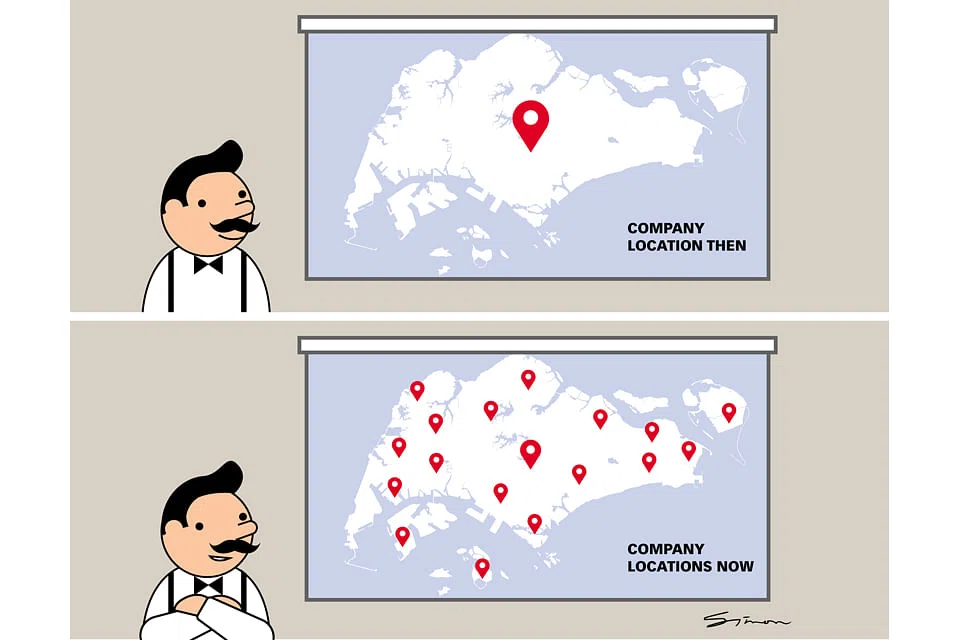
THIS WEEK'S TOPIC: Apart from health and economic consequences, will Covid-19 also spell a big reset in terms of how we work? As an employer, how open are you to large-scale work-from-home in your organisation?

THIS WEEK'S TOPIC: Apart from health and economic consequences, will Covid-19 also spell a big reset in terms of how we work? As an employer, how open are you to large-scale work-from-home in your organisation?
Tony Cripps Chief Executive Officer HSBC Singapore
We've always advocated for flexible work arrangements within HSBC, but it has come to the fore in our current predicament. Working from home is not only about putting in place the hardware needed.
Over the years, we've made progress in building a sense of connectedness and trust between colleagues that enables remote working. Half of our company is now doing so, with the rest performing vital roles such as maintaining the infrastructure to support our digital networks and meeting our customers' banking needs at our retail branches.
Looking ahead, I hope that we will keep within us the adaptability and resilience that will enable us to work in a way that suits us at any point of time. This means flexible work is not only for times of crisis - it should help us find a healthier balance between our personal and professional lives for the rest of our career.
Hsien-Hsien Lei Chief Executive Officer The American Chamber of Commerce in Singapore
The big reset isn't just about where we physically conduct business, it is also about shifting our mindset to manage expectations of how we build relationships, communities and workplace cultures. Flexible working arrangements, implemented due to the effects of Covid-19, can complement diversity and inclusion efforts to have a positive impact - demonstrating that companies are able to support their employees in accommodating the demands of work and family. Working from home also challenges us to be more diligent, concise, and creative with how we communicate with one another. Even before Covid-19, AmCham encouraged the team to regularly work from home and we will continue to champion it.
Victor Mills Chief Executive Singapore International Chamber of Commerce
Like all major crises, Covid-19 is an unstoppable force for socio-economic change. We and the way we work will be transformed in ways we can't fully appreciate now. The crisis already allows us to experiment with different tools. If, as expected, it is a prolonged crisis, we will have plenty of opportunities to measure output. Provided output does not suffer, there is no good reason why working from home should not become an accepted norm rather than an exception. Covid-19 will accelerate other changes in work practices too including reducing business travel forever and increasing online events and meetings.
Dileep Nair Independent Director Thakral Corporation Limited
The Covid-19 crisis has given an impetus to changes in work already in play. Previously, some tech and media companies have introduced telecommuting in a big way. Now, working from home is being mainstreamed. Of course, businesses involving production lines and teams that must physically collaborate may not find it feasible. But for many others, when it is found that there is no drop in staff productivity, and instead there are benefits from real estate savings as well as better work-life balance enjoyed by staff, working from home may be here to stay. At the same time, companies must put in place computer security measures such as issuing employees with secure laptops and phones, and encrypting all communication. Likewise, companies must arrange for staff to occasionally meet up physically, for relationship building and fostering company loyalty. Widespread telecommuting will then be at least one good that results from this pandemic.
Yeoh Oon Jin Executive Chairman PwC Singapore
''Flex'' working arrangements, like flex-time, flex-space, have been our firm's policy for several years. In responding to Covid-19, the sceptics in the office who did not believe in Flex work are now firmly onboard - they have seen that we can work effectively and just as collaboratively when working from home or remotely. Our recent investments into technologies like cloud-based tools, virtual secure data access and work mobiles issued to all staff are critical in enabling our 3,500 people to work from home. So yes, we are definitely open to this large-scale work-from-home initiative. We are also looking at new resourcing models via the gig economy (which is largely home-based) and this will further drive the WFH culture. Having said that, the need for physical social interactions remains an important aspect for our staff, and the lack of, if prolonged, could adversely affect staff's mental well-being. The ability to have some form of social interaction in the virtual world will have to evolve if we adopt WFH en-masse.
Sebastian Mueller COO & Co-Founder MING Labs
Remote collaboration is the new normal. Through the constraints experienced during this crisis, all organisations have moved onto IT and organisational structures that enable it. Everyone who was previously not geared up for remote work is fully ready now. Most jobs lend themselves to remote performance. There are few valid reasons for insisting on regular office presence. After getting used to working from home for a few months, most employees will demand more flexible structures. Another upside for companies is the expansion of their labour pool. Once remote work is the new normal, they can recruit from anywhere.
Jean Drouffe Chief Executive Officer AXA Insurance Pte Ltd (Singapore)
We implemented agile working in AXA starting in 2017 and equipped our employees to be able to work effectively wherever they are. Having a strong foundation already in place enabled us to respond quickly to the Covid-19 situation to ensure the well-being of our employees while minimising any disruptions to our operations, as we had the tools and resources to scale up work-from-home capabilities to all office staff. Since February, the majority of our employees have been working from home. More than a month in, we are happy to have seen our employees adjust and adapt well to this work arrangement. While remote working has become more commonplace, certain benefits you get from working in the office such as the sense of community from interactions and connections unfortunately cannot be replaced. Remote working should be embraced, especially when the situation calls for it, but we're unlikely to see a complete shift in the near future.
Leong Chee Tung Chief Executive Officer EngageRocket
We are now forced to rethink what it means to be at work, and dig deep into what drives productivity especially for the knowledge economy. Building familiarity with enhanced communication protocols and remote working tools will make it more likely that work becomes more efficient in the near future, possibly with less commuting and more reliance on digital capabilities. At EngageRocket, we're preparing for large-scale work from home, and are confident that we can make the transition if necessary.
Alain Deniau CEO & Board Practice Lead in Singapore Heidrick & Struggles
As a leadership search & consulting firm, we're no strangers to working in virtual environments, or home. Digital transformation has changed organisational cultures and equipped many companies, including ours, with efficient tools enabling remote work for employees.
In our annual Route to the Top report, we found that resilience and empathy were highly desired traits in leaders today. The concept of remote work has been around for quite a while, and business leaders must adapt and change to ensure business continuity. They must be transparent and set short-term expectations for their employees; work should go on with trust and care for each other in order to overcome trying times. Leaders should also give perspective for the ''day after''.
Christopher Wehner Managing Director BMW Group Asia
We find ourselves in unusual times. The current situation has forced us to explore how our business can continue successfully with a large-scale work-from-home arrangement. Our team has risen to the challenge and we are working hard to ensure all employees have the resources they need to work well. However, there is great value in tangible interactions - we believe meetings are more efficient and face-to-face interactions help strengthen collaboration and build trust, both of which are essential in a work culture. Therefore, we will have to find the right balance between working from home while ensuring our employees feel connected to one another and the organisation as a whole.
Tomas O' Farrell Co-founder Workana
Covid-19 will undoubtedly shake up how companies source teams and convince many to consider incorporating remote, freelance workers for projects instead of relying on locally-based talent. With the shift in technology and with developing trends in how people work, we are pleased that the promise of virtual teams is fast becoming the new norm. Also, with companies globally instituting work-from-home policies, many may begin to see how productive remote workers can be, opening up new ways for them to think about structuring their internal teams. Businesses may also begin to see it as a way of ensuring business continuity in times like we are experiencing now.
Tony Lim Head of Singapore IG Group
The Covid-19 episode turned out to be an unwitting national work-from-home experiment, but our conclusion remains that there will be no permanent shifts for the majority that reside a short commute away from the office in this island state.
It is the camaraderie, the social banter, the synergy from face-to-face interactions and even the demarcation of work and personal life that IG Singapore employees find to be missing. These are things that technology simply cannot replace.
Certainly, some have discovered the benefits of telecommuting in tending to urgent needs or increasing efficiency, which IG Singapore has always been supportive of. The majority, though, are definitely looking forward to being back in our modern office!
Jayajyoti Sengupta Head, Asia-Pacific, Japan, India and Middle East Cognizant
Thanks to the coming together of virtualisation of work and consumerisation of IT, work from home (WFH) has been gaining ground for several years as the new dynamic of work. We had seen it coming, what with anytime, anywhere systems that can create virtual presence challenging the core rationale for vertically integrated corporations with co-located employees in company buildings. In the latest industrial revolution, work is everywhere and anywhere and all the time. It is literally and metaphorically in the palm of our hands. Unchained from a physical place, millennials no longer ''go to work'', they just ''do work''. WFH is not only here to stay, but also poised to become increasingly mainstream and indispensable.
John Bittleston Founder and Chair Terrific Mentors International Pte Ltd
For the past three years we have been helping clients to work from home. As mentors/coaches, we ourselves have been doing so from well before that. So it won't be a big reset. What we do need to do is to learn how to work more effectively from home, which includes the following:
Patricia Yim General Manager IBM ASEAN
Our people are our core assets and every measure must be taken to safeguard them. Organisations must be prepared to accept working remotely as the new normal as employees adjust and become comfortable with the concept. Employees are now training to make full use of the digital tools to serve clients without impact. Post-crisis, for more industries this will be a common component in their workforce strategy. A key consideration is to ensure technology is secure, productive and intuitive, harnessing the power of AI technology. Mobility and working remotely has been a cornerstone of our strategy in supporting our clients since the '90s. IBM operates the largest corporate network in the world, with 22,000 wireless access points and 1,500 firewalls. In recent days, we have shifted to support nearly all IBMers working remotely, and we have done that seamlessly. We are able to do this as we have invested heavily in the past in our infrastructure and remote access capabilities, with focus on security, ease of use, and business continuity. These engineering decisions have proven to be vital for us.
Axel Berkling Executive Vice-President KONE Asia Pacific
The world is now closer to realising the vision of remote working and telecommuting being the norm for employees. At KONE, our culture has always enabled every employee to enjoy excellent work-life balance. I believe it's possible to sustain high levels of productivity regardless of their place of work, as long as they are empowered with the right tools and solutions. Our employees can telecommute easily through secure access to emails and shared folders, collaborative work solutions, and video conferencing chats. We are also engaging effectively with our customers across locations through these measures in place.
Marcus Cheng CEO Acclivis Technologies and Solutions
Many organisations still require their workforce to come into the office so remote working may not be sustainable over the long term.
As much as telecommuting is encouraged during these times, we are still seeing demand from our financial institution clients to use alternative work sites as a proactive way to ensure business continuity. These third-party sites - typically known as work area recovery sites - house part of their critical workforce, and are run in tandem with other measures including staggered hours and remote working so that all parts of the business stay operational. We think the trend of leasing alternative work areas will continue for those industries that can't afford remote working and more so if their core office premises are compromised.
Moray Armstrong Managing Director CBRE Singapore
We have seen many companies shifting from the traditional office model to embrace more flexible working spaces and alternative workplace strategies. Covid-19 has probably accelerated this workplace transformation and may indeed have a long-term effect. It has become apparent that in uncertain times, flexibility and mobility are key components in remaining resilient.
As a strong advocate of activity-based working, our CBRE office had already implemented flexible working policies prior to the outbreak. This agile approach ensured that we were able to quickly activate and maintain remote working at a large scale. We have also been working with a growing number of clients to set up their offices for remote working. Our workplace strategy team and digital technology professionals are extremely busy extending support and advice to a multitude of customers to ensure these organisations remain as productive and connected as possible.
Adam Reynolds APAC CEO Saxo Markets
I think Covid-19 will rapidly accelerate a process towards flexibility and telecommuting that was already underway. At Saxo Markets, as a purely digital broker, we were well-placed to immediately move into a split-teams working strategy with no interruption to our business. The biggest challenge was enabling client-facing staff, who largely communicate by telephone, to function from home without any degradation in the service level. That has been mostly achieved with the only challenge being variable Internet speeds at some of our staff's homes.
I have been pleasantly surprised by the uptick in productivity that this telecommuting has brought about in our business, with our teams using some of their non-commuting time to work longer hours.
Of course, with the volatility in the market, Saxo has seen an unprecedented pickup in new account applications, activity and service calls, so our onboarding, sales and service teams have been working a lot of overtime to service our clients. In my view, this lockdown will last for quite some months, and we will end up with a more flexible working environment even when it is back to BAU.
Ng Tian Chong Senior VP & MD, Greater Asia HP Inc
Since mid-March we have deployed a large-scale work-from-home policy here in Singapore and across Asia to ensure the safety and well-being of our employees, our partners and the communities serve. We are doing everything we can to empower our teams with the tools and the flexibility they need to execute and stay connected.
Looking at the wider market, we have seen a rapid increase in businesses allowing employees to work remotely. This is what the future of work is all about. Mobility is everything and the office of the future will not be ''stationary''. This trend was already being driven by millennials, who comprise half the workforce in Asia-Pacific. When this challenging time has passed, their expectations for instant, always-on connectivity, paired with workspace flexibility and mobility, will be the norm.
Mark Homeier Chief Executive Officer Maxonrow
As the global CEO of a tech company that prides itself in ''trust'' as the basis of all transactions, I intrinsically trust my team; work from home gives everyone a chance to recalibrate. However, I can't say I'm thrilled about 100 per cent work-from-home because the energy when you have several brilliant minds in the room thrashing out a problem is simply better than video. Nevertheless, status quo has been upended for companies without a WFH policy and I can't say that I'm sorry to see that change - it's surprising how many ''techies'' relied on face-to-face meetings and physical oversight before this crisis.
Sam Fischer President, Greater China and Asia Pacific Diageo
We can't predict how Covid-19 will impact the future. However, Diageo is an agile organisation, with flexible and nimble work solutions long embedded in our culture. Our businesses across Asia-Pacific have been enabled for remote working, and our working environment has been set up in such a way as to ensure seamless connectivity and allow maximum flexibility for employees. This won't change as we'll continue to refine how this works to better empower our people and business.
Pierre Samson Senior Vice-President, Asia Pacific Alcatel-Lucent Enterprise
These are definitely unusual times. Nonetheless, working remotely and with virtual teams are not new concepts. Our remote working polices, which have been in place for years, helped us transition smoothly when we implemented remote working at scale recently. Staff from across 46 locations now stay connected using our communication and collaboration tool Rainbow. Our detailed security policies have also helped us to mitigate cyber risks especially during such times.
Today's cloud-enabled connectivity technologies allow workers to be productive wherever they may be. In fact, we have been working with many organisations to set up business communications systems that empower their teams with remote collaboration capabilities. Effective remote workers need to be equipped with modern tools - easy-to-use and secure business communication tools that connect people, machines and processes.
Robert Walter Managing Director Robert Walters in Singapore
Even prior to Covid-19, companies had been moving more towards flexible working. This unfortunate situation has forced companies to find ways of working effectively and collaboratively remotely and this will likely remain an option companies are open to in the future. One of the potential effects our clients are now discussing is whether, in the future, they will need as much office space as before. We believe these circumstances are increasing the consideration of hot desking and work-from-home rotations rather than maintaining ''a seat for everyone''.
As a recruitment consultancy, our workforce is relatively mobile, and we have technologies to support remote working from home, cafes and offices. This has allowed us to quickly implement large-scale work from home in this period - and we will consider it if situations call for it in the future. As with many companies, we believe the future holds a more flexible, multi-location workforce and this pandemic has accelerated this thinking.
Tripti Lochan Co-CEO VMLY&R Asia
The Covid-19 outbreak could teach us some valuable lessons about the way we work, particularly when it comes to strategies for efficient remote collaboration, defining work/ life balance at home, policies around business travel, and the positive environmental impact organisations can make as commuters stay at home.
VMLY&R is well-positioned for remote working, and we are committed to supporting our teams to support clients through the long haul. Challenges lie ahead, as the outbreak is affecting us all differently, so taking a hyper-empathetic human approach and assuming ''good intent'' when conversations are stunted and misunderstandings happen, will be key to productive remote working.
Angus McDougall Regional VP, Asia Pacific & Japan Entrust Datacard
Covid-19 has placed every company into the world's biggest remote working experiment. In uncertain times, we want to safeguard our employees' well-being first and we have implemented work-from-home arrangements in Singapore and our regional offices in Asia-Pacific. Our customers are making significant adjustments to their operations as well. The surge in employees working from home comes with rising demand for multi-factor authentication so employees can work from home seamlessly and securely. With phishing attacks on the rise, bad actors may take advantage of a crisis. We are realising that verifying customer and employee identities with strong authentication is more important than ever.
Callum Laing Chairman Unity Group
In this paper, nearly two months ago, I posited that this crisis would lead to a rise in remote working. Our company moved fully remote two years ago and the opportunity it provides is for a massive, untapped and under-utilised workforce to suddenly start making a contribution again. Stay-at-home mothers (or fathers) plus non-able-bodied or those who are unable to commute are suddenly back in the economy. Welcome back! The business world will be much stronger with your addition.
Amit Anand Co-Founder & Managing Partner Jungle Ventures
We've always adopted a flexible and remote working policy so the impact of Covid-19 has been minimal for our operations, and we remain confident of remaining operational in the new normal post-Covid-19. We do realise that while we have the advantage of being prepared, some startups might struggle to balance the new working arrangements together with pressure of ensuring business continuity. We are working with our portfolio companies to provide necessary guidance and support to overcome these challenges. Whether you are a startup or a large multinational corporation, employers should constantly motivate and empathise with their employees, while taking it upon themselves to take care of employees' physical and emotional wellbeing during this period.
Simon Ashenden MD, Security Risk Management AP Kroll
The current Covid-19 crisis and the subsequent government social distancing requirements have prompted companies to relook at the concept of flexible work arrangements and building a responsible workforce. In uncertain times such as these, we have seen firms adopt innovative and smarter ways of working productively through tools to keep conversations going. An organisation's business continuity plan needs to fully address these evolving requirements, while at the same time ensuring sensitive company data is kept secure. Under current circumstances, organisations are advised not to neglect the unseen cyber risks as employees are now away from the secure network built in the workplace environment, thereby exposing vulnerabilities to threat actors. Large-scale work-from-home arrangements can be successful if employees are well equipped with knowledge to be cyber-smart.
Eryk Lee Chief Executive Officer AAM Advisory
We need to be fully prepared that Covid-19 may indeed last longer than anyone would have expected and the wellbeing of employees has to remain the primary focus of business leaders. From an operational perspective, companies need to adopt technology to ensure that business can continue in a completely new environment, where remote working becomes the norm. For example, meetings will need to take place remotely, companies will need to adopt digital signatures for business transactions and use two-factor authentication for approvals. This needs to take place at an industry level for many businesses as there are so many inter-dependencies in the connected world we live in. For example, if the insurance industry cannot accept the use of digital signatures, it will not work even if financial advisory firms are using these with their end-clients. At the same time, regulations may need to evolve to allow and facilitate new ways of doing business, while at the same time ensuring that we retain the same robust controls, governance and client protections. In fact, if the government and regulators begin to take the lead in such initiatives, it will be easier for companies to follow their lead.
Simon Lee Vice-President, Asia Pacific & Japan Gigamon
We will definitely encounter a new ''normal'' as the work-from-home mandates are rescinded and we settle into routines that ideally retain the best of both situations. For example, cultural acceptance of working remotely has increased as modern video conferencing technologies enable teams to stay productive and personally connected.
From a technology readiness standpoint, having embarked on a digital transformation journey, the Gigamon IT and InfoSec teams were ready for the network speed, traffic visibility and security pressures that large remote teams can put on an infrastructure, so we were ready for this evolution. As a global organisation, remote working will remain a key part of our culture as we collaborate globally to manage our business. I fully expect the Gigamon team to continue to evolve and exit this crisis a more efficient and focused organisation.
Anand Sanghi President, Asia and India Vertiv
Covid-19 has definitely affected how we work. At Vertiv, we triggered our business-continuity process and implemented split teams in our Singapore office which started in late January as a pre-emptive measure to keep our employees safe.
We got everyone comfortable using video conferencing and other digital collaboration tools, published guidelines for employees working at home, and provided guidance for managers to help maintain morale and productivity. Our takeaway is that with good business processes, robust and reliable IT infrastructure, communication bandwidth, progressive policies, empowered employees and engaged leadership, companies can continue to be productive in a #WFH environment.
Magesvaran Suranjan President, AsiaPac, Middle East and Africa Procter & Gamble
At P&G, protecting the health and safety of our employees is our top priority while we continue to serve our consumers and support the community. We have been following the global and local health authorities' guidance to keep our workplaces safe. As the situation has been evolving, Covid-19 contingency plans have required businesses to embrace remote work. As an organisation which already offers flexible work arrangements, we have been able to quickly adopt the new way of working supporting our employees with the right IT and remote tools. This is paramount as we adapt in this evolving landscape and future-proof our workforce. During this unprecedented time, it is crucial for us to be a positive force for our employees and for the people around the world. We continue our commitment to serve consumers responsibly with our brands, while ensuring support to the community during this difficult time.
Stephen McNulty President, Asia Pacific and Japan Micro Focus
To slow the spread of Covid-19, more enterprises will implement remote working procedures as employees familiarise themselves with conferencing technology and virtual interaction best practices. This is not a major shift for Micro Focus as we have the ability to scale up existing work-from-home policies to protect our staff while maintaining business-as-usual operations.
A remote workforce requires proper training and protocols to ensure team visibility and collaboration standards. Within the sales function, personal interactions remain essential albeit conducted virtually temporarily, with more reliance on online marketing efforts and inter-regional support. The global village will become smaller than ever before as we unite in the time of Covid-19.
Shahid Nizami Managing Director, Asia Pacific HubSpot
HubSpot has always had a strong culture of flexibility and autonomy which has allowed us to adapt quickly to the current environment. We have closed all global offices and implemented remote working for all. With remote work, it is crucial that people are set up for success. In addition to 24/7 IT assistance, we have also introduced a variety of virtual programming - from daily lessons with a teacher for parents with young kids, to a Q&A with a doctor on the topics of mental health, stress, and isolation. I am heartened to see that our employees remain in high spirits during this challenging time and are connecting with each other through virtual lunches and happy hours.
Ronak Shah Chief Executive Officer QBE Singapore
We have advocated flexi-work arrangements since well before Covid-19, so we understand how to implement effective work-from-home practices that benefit both employees and the company. There are certain intricacies in having remote-work arrangements for a business like ours, as face time with our clients is important. However, technology has helped mitigate this, as we are now able to shift elements of issuing policy quotations and the overall claims process to online platforms. This said, Covid-19 has forced us to expand the scope of our flexi-work programme to ensure safety, with so many people out of office at the same time. This exercise has served as a good stress test and given us confidence that we can continue to operate at optimal levels.
Sandeep Bhargava MD of Asia Pacific/Japan Rackspace
As part of our business continuity plans to stay safe, we have implemented work-from-home days in our Singapore office from the first week of February. We were one of the first organisations globally to test our work-from-home capabilities in all our offices and rolled it out across our network from early March. Even before Covid-19, Rackspace has been flexible about employees working from home, enabled by collaborative technology tools, various cloud-based systems, a culture of fanatical employee engagement and the trust between the firm and staff.
The biggest challenges that organisations will face around remote working are to do with technology (having the right tools) and corporate culture. Organisations that have taken a cloud-first, objective-oriented approach like ours may find they are better set up for delivering customer outcomes from anywhere, as they are better designed for remote access and scalability.
Lee Chong-Win Chief Executive Officer Logicalis Asia
At Logicalis, we are strong proponents and adopters of the Modern Digital Workplace, a key tenet of which is the untethering of employees from their desks. With the current situation, we have become increasingly familiar with solutions that facilitate immersive multi-party virtual interactions whether for work or education. Cloud-enabled solutions provide access to applications and data with little geographical boundaries. However, along with harnessing key technology solutions, organisations need to evolve their culture and work processes to maximise associated benefits such as enhanced responsiveness, employee agility and business continuity planning. As an advocate of flexible work arrangements, we continually refine both the technology and employee experience as we expect this be the inevitable new normal.
Edmund Lee Managing Director Singapore TMF Group
For many companies, large-scale work from home is a fairly radical way of working that has been implemented out of necessity rather than by deliberate design. While remote working works for many firms, we recognise that such arrangements may not be suitable for all industries. At TMF Group, our employees welcome the flexibility but have also expressed a desire to return to an office environment. One concern about large-scale work from home is that it could lead to a loss of team culture and undue reliance on digital tools. While technology enables collaboration on an unprecedented level, it cannot replace face-to-face communication and having a sense of belonging. TMF Group remains open to remote working and this could indeed be the next workplace evolution, but we'll need to consider employee sentiment over the long run.
Matthew Bennett VP & MD, Asia Pacific & Japan VMware Carbon Black
The Covid-19 pandemic has driven home just how connected the world has become. The future of work is changing - remote working is becoming the norm and work itself has become more distributed, which means endpoints are too. Personal cyber-safety and security have become a growing concern, as a disparate workforce creates greater attack surfaces for hackers to penetrate. Cybersecurity will continue to gain increasing importance in the future of work.
VMware Carbon Black has always believed that the virtual perimeter would inevitably disappear, and that is what we've been working towards. We tap our own capabilities to work remotely, maintain productivity, increase connectivity, and provide continuous secure access to applications regardless of the endpoint. We will continue helping organisations do so, too.
Mike Ong Vice President BIGO Technology
As the nature of our work is digital, we have naturally and smoothly transitioned into working-from-home arrangements for employees. This in line with recommendations and measures from the World Health Organization (WHO) and local governments.
Technology knows no boundaries - with over 30 offices across the globe, we keep the work flowing by telecommunicating across geographies. In recent years more organisations have embraced remote working arrangements and it has been the same at BIGO Technologies - especially as our products naturally lend themselves to flexible work arrangements. We continue to roll out our own remote communication tools in video-based and VoIP products across our organisation. We are a strong believer in constant innovation to enhance video, live streaming and networking technology, which presents a huge benefit to businesses, individuals, and the world to stay connected during times of crisis.
Summer Choo Country Director ADA in Singapore
ADA introduced Working from Home (WFH) options back in early March to protect our people. While working in the office undoubtedly offers better collaboration, discussion, and team camaraderie, the Covid-19 situation has forced us to get out of our comfort zones with tele-communication.
This has allowed our people to learn to present effectively, listen attentively, and to be mindful with our choice of language - making us better and efficient communicators. The WFH situation has also conferred benefits such as higher productivity and improved work-life balance including more time for staff themselves and with their family.
Adrian Chng Chief Executive Officer Big Bear
In response to Covid-19 we have introduced policies to safeguard our employees including spilt team arrangements to limit physical contact between large groups. However as a tech company, GoBear has already built our culture around flexible working arrangements.
Working remotely is something we encouraged since we started, so that employees can plan their day and find the right balance between home and work. It has proven to be a strong way to encourage being results-driven and foster cross-border collaboration, particularly for complex multi-market projects.
With high Internet penetration and the widespread availability of web conferencing and chat technologies in Singapore, I believe telecommuting will be the future of work.
Praveen Kumar General Manager, Asia Pacific ASG Technologies
Covid-19 isn't just changing the way we work; it also exposes businesses' readiness to go digital.
As the only solutions provider for both Information Management and IT Systems to global organisations, serving more than 3,000 customers worldwide in 60 countries, we are ready to implement large-scale work-from-home schemes for our employees. We understand the importance of being digitally-enabled as a business and simultaneously making sure that the data in every employee's computer is properly managed, secured and protected.
John Lee Managing Director (Asia Pacific) GRF Asia-Pacific Pte Ltd
While we recognise that some tasks can be delivered remotely, it is important to have a structured communication plan with set objectives. Employees also need the physical connection with each other to innovate and come up with new ideas. Thus a right balance has to be achieved. If the objectives can be delivered effectively remotely, more companies will embrace this mode of working. The current pandemic may be a test of its effectiveness.
GRF is already practising a hybrid of office and remote working. Due to its global presence we have constituents in the US, EMEA and Apac in different time zones.
Linus Lim Co-Chief Investment Officer Phillip Securities Pte Ltd
Working from home has historically been done in our shophouses - I tried out working from home and I find it a positive experience; there's a better chance to reflect, consider options and the ''commute'' was stress-free! Our financial advisers have always been given the option of working from home though some prefer to have a workplace in the city. (75 per cent of them are now mobile)
Increasingly we will have to adapt to the needs of our team members over time - many processes still require physical signatures and sign-offs which can be changed to allow for more remote work.
I like the idea of telecommuting as we can draw on talent who may find it difficult because of time or individual circumstances to join us. This may include people who want to spend more time with their family, senior citizens or those who may have physical disabilities that restrict travel.
Joanne Wong VP, Asia Pacific and Japan LogRhythm
Working remotely is not a new concept for us at LogRhythm. Prior to the Covid-19 outbreak, some of our colleagues who are located in cities outside the regional headquarters have already adopted remote working, and this has worked well for us.
A crucial factor that contributes to successful large-scale remote working arrangements is to ensure that companies have in place the right IT and security framework. As home networks are known to be more vulnerable to cyberthreats, businesses need to be mindful of the risks of telecommuting, and ensure that cybersecurity measures are taken into account in the overall business continuity plan.
Vikas Nahata Co Founder and Executive Chairman Validus Capital
With Covid-19, new health and safety measures as well as remote working arrangements are fast becoming the new normal. Employers need to remain open-minded and embrace change and protect their employees, even if it means large-scale work-from-home policies. At Validus, we've always seen technology as a growth enabler, and today, that remains especially true - businesses have a chance to test, evaluate and update business contingency plans, ensuring that the safety of employees and maintaining efficiency, with an eye on improving processes. We've started work-from- home policies since early March, with guidelines in place to ensure accountability and productivity.
Suganthi Shivkumar MD, ASEAN, India and Korea Qlik
Companies are pivoting towards remote working initiatives to encourage social distancing and prioritise the safety of employees. At this time, we have asked all our employees in Asia Pacific to work remotely. Qlik has always embraced a flexible work culture and this has enabled us to quickly implement large-scale work-from-home measures with minimal disruption. The health and safety of everyone in the Qlik community remains a top priority and our business continuity plans have allowed employees to use secure, remote technology to work efficiently. We are heartened to see Qlik's employees, partners and customers band together to share additional information, resources and even creating real-time dashboards around Covid-19 to help each other work better and make smarter decisions during this time. I am confident that we can combat this outbreak if we all stand united and offer as much support as we can.
Bill Lewis Co-Founder Temasys Communications
In the world of business, it is often unplanned and unforeseen major circumstances that force significant change. These changes are often made involuntarily with an eye on survival and continuity rather than comfort. The facilities for employees to be based at and work from home have been with us for a decade. But, particularly in Asia, remote working (or home-based working) has seen slow (or almost negligible) acceptance - more often than not for cultural reasons. Today as Covid-19 forces onto business (new) practices and processes that embrace home-based working, there may be a realisation that the fear of loss of control, fear of workers not working, fear of loss of productivity, were all false assumptions. As these false expectations are blown away, by business continuity effectively executed, we may see that many organisations choose to dispense with the ''old way''. Seeing that business has been unaffected by an extended period of home working, the bosses with a more ''controlling'' style of management will not have a case to impose full-time office presence. The outcome may be happier employees and a complete change of work practice.
Toby Koh Group MD Ademco Security Group
Working from home, remotely away from the workplace, is a necessity at this time due to Covid19. Ademco has for years been certified under ISO22301 for business continuity. As part of that strategy, we have most of our systems on the cloud. Hence, working from home is very possible. However, Singapore has the geographical advantage of being a small island. Travel to work is convenient as compared to many other cities like Jakarta, Manila and other commuter-challenged cities. The intrinsic value of having my team work in physical proximity is invaluable. The camaraderie and interactions resulting in closer team bonding is worth many more times than the cost savings of reduced work space allocation. As the saying goes, you cannot email a smile or a handshake.
Helen Ng Chief Executive Officer Lock+Store
For self-storage operators, telecommuting only makes sense for back-end administration staff. Most customers still prefer the human touch and would like someone to show them around the facility and explain to them our storage plans in detail, and respond to any questions they may have on the spot. During this period we are advising potential customers not to visit our facilities. They can ''tour'' our facilities by watching a video online, and book and pay for storage units via various cashless facilities. We have also activated our business continuity plan which includes split operations and on-premise social distancing.
Frankie Chia Managing Partner BDO LLP
Technology for working remotely has advanced greatly since the Sars outbreak in 2003. This Covid-19 global pandemic has forced us to put the technology to the test on an unprecedented global scale. Businesses are forced to seriously reconsider how such incidents may lead us to employ different ways of working and conducting business in future. Telecommuting technology and flexible work arrangements have so far proved highly effective in mitigating disruption and ensuring business continuity in this crisis. I foresee businesses emerging from this crisis with telecommuting and flexible work arrangements as a new normal in this digital economy age.
Sudhanshu Co-founder & CEO Rewardz
At Rewardz, what matters is getting the job done; where you work from is inconsequential.
Adapting to current times has been smooth as we have always supported work from home. Once the situation stabilises, we will continue to make office space available for those who need close coordination on projects or who focus better at the office.
Organisations shifting to a WFH arrangement essentially require: 1) Adoption of tech tools for communication and collaboration; and 2) Right mindset to trust their employees coupled with the right response by employees to not abuse this trust. Trust fosters trust. And trust will see us through.
Sudhir Agarwal CEO Everise
An economy-shaking event like this will fundamentally shift many consumer and working behaviours. Work-at-home was already a solution Everise provided, but in response to this outbreak we have stepped up to ensure we have the capability to provide all of our services in a home-based model, regardless of location. In a couple of weeks, we were able to scale up from 10 per cent to 77 per cent of our global workforce in a work-at-home environment.
Over the long term, working from home will become the new normal, making the optimal outsourcing strategy of the future one that is globally distributed and blended between work at home and brick-and-mortar, made up of full-time employees. This approach will offer companies optimal flexibility to mitigate risks and address unknown outcomes on how Covid-19 will impact the global and regional economy, and their respective workforces, in the foreseeable future.
Lim Soon Hock Managing Director PLAN-B ICAG
I am a great believer and practitioner of telecommuting, having worked for global MNCs, which are believers and trailblazers of this practice, since the '90s. Covid-19 has debunked the myth and misconception that work from home is impractical, problematic, unproductive and encourages absenteeism. It has proven that it is not face time but throughput that matters. For example, it even allows for customer engagements and enhancement of customer relationships management. To be fair, the availability of technologies such as webinar, video conferencing, etc has facilitated this beyond meetings, to encompass even engineering discussions, with photos of products and parts, etc, using the ubiquitous smartphone.
When more companies embrace large-scale telework, there will be less land and air travel, helping to reduce the carbon footprint, and contributing to climate control. Companies must ensure there is good communication among employees and above all, that there is trust between management and employees for work-from-home to take off in a big way.
I believe we will see telework as the new normal, going into the future.
Benjamin Tan Vice President Ultimaker Asia Pacific:
Today, many of us are empowered by technology. At Ultimaker, we too have been harnessing various tools and resources to communicate with global customers and colleagues alike.
Due to the outbreak, many of us are now working remotely. This has not changed how we work; only where we work. At the end of the day, we are all measured by performance and not face-time.
Flexible work arrangements have not only helped us with business continuity, it is also a great talent retention tool. I strongly believe this will be continued and embedded as part of corporate culture after Covid-19.
Andrew Chan Founder and CEO ACI HR Solutions (ACI)
While most companies are currently forced into having staff work from home due to Covid-19, future adoption will differ in various companies. What is important now is to ensure that clear communication and metrics are given to staff on what is expected of them during this period. Once we return to normality, HR and business leaders can measure their productivity based against those metrics. It might be tempting from a cost perspective to continue with a remote workforce, but it can be fraught with danger without fully analysing what might be gained or lost by its implementation.
Mario Singh CEO Fullerton Markets
On Feb 2, Bloomberg ran an article entitled Coronavirus Forces World's Largest Work-From-Home Experiment. Since then, governments the world over have imposed even stricter measures like a full lockdown, border control and social distancing.
While these measures are certainly necessary to contain the pandemic, Covid-19 has upended the business world. Telecommuting and teleconferencing have now become the new normal. The good news is that there are certainly advantages to flexible work arrangements.
Last year, a survey of 7,000 workers by FlexJobs showed that 65% of them reported higher productivity working from home, citing benefits like fewer interruptions from colleagues, minimal office politics and reduced stress from commuting. A 2019 Harvard University study also found that those given the freedom to work from anywhere were 4.4 per cent more productive than those who had rigid workplace requirements.
Some of our staff within Fullerton Markets already have work-from-home arrangements. In this day and age, what I am most concerned with is productivity and efficiency to grow the company. Location is immaterial.
David Leong Managing Director PeopleWorldwide Consulting Pte Ltd
It's more than a reset in the way we work - from video conferencing, multi-party conference calls, Skype meetings and interviews, staggered work start-end hours, staggered lunch, to work-from-home, flexibility at work is at its best in this period. Flexible work arrangement is now the reigning norm. These are not new concepts and have been advocated by many, including labour unions and governments. This time, all the modalities of flexible work arrangements become, at once, useful for the purpose of work. Work effectiveness, outputs, communications and interactions are not so much impacted because conversations and agendas remain the same. Face-to-face, eyes-to-eyes, hand-shakes may be missed but these do not affect communication.
We advocate flexibility at work as handling clients can be done via email and the phone.
Going to work in an office at a fixed time with a fixed lunch hour, commuting during the morning and evening peak hour in congested public transport will soon be seen as archaic. We'll change the way we work.
TRENDING NOW

Ex-Nvidia CEO Jensen Huang carried a secret for more than a year. It led to his downfall
South-east Asia has lost Nvidia’s best salesman

Demand, tech capabilities position Apac and AI as Skyscanner’s next growth frontiers: CEO Bryan Batista
Jensen Huang discusses comeback as Nvidia CEO with allies: report

