Gender parity is critical to success in business

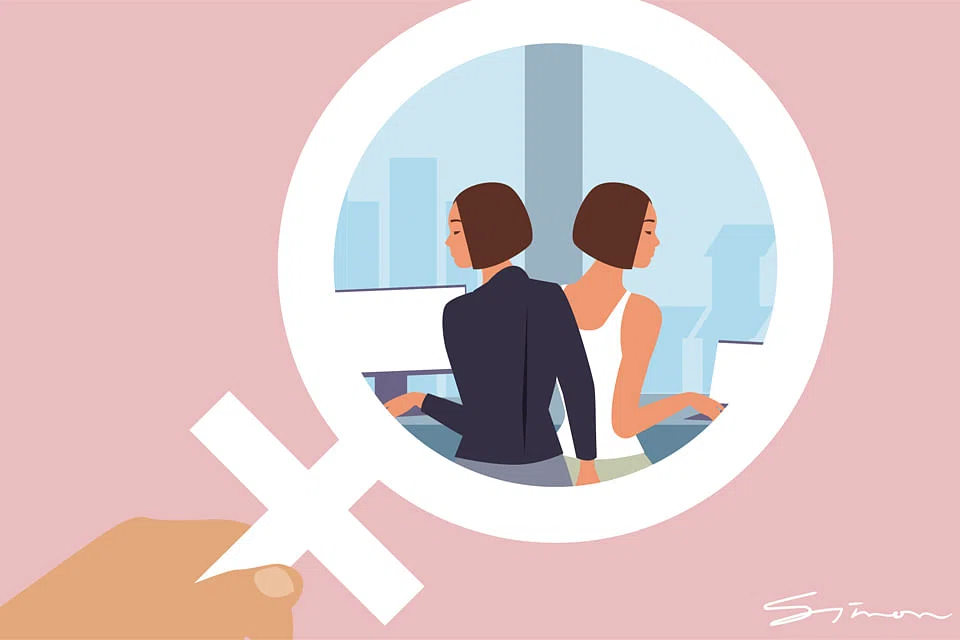
THIS WEEK'S TOPIC: Will new work norms such as the rise of hybrid working and work-from-home help improve gender equality at the workplace?

Published Sun, Mar 14, 2021 · 09:50 PM

    THIS WEEK'S TOPIC: Will new work norms such as the rise of hybrid working and work-from-home help improve gender equality at the workplace?
    Rachael Tay Regional Head of Benefits, APAC Lockton

    Gender equality in the workplace varies by profession. Some are constrained by the availability of relevant talent, while other professions could effectively expand gender parity by embracing greater diversity in hiring and more inclusive managerial practices. That said, policies like hybrid working arrangements and WFH do go some way to rebalance the burden of household and care duties and contribute towards improved gender quality. However, we have more deep-rooted social, cultural and economic issues than flexible work arrangements to tackle in order to make significant strides when it comes to gender equality, but every step helps.


    Molly Padgett SVP Head of HR Asia Pacific Visa Inc

    Who could have imagined in February 2020 that Singapore would shift most of its professional workforce from office to home? Here, we experienced the flexibility we may have feared in the past. I think this flexibility is here to stay, and the evolving workplace will enable a huge pool of returning female talent for companies, and allow women to rejoin the workforce on their own terms. At Visa, we're getting ready for that by ensuring that our benefit and leave policies are aligned with this change, with more flexibility around caregiver leave for returning employees, allowing for a more even distribution of labour for all.

    Nick Chia Managing Director Russell Reynolds Associates Singapore

    Covid-19 has forced us to question many assumptions about work, one of the biggest being the notion that remote work is less valuable. This has disproportionately impacted those who valued flexible working arrangements - particularly women, caregivers, and individuals who stay far from their office. The past year has demonstrated that outcomes can often be just as good when delivered in person or virtually. This gives me confidence that these new norms will help build more equitable workplace practices and create diverse teams, made up of people who contribute in their own ways, in full- and part-time roles, from the office or home.

    Cheung Pui Yuen Chief Executive Officer Deloitte Singapore

    Gender equality is part of the larger inclusion conversation, and it is up to employers to ensure that their people feel safe and valued at work.

    New working arrangements will go some way to strike the balance and support those who require the flexibility. However, they need to go hand-in-hand with steps that include emphasising trust and empathy, providing networking and mentoring opportunities, implementing learning experiences that take into account personal needs and priorities, and addressing unconscious bias in succession and promotion planning.

    There is no one-size-fits-all approach. Making diversity, respect and inclusion non-negotiable values will help shape the policies to achieve gender equality in the organisation.

    Cynthia Tan Chief Human Resources Officer Eastspring Investments

    At Eastspring, we believe that gender equality is critical to our society and to future economic growth. The pandemic enabled us to test how effectively we were able to support remote working (and, therefore, flexible working). At one point, we had almost everyone working remotely and confirmed that we can offer more flexible working and better support for all colleagues as they navigate work-life balance challenges - one way to improve gender equality in the workplace.

    From what we see, this has enabled men to play a more active and engaged role at home with both women and men working at home more often. This benefits the whole family and removes some of the mental load from women. This is not to say it is perfect all the time, but at least it contributes to more equality in roles both within and outside the workplace.

    Max Loh Managing Partner, Singapore and Brunei Ernst & Young LLP

    New work norms, such as flexible and hybrid working, enable but cannot be the panacea for workplace gender equality. The fact that it is primarily women who seek flexible working to balance familial and career responsibilities is already telling of how cultural and societal norms cannot be changed overnight. Fundamentally, it must first be about accelerating changes in norms and providing equal opportunities for all - and not just compensating for gender bias. Leaders should be intentional about removing barriers that impede women from achieving their potential, supporting their developmental needs, influencing hiring and progression policies, and institutionalising metrics that drive inclusion. They should also role-model by personally eliminating unconscious bias and gender-biased comments, and holding everyone accountable for inclusion and belonging outcomes.

    John Hackett Director HR, Asia Pacific & Japan Sophos

    In my opinion, the rise of hybrid working and WFH cannot hurt the cause of gender equality in the workplace. This is because it makes it easier to balance everyday life with one's workload. However, turning new work norms caused by Covid-19 into organisational policy should be part of a comprehensive gender equality plan that considers addressing perceptions around female stereotypes, organisational culture, talent attraction and selection practices, equal pay practices and the development of effective employee resource groups. Hybrid working alone is not the answer to the challenges that exist concerning gender equality.

    Nick Jonsson Managing Director EGN Singapore

    Unfortunately, through our network interactions, we are finding that for women the new working styles are further blurring the lines between work and life. Their family commitments have increased, making it harder for them to work a normal work day. From our research, we know that more women need to be leaders to teach men how to be gender-blind in the workplace, and yet if it's more difficult for women to carve out the space they need to attain career progression, I'm concerned that we may lose the progress we have already made towards gender inclusion.

    Ang Thiam Guan VP and GM, Asia Pacific Juniper Networks

    Covid-19 has affected us all but unequally. Hybrid working practices and flexible working arrangements can reduce the need for women to choose between work and caregiving duties. This will allow both men and women to share the load on family responsibilities, while attaining better work life balance.

    But more can be done to achieve gender equality at the workplace. Strengthening our pipeline of female talents, providing learning and development opportunities , and promoting qualified women to leadership positions are necessary to consistently drive gender equality at work. Besides well-intent programmes and initiatives, we need to work together as an industry ecosystem to establish equitable gender norms that will continue to acknowledge, advance and celebrate the contributions of women in the workforce, now and in the future.

    Motohiko Uno President Fujitsu Asia

    We believe in reflecting the diversity of our world and actively building an inclusive culture to ensure everyone can succeed regardless of gender identity. As a company driven by innovation, an inclusive workforce allows us to challenge established ideas and perform better. Yet we recognise that women remain underrepresented in the workforce. Flexible working hours with remote work arrangements empower women to transform the way they work, allowing for better balance between their professional and personal roles. To drive sustained impact in the long run, these will need to be a part of a holistic diversity and inclusion strategy to empower and inspire employees, regardless of their gender.

    Julie Tay SVP and Managing Director Align Technology, Asia Pacific

    With the rise of WFH, many women may feel increased pressure from the demands of integrating work and family life - with few boundaries between them. However, this new model also provides greater flexibility that working moms need. And while there is still more that can be done in terms of managing societal expectations of the traditional role women play in the family, the new work norms may provide women and men more equal opportunities to embrace different roles and prioritise needs at a particular season of their lives, be it at work or at home.

    Sudhanshu Ahuja CEO & Co-Founder impress.ai

    Hybrid and remote working is a step in the right direction for improved gender equality, but more needs to be done to address the new challenges that have arisen. Today, with virtual engagements rife in the business world, more opportunities are accessible to those looking to balance family responsibilities with career ambitions. However, the melding of work and home environments makes it hard to shake off the persistent cultural obligation on women to be the main household caregiver. More can be done through education on an organisational level to raise awareness of the challenges that the New Normal has brought about, and from there, implementing policies to help employees balance their various responsibilities. Ultimately, a better understanding of how to best manage the challenges women face today coupled with the right support will help accelerate gender equality efforts.

    Ng Tian Chong SVP and MD, Greater Asia HP Inc

    In the three decades at HP I've worked with, been inspired by, and celebrated achievements with some of the smartest and most ambitious women in the industry. Gender equality in management leads to better decisions for the business. Despite the shifting work environment, we will always remain committed to progressing our talent regardless of gender pre- and post-crisis.

    Yet we do have many initiatives to support female talent through this historic crisis. For instance we have regular HR and MD roundtables for employees along with leadership programmes specifically aimed at female talent. Together these programmes provide mentorship and growth, which ensure a continuity of experience, skill, and loyalty that builds great leaders equally.

    Isabel Chong Country Manager, SE Asia Eaton

    Remote working has helped level the playing field, especially for working parents given the flexibility in schedules. However, this also means organisations are heavily relying on virtual communication. It's critical to continue engaging employees even without physical meetings to foster an inclusive culture and ensure employees feel valued.

    Eaton has been arranging regular virtual sessions through initiatives like Women Adding Value at Eaton. These sessions are instrumental in addressing challenges employees face at work and building our female employees' confidence in their abilities. We hope employees can continue to thrive even with present working arrangements.

    Mark Leong Country Manager, Singapore NetApp

    At NetApp, we believe that workplace gender equality isn't merely the right thing to do - it is our imperative as a global organisation to help foster diverse and inclusive teams especially at a time when traditional ways of working are being uprooted. Harnessing the power of technology can be a great enabler to break down barriers that men and women face in fulfilling their roles at work or at home. We are also supportive of initiatives that increase our individual and collective awareness about workplace gender equality to drive real impact in the lives of our employees and the larger society.

    Diana Lee HR Director, Singapore SAS

    At its best, hybrid working provides mobility, flexibility, and a fairly good balance to all, but it is perhaps too early to judge whether these new working arrangements are improving gender equality in the workplace. WFH may make life easier for working mothers, and make it more practicable for women to set up their own businesses. The hope is that the hybrid system will improve acceptance of shared responsibilities. Experience around the world has proven that when traditional attitudes to gender roles are overcome, empowered women bring huge value to the workplace.

    Josh Heniro Senior Director, SEAsia and Australasia Institute of Management Accountants

    The new normal has provided access to more resources as the workplace shifts remotely. Gender equality will see an improvement, with more women upskilling and breaking the glass ceiling. At IMA, more than half of our global board of directors are female, including our incoming sixth female Chair-Elect. Our annual IMA Women's Leadership Summit will be held virtually this year, bringing access to resources, mentorship, and aspiring women across the globe in the finance and accounting industry. As a result, we will see more women taking up leadership roles in the industry due to a snowball effect from this improvement.

    Prajit Nanu CEO and Co-Founder Nium

    While there are certainly more opportunities for women in technology and leadership positions today, the rise of hybrid working has the potential to lift the discussion beyond token representation, to fostering authentic inclusion in the workplace. Though the challenges of working from home may have eclipsed important conversations about workplace gender equality, Nium has taken this opportunity to launch an exclusively women-only technology training programme to increase women representation, and more importantly, participation in decision-making. With greater quality and diversity of viewpoints at the table, we hope to build a strong pipeline of female leaders who will shape the future of fintech.

    Kohe Hasan Partner Reed Smith

    Society has been forced to rethink remote working, flexible hours, office face time, and face-to-face interactions. This has created a window of opportunity for women to push for a more favourable division of gender roles. Women can look to better control their time shared between the workplace, family, and personal growth. This is not without challenges. Introducing the workplace into the family home can create tension that women often bear the brunt of. There is cause for optimism, however, as there is now a widespread acknowledgement of the need for an open and frank discussion about gender equality.

    John Yang VP Asia Pacific and Japan Progress

    Remote working encourages equal responsibility for all at home, as there is now clearer visibility and accountability on household chores. If men take on a more equal share of domestic responsibilities, women - especially working mothers - will have more time to work on critical projects and advance their careers . This can lead to a greater opportunity for women to bring different perspectives and solutions to problems faced by businesses. If women are underrepresented, these unique points of views might be lost. Moving forward, we need to understand that addressing gender inequality is critical to success in business and to realising a Singapore that cares for all.

    Dan Beevers President, Asia Pacific Vodafone Business

    Flexible working policies are an important part of improving gender equality at the workplace, alongside other actions such as providing support for working parents or training for career rejoiners. In the long run, however, organisations need to be fully committed to effecting change from within. This has been a clear goal for Vodafone - well before the pandemic - and a key part of our contributions to the UN Sustainable Development Goals. Beyond flexible working arrangements, businesses must adopt a multi-pronged approach that encompasses all areas where gender inequality manifests, including through unconscious bias training for senior leaders, mentoring sessions for young female employees, or balancing recruitment processes.

    Richard Gerdis Vice President, Asia Pacific LogicMonitor

    Hybrid working and WFH arrangements certainly can go some way in helping provide workplace flexibility for women, but it is important to note that there is still much more to be done. Antiquated beliefs about gender still run deep in many workplaces and even though progress can be made through structural changes, mindsets will need to change. At LogicMonitor, we truly believe that organisational diversity has direct impact on overall success, and diversity and inclusion are woven into the very fibre of the business. As a business leader, it is clear to me that we want capable people on the team, regardless of their ethnicity and gender. People from diverse backgrounds offer diversity of thought, and this is what great teams are ultimately built on.

    Pierre Samson SVP, Asia Pacific Alcatel-Lucent Enterprise

    The pandemic has no doubt been disruptive to regular office work routines. However, the wide adoption of WFH arrangements means workers of both genders can better balance work and family responsibilities, giving them more capacity and flexibility to perform their roles to their fullest capabilities. Alcatel-Lucent Enterprise has supported flexible work arrangements such as remote working even prior to the pandemic and we strive to apply an equal opportunity approach through growth opportunities for all. In fact, we recently committed to increase the representation of women in leadership positions from 21 to 30 percent by 2022. Through educational initiatives, we aim to overcome bias and further diversity understanding as well as equally represent genders across all teams.

    Tristan Chiappini VP of Partnerships, Head of APAC PPRO

    With this review, the government has hit the nail on the head in articulating how gender equality advocacy needs to move beyond traditional metrics of female leadership representation in the workplace. Hybrid and work-from-home (WFH) policies can empower more women to function effectively as both a top value contributing employee while maintaining their role as a caregiver. However, these new work norms do not adequately address the cultural context where the traditional male-breadwinner model remains dominant. To overcome this, we need to understand how these new dynamics are reshaping the workplace from multiple perspectives and recognise the added value of gender diversity in today's global economy.

    Pamela González Lennon APAC Marketing Head Syngenta APAC

    As a woman in leadership, I always aim to create equal growth and development for all our employees. I treasure the learning and career opportunities I had for growth, with great support from my mentors. I want to carry this forward by mentoring other women and providing networking and development opportunities for them.

    This International Women's Day, Syngenta launched the #SyngentaChooseToChallenge initiative that encourages employees across the region to share their ideas on building a gender-equal world at home or work. Looking at the overwhelming participation from my colleagues, I am proud to say that our commitment to bringing about workplace changes is stronger than ever.

    Jeeta Bandopadhyay Co-Founder & COO Tookitaki

    The new normal provides companies access to a larger talent pool, increasing chances of workforce diversity. We believe that organisations can become innovative by giving their team members, irrespective of gender, the flexibility, allowing them to opt in for work-from-office or home across the year, facilitating a sustainable work culture. The option of hybrid working and work-from-home prompts and encourages the currently unwilling or unable to take up a job with agile workplaces. At Tookitaki, Diversity, Equity and Inclusion is core to what we practise. Apart from providing equal opportunities and building a conducive and collaborative work culture, our priority is to ensure work-life balance.

    Thomas Holenia President Henkel Singapore

    Flexible work arrangements acknowledge the challenges that both women and men face in managing their work and personal commitments. They therefore reflect a company's support and advocacy for inclusiveness and equal opportunity in the workplace. At Henkel, we actively promote a culture of diversity and inclusion, and strive for a balanced workforce in terms of gender, age and cultural backgrounds. Our HR team provides unconscious bias training for all employees and organises monthly diversity panel talks to foster greater understanding and dialogues. In Singapore, we celebrate International Women's Day and Diversity Week annually. We are also making good progress in developing our women leaders: The share of women in managerial positions in Singapore reached 45 percent at the end of 2020, compared to 36.9 percent for Henkel globally.

    Manish Tibrewal Chief Executive Officer Maitri Asset Management

    With gender inequality on the rise amid Covid-19, we must seize the opportunity to build back better and ensure equal economic opportunities for all. Maintaining hybrid working and WFH measures beyond the pandemic will be one step in the right direction. However, companies must continue to work alongside governments to ensure more women enter into the paid workforce, have flexible hours and take on more leadership roles. As investors, we must also play our part; with investment opportunities increasingly being assessed through an ESG lens, gender equality considerations should be factored into investment decisions so that capital is allocated in line with sustainable social development.

    Dinesh Malkani CEO and Founder Smarten Spaces

    The transition to hybrid work and the flexibility it provides has positively impacted gender equality. Working anywhere, anytime, combined with the use of collaboration technologies, has empowered both men and women to balance their personal and professional demands better.

    Organisations have a key role in progressing gender equality by shifting to hybrid work. By leveraging on technology to level the playing field, businesses can provide the right tools and platform to ensure flexibility and an enhanced employee experience for the Future of Work.

    Dean Collins Managing Partner, Singapore Dechert LLP

    Whilst the new norms have created opportunities which could, and should, have a transformational effect on women in the workplace, we should recognise the challenges these create. Working mothers have taken on a disproportionate role supporting home schooling during the pandemic and there are downsides when people are not in the office. To ensure that hybrid working and WFH benefit everyone involved, leaders have to be empathetic, realistic and watchful to ensure we embrace these challenges successfully. Firms with strong diversity and inclusion initiatives have workforces that are better prepared to adapt to this, offering scope to improve retention and gender equality in the workplace. At Dechert, we've been focused on consistent messaging and setting boundaries while our lawyers and business service professionals are balancing client demands, family needs and administrative requests.

    Christopher Wehner Managing Director BMW Group Asia

    BMW Group Asia is committed to gender equality in the workplace, and we are proud that women make up close to half of our team and half of our management in Singapore. These talented women represent all functions across all levels, and are critical to our team's success. Prior to the pandemic, we implemented flexible working arrangements which empowered all our staff - regardless of gender or family status - and supported their various lifestyles, commitments, and preferences. We believe gender equality will be further improved with hybrid working arrangements to provide our team with the flexibility they need to address the challenges they face in this new norm of working.

    Saw Ping May Founder ProsperUS

    Remote working practices have enabled more women to return to the workforce given the flexibility and convenience it offers. Remote working has also reduced the barriers for women to find work more easily in other parts of the world. This has no doubt helped open doors to more opportunities to progress in their careers. Today, as both men and women work from home, and in some cases share parenting and household responsibilities, one can expect more camaraderie within families. This strengthens the family bond and brings balance in our lives beyond the workplace. Most of us have perfected the balance after many months, while others are still learning as we go along. Ultimately, closing the gender parity gap is something that needs to be addressed in all aspects of our lives, not just the workplace.

    Ling Hai Co-President, Asia Pacific Mastercard

    At Mastercard, our approach to achieving parity - of all kinds, not just gender - is underpinned by a culture of mindful inclusion and decency. We look at gender equality through multiple facets - from flexible working arrangements to pay scale equity, and thoughtful talent planning to bespoke programmes designed around gender balancing, especially at the mid-career levels. While the pandemic has clearly reframed the corporate work culture in many ways, in our view, the issue of gender equality in the workplace requires a collective mindset shift at a societal level, in addition to policy reforms to address.

    Carol Fong Chief Executive Officer CGS-CIMB

    As a working mother of three children, I understand the challenges that women face when forced to juggle between their careers and family. In that context, remote working has certainly helped level the playing field between men and women, since there is no difference in productivity when working from home. In the past, women have been at a disadvantage when it comes to roles requiring travel. However, with the pandemic halting travel, and businesses realising that they can survive with less travel, this would contribute to improving gender equality in the long run. In the grand scheme of things, I believe talent will always transcend gender barriers. As Group CEO, I have always encouraged and empowered women and men to create a work environment of equality and mutual respect.

    Srihari Gopinath Senior Director of Marketing, APJ Aruba

    Over the last year, we have witnessed how the pandemic was a wake-up call for many organisations to reimagine the workplace. With the growing adoption of hybrid work models, management teams are reorienting their thinking to improve safety, collaboration requirements, physical and emotional well-being of their most valuable resource - people. A hybrid work environment is creating greater empathy on the fine balance needed to be successful at managing personal and professional responsibilities, without compromising one or the other. Gender diversity continues to be a very important goal, and our commitment towards inclusion is a deliberate action that enables us to create equal opportunities for everyone and lead the way in driving this change.

    Ravi Saraogi Co-Founder and President, APAC Uniphore

    Uniphore is an equal opportunity provider. We've been taking measures to expand our gender diversity numbers even before remote working became mandatory. Remote workforce management and instilling trust amongst employees aren't new to us. Our women employees are encouraged to work as per their convenience through flexible working hours to ensure work-life balance. Working from home also means that men now get to share the responsibility for caregiving and home chores, eventually closing the gender gap. Uniphore has 34% female representation globally, with a 38% presence in the leadership team. As we continue to strive for women's equality, we aim to achieve 50% diversity figure soon.

    Parvinder Walia President, Asia Pacific &Japan ESET

    Remote working has allowed more flexibility in work schedules which can benefit employees with family commitments. Even so, homes are not necessarily a gender-neutral space. Gender roles are still deeply rooted in today's society with caregiving still often associated with women. We must all recognise the importance of unpaid care work. All things considered, hybrid working has made it easier for parents - men and women - to better balance work and family responsibilities.

    A more permanent shift to remote or hybrid working arrangement can also have a positive impact in boosting gender parity in the workplace by encouraging more women who are burdened by caregiving to participate in the workforce. It's important for organisations to give employees the space and flexibility needed to equally shoulder family responsibilities regardless of gender.

    John Ng Chief Executive Officer YTL PowerSeraya

    The impact on the home can vary as it depends on the demographic composition of family such as age of children, working or homemaker spouse, family culture, etc. Just as in flexi-working arrangements, opportunities may be greater during such times for the man to contribute more to familial responsibilities. Shifting of roles within the family could see a greater balance of gender equality in the workplace. However, in the new normal even after the pandemic ends, organisations must continue to engage and promote gender equality in the workplace and flexi-work arrangements for longer-term sustainability.

    Catherine Loh Chief Executive Officer Community Foundation of Singapore (CFS)

    The lockdown has become an equaliser in how we navigate work and family responsibilities. With increased acceptance for flexible work arrangements, this could be a major step in the right direction. Not only do women now have control over how they work, but mothers are also empowered to stay in the workforce post-motherhood. Beyond that, flexible work norms could help the not-for-profit sector grow. The vision for a caring Singapore has been elevated thanks to the pandemic; coupled with the new work flexibility, we might see an influx of talented and amazing women joining the space to help the underserved in Singapore.

    Daisy Santosa Chief Operating Officer, Asia Pacific Japan Software AG

    Hybrid models of working provide the world a better chance to close the gender gap, especially when women have started families which has historically been the pivot point that stalls their work trajectories.

    Embracing diversity and inclusion is a key engine for innovation. While we have seen marked improvements in gender progress in the technology industry, there is still a long way to go. At Software AG, we are proud of our 50-50 gender balance, and will continue to sustain a culture of flexibility, open-mindedness and deep collaboration by fostering an equal-opportunity workplace.

    Andy Postlethwaite Chairman and Board Director BASF South-east Asia Pte Ltd

    At BASF, we want to attract and retain the best talents, regardless of gender, to be the leading chemical company for our customers. Close to half of BASF's workforce in Singapore are women, and 30 per cent of leadership roles here are held by women, which meets our global target. To meet the needs of our diverse workforce including working parents, BASF in Singapore implemented flexible workplace policies this year where employees can choose where, when, and how to work. We believe that there is significant value in creating an inclusive culture and a supportive working environment for all our employees.

    John Harrington SVP, Head of Asia Pacific and Japan Nokia

    While hybrid or flexible working arrangements have helped optimise time previously spent in long commutes, I believe there is still a fundamental and holistic approach required to address the traditional issue of gender inequality in the workplace. It is important to have a good gender balance at work, which has a multiplier effect - the more diverse the workforce, the more inclusive the environment becomes, and the more the individuals feel valued and empowered.

    At Nokia, we have pledged to create more visibility for women's achievements and create a more equal workplace by developing support systems for women talent who aspire to achieve more.

    Chia Ngiang Hong President Real Estate Developers' Association of Singapore (Redas)

    With the ongoing progress towards gender parity to enable women to balance family commitments with career aspirations, we see more women contributing productively to the workforce and active advancement to executive positions and leadership roles. The new work norms may be challenging for working mothers with young children or elderly at home. However, with strong support from families and adequate home space as well as collective efforts by government, employers and unions to promote a more balanced gender ratio at workplaces and flexible work arrangements, I believe we will be able to improve workplace gender equality and bring a positive change to the working environment in the new norm, thus building a more cohesive and inclusive society.

    Aung Kyaw Moe Founder and CEO 2C2P

    The rise of hybrid and remote work arrangements as a result of Covid-19 has offered our employees more flexibility in allocating time towards work, personal and family obligations. Working parents, for example, have welcomed more flexibility taking turns to care for their children while working from home. Still, flexible work arrangements are but tools. It has to be accompanied by a culture that encourages employees to pursue and balance their personal and work commitments. In 2C2P, with nearly half of our leadership being women across the offices, we are able to factor in diverse needs in our HR policies that are essential to promoting this culture.

    Mark Micallef VP, Asia Pacific and Japan Cloudera

    Creating an equitable workplace requires mindset and behaviour change at all levels. Along with gender parity, we must also pay attention to the other facets of workplace diversity.

    Our goal should be cognitive diversity, which includes diversity of thinking, perspective, and intellectual style - and inclusion as the glue that binds and brings the best out of our talent pool. The theme for International Women's Day this year is ''Choose to Challenge'' and we must challenge actions that do not ensure equality; challenge the workforce data and disaggregate it to take steps to eliminate hidden biases, better understand the diverse concerns and glean insights to shape our plans to create a more equitable workplace; challenge the way we communicate to be more open to create a shared sense of purpose and engender stronger commitment from employees.

    Monty Sujanani Country Manager Robert Walters (Singapore) Pte Ltd

    Achieving gender equality, and sustaining it, is a multi-faceted topic and part of an ongoing journey to support staff in fulfilling their unique potential. Workplace policies that allow for flexible work arrangements will offer more opportunities to support employees, regardless of gender, such as allowing working parents to better manage their commitments outside work. In Robert Walters, we stand proud as an equal opportunity employer, with an extensive policy in place to develop a working environment that promotes dignity and respect to all. As a leading global recruiter, we believe in using technology to help companies create more diverse workplaces as well, such as minimising potential bias in the hiring process.

    Maren Schweizer Director Schweizer World Pte Ltd

    Long-term progress towards more gender equality is likely to stem primarily from changes in expectations and social norms, while Covid-19 has served as an accelerant.

    Firstly: Businesses become more aware of childcare requirements and respond by quickly adopting more flexible work schedules and remote/ hybrid work options. These changes are likely to persist while both partners alike will gain flexibility in combining career and family.

    Secondly, additional childcare (and homeschooling) requirements also had a positive impact. Role models in some families have been reversed. Nevertheless, statistics show that more women have fulfilled these demands. I believe any couple shall decide between themselves how to run the family. Businesses and communities can provide the framework.

    Moray Armstrong Managing Director CBRE Singapore

    With more companies adopting hybrid working, working parents can now be closer to their family and play an even more active role in raising their children, while pursuing their career goals. Most companies still see the office as essential for team bonding and onboarding new colleagues, but technology has proven to be a useful tool to maintain some level of collaboration and support human interaction. Thus, employers are now more open to flexible work arrangements. In the longer term, this may encourage more mothers to stay in the workforce. At CBRE, we remain committed to fostering gender equality in the workplace, earning us a place in the Bloomberg Gender-Equality Index for the second year in a row. We are especially proud of the CBRE Women's Network, the first employee network group of its kind in commercial real estate. It offers a range of programmes and resources to help our female employees achieve their career goals.

    Rachael De Foe Founder RDF Strategies

    I would be cautious about saying Covid-19 levelled the playing field for women. On one hand, the drastic move to an online-first workplace stripped away gender biases from the physical office, forcing only results and output to be the key measurement for performance. On the other, we must weigh these opportunities alongside the domestic expectations on mothers and female caregivers. The positive impact of these shifts will only be seen if sufficient support is provided on the home-front and men equally take on these responsibilities too.

    Alexander Harrison Chief Executive Officer Barclays Singapore

    By providing flexibility and empowering people to manage their time effectively, the hybrid working model should support the drive towards improving gender equality at the workplace, particularly for women.

    However, in the past year, we've actually seen more pressure placed on working mothers as they've tried to adapt to the new operating environment and faced real challenges in trying to juggle both work and home commitments. The forced change in our working environment only seems to have exacerbated the pressure placed on female colleagues as working expectations haven't adapted quickly enough to the revised operating rhythm (For example, conference calls organised during school pickup times).

    Therefore, while we adapt to new ways of working, we also need to be mindful that the visibility we have raised for female talent is not dissipated and ensure that we are always committed to strengthening a supportive and inclusive culture at the workplace.

    Kai-Niklas Schneider Managing Partner Clifford Chance Singapore

    We are committed to improving gender parity firmwide, because we want to attract the best people from the widest talent pools by delivering an equality of opportunity and advancement for all. Policies like hybrid working and remote working are an important part of our overall strategy - which can be summed up as ''change the rules, change the culture and change the lived experience'' - but must encompass delivering on other actions too. The real barometer of change in particular is better representation and inclusivity of women in leadership positions. The question is how to move from what is well known, such as the fact that diverse leadership and teams lead to better performance, value creation, and translate them into real results, such as equal seats at the decision-making table. Only by breaking down the barriers that restrict recruitment, progress and retention, can we become a stronger firm and create a brighter future in the legal industry.

    Tan May Lin Director of Sales, Marketing and Customer Service Epson Singapore

    Hybrid working environments are undoubtedly changing business dynamics for organisations of all sizes, as well as in homes across Singapore. While working from home encourages the essential cultural shift to view women as both caregivers and employees - it has also blurred the lines for the parental roles in families. Today, both men and women are seen as family members with responsibilities that extend beyond work and there is a greater tolerance for these personal obligations in the new normal. At Epson, we believe that it is this increased understanding that will propel us to a more gender-egalitarian society - professionally and culturally.

    Eric Goh VP and MD, Singapore Dell Technologies

    New work norms have helped employees better manage their professional and personal commitments to a degree. Some of my team members have very young children, and I've seen how working from home has given them more flexibility to spend time with their family and still do well at work. I am also aware that many women have been impacted by the burden of unpaid care placed upon them at home and the difficulty of balancing this while working from home. There is still much to be done and leaders need to set a culture of flexibility and understanding.

    We also must recognise that location of work is only part of the equation to improve gender equality. As an organisation, Dell Technologies acknowledges that a diverse and inclusive culture is necessary to power innovation and drive business growth.

    Ang Shih-Huei CEO and Co-founder Klareco Communications

    Remote working certainly makes it less intimidating for some women to re-enter the workforce. However, gender equality is a much larger issue that needs to start at the top with the right leadership. There is a gradual shift in mindset where employers realise that talent ultimately boils down to merit, and not gender. With a more supportive work environment and increased opportunities, women are gaining the confidence to have a greater voice and to take on bigger leadership positions. As a committee member of the SCCCI Career Women's Group, I believe that women leaders need to take part in important platforms like these to effect change and to see greater gender equality.

    Kong Wan Sing Founder & CEO JustCo

    Covid-19 has resulted in a cultural shift towards WFH and has given rise to hybrid work models, with employees feeling more trusted and supported by managers. There is greater appreciation that workplace flexibility can be mutually beneficial to an organisation and its personnel and is recognised to achieve gender parity. Workspace solution providers have taken this business transformation one step further by leveraging technology to offer diverse workspace options including on-demand remote work booths, making it cost effective to ''work from anywhere'', including sub-urban locations, and this provides greater accessibility to working mothers who are balancing work responsibilities and family needs.

    Tan Su Lin Chief of Staff and VP of Operations Carousell

    Instead of trying to achieve gender ''equality'' at the workplace, we prefer to focus on gender ''diversity''. Ensuring that the needs of a diverse team is taken care of is an extremely important and ongoing conversation for us. With both our users and teammates at heart, Carousell invigorates and celebrates the diversity of thought. With more varied voices, we can come up with better solutions for our community. This can only come about when every member of the team, from both genders, feels a sense of belonging; a safe space to be at their best.

    At Carousell, we have always given our team the flexibility to balance their personal lives and needs with work. This is most apparent in the past year when mothers and caregivers have had to wear multiple hats during traditional office hours. The pandemic has proven that we can manage well with these working arrangements which are likely to persist post-Covid.

    Gary Harvey Chief Executive Officer St James's PlaceWealth Management Singapore

    Beyond just calls for more hybridised work, what is essential is to have employers that believe in an agile work policy and are empathetic to helping employees strike the right work-life balance.

    This will be helpful not only to young women with families, who disproportionately assume the role of caregivers, but also to other individuals who no longer have to adhere to the expectations of the conventional workplace.

    There is no one-size-fits-all solution for inequality at the workplace and it requires constant and gradual effort to remedy. When individuals are empowered and trusted to make meaningful choices about how they want to work, this will often translate into better productivity, opportunity and equality for all.

    Kunaciilan Nallappan Regional VP, Marketing, APCJ F5

    The rise of technology-enabled hybrid working models has increasingly normalised flexible working arrangements. As an advocate of diversity and inclusion at F5, I believe that providing equal opportunities is essential in advancing gender equality. With flexible working, there is an expanded understanding of women's ability to successfully straddle work and family. For instance, our ''Freedom to Flex'' programme allows our employees to work remotely and create a routine that suits their needs.

    The digital working environment has been an excellent conduit in bridging gender divides that hinder workplace equality. This new normal has also created new platforms for every employee to be heard. As a technology company, we are firm believers of leveraging these capabilities as we strive for a more inclusive work environment.

    Yvonne Lim Managing Director, SE Asia The Executive Centre

    The hybrid work/WFH model has given most of us a whole new perspective of work-life balance, when work doesn't start at 8.30am or end at 6pm, productivity is no longer just about technology and resources, while we have to both work but also be ''present'' at home, especially for those with children around. For professional females, the pressure to deliver in a ''work at home'' environment (childcare, facilitating home schooling, etc) while still balancing professional responsibilities is more apparent than ever and has highlighted the need for more measured expectations when it comes to non-work related responsibilities. The importance of flexible working solutions in the future of work is patently clear, and social issues such as human resources, WFH policies and gender equality must advance into the modern age.

    Steve Wang Managing Director, Asia Pacific Talent Plus, Inc

    For ''imprinting'' to happen, systemic changes need to be routinised and take root in each organisation's ''cultural'' consciousness. Peter Drucker believes that knowledge is gender-neutral; hence, so are talent and leadership aptitude. While hybrid working practices and WFH schemes favour the knowledge worker, additional infrastructural enhancement at each firm will speed up the balancing in gender equality and diversity. Progressive organisations make ''work-from-anywhere'' online or offline a prerequisite, applying well-planned flexibility in work hours, innovations in productivity through input measurements rather than hours devoted, and personalised growth and development plans commensurate with a person's talent potential to be the top-of-mind consideration among senior leadership.

    Sudhir Agarwal Chief Executive Officer Everise

    We founded Everise four years ago with an agenda to build inclusive policies into our culture and DNA in a structured, flexible manner. Today, 65 per cent of our workforce are women, and 45 per cent of them have leadership positions. To accomplish this, we hire based on psychographics (preferences and aspirations), and the result is a diverse workforce that helps eliminate biases in the workplace. Being flexible as to how we work - in terms of hours, hybrid work models and work-from-home - means that we have a more experienced, empathetic workforce.

    Mario Singh Chief Executive Officer Fullerton Markets

    Hybrid working and WFH have become the norm across society ever since the pandemic hit. While I'm sure that such initiatives would help improve gender equality at the workplace, more needs to be done to ensure that we are truly walking the talk.

    While the government has launched important initiatives to celebrate how women have shaped families, workplaces and communities, not many people are aware of how they can play their part in these programmes. Essentially, all areas of society - government, media, employers and educational institutions - must get behind the notion of true gender equality and play a part in sharing or talking about such initiatives. Only then can we drive and see true sustainable change.

    This is Part 2 of the responses.

    The full (Part 2) list can be found at https://www.businesstimes.com.sg/views-from-the-top

    Part 1 was published on March 8: https://www.businesstimes.com.sg/views-from-the-top/gender-parity-more-than-workplace-flexibility-required