

Towards gender diversity in the boardroom
THIS WEEK'S TOPIC: How might corporate Singapore reach the target of 20 per cent female directors in listed companies by 2020?
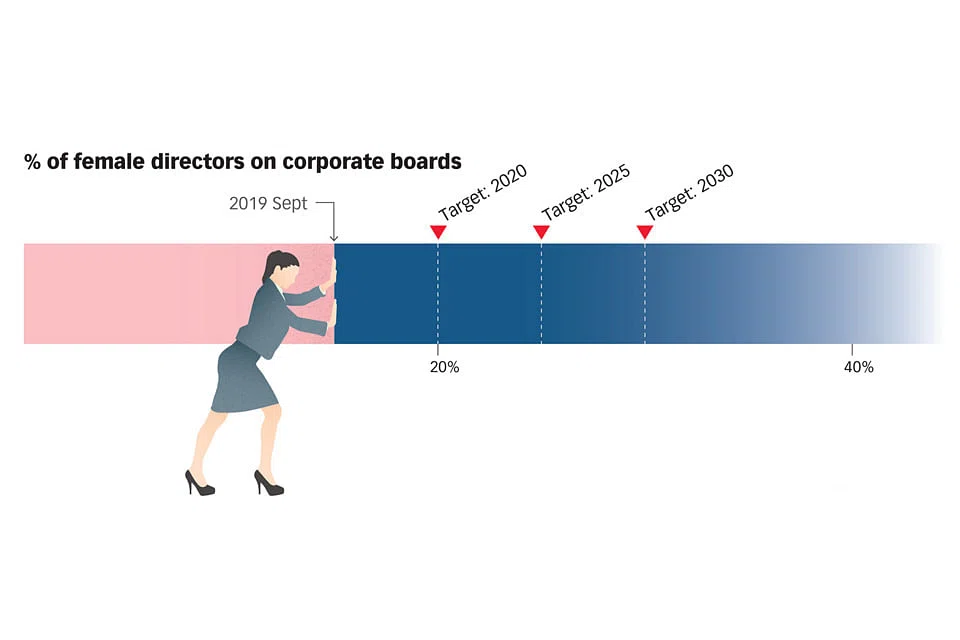
THIS WEEK'S TOPIC: How might corporate Singapore reach the target of 20 per cent female directors in listed companies by 2020?
Preethi Sanjeevi Managing Director VMLY&R Singapore
''20 by 20'' is not as difficult as you might believe despite the slow adoption of gender equality policies across corporates in Singapore and globally. The solution starts with awareness - because while there may be a national agenda targeted at increasing female representation, there's still a large number of companies who are oblivious to their skewed gender distribution. Rather than simply an external government mandate, this needs to be a top-down awareness campaign targeted at company leadership. Second - incentivisation. Though we shouldn't need it, rewarding corporates for achieving ''20 by 20'' could help to kickstart the process. Studies show that female leadership can increase performance and employee satisfaction, and the hope is that with this start, corporates will continue to grow equal representation across the workforce.
Ruth Yeoh Board Member The Singapore Committee for UN Women
The pipeline of women ready to step up and serve as female directors in listed companies already exists in Singapore, and this pipeline is steadily growing.
The issue is the lack of diversity during the nomination process. Organisations, in order to stay competitive and relevant in today's business environment, need to open up their nomination processes to bring on diversity of thought and experience to their boards.
It begins with an inclusive nomination process, is enforced with a gender-neutral selection criteria and established with having a woman on the board. This paves the way for more women at the top.
Junie Foo Chairperson BoardAgender
Earlier in April this year, BoardAgender, an initiative established in 2011 to increase awareness for more women on boards, reached out to the 21 companies with all-male boards, with the intention of meeting up with the chairs to chat and offer support in placing women on their boards. Of these 21 companies, five responded to us and one agreed to meet up. If each of these 21 companies puts just one woman on their board, the percentage would increase to 18 per cent.
We are currently 37 female directors short of our target and we believe that it is not a supply issue. Gender diversity on boards must be a priority for a company to fully understand the consumers and stakeholders.
Alain Deniau CEO & Board Practice Leader in Singapore Heidrick & Struggles
There is time for Singapore to hit 20 per cent female directors by 2020. Female leaders in Singapore are highly competent and ready for such positions; efforts should be made to reach 30 per cent female representation by 2025. However, legacies within companies remain a key barrier.
From our experience with leadership assessment, development, and succession planning, Singapore can achieve higher female representation on boards by enlarging pools of potential candidates, perhaps by nominating capable younger people. Alternatively, Singapore can emulate other countries, where board sizes were reduced, resulting in smaller, younger, and more agile boards, while increasing the proportion of female directors.
Mark Laudi Managing Director Hong Bao Media
What comes first? More women directors on boards, leading to better-run companies? Or well-run companies, leading to more women directors being appointed to boards?
While there is some evidence of the former, the latter is often overlooked.
The reverse is also true: the absence of women on the board of directors is evidence that a company is not managed to its full potential in a variety of areas of its operations.
So, the bottom line is: if you want to see more women on boards, companies must simply be run better.
Ho Geok Choo Chief Executive Officer Human Capital (Singapore)
If 20-by-20 is a must, a firm government push with a name-and-shame listing may seem like a given. But it's worthwhile to note the cultural nuances underpinning the statistics. The West are out front, but bar India, Singapore boards are way ahead in Asia and by almost double-digit percentage points compared with China, Japan and South Korea. That may offer cause to stay the iron fist and soldier on with the velvet glove of persuasion and publicity.
Cheung Pui Yuen Chief Executive Officer Deloitte Singapore
Experienced corporate board members can be champions to mentor women and, over time, become sponsors where they back women as candidates for corporate boards and also assist them in broadening their connections with other sitting directors. Leaders of large organisations, particularly CEOs, have an important role to play too - by examining the culture within their organisations, the makeup of their boards and leadership, and being honest about what changes can be made to address important diversity and inclusion matters. This helps foster an environment of increased access, opportunities and leadership roles for women, to lift women in leadership.
Loh Boon Chye Co-Chair, Council for Board Diversity and CEO, Singapore Exchange
Appointing more women directors is not about fulfilling numbers or complying with corporate governance norms. It is about organisations being convinced of the value of diversity - how bringing diverse perspectives to deliberations and decisions improves governance. Better performance outcomes will also follow and in turn help to build long-term value.
The Council for Board Diversity is working on convincing organisations that they will be in a better position with more diversity on their boards. We are engaging companies to understand their circumstances, and to assist them in finding suitable women directors with the skills and experience to help navigate change and leverage opportunities.
Mildred Tan Co-Chair, Council for Board Diversity and Chairperson, National Volunteer & Philanthropy Centre (NVPC)
Diversity in the boardroom matters as diverse boards tend to perform better, and women today are very much in the forefront of many buying decisions and provide a valuable alternative insight. Increasing women directors is an opportunity to strengthen board composition with ''in-demand'' expertise, such as digital consumer experience and corporate governance, bringing innovative ideas to the table.
We encourage board chairs to go beyond the usual networks and names. Search further afield for those who can add value. Demonstrating a progressive culture open to new ideas and diversity will help organisations attract good women candidates at the board level and organisation-wide. At the Council for Board Diversity, we are working hard towards increasing the number of women directors in the boardroom to create the ''right'' board profile to take the organisation further into the future.
Nick Jonsson Managing Director EGN Singapore
Corporate Singapore needs to stop thinking about board seats and start from the bottom. Perhaps they can learn from the Scandinavian model and introduce mandatory paternal leave in combination with maternity leave and state-mandated parental leave benefits provided by a combination of social insurance funds and employers, tax incentives and post-maternity re-entry programmes. Only when you make it possible for both parents to combine career and family will you see more women on board seats.
Pascal Lambert Group Country Head, Singapore Head of South East Asia and India Societe Generale Group
As a leading financial services group with 43 per cent of women on our board of directors, Societe Generale commits to promoting gender balance in the workplace and economic system by signing the UN Global Compact's Women's Empowerment Principles. Some key measures to help us fulfil our ambition, which Singapore corporates could emulate, include: having a dedicated member of the group management committee responsible for diversity and inclusion; ensuring the share of women (including those in high-potential pools and succession plans) in the group's management bodies is monitored by the general management; ensuring the appointment process for top executives is collegial, to limit bias and promote gender diversity; and ensuring high potential women, who represent about 40 per cent of the pool in 2018, benefit from specific development programmes and visibility within the bank's management bodies.
Victor Mills Chief Executive Singapore International Chamber of Commerce
The lack of even modest diversity on listed company boards is nothing short of an embarrassment and a disgrace for a developed economy like Singapore's. Lack of diversity on boards fosters groupthink to the detriment of the companies, their management teams, their shareholders and stakeholders. The current softly-softly approach of encouraging change is not producing the desired results quickly enough. The only option, it would seem, is for SGX to give notice it will change the listing rules effective Jan 1, 2020 mandating a minimum of 20 per cent female directors for all listed companies. Do it now.
Ronak Shah Chief Executive Officer QBE Insurance (Singapore) Pte Ltd | Asia
While there are set goals to increase female representation on the board in a certain timeframe, we might actually be ''putting the cart before the horse'', and cause motivations in ensuring board diversity to become skewed. To create true gender diversity on the board, companies must level the playing field between men and women, and ensure that they are measured against the same yardstick. We believe that there is no capability gap between men and women, and having this mentality will lead to zero consideration towards gender in board appointments, making way for true and authentic board diversity.
Patrick Lee CEO Singapore Standard Chartered Bank (Singapore) Limited
Everyone should play a role in promoting equal opportunities in the workplace. Senior management can lead the way by promoting and actively reviewing HR policies to ensure they reward fairly and consistently, groom women leaders and build an inclusive workplace.
It is also important to galvanise support from both male and female employees to champion gender parity. Research has shown that when men are actively engaged in gender inclusion programmes, 96 per cent of organisations see progress, compared to only 30 per cent where men are not engaged. While there is still much to do, Standard Chartered is making good progress - from aligning to our Fair Pay Charter to meeting global targets with women representing about 30 per cent of our management positions. In addition to our flexible work arrangements, we offer 20-week paid maternity or adoption leave to employees in Singapore, helping our people find the balance they need.
Deborah Heng Country Manager, Singapore Mastercard
Gender parity can only be achieved if it takes precedence as a national, cultural and corporate imperative. Such an endeavour, however, cannot be accomplished by one entity alone, and requires strong collaboration between the public and private sector. The government and policy makers can narrow the gender gap by enforcing equality legislation with emphasis on anti-discrimination and workplace harassment. Corporations must also do their part to provide equal opportunity, regardless of gender. At Mastercard, fostering a culture of diversity is not just a corporate priority; it is a business imperative. Today, 40 per cent of our global workforce are women and a respectable proportion of women are on our global board of directors. We continue to run the Mastercard Women's Leadership Network as a platform that inspires success and empowers female leaders.
Christine Houston CEO Executive Search Group International
The short- and long-term answer lies in cultivating Singaporean female talent. Short-term, every listed company director should target, engage, develop and mentor at least one senior female executive. This should be on the agenda of every board meeting, with progress reports mandatory from each director.
Longer term, in order to increase the pool of potential female board members, every listed company should identify senior level female executives within their organisations. The company should commit support to obtaining directors' credentials through accrediting organisations, eg, Singapore Institute of Directors or INSEAD. This would involve an investment commitment in time, money and guidance.
Judy Walker Chief Medical Officer Cerecin
Most agree that female representation needs to increase on boards, but few agree on the means. Certainly, ''equality of opportunity'' needs to be real. Most business networks are male-dominated even in traditional women-led industries. This favours men choosing men as board members. Women can help themselves by networking further.
However, this and other ''equality of opportunity'' measures will not achieve ''20-by-20''. To enable this, one needs consider ''equality of outcome'' measures, such as quotas. One option could be to deliberately initiate a search for board members solely with female candidates. Only if no suitable women candidate can be found should men be considered. I do not think the lack of women on boards is due to conscious attempts to exclude women; rather our perceptions of what a board member looks like is dominated by a certain male image. Once both men and women see competent female leaders and different profiles of what a leader and effective board member looks like, it will be easier to naturally think about women as board members, without artificial interventions.
A critical mass needs to be achieved and sometimes, this can only be achieved with quotas, no matter how draconian this might seem.
Max Loh EY Singapore and Brunei Managing Partner Ernst & Young LLP
Having a ''20 by 20'' goal is important because what does not get measured does not get done. Yet, one should not be overly consumed by this hard target as consciousness and trajectory is surely more purposeful. The belief that diversity and inclusiveness discourages groupthink and drives better decision-making may not fully translate into gender-balanced board appointments if there is a gap in the demand for and supply of women candidates with the right skillsets and experiences to contribute to strategy and governance beyond fulfilling a desired gender mix. Corporates can actively help nurture the women board talent pool through supporting executive training programmes and sponsoring working women into leadership positions in the first place. Ultimately, it must be about removing - and not lowering - the barriers to entry, and pushing for rigor and transparency in the nomination criteria and process to achieve diverse boards.
Anneliese Schulz President Asia Pacific Japan Software AG
Initiatives around building a diverse workplace should further move up the corporate agenda.
As such, attracting overseas female talent, nurturing ''young'' female, local senior leaders as well as opening up the recruitment span to non-traditional sectors into companies in search of board members should be actively promoted. Diversity comes in different forms such as age, education, culture and gender, etc, and should therefore be fully explored, also in context of Singapore's 2020 ambitions. At the same time, professional development programmes and cross-company initiatives should support the retention and growth of promising women leaders. In Software AG Asia, fostering gender equality is a key aspect of our targeted diverse work culture having to date 37 per cent IT-related sales roles filled by women, with the Singapore team reaching a 50-50 gender balance.
Ivy Lai Country Manager Philips Singapore
Gender balance is essential for economies and communities to thrive. We are entering an exciting period of history where the world expects ''balance''. We notice its absence and celebrate its presence. A starting point would be that every individual be treated fairly and respectfully, and have equal access to opportunities and resources. Sound policies and mentoring programmes are some steps to make an organisation a great place to work. We empower and challenge our employees to embrace diversity and inclusion, and to build high-performing teams, which require a diverse set of people, experiences, knowledge and skills. Therefore, we always strive to be inclusive and hire to grow.
Harriet Green CEO and Chairman IBM Asia Pacific
In order to foster women's leadership for inclusive growth across corporate Singapore, it's imperative that we make gender equality in leadership a business priority with accountability at the top. Instead of casting accountability as punitive, leaders should be recognised in the same way that they would be for achieving financial or operational goals - for supporting female leaders today while cultivating a pipeline of future talent.
What's more, companies need to ensure their programmes support women across all stages of their life and at different entry points to the workplace, while investing in ensuring their skills are fit for the future of work - one that will require 120 million workers to be retained or reskilled over the next three years as a result of AI and automation.
This focus in turn will ensure Singapore has more female role models, essential to taking away any doubt women pursuing leadership roles may have an employer's commitment to inclusive growth. Afterall, ''if you can see it, you can be it''.
All of this can only be achieved through a concerted (or united) effort by all of us - men and women alike underpinned by an inclusive culture and robust Diversity & Inclusion plan.
Isabel Chong Country Manager for Indonesia, Malaysia and Singapore, Electrical Sector Eaton East Asia
Singapore's goal of greater female representation at the board level is a much-needed step in the right direction. In order to achieve the ambitious goal of ''20 by 20'', an organisation's culture will need to transform through both top-down and bottom-up approaches - especially in fields such as STEM sectors where female representation has traditionally lagged behind. This echoes a shift in the business landscape that will see more listed companies moving away from the sole focus of generating greater shareholder profits. Having greater diversity at the board level will not only encourage companies to invest more in their employees, communities and broader segments of society, but will also help in navigating an increasingly complex business environment where only the most adaptable and forward-thinking companies will thrive.
Sng Khai Lin Co-Founder and CFO Fundnel
Fulfilling this vision begins with acknowledging the inherent gender bias that exists within certain industries, and recognising the commercial value of having a gender-balanced workforce to provide diverse perspectives. It is pertinent to work from the ground up, ensuring that career opportunities are based on merit. Support for mentorship organisations such as the Young Women's Leadership Connection could also go a long way to closing the gender gap. Following these principles, Fundnel's team composition has grown from having a single female employee at the time of its establishment four years ago to one close to achieving a 50 per cent split between both genders today.
Malina Platon Managing Director, Asean UiPath
Technology companies and those in STEM-related fields need to make a conscious effort to nurture a welcoming and inclusive environment for females throughout the company - not just at director level. This starts at entry and continues through the various leadership and management levels. UiPath has at least one third of management positions filled by females including senior leadership positions in Singapore and Asia-Pacific. By supporting women in leadership and focusing on upskilling and reskilling we will start to see highly qualified females reach director level or higher in the not too distant future.
Furthermore, by working with academic institutions and Singaporean companies, we can encourage more females to enter STEM fields. For example, in our Automation Readiness Programmes, we work with our partners to develop courses to upskill and reskill employees in RPA literacy - with universities to train students to work alongside robots, and schools to teach children how to automate tasks on a computer. It aims to upskill minorities, women and children and better prepare them for the future of work. As we start to see more female role models in this industry we will begin to welcome more female candidates and employees. This process will not happen overnight but we are starting to see this happen with us and our partners.
Mario Singh CEO Fullerton Markets
A research report issued jointly by BoardAgender and the Human Capital Leadership Institute, 20 by 2020: Gender Diversity on Singapore Boards, showed that the proportion of female directors on boards listed on the Singapore Exchange (SGX) crossed double digits for the first time to 10.3 per cent as at June 2017. This is good news.
The same report detailed six specific advantages in having a gender-diverse board. These include heightened investor confidence, stronger corporate governance and greater social impact. To ensure we reach the target of 20 per cent female directors in listed companies by 2020, multiple organisations need to be proactively engaged to share the benefits of having a gender-diverse board. Examples of such organisations include the trade associations, the Singapore National Employers Federation, the Singapore Institute of Directors and the Association of Listed Companies.
Elisa Mallis MD and VP, Asia-Pacific, APAC Center for Creative Leadership
Singapore is moving the needle on boardroom diversity. Though we still have a long way to go in Singapore and in Asia, as women continue to face significant roadblocks in gaining board seats, some pockets of progress have been made since 2017. To reach the target by 2020, organisations will need to invest in job rotation to ensure every employee is exposed to a variety of promotable tasks, expand opportunities for women to build a strong network of mentors and coaches, and help women boost confidence by developing skills through leadership programmes. Top management must also walk the talk and take serious measures towards wage equality. Finally, society must expand support systems for family responsibilities to enable women in these board level roles.
Alfred Lee Managing Director Refinitiv Asia Pacific
To achieve this goal, genuine commitment must start from the CEO and company top management. And it is crucial that this commitment for diversity is measured by transparent reporting of Diversity and Inclusion (D&I) performance metrics among Singaporean companies. D&I performance targets should be achievable and measurable to create a working environment that is committed to developing and promoting diverse talent to the board.
We recently released our global D&I Index, which recognises companies that are leading the way in imbedding D&I in their business strategy and practices, and one Singaporean company was among the top 100 most diverse and inclusive organisations. With D&I practices and disclosures gaining momentum among businesses in Singapore, we are confident that more local corporations will be added to our Index in the years to come.
Duncan Hewett SVP & GM, Asia Pacific & Japan VMware
Participation of women in leadership positions is critical for innovation of companies at every level of the organisation. However, major barriers still exist, including institutional bias, and often failure on the part of companies to create positive culture for women to achieve their aspirations. Actions to increase representation need to start with accepting the unconscious bias each individual has, increase awareness and take tangible steps on mentoring, sponsoring and coaching women in organisations to succeed. We need to start by being transparent about the state of our organisation externally and internally - something VMware has done by sharing our data openly on diversity. External metrics drive change and accountability and help take the first step to owning cultural transformation and participation across all levels and functions.
Wissam Khoury SVP and MD, MEA and APAC Finastra
Having women in leadership is not a luxury or a box-ticking exercise - diverse representation is a must that increases our ability to win and our chances of internal and external success. Making this happen means taking steps to attract a balance of men and women for all roles - in particular those that are under-represented by women - and nurturing an internal pipeline of women who can progress into leadership roles.
At Finastra we have committed to initiatives and a cultural shift that will progress our diversity and inclusion priorities. For instance, our Women@Finastra programme creates opportunities and pathways for women into management and leadership positions. With sponsorship and mentorship at different levels, we bring women leaders together with our Executive team to identify key priorities which are important, which in turn benefits everyone across the organisation.
Hari V Krishnan CEO PropertyGuru Group
Last week, PropertyGuru Group announced new appointments to our board of directors, including two independent directors who are our first female directors. Our board now comprises 25 per cent female directors and we are very proud to have made this progress.
While the move is part of a broader exercise to evolve our corporate governance in tandem with our high growth trajectory and the increasing scale of PropertyGuru's business, the new directors bring even greater diversity, breadth and depth to the board. The target that Singapore has set can be attained. However, a percentage is half the cause achieved; the other half is about enabling diversity, so it thrives at all levels of the organisation. True inclusion requires a strong sense of equity. Equity is different from equality, which I define as providing the exact same conditions for all stakeholders. Equity is tougher.
It means understanding the unique requirements for different stakeholders, and then providing conditions which allow all to have the same chance of success. The belief in diversity needs to be ingrained in the company's DNA and its governance, and then manifested across all levels of the organisation.
Sandie Overtveld VP APAC Zendesk
Taking a step back, the current targets set for reaching equal representation on boards in Singapore mean it will be 2050 before we get there. That's not good enough. Given the significant progress Singapore has made in so many other areas in such a short time, these targets could stand to be more bold. However, the reality is companies struggle with representation, across all levels of their organisation, including at Zendesk. While there is no silver bullet, there are a myriad strategies that will help accelerate achieving equal representation across boards in Singapore. This includes policies that reinforce equal pay, eliminating unconscious bias when it comes to appointing board members as well as in decision-making and governance processes, and establishing mentorship programmes between current board members (both male and female) with aspiring women leaders to identify and nurture future board talent. The statistics as to why this is imperative speak for themselves, as research shows that having women on boards is good for the bottom line. The top 20 largest companies in the world all have at least one woman on their board, and Fortune 500 companies with higher numbers of female board members outperform competitors in return on equity, invested capital, and sales.
leLainya Koutereba MD, Southeast Asia and Singapore Otis Southeast Asia & Singapore
Getting women into the boardroom requires a multi-faceted transformation - firstly, more women must believe that they belong at the director's table. Often, there are unconscious self-biases that may hold women back from reaching their full potential. It is crucial that they are able to identify and overcome their own personal biases along with support from their families and societies. Council for Board Diversity numbers indicating that the percentage of female representation has more than doubled since 2011 is a clear signal to all female professionals that rising to the top of an organisation is no longer a pipe dream.
At the same time, organisations must continue to recognise that a diverse workforce is essential to driving business growth. Leaders must foster an environment that supports and enhances the recruitment, retention and advancement of high performing employees. I have seen for myself that putting our people - whether male or female - at the centre of what we do certainly yields results.
Caecilia Chu Co-Founder and CEO YouTrip
While the situation is improving, I think companies can play a more active role in closing the gender gap to increase the number of women on boards. I find it pivotal that CEOs and other C-suite executives advocate for inclusivity and diversity. Hard quotas are counterintuitive - everyone needs to feel equally respected, trusted, and supported in the workplace. At YouTrip, we believe changing company culture and mindset comes first; we have close to a 50-50 gender balance across our offices, which is something we've done consciously by putting a lot of effort in our talent and recruitment strategy, and particularly in building our culture of inclusiveness and openness.
Lee Fook Chiew Chief Executive Officer Institute of Singapore Chartered Accountants
Promoting board diversity requires continuous education and perseverance. Corporate leaders need to be convinced that board gender diversity brings benefits to their businesses for them to place it high on their agenda. Only then can the current gap in board gender diversity be effectively and meaningfully closed.
Adopting a carrot and stick approach to enforce the diversity is unlikely to produce desired results. Instead, it may bring about the unintended consequences of companies merely complying with the requirements or guidelines in form rather than in substance. The board of directors have a significant governance role, and appointments should be based on those being appointed forming the best team for the job, and gender diversity should be a key consideration.
Mark Billington Regional Director, Greater China and South-East Asia ICAEW
Despite clear signalling from government and more businesses having a desire to tackle board diversity, Singapore's slow progress may be attributed to gender-cultural norms, which limit the intended positive effects from regulations and policies.
In order to achieve the set target, companies will need to play their part in changing this line of gendered normative thinking. Top-down support, articulated through the implementation of supportive HR policies that benefit working parents, as well as considerations for women transitioning back to work, are key to building a truly inclusive culture at work and specifically deepening the talent pool from which future female directors can be identified and nurtured.
As a supporter of gender diversity, ICAEW is committed to having 40 per cent women in leadership by March 2020. We enable our female employees to progress and reach their full potential by providing leadership and development training and one-to-one coaching to address individual development needs.
Ambica Saxena Director, Head Of YSC Singapore & Hong Kong YSC Consulting
Despite a 60 per cent female labour force participation rate in Singapore, there are still significant obstacles in the way of hitting 20 per cent female board representation by 2020. To build a diverse talent pipeline, companies must recognise the active role they play in ensuring female employees are able to gain equal business and commercial exposure as their male counterparts. Measures must be put in place to identify and develop women for senior leadership as early on as in their mid-careers.
Female executives have a role to play too, and must actively build their brand and network more widely, looking past any perceived stigma. These changes will only take place when leaders and female executives embrace the risks needed to drive greater diversity at all levels.
Praba Thiagarajah Founder & Group CEO Basis Bay
A gender-diverse board will deliver a broad spectrum of perspectives, helping Singapore's corporations make better decisions and create long-term value. As several studies have shown, corporate boards that value gender diversity are more open to innovation and achieve better financial performance. At Basis Bay, we have committed to developing the next generation of female leaders who can serve on corporate boards by including women in executive positions within the organisation at a rate of about 30 per cent. To reach the target of 20 per cent female directors by next year, Singaporean companies should consider expanding the requirements for board positions, and not limit the criteria to having prior board experience or CEO role. Reducing lengthy directorship tenures will also unlock vacancies to make room for these new perspectives. Accomplishing this goal is only possible with commitment from company leadership, investors and policymakers.
Siaw Kim Leng Managing Director (Singapore) TMF Group
Whilst the percentage of female board directors has risen in recent years, women are still under-represented in top leadership positions in Singapore. Advancing gender equality in business is an unrealised economic benefit with a growing body of research indicating that a more gender-diverse board yields better performance and results. Upholding equal opportunities is paramount to TMF Group. Although we've attained the target of 20 per cent female representation in our executive committee, we recognise that there is still room for progress and are committed to sustaining this momentum. Businesses can improve the visibility and leadership of women on corporate boards by consciously committing to gender diversity within their organisations, and expanding their professional network to cultivate long-standing relationships with top female candidates.
Tony Lombardo CEO Asia Lendlease
Building diversity across gender, experience and ethnicity is critical and requires careful planning and long term commitment. At Lendlease, we highly value diversity and my leadership team comprises 42 per cent females.
Corporates are starting to recognise the importance of female representation and its associated benefits with better company performance. This is underpinned by a strategic framework that builds gender equity into every part of the business. Lendlease has a number of initiatives aimed at empowering women and offering opportunities for women to develop their leadership skills at every level; these include Chief Executive Women programme and mentorship to leverage the power of role models. More can be done to support as well as demystify women at leadership positions like female directorship. We need to show a clear path to the top and be fully committed to build a more inclusive workforce that inspires employees and drives growth.
Dolly Goh CEO Singapore National Co-operative Federation (SNCF)
Moving board diversity from a ''problem to solve'' to ''something to practise'' should be considered for the variety of perspectives, backgrounds, and experiences that a diverse board can bring. While the Council's latest figures are encouraging, more can be done to widen board gender diversity. This includes establishing a formal recruitment policy on the competencies required, having candid conversations on why board diversity matters, and encouraging board refreshment to open regular opportunities for the organisation to introduce fresh blood to meet evolving needs. Board composition, diversity and refreshment also help to prevent members from spreading themselves too thin, addressing the common issue of ''over boarding''.
On the co-operative front, we are heartened that international co-operative retailers are leading the way for women on boards, with nearly twice as many women in director positions when compared to FTSE 100 and 250 companies. What's important is for organisations to think of the ''20 by 20'' goal as a compass, and not an endpoint.
Chia Ngiang Hong President Real Estate Developers' Association of Singapore (REDAS)
To increase women representation in the corporate world is a big challenge but not insurmountable. It requires a change in the stereotyped mindset to move the needle more significantly.
Concerted efforts by various interest groups such as women's organisations, SID, Council for Board Diversity and companies, etc, must be directed to first change how boards perceive the importance of diversity and transform the way boards nominate, assess, and select directors, eg whether to adopt a deliberate and targeted board renewal process, or for boards to cast the net wider when searching for candidates, or to make an intentional effort to train and develop women for board roles in the future.
Mentorship programmes by women for women within companies can also hasten the progress of women representation within a company. Creating awareness and use of influence/persuasion would be a preferred approach than through use of quotas or exposing specific companies.
Paul Henaghan SVP, Data Centre Solutions, APJ Dell Technologies
To see more women in leadership positions, forward-thinking organisations will know to address the barriers preventing women from achieving success such as human bias (conscious and unconscious), implement mentorship and to create an environment where women can do their best work.
At Dell Technologies, we were the first in our industry to roll out unconscious bias foundational learning to educate our leadership on how bias can unintentionally harm work culture and performance. We also invest in employee resource groups (ERGs) and a flexible work environment that empowers team members to work where, how and when they are most effective. For female team members, the ERGs provide a platform for knowledge sharing and building of critical professional networks, thereby creating an ecosystem where they can work together and grow alongside mentors whom they identify with on both the professional and personal fronts.
There's no one-size-fits-all approach to creating more gender-diverse leadership, but organisations must know that embracing differences to bring diverse employees together can encourage innovation and success.
Naveen Menon President, ASEAN Cisco
Diversity is key for better business. Research has shown that gender diversity is correlated with both profitability and value creation. While it is natural to see quotas being set, more can be done at the board level to develop female leaders. A powerful first step for existing board members is undergoing unconscious bias training to understand how full-spectrum diversity can drive better business outcomes.
This will ensure that board members are ready to multiply their commitment to diversity at every level in the organisation. Another area to drive focus is in sponsorship - where senior leaders (male and female) advocate and actively sponsor the success of high performing female talent. Half of my country leadership team are women, and I have first-hand experience of the positive impact this has had on our business performance. It has also supported our drive towards developing a more inclusive and conscious culture.
Marianne Page Director Asiabox Consultancy Services Pte Ltd
Dearth of female representation in boards is a phenomenon faced in many Asian countries. One of the reasons could be that boards are looking for relevant experience in particular fields. Wider experience in different fields should be taken into account when looking for board representatives. If women have given up work for a few years to take care of their children they should be given the opportunity to get on boards by offering them professional development courses at universities so they can get the relevant knowledge. The companies could also consider getting experienced women in different fields to spend some time in the relevant companies to learn the business at the ground level so they understand the business better.
In addition, I think it also needs to be part of the governance rules to have female representation on boards, if not already a requirement.
Matthieu Imbert-BouchardManaging DirectorRobert Half Singapore
It's important to remember that creating diversity and inclusion at the leadership level of Singaporean businesses isn't just about ticking boxes around gender. Organisations should facilitate female candidates over the long term to be the best fit for the leadership role by virtue of their business acumen and experience through the cultivation of a strong talent pipeline that supports women to the top of their career path, particularly between the middle-management and senior levels where female representation tends to decrease. Initiatives like cross-generational mentorship, professional development opportunities, and generous parental care programmes can contribute to this.
Alan WattsPresident, Asia PacificHilton
To reach the "20 by 20" target, companies should take a leading role in providing a supportive environment and inclusive culture to grow and support female leadership in the organisation.
At Hilton, our Thrive@Hilton promise to our team members shapes mindful leadership behaviours to cultivate a culture that is sensitive towards and supportive of the needs of female team members (as well as a diverse group of team members). For instance, we embedded the mindset of "being flexible about flexibility" to enable team members to effectively integrate work demands with personal or family needs without feeling that career progression can only be achieved with some personal sacrifice. We also launched the Women Team Member Resource Group (WTMRG), which aims to drive female leadership development through sound career planning. Initiatives championed by the WTMRG include effective career conversation workshops with both female and male team members, and unconscious bias training for all leaders. Recognising the value of connecting and learning from role models, the WTMRG also provides mentorship opportunities for female team members at any level, in addition to Women in Leadership events and training focusing on personal branding, emotional intelligence and career growth. To date, we have tripled women leadership in hotels since 2012.
Ultimately, we cannot expect existing societal mindsets, including that of women's own expectations, to change overnight. We need to first break the glass ceiling, have open conversations and encourage women to explore their true potential; only then will we see the beginning of a sustained culture of progress in female leadership.
Maren SchweizerDirectorSchweizer World Pte Ltd
Short term, it is vital to consider the "recycle rate", or the rate at which individuals serve on more than one board. Sitting on multiple boards requires that one does not hold a full-time executive role to ensure sufficient time and focus. Then, multiple directorships foster the value of connecting the dots. Medium-term, we shall actively cultivate a more inclusive workplace culture. Being the only woman in the room isn't an easy thing. Research studies suggest that diverse people do not "leak" out; they are pushed out by the culture and practices of organisations.
Getting on a board might feel, for women, like getting into a secret club. It's not. My experience is that being the only one has the charm that there is more acceptance to put the finger on the weak spots.
Sudhir AgarwalCEOEverise
Diversity is a major part of success in any company, driving not only financial performance but innovation as well. In a recent APAC study with Female Entrepreneurs Worldwide on how enterprises can accelerate gender parity in leadership, we found that while 81 per cent of leaders thought it was important for companies to promote diversity, 79 per cent of companies do not have specific programmes in place to do so. The study also found that indeed the root issue is a lack of females in senior positions. To break the cycle, Everise has made an effort to improve parity in leadership positions by developing programmes to specifically tackle these issues including diversity training, innovation mentorship and creating a forum for safe discussions to take place.
Henry Tan Group CEO Nexia TS Group
We should challenge if this target is correctly framed in the first place. Board diversity, including gender diversity, aims to lead to better decision-making at the board with different views. Having a fixed target and focusing only on gender diversity may not be the way to go forward. We may be better able to meet this target indirectly if we encourage more diversity as a whole. This will include gender, industry skills and also nationalities away from the traditional mould. Meritocracy is always the best. I believe many women would not want to be on the board just because they are female but because they are the best fit for what the board requires in terms of diversity of views for decision making.
Johnson Chng Managing Partner (Asia) QVARTZ
Having a target is good but one should not go for 20% just for the sake of it. The best way to achieve the target is to enable more corporates to see the benefits that female board members bring to the company. That can be enhanced through showcasing more examples of companies with female board members, or of what other markets have done, the journey taken and the benefits and lessons learnt. That way, there will be more mindful awareness at the least to create the right content of dialogue and discussion at the board level to seek out potential female board members who can value-add to the company. That way we will achieve meaningful and quality representation of women at the board level, whether ''20 by 20'', higher or lower, faster or slower.
Lim Soon Hock Managing Director PLAN-B ICAG
Corporate Singapore must move away from the old boys' network to reach the target of 20% female directors in listed companies by 2020. Unfortunately, to break into the circle, potential female directors may have to socialise and network more, like their male counterparts. It is also a problem for aspiring male directors who have the requisite experience, some of whom are willing to be trained as board directors. That said, there are other channels for women to use to make themselves known, for example through the Board Appointment Services of the Singapore Institute of Directors' and search companies.
When we consider the interests and the willingness to serve on boards, there is really no lack of qualified talent. The issue is one of companies willing to reach out to other potential nominees, both men and women, beyond the current pool of directors. Perhaps the rule on the maximum number of board appointments that a person can hold may now need to be enforced. Likewise, only as a last resort, if leaving to the discretion of companies does not work, should we regulate the appointment of female directorships in listed companies, such that the 2030 target can be achieved.
I am for more female directors on boards, not just for inclusiveness and gender diversity, but for the talents, insights and intuition that they can bring to enrich boards.
Dora Hoan Group CEO Best World International Ltd
The Singapore work environment is actually conducive to women : Women here make up almost half of the workforce; the high cost of living in Singapore demands that both husband and wife work, and hiring domestic help is relatively easy, which leaves room for women to pursue a career.
But in fact, Singapore ranks low on percentage of women filling board positions. Gender equality is an aspiration that requires a long time to evolve. To achieve the 2020 target, a hard gender quota by the government should be the only solution.
Candidates for board members could be sourced from companies' female senior management, families of board members, female stakeholders and independent directors. Moreover, courses could be conducted for potential board members.
Corporates in Singapore should keep in mind that meritocracy and gender diversity are not mutually exclusive. Both are imperatives that will provide different views and mindsets for the benefit of the corporation.
David Leong Managing Director PeopleWorldwide Consulting Pte Ltd.
Hard coding ''20-20'' for listed companies for women to be board members can be done if there is a sufficiently large pool of candidates to choose from. It's not an aspirational target but realisable. Singapore Institute of Directors (SID) is already conducting courses and providing an overview of the director landscape in Singapore, including their duties and responsibilities, and they can intensify such training particularly in the context of listed companies and specifically catered to women directors.
Contextualising the training for women directors and thereafter making their names available in a public name roll with their professional descriptions will help.
Listed companies can enlist these candidates from a known pool of available and competent professionals properly trained by SID.
Toby Koh Group MD Ademco Security Group
There are many very accomplished women in Singapore, in the business world and beyond. That is an undeniable fact. These women span all verticals and all sectors, not only in the commercial world but in the arts, social works and more. Rather than push towards a 2020 target, I feel it is more important for women to step up and put themselves forth into the boards with their skillsets and potential contributions. In this day and age, the old boys' club is no longer relevant. More important is assembling a board that can lead and guide the business to greater heights.
Yeoh Oon Jin Executive Chairman PwC Singapore
While I do not personally advocate quotas as they can lead to tokenism which is more damaging in the longer term, a key hurdle impeding gender parity on boards is the current preference for prior board experience. The focus should be on including women with the right background and expertise to ensure diversity of thought and experience, irrespective of board experience.
Mentorship of female talent is also key, and men can do more to take the lead in identifying and championing women within their networks and exposing nomination committee members to women with no prior board experience. Achieving gender parity on boards will require patience as we move from old ways of thinking to meaningfully incorporate members with different experiences and perspectives on boards.
Leonard Cheong Managing Director AdNovum Singapore Pte Ltd
Diversity is necessary and beneficial for all companies. While the nation is moving towards this goal progressively, the aim should not just be on achieving the targeted percentage but how companies are restructuring their board composition internally towards such inclusion.
Diversity has to be apparent everywhere not only in terms of gender but also age, race, language and religion. It has to be a fundamental aspect in the recruitment process for all levels with no discrimination in terms of compensation.
Companies need to be open to look for candidates internally and externally, beyond their archetype and focus on the values and perspectives that these female candidates can bring on board.
TRENDING NOW

Olivia Lum, ex-CFO not giving evidence in their Hyflux trial

Bank on AI-resilient Singapore property via deep-value listed property groups

Positive pivot or premature? Analysts split on Keppel Reit’s S$610.9 million buy

Once staunchly pro-China, Malaysian Chinese businesses are now distancing themselves from Beijing

