

Wealth tax - use 'shock therapy' cautiously
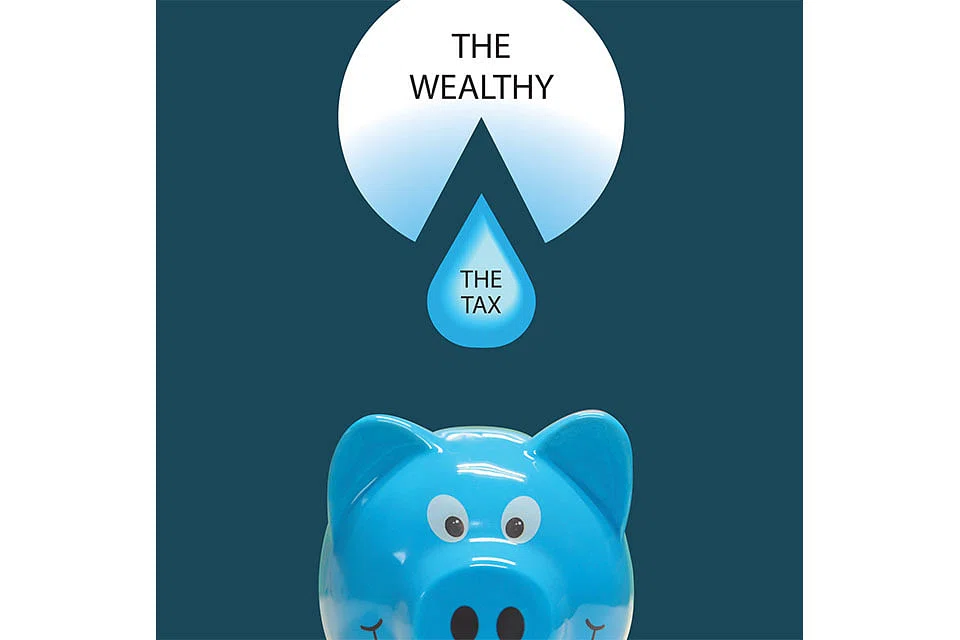
THIS WEEK'S TOPIC: Should Singapore enhance its wealth taxes (for instance, with a levy on property gains or inheritance) to narrow the wealth gap?
THIS WEEK'S TOPIC: Should Singapore enhance its wealth taxes (for instance, with a levy on property gains or inheritance) to narrow the wealth gap?
Lawrence Loh Director, Centre for Governance and Sustainability NUS Business School
There are merits for a wealth tax. It is a fast way to redress the disparity between the rich and the less endowed. It is, in fact, a ''shock therapy'' that may expedite the desired outcomes. However, a careful balance must be struck as capital or even talent flight might occur. As in corporate taxation, assets can easily beat a path to tax havens globally. We may end up winning a battle but losing the war on economic opportunity multiplication. More fundamentally, we should not erode the meritocratic underpinning of incentive - we should level up and not level down. Equity is a noble social objective but this cannot be distracted by envy.
Victor Mills Chief Executive Singapore International Chamber of Commerce
Just as there is a need to stem base erosion and profit shifting by companies, there is a need to tax individual wealth, rather than income, more fairly and progressively to achieve a more just society and more tax revenue. Singapore needs to find additional sources of tax revenue to support projected expenditure in health and social care associated with its rapidly ageing population. The challenge is to tax wealth without encouraging capital flight. A progressive wealth tax on gains from the sales of all properties and securities valued at S$3 million and above would be fair and commensurate with the quality of life which Singapore provides.
Gary Harvey Chief Executive Officer St James's Place Wealth Management Singapore
A wealth tax will have significant implications for generational wealth transfer and retirement planning, particularly in the context of Singapore's wealth landscape - an ageing population, substantial property appreciation, a general tendency to save rather than spend, and the country's standing as a tax-friendly jurisdiction for global capital.
There are many unknowns at this stage but any tax reform will ultimately lead to a greater need for professional advice and more opportunities for experienced financial advisers to demonstrate their expertise and value to their clients. It can help boost professionalism and raise standards within Singapore's wealth management landscape.
Marcus Lam Executive Chairman PwC Singapore
Introducing a new wealth tax would be a significant decision and only one of many possible levers that can address inequality. It could bring in much needed tax revenue - but possibly at the expense of further eroding Singapore's fiscal competitiveness. As a means of redistribution, it has had limited success overseas, whereas Singapore has always done this effectively through targeted transfers. It could also hamper our efforts to make Singapore a hub for more funds and investments. The more sustainable strategy would be growing our tax revenue by growing the economic pie while concurrently pursuing non-tax policies such as creating higher value jobs, supporting upskilling and encouraging entrepreneurship and philanthropy to bridge the wealth gap. It is imperative that in designing any wealth tax, it preserves our efforts to remain attractive to capital formation that underpins business growth - for it is growth and enterprise that ultimately drive the increase in Singapore's needed tax collections.
Max Loh EY Managing Partner, Singapore and Brunei Ernst & Young LLP
One must holistically look at wealth taxes within an overall tax system and our economic and social circumstances. Over the years, there have been shifts in asset allocation from business activities and income towards investments and returns exacerbating wealth inequality. Even without capital gains tax, inheritance tax or estate duty, Singapore's top marginal personal income tax rate at 22 per cent is not low; and there are already other wealth-related taxes and levies on property and vehicle ownership. While imposing more forms of wealth taxes is optically attractive to meet revenue and redistributive goals as well as support inclusive growth, it is not an easy panacea for tackling the wealth gap and other related socioeconomic issues. The design of any wealth tax must be well-calibrated to take into account effectiveness, administrative efficiency, progressivity, capital flight risks and exemption thresholds. Meeting clear objectives without sacrificing Singapore's competitiveness in anchoring investments and talents as an economic hub is imperative.
David Kuo Co-founder The Smart Investor
Increasing taxes on the wealthy to distribute to the poor suggests that something has gone wrong with a country's economic model. Rather than overhauling the taxation system, we should revisit the assumptions used in the economic plan. It is too easy to blame the tax structure for wealth inequalities. It could be more beneficial to examine how lower-skilled workers can be better included into a country's overall growth. If we tax accumulated wealth then who would ever want to accumulate assets? We would just spend what we have, which effectively discourages us from living below our means and investing for the next generation.
Dileep Nair Independent Director Thakral Corporation Limited
Returns on capital exceed returns on labour. This is the root cause of wealth accumulation leading to inequality and wealth disparity in developed economies. If nothing is done, this results in strife and a divided society. We need better social safety nets, unemployment insurance, retirement pensions and more subsidised public services to help the less privileged and temper the impact of inequality. Wealth taxes are a sensible source to fund such schemes. Our existing wealth taxes would need to be extended to perhaps capital gains, estate duties and even net wealth. Of course, there is a risk of capital flight and driving away high net worth individuals who are a source of investment as well as job creation. However, Singapore offers a stable and safe environment as well as excellent business infrastructure. These are highly prized. Hopefully, as more countries see the need to address inequality, there will be a global agreement on wealth taxes, just like the recent G-7 agreement on a minimum corporate tax rate.
Mario Singh Chief Executive Officer Fullerton Markets
I am for a wealth tax to narrow the wealth gap. In my opinion, the levy should be on property gains rather than inheritance for two reasons. Firstly, taxing property gains addresses the problem at the root since the widening wealth gap across the world has been historically driven by property investments. Secondly, instituting an inheritance tax will just drive wealthy individuals and families to park their wealth and assets overseas which will run counter to the initiative of narrowing the wealth gap. Although it would be a first for Singapore, wealth tax is not new. Argentina recently did it (netting US$2.4 billion from the wealthy) and the US is mulling it too.
Overall, Singapore has done well in reducing the wealth gap. Its Gini coefficient fell to a low of 0.375 in 2020.
Toby Koh Group MD Ademco Security Group
Caution please. Taxing wealth is a slippery slope and can cause irreparable damage to Singapore. Income and consumption tax have been well positioned and strategic in boosting the national coffers. Lower income segments get targeted help from government to offset consumption tax and pay little to no income tax.
Wealth taxation threatens the fundamental concept of wealth creation and savings, and alters behaviour of the wealthy. They can choose to move their wealth away or hire the best tax consultants to structure a moat around their assets. Focus on corporate and individual income growth by having good conducive policies; that's the best possible growth strategy for income to the nation.
Frankie Chia Managing Partner BDO LLP, BDO Raffles
Singapore is a leading financial hub due in large part to the attractive incentives for foreign human and capital investment, which in turn contributes greatly to the vibrancy and strength of our domestic economy.
Wealth taxes could seriously dull Singapore's competitive edge in attracting and retaining investment and talent. As has been noted, the consequences are usually detrimental and wealth taxes fail to effectively redistribute wealth. Moreover, taxing wealth goes against deeply-rooted Asian values of wealth accumulation and building for future generations - values which the government has cultivated in the past.
Our focus and efforts should be directed towards ensuring that every Singaporean across all levels of society has access to affordable quality education, healthcare, and public housing. While we think of reducing the wealth gap, we should consider higher progressive personal income tax rates.
Justin Loh Country Director, Singapore Veritas Technologies
Singapore has always prided itself as an open economy and meritocratic society. As a small city state with no natural resources, we need to constantly find ways to attract and retain capital and investments. Implementing a wealth tax will be counter-productive to these approaches as it defies the fundamental principles that this city is built on and will drive investments elsewhere. To balance the wealth gap, we should double-down on creating equal and fair opportunities for our citizens so that no one is disadvantaged from the get-go. This can be done by broadening our education pedagogy and pathways, keeping it accessible and affordable, and ensuring that our future workforce remains relevant not just locally but also globally.
Jeffery Tan Group General Counsel Chief Sustainability Officer Jardine Cycle & Carriage
In enhancing our wealth taxes, there are many aspects that need to be carefully considered: From how best to achieve greater wealth redistribution to the quantum of assets owned before one is deemed ''wealthy'' and hence be subject to wealth taxes.
In trying to achieve greater ''fairness'', we should also bear in mind not to unwittingly discourage business entrepreneurs and possibly chase them away from our Little Red Dot or, worst, dampen the spirit of those who work hard, demonstrating innovation and commercial acumen, from enjoying the financial fruits of their labour.
The challenge is to have a nation that likes to win and celebrates winners, but is also mindful that it does not develop a penchant ''to cut down tall poppies'', in the name of narrowing the wealth gap.
Bazul Ashhab Partner & Head of Dispute Resolution Oon & Bazul LLP
Meritocracy has been pivotal to Singapore's success, and to facilitate equitable growth, a sensible wealth distribution model is needed to create inclusive opportunities for all. Failing to do so will only lead to divisiveness and a risk of populist policies. The pandemic is sharpening inequality all around and may have contributed to nasty divisive comments on race and the foreign work force.
However, caution and care should be taken when considering wealth taxation. It may be a popular response but there are very good reasons why inheritance tax does not usually work well. Innovative policies are required to put the right pressure on the wealthy to lead in wealth distribution, achieving social mobility without creating any impression that Singapore is not a viable place to generate or keep wealth.
Chia Ngiang Hong President Real Estate Developers' Association of Singapore (REDAS)
As a small and open city-state, Singapore's light-touch tax regime has been our competitive advantage. Keeping, attracting and growing the wealth pool is important as it helps to expand the economy, boost consumption and contribute to the tax coffers. In my view, the best way to grow tax revenue is to expand the economic pie. We need to build on our existing effective and stable tax ecosystem and astutely calibrate any tweaks to our tax regime without drastic shifts which can have adverse ramifications such as capital flight, and diminish our attractiveness as an investment, business and wealth hub. A net wealth tax with high thresholds and few exemptions may or may not tackle inequality, but considering the potential trade-offs to growth, overall tax revenues and efficiency, other targeted new taxes or simply raising existing rates might be a safer approach. It is important to strike a sensible balance between Singapore maintaining its status as an attractive investment and wealth management hub and addressing the perceived wealth inequality.
Maren Schweizer Chief Executive Officer Schweizer World Group
A wealth tax does not fit with Singapore's past and future ''business'' model.
Firstly, it remains crucial to be an innovation hub that attracts entrepreneurs, innovators, capital, and thought leaders, all adding considerable value to the overall ecosystem while being a career accelerator for locals.
Secondly, we are a wealth management and private banking hub, built on a pro-wealth ethos that has helped drive the nation's success and become the Switzerland of Asia.
Most importantly, small and medium enterprises (SMEs) are a vital pillar of Singapore's economy. Many are multi-generation family businesses that reinvest with a long-term perspective in mind. Most SMEs have considerable value of illiquid assets but little liquidity to settle a wealth tax bill after a pandemic.
Furthermore, history has shown failed or botched wealth taxes worldwide - two-thirds of European countries had abandoned wealth tax, citing high administrative costs due to complexity, risk of capital flight and failure to achieve the goal of wealth redistribution.
Alain Esseiva Chief Executive Officer Alpadis Group
Singapore should be very cautious about introducing any increases or new taxes on wealth. As has been noted, wealth taxes have done poorly in other countries and there is no reason to think they would work well in Singapore. The wealthy usually have a way of avoiding such taxes - they can afford to hire accountants and tax experts to manage their wealth in a ''tax efficient'' manner - and so the reality is most of these taxes often fall on the middle class.
If Singapore wants to reduce inequality and increase the overall wealth of lower-income citizens, it should focus on what it has done so well in the past. This includes ensuring that tax rates stay low and foreign companies and entrepreneurs choose Singapore to set up their business. This increases demand for employees who in turn can command higher salaries. The government should also focus on keeping the country clean, safe and efficient, with regulations light but smart. All of this will attract more wealth to Singapore and benefit those lower down on the income scale.
Lim Soon Hock Managing Director PLAN-B ICAG
Given the widening wealth gap, it makes sense to enhance wealth taxes to narrow it. But instead of introducing taxes on property gains or inheritance, which have inherent risks of disincentivising hard work, capital flight, or potentially not achieving intended redistributive goals, the government may want to consider other avenues that are more palatable and appealing. For example, more can be done to encourage the wealthy to donate to charities by introducing a multi-tier tax-deductible scheme with increasing multiples for larger donations to replace the current single deduction of 2.5 times the donation.
Even if it means giving away a portion of the wealth, it would appease the ultra-high-net-worth individual or high net worth individual more from the social impact such a donation would inevitably create, apart from some tax savings. This would also contribute to Singapore's efforts to develop a Giving Nation for those in need by those who can give.
David Leong Managing Director PeopleWorldwide Consulting Pte Ltd
A wealth tax will cause a flee-effect. Wealth follows the gradient and gather at the shallowest trough - at zero tax. If that gradient is shifted, the wealth will flow to the next lowest trough. The build-up of wealth in Singapore is through the ''no-wealth-tax'' magnet.
Since Singapore has no natural resources or commodities, the attraction of wealth works for us to build fluidity and flow in our financial systems. The accrual effect of private wealth forms a dynamic pool that becomes our financial resources. Where the wealth resides, economic activities from venture funds to family offices will be boosted as they are unlikely to be unmoving ''still water'' but funds looking for returns.
The question is: Is the tax of wealth enough to lower the Gini coefficient to risk the flee of capital? It is a delicate balance. As a financial hub and oasis amid chaos, providing a predictable environment augments investors' confidence. Singapore must not lose its magnetic appeal as a wealth hub.
Joshua Yim Chief Executive Officer Achieve Group
Wealth is an important contributor to the social cohesion of any nation. In Singapore, however, our Gini coefficient has remained above 0.4 since 2000, indicating the high level of our income inequality. In 2020, though our coefficient of 0.452 fell to a historic low of 0.375 after adjusting for government transfers, it is higher than that in other developed countries such as Finland, Germany, Japan and the United Kingdom. Given that over two-thirds of our working-age population is the backbone of our workforce and economic insecurities have been heightened by the Covid-19 pandemic, it is now imperative to enhance our wealth taxes not just to narrow the wealth gap, but also to ameliorate any perceptions about wealth inequality.
TRENDING NOW
Easy to rent out, hard to sell: Are buyers losing interest in Singapore’s one-bedroom condos?

GovTech retrenches another 38 staff in second round of layoffs

Stocks to watch: Seatrium, CapitaLand Investment, Keppel DC Reit, Suntec Reit, CLCT, TSH Resources

World’s largest offshore wind platform by Seatrium consortium on track to be completed by 2028

