Work pass rules: Treading a fine balance
THIS WEEK'S TOPIC: How do you see the impact on industry and the economy of further tightening of work pass rules over time ?


THIS WEEK'S TOPIC: How do you see the impact on industry and the economy of further tightening of work pass rules over time ?
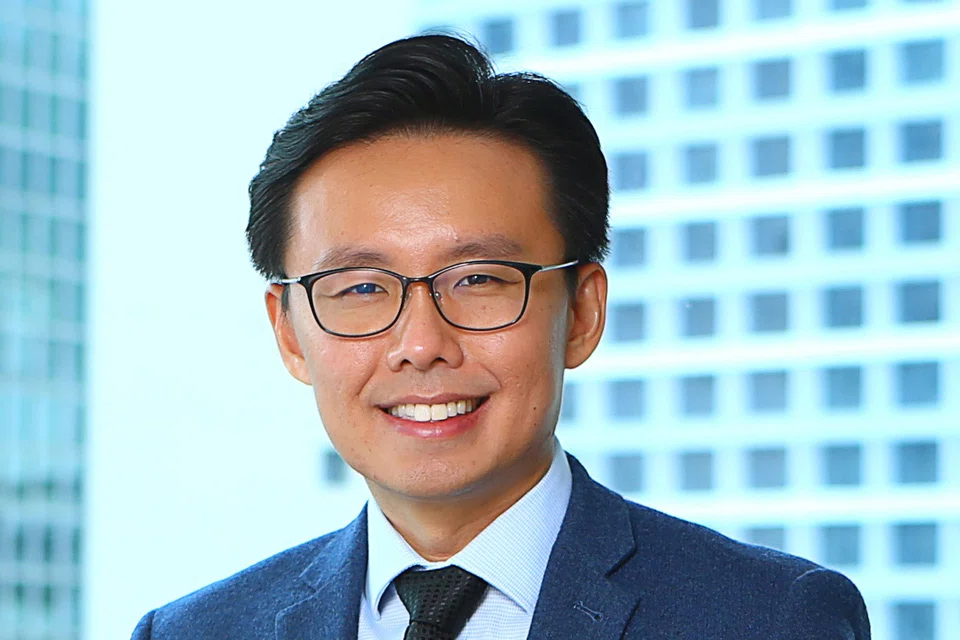
Tonny Loh Partner Heidrick & Struggles Singapore
We don't know all the changes yet, but based on what was already announced, in the short term, costs and prices will likely increase in the domestic sectors, but so will wages. This will benefit Singaporeans as our export sectors will likely remain globally competitive.
As Singapore seeks to maintain its position as an international business hub, the right balance must be achieved between welcoming foreign talent and developing a skilled local workforce. We compete on the world stage, and need the best talents to succeed. This will not change. There is no one-size-fits-all policy; and as a nation, we have already taken specific steps and a differentiated approach to build a steady pipeline of talent for various sectors.
For example, the recently rolled out Tech.Pass for foreign technical experts and business leaders in technology complements the SkillsFuture movement targeted at Singaporeans.
Lawrence Loh Director, Centre for Governance and Sustainability NUS Business School
We are treading a delicate balance in any tightening of foreign worker rules. The pros and cons have to be carefully weighed, and there is no magic solution. The social objective is of paramount importance but there are economic implications for consumers and businesses.
The more fundamental issue is national competitiveness - which is an existential consideration for Singapore. We should not put the country out of relevance to the world. We may win the battle but end up losing the war.
Ultimately, the long-term survivability of Singaporeans overrides other contemplations - let's continue to be a solid global economic hub but one with a strong social conscience.
Victor Mills Chief Executive Singapore International Chamber of Commerce
Provided the tightening of restrictions is done gradually over time and provided businesses are able to access the talent they need to achieve their business goals, all will be well.
I fully believe this will be the case because the reverse would be illogical and counterproductive for everyone. Businesses needs talent, and Singapore needs to remain open to investment and talent for the sake of its economy and because we do not have enough talent of our own.
Nobody wants or needs protectionism from Singapore, and neither do employers need a misplaced sense of self-entitlement from either local or foreign talent.
Vadim Berman Chief Executive Officer Tisane Labs
Raising the minimum remuneration for Employment Pass (EP) holders by, say, a few hundred dollars will not change much for the bigger companies, but no doubt may aggravate some struggling business owners.
What can be improved? The criteria should be made more granular and industry-specific, rather than one-size-fits-all. Fintech and banking with their generous investments won't be impacted by the new measures.
On the other hand, bootstrapped startups are becoming increasingly harder to run, and the new measures are making it ever tougher. That, in my opinion, is unfortunate: bootstrapped startups employ people who usually won't be employed in lucrative multinational corporations (MNCs).
Michael Lien Founder and Board Chairman LEAP201
Ongoing tightening of EP and S-pass criteria gives Singaporeans greater headroom to grow and benefit from capability transfers, especially in financial services and information and communications sectors. It will be useful to see such calibration further expanded in the near future.
Expanding the Progressive Wage Model and raising Workfare payout amounts will provide a medium term boost to the economy. Requiring companies that hire foreign workers to pay all local workers at least the Local Qualifying Salary is also an important step.
Such measures send a clear signal to businesses on the need to shift away from high dependence on foreign workers. A transition period will be needed, particularly for micro enterprises.
Svend Janssen Head of Asia Pacific & Japan Nuix
Foreign workers have always been a key ingredient of Singapore's lifeblood and success. In the National Day Rally, Prime Minister Lee Hsien Loong has made it clear that this may not change. However, the economic challenges of the pandemic have had adverse effects on global labour markets - including Singapore.
In this context, it is very understandable that Singaporeans are concerned about foreigners competing for jobs. This is a concern that the government cannot ignore. Getting the balance right, upskilling local workers, creating sufficient vacancies for Singaporeans - and allowing the right number of foreigners - is a complex but necessary task.
I am 100 per cent confident the government will succeed in doing that, thus preparing Singapore for a prosperous future - with diversity in the workplace.
Dileep Nair Independent Director Thakral Corporation Limited
Singapore is a labour-short economy. Being a city-state, our economy is also inherently fragile; to thrive, it has to be vibrant. We must remain open and connected to the world. Any restrictive policy on manpower will mean a rise in labour costs and impact our trade and investments.
But if tightening of work pass rules is done gradually and with adequate notice, businesses can try to adjust. No doubt there is a plethora of schemes to help small and medium-sized enterprises (SMEs) to upgrade but assistance in navigating the system and grants application should be enhanced. We seriously need to address the issue of poor productivity. Otherwise, we continue being a first world economy paying third world wages.
Joanne Wong VP, International Markets LogRhythm
Singapore has come into our own as a leading digital and manufacturing hub, but such rapid growth has always outpaced our runway of talent. We have then always had to strike a careful balance between tapping into the expertise of overseas professionals and our own talent pool.
The ongoing review of workplace policies is certainly merited, but we must be conscious to prioritise businesses' access to quality talent. Specialised industries like cyber security and artificial intelligence (AI) are already facing a shortage of talent as it is, and we cannot afford to have any such limiting factors as we strive towards becoming a world-class hub. Now more than ever, we must double down on investing and nurturing local talent, who will be key in leading us to unlock our full potential and succeed on a global stage
Ben King Country Director Google Singapore
Prime Minister Lee Hsien Loong's call for businesses in Singapore to strengthen their Singaporean core while ensuring that Singapore remains open is a critical move that Google supports. Singapore has positioned itself well to be a regional technological hub; and what sets Singapore apart are factors that should not be overlooked: future-looking policymaking, an open environment to drive innovation, and fluidity of cross border data flows and talent.
Singapore has been our Asia-Pacific headquarters since 2007, and we have over 2,000 Googlers across multiple functions, as well as over 200 openings on our Singapore Careers site. We are fully committed to this country over the long term as it relates to cultivating the right local talent to serve our diverse partner, customer and user needs.
Charles Ferguson General Manager, Asia Pacific Globalization Partners
Singapore remains committed to an open economy that leverages global talent. Gradual tightening of work pass rules certainly poses a challenge to certain industries but it may offer a benefit in attracting even more qualified professionals and workers across sectors.
Considering Singapore's historical dependence on international talent, it is clear that the government has been doing its utmost to strike a balance between pursuing economic goals and enacting social policies that protect and reassure both its citizens and the foreign talent population.
Today's business landscape, enabled by global employment solutions and remote work technologies, has opened new doors for companies to scale efficiently and compliantly grow their global teams. In taking advantage of the new Tech.Pass, the work-from-anywhere trend and e-residency are promising new ways to tap the best talent available.
By staying innovative, employers can neutralise or even transform challenges into opportunities in today's ever-changing business environment.
Ng Tian Chong Managing Director, Greater Asia HP Inc
In a protracted period of uncertainty, Singapore's operating environment is changing significantly, and it is important to protect the future of Singapore workers. However, we need to create a balance in remaining a globally-minded economy and attracting the best talent to ensure Singapore remains competitive.
With a robust ecosystem of industries, each one of which builds on the other, the country needs a diverse array of talent - both local and global. So while companies invest in upskilling and reskilling our talent base and balance diversity with local roles, individuals too need to constantly acquire mindsets and skills for the jobs of the future.
Chew Siew Mee Country Manager (Singapore) JobStreet
The war for talent in Singapore will likely persist, due to the rising demand for skilled workers in emerging sectors such as technology, while local supply for these skills might be low. As such, job mismatches will intensify and we will see employers shifting focus to talent retention and reskilling their employees to adapt to these challenges.
JobStreet's Decoding Global Talent report shows that Singaporeans are willing to retrain to enter different industries and match their skills with their desired job. Hirers on their part should recognise this urgent need for retraining, and provide necessary tools and resources to help candidates remain competitive in the job market.
Pascal Lambert Group Country Head, Singapore Head of South East Asia and India Societe General Group
Diversity is the norm in Societe Generale where we have over 133,000 employees representing 137 different nationalities working in 61 countries, and 56 per cent of the workforce employed outside France.
We are determined to be a company where employees feel good as they are, reflecting the diversity of the customers we serve and the societies in which we operate.
Locally we work closely with the Monetary Authority of Singapore to develop and promote Singapore as a regional and international financial centre. In this leading position, Singapore offers a pro-business environment, excellent infrastructure, international connectivity, as well as a highly skilled, cosmopolitan labour force.
While our focus is to hire and groom local talent, some of whom we hope will embrace our global opportunities, it remains important that we continue to bring a diversity of talent from our global workforce to Singapore, regardless of seniority. Just as diversity is critical to the growth and prosperity of any organisation, it is also a key factor for Singapore to maintain and strengthen its reputation as a global hub.
Tirupathi Karthik Chief Executive Napier Healthcare
In a software product business, a typical team structure includes developers that deliver more than 40 per cent of the required effort. In the US, many businesses have a nearshore arrangement in neighbouring countries. This allows them to keep a balance in the mix of people needed for projects. Such people travel on demand but then go back to the near shore again. Maybe we can consider such arrangements with Batam or Johor and find a balance?
To try to fill the pyramid structure of the team with affordable local talent would be theoretically impossible for SMEs here. The Big Tech firms can manage this but it is unlikely that SMEs can work on this basis sustainably.
Neil Jones Regional MD, APAC AMS
Investing in local talent to build capabilities for the long run should always remain a priority, and this is something that AMS is a big advocate for. However, with reduced talent mobility due to the pandemic, it is inevitable that this results in competition for talent, or a combination effect in which roles are left unfilled.
While the approach to raise the salary threshold for higher-paid workers will still attract talent, it must be weighed against the ability to grow local talent simultaneously. It is all about finding the right balance of nurturing and growing local talent, while still being able to quickly and effectively mobilise global resources. This will allow Singapore to remain a destination of choice for companies looking to expand in the region.
Chia Ngiang Hong President Real Estate Developers' Association of Singapore (REDAS)
I am very concerned as the foreign workforce constitutes a key source of labour for many industries, particularly the real estate and finance sectors. Tightened rules will undoubtedly reduce access to and drive up costs of skilled labour.
Government and industry efforts to beef up the skillset of local labour and infrastructural development to mitigate the impact on businesses take time and may not always succeed. It is thus necessary for tripartite stakeholders to carefully calibrate the pace and depth of tightening, and consider special exemptions for businesses that find difficulty hiring locals for certain jobs as well as new industries requiring specialised skilled foreign talent.
Striking a balance is key to ensuring that in a small and manpower- scarce nation like Singapore that faces ever-increasing global competition, both local and foreign labour continue to contribute to business growth and the development and prosperity of our economy.
Mario Singh Chief Executive Officer Fullerton Markets
This is not an easy task to calibrate. On one hand, rules need to be fairly relaxed to ensure that sectors such as construction and marine shipyard do not face a labour shortage. On the other hand, rules need to be tightened to acknowledge the concerns that some Singaporeans may feel over perceived unfairness in hiring practices.
I endorse the move to tighten work pass rules gradually because it serves a dual purpose. Firstly, it still allows the company to attract the required talent to handle the job, thereby enabling the company to grow and sink roots in Singapore. Secondly, it provides Singaporeans with the bandwidth to grow, upskill and reskill ourselves to remain competitive and possibly handle those jobs in the future.
Chris Humphrey Executive Director EU-ASEAN Business Council
For Singapore to retain its unique position as a regional competitive business hub, and to achieve long-term economic goals, Singapore needs to continue to enhance its programmes to upskill the local workforce and adjust the education system to ensure that the next generation can keep up with future demands.
The country has a good pool of local talent, but needs foreign talent to maintain its competitive edge to fill possible skills and knowledge gaps in the economy, or take on job roles that are experiencing labour shortages to complement the workforce, which will be lost if restrictions are tightened.
As has been said before, to win the Champions League you need to have the best players of this world in your team.
Lee Quane Regional Director - Asia ECA International
All cities at the forefront of the global economy rely on the flow of talent to maintain their statuses. Singapore is no exception. Given its finite talent pool, using talent from overseas will continue to be an important ingredient of Singapore's economic growth.
Indiscriminate tightening of work pass rules may have negative consequences for the economy, such as the rise of international remote working as an alternate means for employers to call upon the skills of talent based overseas.
To avoid the risk of jobs moving offshore, manpower policies need to continue to enable the flow of skilled workers who add value to Singapore's economy and society, while ensuring that any company that calls on foreign talent has shown that they are doing so only because they have not been able to find that talent within the local workforce.
Kannan Chettiar Managing Director Avvanz
As Singapore is aggressively digitalising as a nation, we already see skill and competency gaps within our local workforce. While upskilling is an option, this will take time and hence we do need foreigners to fill the shoes. As an employer, if the tightening of work pass rules gets intense, we will have to continue outsourcing some of the work overseas.
On the other hand, for blue-collar jobs, if locals are not keen to undertake these roles, we have to bring in foreigners - and we don't really have a choice there. Though the recent announcements on progressive wage increments in such jobs are in the right direction, I am not sure how much that will incentivise locals to take up these jobs.
So, again we might be back to hiring foreigners. Higher cutoffs in salaries before issuing a S-Pass or EP will impact business bottom lines for sure.
Maren Schweizer Chief Executive Officer Schweizer World Group
The brightest ideas are the secret sauce of any technology hub like Singapore.
With more startups and technology giants moving into the island state firms face a severe talent shortage across most verticals. It's about quantity on the one hand, as well as quality on the other hand.
We need to build a more robust local tech talent pipeline first and be ready to send our local graduates abroad on a learning journey. By doing so, Singapore talent can imbibe what works elsewhere, bring back the experience, and accelerate our ecosystem based on diverse views and knowledge.
Therefore, importing ideas and talents remains a must. Moreover, remote work is becoming the main competition for locals. While digital transformation based on technology is accelerating, we should not tighten work pass rules at this moment.
Nevertheless, it is essential to make sure that foreign talents stay and contribute to our community in the long run.
Toby Koh Group MD Ademco Security Group
Foreign talent has been an essential component to Singapore's progress through the years - not just in business and industry, but in sports, arts, culture and more.
As a proud Singaporean, I will be the first to protect fellow Singaporeans' livelihoods because my own friends and family may be affected. However, the reality is that our country needs more talent to grow.
Human capital is a precious resource. As banker Walter Wriston noted, human capital will go where it is welcomed and stay where it is well treated. Singapore must continue to open our doors to foreign talent that can make a difference to the country - not all talent, but the most fitting talent. Let us not forget that many of our forefathers were also foreign talent.
David Chan Managing Director AdNovum Singapore
The talent crunch in the cyber security industry is real, and there is an acute need to attract and retain these top cyber security talents.
AdNovum has kickstarted the upskilling and reskilling efforts for our employees to better meet the industry's latest requirements and demands. Our current talents are valued, and we constantly review against global salary benchmarking tools to ensure competitive compensation. AdNovum has teammates of different levels in the interview process to ensure that all candidates are hired based on merit, regardless of their age, gender and ethnicity.
The tightening of work pass criteria encourages organisations to remain open, but must be further supported to ensure that resources for highly competitive industries are sufficient.
Joshua Yim Chief Executive Officer ACHIEVE Group
Tightening of work pass rules could be driven by the nature of the job and the availability of talents, rather than by the usual qualifications and salary prerequisites. Today, Singaporean professionals, managers and executives (PMEs) have the competencies to excel in many positions, particularly in human resource, finance, legal and taxation.
Conversely, there is a scarcity of Singaporean talents in areas such as bioscience, data science, cyber technology. Work pass rules could thus be adjusted to admit foreign specialists who possess the skills that Singaporeans do not have at present. This ensures that our industries will not be held back for the lack of talent At he same time, Singaporeans' job concerns can be equitably addressed while our economy as a whole can progress and remain competitive.
Callum Laing Chief Executive Officer MBH Corporation PLC
This is super simple. Industry will hire the best people regardless of location. When they were welcome in Singapore, they were housed here, given local support staff, etc. Now that it is impossible to bring talented foreigners to Singapore, we are just telling them to stay where they are. Remote working is the norm, so let's just get on with it.
For support staff, let's adopt the same approach - get the best people regardless of the location. I'm sure the Singapore economy will be just fine, but the businesses I'm talking to are voting with their feet - and that means less local hires.
Laletha Nithiyanandan Managing Director Behavioural Consulting Group
If you see the salary cut-offs from a longer-term perspective, it's actually good for Singaporeans as wages need to go up for them to participate in fields where we use foreign workers at a low cost. In some countries such as Australia, it is possible to earn well doing skilled work; we need to build that expertise locally again.
With regard to foreign workers, we should also be concerned about what they have to pay in their country to get to work in Singapore as we don't want to indirectly feed human trafficking in any way.
Lim Soon Hock Managing Director PLAN-B ICAG
A key reason for bringing in foreign talent is to complement and enrich our human capital. It is good that this is calibrated in harmony with that of our local workforce. As more Singaporeans upskill, recruitment of foreign talent would have to be at a higher level or where we are lacking, for example in fintech, environmental, social, and corporate governance (ESG), etc. Both Singaporeans and foreigners would have to be on the same escalator, progressing upwards in skill, knowledge, and expertise for Singapore to be future-ready.
In the larger scheme of things, further tightening of work pass rules over time can only benefit the industry and economy, thus creating more and better jobs for Singaporeans.
Annie Yap Executive Chairman & Founder The AYP Group
Further tightening of work pass rules over time in Singapore will no doubt have an impact on many industries and the economy as a whole. The measures no doubt push many companies to localise jobs.
At the same time, sectors that face shortages of suitable local workers may have to end up paying their foreign workers a higher salary in order to retain them.
Personally, our professional employer organisation (PEO) services have allowed us to hire foreign workers remotely, which has enabled us to hire foreigners whose skills complement our local talents. Ultimately, this move could increase business costs for many, regardless of industry.
David Leong Managing Director PeopleWorldwide Consulting Pte Ltd
Manpower is scarce in Singapore. We have to recognise our vulnerability. Yet Singapore has not become weak competitively. The magic lies in our people and the way we organise talents, brain and brawn, locals or foreigners, to work for Singapore.
Restricting the flow of talent into Singapore cannot be a permanent solution; it will erode our competitiveness. During this phase of higher-than-normal unemployment, calibration of the valve to control the inflows is necessary. When the pressure eases, the valve should be loosened to ensure that we have enough brain and brawn to complement our economic growth strategies.
The policy tightening and loosening is a delicate balance. Singapore cannot be better off with a smaller population. Economically, it will not make sense. We need a dynamic, innovative, creative and vibrant pool of talent - local and foreign - to sustain our competitiveness.
Henry Tan Group CEO Nexia TS Group
In his speech, PM Lee is basically taking the bull by the horns to explain the fault lines Singapore is facing.
To me, further tightening of the EP and S-Pass criteria will have a very negative impact on the Singapore economy. I believe that Singaporeans in general are not averse to having foreign talent as long as firstly, it is on a merit basis and there are no signs of managers employing just their own nationalities. Secondly, for every foreign talent that a company brings in, there are multiplier effects on the number of Singaporeans employed.
With travel severely curtailed during the Covid-19 pandemic, Singapore has to be mindful of continuing to be relevant. We need to make Singapore, a small market, a convenient and attractive venue as a regional headquarters (HQ) for international companies. Otherwise, the MNCs may skip Singapore and run their regional HQ function from their home country.