

Workforce of the future
THIS WEEK'S TOPIC: How should the concept of labour be updated for the new economy? What key traits would be most critical for a future-ready workforce?
THIS WEEK'S TOPIC: How should the concept of labour be updated for the new economy? What key traits would be most critical for a future-ready workforce?
Karl Hamann CEO, Singapore | Asia QBE
The new economy has created new types of employment, including gig workers who contribute to the sharing economy through casual short-term or freelance contracts. The huge growth in the number of shared services today means that governments should be expecting larger portions of workers to be employed in this way, which could force us to consider how the safety net of employment laws can account for these people as well. With technological disruption now a mainstay across industries and posing a multitude of unprecedented changes, adaptability and thoroughness are needed to ensure that no worker - in any capacity of employment - falls through the cracks or gets left behind.
Alice Bentinck Co-Founder Entrepreneur First
The new economy will see the emergence of technology entrepreneurship as the 'default career path' for the world's most talented and ambitious individuals. This shift from writing cheques to writing code, now puts a means of production into the hands of individuals, giving them unprecedented power, driven by ever-growing scalability, scope and decreasing costs. As we enter an era where a large proportion of the world's most ambitious individuals will be founders, the Napoleon of the 21st century won't raise an army, they'll create a startup. Sufficiently talented and ambitious individuals must be given the opportunity to succeed on merit alone and be able to bring their innovations to market.
Dev Dhiman MD, Southeast Asia and Emerging Markets Experian
The future of work is shifting to a skills-based and technology-enabled labour market, with collaboration and sustainable growth being key drivers in this new economy. The workforce of tomorrow will consist of people who are agile, resilient, adaptable, and right-skilled, leveraging a human-technology augmented approach that adds value and longevity to the business. At Experian, our investment in AI, machine learning, and automation has resulted in higher efficiency and greater productivity. We also understand that it's a two-way street and have always strived to foster an open, data-driven culture where employees feel a sense of empowerment and purpose to achieve more.
Darren Webb Managing Director DCSG
The concept of labour (including long service for the same employer; job for life) is now more closely matched to the consumption model we see in other sectors globally, such as housing - why buy and commit when you can rent and have more freedom. Therefore the challenge for employers is to stay relevant to tomorrow's employees. The concept of office perks, free food, chill-out areas, etc is not going to be enough. Even working from home will be considered a norm, not an exception. So employers will need to look further to secure talent, enabling and encouraging working from anywhere, freedom to work when you want and maybe even freedom to work for more than one employer at a time. This may seem radical now, but will the workforce of tomorrow think so?
Victor Mills Chief Executive Singapore International Chamber of Commerce
Employers and employees should see their relationship as one of collaborative teamwork designed to achieve the desired output and commercial success. Because this relationship is more equal than the traditional boss/subordinate role, remuneration policies will need to change to be more equitable. That will require an attitudinal change among employers. Employees, too, are required to change their attitudes. They should not sit back and wait for the boss' instructions. They need to take ownership of their work by demonstrating initiative and, in so doing, become more engaged, productive and rewarded. Utopia? No, just common sense and a more equal society.
John Bittleston Founder and Chair Terrific Mentors International Pte Ltd
Artificial Intelligence is on the brink of out-thinking human intelligence in any way that can be accurately codified, measured or defined. Where logic and reason determine an answer, AI will beat us. At present that does not extend to areas of nuanced feeling where our senses have been developed to sense pleasure, pain, fear, joy, love, hate and other subjective sensations. AI is not able to perceive relationships in the creative way that humans can. It is thought that it will be a long time before AI achieves this.
It is therefore essential that humans keep control of AI by commanding the areas it cannot. Future humans need greatly enhanced soft skills which must themselves be progressively developed to stay ahead of AI.
Dileep Nair Independent Director Thakral Corporation Limited
The concept of work is rapidly morphing. Many are going from traditional employment in a fixed place using skills learnt in institutions and honed over time, to an activity undertaken as an independent agent in a digitally-enabled economy and with skillsets that have to be refreshed from time to time. Some are even contextualising work as just one activity in a ''portfolio life'' that includes the other activities they find fulfilling.
To thrive in this evolving environment, one needs to have an open mindset that welcomes change and embraces new ideas. Nurturing an inquisitive and creative bent of mind is essential for spotting opportunities in such a changing landscape. One must rubbish the idea that ''you can't teach old dogs new tricks''. Learning new skills is a sine qua non to be part of a future-ready workforce. Ultimately, it's the responsibility of every individual to ditch old work habits, and be proactive and seize the opportunities to keep himself relevant.
Yeoh Oon Jin Executive Chairman PwC Singapore
While technology is ushering in a generation of smart machines and automating systems, it is also becoming more evident that analytical and reasoning skills of the human mind are equally important and, at least for now, irreplaceable. In addition, new skills are required to navigate this digital transformation, and it will take a blend of leadership, technical prowess, creativity and emotional intelligence to navigate the changing landscape. The workforce of the future will need to be adaptable and agile underlined by an open mindset and lifelong learning agility.
Martin Alintuck MD, South East Asia Ruder Finn Asia
''The more things change, the more they stay the same.'' When considering traits and skills for workers of the future, we need to keep in mind that insightful phrase. For sure, an ability to understand new technologies, new patterns of commerce and new ways of communicating will be vital for success in the future (and they are today!). But despite all our excitement about the changing world, we still need a workforce that can read and write well, listen and think critically and, ideally, be able to think and act creatively. Sounds basic (maybe even boring) but without those skills, one won't be able to successfully ''navigate'' the future.
Chua Soon Ghee Partner, Head of Southeast Asia AT Kearney
AT Kearney published a report titled Learning to Learn: Adapting to Continuous Workforce Disruption at Ecosperity 2018, where we observe that everyone is working up to 50 per cent longer due to longer lifespans, and hence being relevant for life is imperative in the face of rapid technology-induced job disruptions. We will need to adopt a partnership approach for lifetime employability, where not only individuals need to continually upskill and reskill, but businesses will need to redesign jobs for flexibility, and help employees develop portable skills and knowledge. In addition, government's role should be to provide an enabling framework of appropriate regulation, incentives, funding and accreditations.
Anders Liss Country Manager Scania Singapore
With change happening more rapidly, the workforce would stay relevant by being more agile, innovative, resilient and ready to learn new skills. Virtually every industry is undergoing transformation. Even the transport industry is gearing up for automation, connectivity and electrification for the new economy.
It is the workforce - our people - we credit for making these business transformations possible. Today, we describe them as human capital or talent, with the collective skills, knowledge and experiences to drive business growth. We engage them differently at the workplace, upskilling them but also motivating, valuing and rewarding them to do their best. We can no longer view them as ''labour'', but as creators of future business and economic value.
Max Loh EY Asean and Singapore Managing Partner Ernst & Young LLP
New technologies are driving the convergence of industries, for example, retailers entering logistics and ride-hailing companies offering payment services. As companies constantly evolve their business models, this will create a new working world. Instead of contributing by performing learned tasks in fixed roles, the workforce needs to be ever evolving through reskilling to acquire new digital capabilities and adapting to new roles when technology undertakes existing tasks. This will require a mindset shift in the workforce to embrace job transitions - whether with the same or another company - as the norm in a world of disruption. Having said that, companies must go beyond building digital capabilities to also strengthen uniquely human attributes such as ethical reasoning and empathy to build a future-ready workforce.
Ambica Saxena Head YSC Singapore
To be ready for the future of work, we need to look at the past. The current concept of labour harks back to the industrial revolution, and since then people have worked within a particular set of rules and timings, while our education system has churned out a specific type of worker. But things have changed and young knowledge workers are now more likely to be driven by purpose. They also do not want to be tied into structures, such as set working hours and locations.
To prepare for the future of work, organisations must shift from an input-oriented to an outcome-oriented approach to employment, offering contracts and working practices that give a sense of ownership and flexibility, where employees are partners, not just workers.
Jayaprakash Jagateesan Chief Executive Officer RHT Holdings Pte Ltd
We've moved on from labour that is focused on hours spent performing a specific task in a permanent environment for a fixed pay. Employers now look for problem solvers who are assessed and remunerated based on their ability to deliver successful outcomes.
Increased automation will leave us with jobs that require a human touch, including creativity and soft skills. Employees who are flexible with their scope of responsibilities, working hours and location will be more prepared to adapt to the constant change in business.
In addition, a future-ready workforce must enable a more integrated and multi-disciplinary approach to work as businesses begin to break down the old siloed departments and functions to shape a nimbler and more competitive organisation.
Cheung Pui Yuen CEO Deloitte Singapore
For many years, people viewed contract, freelance and gig employment as ''alternative work'', supplementary to full-time jobs. Today, the alternative workforce has gone mainstream with more people embracing a path to greater autonomy and more flexible and meaningful work.
As Industry 4.0 introduces more advanced technologies capable of impacting almost every aspect of a business' operations, the skills gap is threatening to leave behind nearly half of today's youth. A collaborative effort between government, businesses and society is key in supporting this dynamic workforce. This means revisiting education and career models, approaches to lifelong learning and work, regardless of geography, and innovating public-private partnerships.
Given growing skills shortages and low birth rates, leveraging and managing ''alternative'' workforces will become essential to business growth in the years ahead.
Gareth McIlroy Managing Director Korn Ferry Singapore
Singapore's workforce has come to be regarded by many as being world class at operating and maximising results within a structure, executing on a well-defined strategy, within an established set of rules. To not only survive but thrive in a world of disruption, business leaders here must strive to acquire future-oriented skills that will enable them to function as what we describe as self-disruptive leaders. For instance, these leaders will need to be able to effectively manage ambiguity in a time of constant flux. Being willing to act, when complete information is not available, or even when some of the information seems to be contradictory, should no longer be seen as being reckless, as managing risk is different from playing it safe.
Laurens Koppelaar Head of International and Singapore CEO Symbo
The new economy, classified by the ubiquitous rise of technology and digital disruption, is creating a more dynamic future of work as organisations of all sizes are becoming more nimble and responsive to rapidly evolving business models and consumer expectations. The traditional notion of labour being expressed in metrics of output per employee is becoming less relevant, and needs to evolve to reflect the growing variety of flexible, less structured, real time and demand-based forms of work (e.g. the gig economy) that will continue to become more prominent and add value in today's society. Moving forward, traits such as adaptability, continuous learning, having a curious mindset with an inclination towards embracing technology, and collaboration are all key to future proofing our talent in a digital first world.
Helen Ng Chief Executive Officer Lock+Store
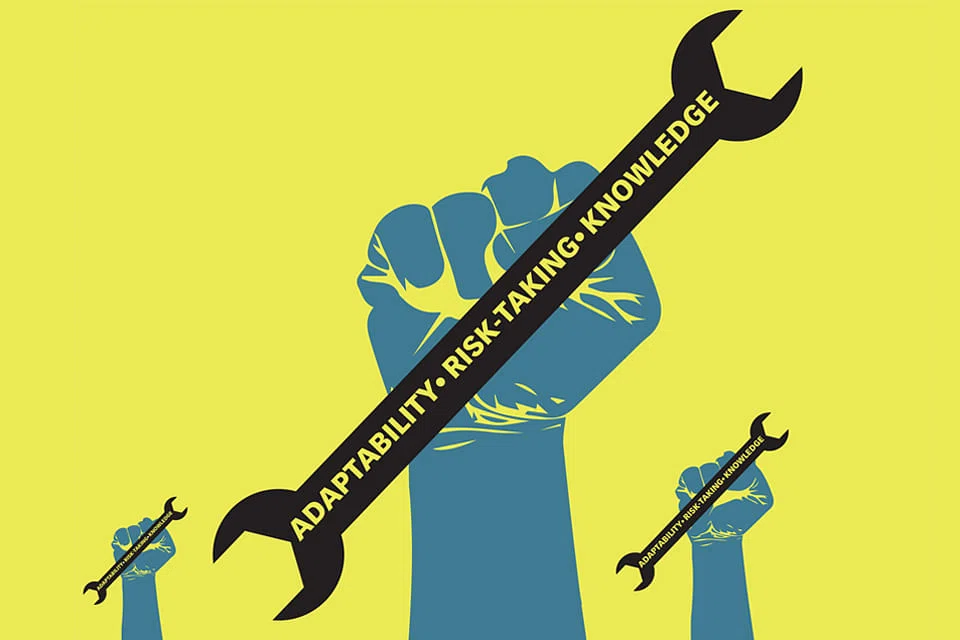
Adaptability, a thirst for knowledge and an appetite for risk are the key defining traits of a future-ready workforce. It is not enough to subsidise mature workers for IT courses - we need to create job opportunities for them as well. Many companies are still not open to hiring older workers even for entry-level jobs, especially in the fields of cybersecurity, data science and machine learning. Mature workers often learn, to their dismay, that the highly subsidised certifications they acquire in these domains are not recognised by employers. We need to address this expectations mismatch to fully tap on the experience and expertise of mature workers for the digital economy.
Wilf Blackburn CEO Prudential Singapore
Just like how the Avengers transcend both time and space, the workers of today need to do exactly that. If they want to enjoy career longevity like the Avengers, they have to face change and competition with agility. They must be prepared to learn, unlearn and relearn, so they can quickly respond and adapt to the demands of a rapidly changing world. Having the courage to challenge the norm and to venture into the unknown is important, as is keeping an open mind to new ideas and new ways of working. It's only if armed with these qualities can one take on the world.
Matthieu Imbert-Bouchard Managing Director Robert Half
Singaporean workplaces are navigating an era of rapid transformation, with the increasing prevalence of new technologies having a major influence on the type of skills companies need to evolve into the future. The growing mismatch between jobs and skills available means professionals and businesses must focus on becoming more agile and responsive to economic and digital transformation - which can be achieved through a continued focus on professional development and hiring new staff with the right skillsets. Crucial skillsets for professionals to be ready for the future workplace include commercial and technological acumen as well as a willingness to adapt.
Rakesh Krishnamuti Country Manager, Singapore PayPal
Increased connectivity and mobility of the workforce, propelled primarily by technology, have given rise to the gig economy. According to statistics from the Ministry of Manpower, freelancers today comprise nearly 10 per cent of Singapore's workforce. Freelancers are increasingly sourcing for jobs from online and social media platforms. More secure and convenient digital payment options make getting paid a lot easier, enabling those in the gig economy not only to sustain but maintain a living. I believe the gig economy offers opportunities that can transform work and businesses as we know it. 9-to-5 jobs are increasingly being replaced by a mobile and digital-savvy workforce. A good example is ride-hailing apps, which have opened doors to individuals who might not otherwise be able to tap into this income stream under a traditional transportation structure. Mothers who want to continue working and take of children can now operate part-time from home. As such, it goes without saying that digital skills are key for a future-ready workforce.
Sebastian Mueller Chief Operating Officer MING Labs
As lifelong jobs and ''company men'' are no more, continuous learning is key. Education is never finished and our institutions need to adapt. Micro degrees, flexible development plans and fluid self-evaluation are just the beginning.
We also need to redefine work on a constitutional level. Our laws are made for an old concept of labour. Modern workers in new job structures still need to enjoy protections. Keeping part-time and gig workers out of social insurance and healthcare is not acceptable.
Lastly, the shifts happening provide a chance to reclaim uniquely human domains. Jobs that require empathy and compassion will grow.
Leong CheeTung Chief Executive Officer EngageRocket
Labour has always been treated like a static asset. In the new economy, it should be managed more dynamically, like income flows. How quickly a company's labour force can innovate and adapt to stay ahead would be more critical than staff costs and headcount. Leadership, the science of managing this flow, then becomes a key differentiator in a world where technology can quickly commoditise other skills.
Naveen Menon President, ASEAN Cisco
My father is a chemical engineer who worked in one industry during his career. I have already worked across three industries so far and according to studies, my kids could traverse 12 to 15 jobs in their working life. With the rapid adoption of AI-enabled technologies, whole industries and occupations are being redefined and workers will need to adapt, learn and forge new career paths.
Despite the disruption being technology-based in nature, an upgrade of softer, foundational and interactive skillsets is most critical. With traditional human intelligence like knowledge, logic, and analysis being steadily replicated by machine learning and robotics, skillsets such as problem solving, creativity, innovation, imagination, empathy and design skills will be valuable assets.
At Cisco we play our part in preparing the next generation with skills and competencies needed for constant change and complex problem-solving through the Cisco Networking Academy. With greater commitment from governments, businesses, institutions and individuals, I am confident that we will achieve our goal of positively impacting 1 billion lives by 2025.
Sumir Bhatia President, Asia Pacific, Data Center Group Lenovo
Technology in the workplace is increasingly common - from robotics in manufacturing to AI-powered chatbots. The challenge is that they're emerging at such a pace that we struggle to maximise their potential. Yet it's therein that we'll uncover the jobs of tomorrow.
To capitalise on the full value of technology, we need to build our economy on intelligent transformation, which will fundamentally change the nature of business and customer relationships and reinvent business processes.
A future-ready workforce needs to be reskilled to be able to navigate this new landscape. Luckily in Singapore, the government is one step ahead, and has already allocated a budget to ensuring we all benefit from Industry 4.0.
Pauline Goh Chairman, Southeast Asia CBRE
In recent years, disruption in the workplace has been pervasive. From advances in technology to changing workforce demographics to heightened global competition - these have resulted in challenges in recruiting, retaining and motivating talent. To be future-ready, it is critical for workers to increase their appetite to learn, unlearn and relearn.
They should be open to embrace the notion of performing different jobs or roles throughout their careers. For example, at CBRE's new headquarters, the traditional office manager role has transitioned to that of a workplace concierge manager who delivers a variety of social, learning and fitness activities to create a holistic workplace experience for employees. Continuous reskilling will make workers more re-deployable to new roles or even a totally different industry - and such agility should underscore a future-ready workforce.
Sudhir Agarwal Chief Executive Officer Everise
Technology should empower existing employees, not replace them. It's essential for companies today to invest in technologies, such as artificial intelligence and automation, which create operational efficiencies that in turn freely enable your workforce to complete higher value and more qualitative work.
Being adaptive and embracing cultural diversity is something we've learned from our operations across the globe. We believe that encouraging a diverse workplace within a company and fostering a culture of continuous learning is imperative for a future-ready workforce.
Goh Puay Cheh Executive Director The Institute of Internal Auditors Singapore
The way we work in the future will be different from today. Future jobs will be more collaborative and mobile. The future workplace will even involve working alongside robots. Hence, it is imperative for businesses and individuals to acquire a new set of core skills to meet the needs of the future economy. The workforce of the future must be equipped with the ability to apply and convert data into actionable, relevant and timely information that can positively affect business decisions in organisations. Soft skills such as sharing, collaborating and negotiating will continue to be important. This includes the ability to empathise and interact on multiple levels as people move between roles and experiences. The key to staying relevant and resilient is to be able to adapt one's thinking to cater to various situations that present differing variables.
Cherian Varghese VP and MD, ASEAN and South Asian Growing Economies (SAGE) Oracle
The new economy is characterised by disruption, change and the need for quick insights. Today, everyone is a decision-maker, with work moving from manual labour towards analysis and strategy enabled by technology. Data and the power to harness it to your competitive advantage is the lifeblood of business and decision-making. Succeeding in this new economy requires organisations to work with their employees to not just upskill, but enable a digital experience across the entire workspace, making work more convenient. A future-ready workforce requires a data-driven mindset and the agility and openness to adapt when faced with rapidly shifting paradigms in the new economy.
Adam Judd Senior VP President of Asia Pacific, China and Japan F5 Networks
As Singapore gears up to adopt the Services 4.0 model, applications will increasingly become the primary drivers of differentiation and value creation for modern enterprises. Naturally, such digitalisation efforts will also require a growing demand for IT talents to evolve - both in skill and expertise.
For organisations to be future-ready, strategic initiatives such as re- or upskilling should be employed. Here at F5, we do this by fostering innovation across all teams and empowering employees to share new ideas and reach their fullest potential. For instance, we celebrate failure in a safe space. When brainstorming for groundbreaking ideas, we prioritise engagement across all departments - enabling collaboration to exchange fresh knowledge, perspectives and expertise.
Praveen Kumar GM, Asia Pacific ASG
Change has been a constant in our workday environment and new developments continue to come quickly. No matter what changes overtake corporate work environments, where we work can't be separated from how we work - and this understanding is driving our evolving concept of ''the office''. The key to the office of the future is technology, and how it is managed. This work environment will involve much more than just an interior remodel. It will require a comprehensive transformation - including IT, solutions and platforms - to create a digital workplace that exists as much on our personal devices as it does in the office.
Kunalan Chakravarthy Chief Executive Priority Consultants
The concept of labour and work has changed dramatically with the advent of intelligent technology that now automates the mundane, the repetitive and tedious work. Today, employees as well as business owners see technology as a threat to their status quo.
But by recognising that technology frees up talent to be deployed on creative problem-solving and solutions building, we can break away from the stasis of work that is high on routine and low on productivity.
Work and labour have to be measured differently. We have an itinerant and highly mobile labour force defining more accurately the value of work through technology. Today this frees up labour and ensures each worker is recognised for their value that they add. This is a seismic shift akin to the industrial revolution that is redefining how we view work, measure it and value it. Technology is a fundamental enabler in freeing up the talent and potential of the modern worker.
Suganthi Shivkumar Managing Director, Asean Qlik
With the rise of AI and robotics, data literacy will ultimately be an important and common skill not just to data scientists but for the entire workforce. Yet, according to Qlik's data literacy study, two in three C-suite executives and nine in 10 middle managers in Singapore are data illiterate. With the data economy underway, being data literate is no longer optional and employees need to take it upon themselves to equip themselves with this skill. Organisations like The Data Literacy Project are already championing this cause by providing assessments and courses so that everyone can overcome future challenges brought on by new technologies.
Chris J Reed Global CEO and Founder The Dark Art of Marketing and Black Marketing
As an expat who moved from the UK to Singapore 10 years ago, I have seen many similar expats come and go. I have also seen an increase in Singaporeans exploring new worlds. Both are outcomes of a more global workforce who have more choices on not only what to do but where to do it.
The positive traits that you need to not just survive but adapt and grow into a new country, continent and culture are the abilities to network, build win-win relationships, say yes to new experiences and try everything. They are all key to your success. Risk it all and try something new and if it works build on it; if it doesn't learn from it and try something else. Whether you are an entrepreneur like me or an employee, these traits will be more and more necessary for building your career, whether that's a portfolio one or a linear one or as a founder of your own business.
Rob Bryson Managing Director Robert Walters Singapore Pte Ltd
The future of work is as much about changing mindsets, as it is about reinventing jobs. As AI systems, robotics, and cognitive tools grow in sophistication, the people aspect of work is becoming more important. Organisations need to reconsider how they design jobs, organise work, and plan for future growth. Those seeking niche or digital skillsets may consider a flexible and diversified workforce that breaks the typical framework of going into office at fixed hours, and encourage an environment of learning. Professionals need to think about how they can continually add value, be ready to embrace change, and adapt to future challenges by seeking opportunities to upskill.
Andrew Chan Founder and CEO ACI HR Solutions
The notion of Labour Day is rather antiquated, and perhaps the meaning of the holiday itself has been lost over time. The new workforce indeed is dynamic and one most organisations have not yet readied themselves for. Whilst upskilling and training are imperative to the labour market, equally important are managers and HR needs to be prepared and armed with future-proof workforce structures that cater to what the new labour market expects.
Sheena Chin Country Director VERITAS Storage Singapore
It is important to consider three key elements when it comes to redefining labour for the new economy. First, what work can be done by smart machines and how technologies could be deployed to augment the workforce? Next, how could organisations leverage the continuum of talent from traditional full-time employees to gig workers to meet business needs? The advent of new collaborative workspaces and digital platforms has also created the need for employers to embrace the notion of virtual workforce while rethinking how they could foster team connections in a digital economy. With blurring lines between the traditional and digital spheres, the ability to harness technology as a key enabler for efficiency and innovation, embracing lifelong learning, developing soft skills irreplaceable by machines, and having a global mindset are key traits that would be useful for a future-ready workforce.
Dolly Goh CEO Singapore National Co-operative Federation
Digitalisation and disruptive technology have transformed the way companies operate, including co-operatives. The concept of labour is also slowly evolving from its literal meaning to one that is more sophisticated, intellectual and purpose-driven, for both employee and organisation. Workers are required to master new skills ranging from using technology platforms to embracing new ways of working to stay relevant and employable. Technical, adaptive and technology skillsets, together with the ability to work with people, would be most critical for a future-ready workforce. As we move forward in the new economy driven by technology, companies (particularly those in people-centric sectors such as co-operatives and social enterprises) must not forget that heart and human insight on society's needs remain at the core of its business - to develop solutions that make a real impact to people's lives.
Thomas Holenia President Henkel Singapore
Amid rapid technological changes and increasing volatility, the ability to innovate, adapt fast and reinvent has become key traits to be successful as well as stay relevant in the job market. Additionally, with the work culture becoming more self-directed, mobile, connected and flexible, employees are demanding a more inclusive environment with greater empowerment, participation and flexibility. At Henkel, we encourage every employee to act as an entrepreneur within his or her area of responsibility, develop one's leadership capabilities, become digitally savvy and engage in a journey of life-long learning. This is supported strongly by our culture of diversity and inclusion, where we treat everyone fairly, encourage dialogue and feedback, and recognise good performances.
Eric Van Miltenburg SVP, Global Operations Ripple
Research shows that one job created within the high-tech sector generates 4.3 jobs in the local economy. This underscores the importance of infusing tech talent in the new economy and indicates that we will need to proactively provide training and educational opportunities to ensure tomorrow's workforce is adequately prepared. Programmes offered in higher institutes of learning should emphasise new technologies such as blockchain, AI and IoT to future-proof the labour force and ensure Singapore maintains its position as a global innovation hub. At Ripple, we partner with universities worldwide to support teaching and research in blockchain, cryptocurrency and related fields to prepare the next generation of engineers, business leaders, entrepreneurs and other professionals to apply these technologies in practice and succeed in the new economy.
Masaya Nakamura Deputy Chairman & Chief Growth Officer Dentsu Aegis Network Asia Pacific
Our latest research, the Digital Society Index, finds a crisis of confidence here in Singapore which has emerged as the world's top digital society, but with most people feeling their psychological needs and well-being are not met by the digital economy. Many remain concerned with the quick pace of technological change and their ability to meaningfully participate in the midst of rapid disruption.
To address this imbalance, businesses need to place people - the workforce and the community - back at the front and centre of the digital economy. There should be a focus on nurturing digital skills as well as the ''offline'' capabilities that will empower people to seize opportunities and confidently deal with evolving risks in the new economy.
Adrian Jones Executive VP, Asia Pacific & Japan Automation Anywhere
The future workplace is all jobs ''supported by automation'', encapsulating the best of human creativity and the power of digital technology. Our vision is automation for all: where software bots work side-by-side with human workers to automate all repetitive, mundane tasks - liberating people to focus on higher-level business initiatives that only humans are capable of steering, driving productivity and innovation in the process.
To achieve this, businesses must adopt a human-centric approach, by ensuring employee competence in handling emerging digital technologies, and aligning automation initiatives around human roles rather than business processes. By optimising for immediate productivity gains, without creating a culture of continuous learning, organisations would see momentary increases in efficiency without long-term performance sustainability.
Stephen McNulty President, Asia Pacific and Japan Micro Focus
An agile and upskilled workforce is crucial in ensuring success of the digital economy. With technology penetrating every facet of modern enterprises, it is imperative that businesses cultivate a culture of innovation and lifelong learning. Similarly, the workforce needs to adopt an open mindset and embrace new technologies, such as AI, to enhance their critical thinking and capabilities.
With Singapore being Asia's technology capital, companies here will always need diverse talents with specialised skillsets to run the regional roles efficiently. With recently announced ''Future of Work'' regional initiative in place, the nation is already paving the way for an empowered workforce and it's time for businesses - big and small - to get on board.
Pascal Lambert Group Country Head, Singapore Head of South East Asia and India Societe Generale
We are optimistic that in the new economy employees can focus on value-added activities and be true ''value creators'' with more time dedicated to day-to-day workplace innovations and deepening client relationships. With digital transformation being a priority of Societe Generale's ''Transform to Grow'' strategic plan, we are committed to help our staff become more agile, employable and future-ready through consistent investment in their development. This includes training on technology topics, certification programmes and soft skills development through different modes of learning tailored to our multi-cultural, multi-generation workforce. We believe our employees are in charge of their careers and facilitate their growth and ambitions through internal mobility, short term assignments and exposure to cross-department initiatives.
Rob Wells President for Asia Workday
The concept of labour is being redefined in the new economy as technology changes the way people work. Technologies such as AI and Machine Learning will be increasingly adopted in the workplace to complement employees with greater efficiency and provide them the ability to generate better insights. We at Workday, being a cloud leader in HR and finance management solutions, see the growing trend that data analytics and digital skills are becoming a necessity across functions and more people are experiencing an expansion or redefinition of their roles. Being future-ready will require employees to constantly upgrade themselves and be equipped with cross-functional skills or risk being left behind. Growing competition for the best talent will also require companies to think more creatively and build work environments that can help attract and retain the best talent.
Ian Lee CEO, Asia Pacific The Adecco Group
Gone are the days where we will stay in the same job for life. Instead we can expect a future of work which is less structured, less certain, and more varied. To survive in this new world, the concept of lifelong learning will be key. The successful businesses of tomorrow will be flexible and adaptable to change, and invest in the skills of their workers as standard. The successful worker of tomorrow will be geared for lifelong learning in the right kind of skills. Firms will need to think differently, and focus on upskilling and reskilling employees instead of outplacement.
Ivy Lai Country Manager Philips Singapore
New technologies are changing the way healthcare professionals work and the skills they need. One major development is the use of artificial intelligence to make sense of large amounts of data available now. Not only should this technology adapt to the needs of healthcare providers and patients, extend their abilities, and help them achieve better outcomes, healthcare workers should also adapt to the evolving technology through continual upskilling and education. Adaptability and training are keys to future-proofing the workforce. It is about combining the strengths of people and technology, to create solutions that improve people's lives.
Jessica Simpson Human Resources Director Amgen Singapore Manufacturing
The advent of Industry 4.0 has challenged traditional definitions of work in the biomanufacturing space and altered the way the industry operates and competes in a rapidly changing environment. At Amgen, we view our manufacturing capabilities and our agile workforce as a competitive advantage. As a multi-product site operating the first-of-its-kind next-generation biomanufacturing facility in Singapore, we recognise the importance to develop a future-ready workforce - one that is highly agile, open-minded, adaptable and equipped for lifelong learning to support our growing and evolving business. One of our approaches to future-proof and ensure an agile workforce is to constantly empower our staff to adopt a continuous learning mindset to learn, unlearn and relearn to sharpen their skillsets. These are augmented by identifying and setting up key development paths, uncovering staffs' interests, and where appropriate, engaging staff on job rotations which further motivates them to be personally vested in developing a career path that best enables them to stay relevant.
Peter Hamilton VP & Regional Director, APAC Kelly Outsourcing and Consulting Group
In this new economy, disruption is the new order where industries form or disappear before we can predict. In this context, agility is priority in building a solid, ready workforce to tackle the future.
To be successful, organisations must take a holistic view of talent in order to have access to the right skills at the right time. This means adopting new perspectives to achieve an optimal blend of permanent and contingent workers, and also developing worker policies that can be flexed across today's multi-generational workforce, in order to engage talent in meaningful ways.
Shahid Nizami MD, Asia Pacific HubSpot
As the nature of work in the digital economy changes, businesses must modernise their workplace culture, or they risk losing their best talent. People increasingly want to build work around their lives, not the other way around -- they want the freedom to create their work-life balance, and a leadership team that sets that example. People want to work on high-impact projects, and have easy access to the information and resources they need to do their best work. Leaders must build a high-performance, transparent culture that attracts and empowers remarkable people who want to have a significant impact on the business.
Ali Azarian Head of South Asia Rackspace Asia
The concept of labour today is defined by those who are forward-thinking and future-ready, as we look to navigate an ever evolving digital landscape. Much like the audacious mountain climber needs the right footholds, tools and understanding of weather conditions to conquer what's ahead, the future-ready workforce needs three key traits - readiness, receptiveness, and relentlessness.
It's no longer about uninformed theories or gut feel today. Leaders need to be ready for any challenges the fast-evolving new economy brings, be receptive to the solutions and tools required to propel the business, and most importantly, be relentless in striving for success. This can be a daunting task in today's climate, where enterprises struggle with an overload of information. That's why at Rackspace, we prioritise providing our customers and partners with a fanatical experience, which means we're always by their side ensuring they receive the expertise and service they need.
We consistently aim to bridge the gap that enables all digitally-inclined business leaders to stay ahead of a fast-moving workforce landscape by empowering future-readiness, driving predictable achievements no matter what the goals are.
Chua Hock Leng Managing Director Pure Storage, Singapore
This is a fundamental question which every generation must answer. In today's digital economy, many disruptive forces have not only changed the nature of society but also the attitudes and expectations within the workforce.
With technologies such as AI and machine learning becoming prevalent, we're seeing the emergence of occupations that didn't exist 20 years ago, such as data scientists, app developers and cloud architects. The critical foundation underlying the new skillsets required for many of these roles will be data, making the ability to use data productively a key trait and complementing the need to be creative, outspoken and open-minded.
Terry Smagh Senior VP, Asia Pacific and Japan BlackLine
Business leaders preparing for the realities of the new economy should be looking at how to raise the collective skill level of their workforce to meet the complex, increasing data demands of Singapore's key industries. Technologies that enable data analytics, such as robotic process automation, are continuing to redefine traditional roles in departments like accounting. Companies need to upskill and reskill to enable team members to make faster, more informed decisions and be more strategic advisors to the business.
Yann Hamon Managing Director why Innovation!
The confluence of emerging technologies and the ''gig economy'' means that companies must consider more collaborative partnerships, different ways of retaining (and perhaps sharing) top talent, more MVP (Minimum Viable Product)-sized initiatives, and redesigning how they provide job security (focusing on coaching and empowering teams to be excellent).
''Future-ready'' organisations must cultivate more ''agility'' in their DNA. Leaders must be humble and agile themselves, and remove hurdles for the teams that embrace the ''test and learn'' mindset. This is what will help us adapt to change and harness change for our own benefit, rather than feeling threatened or - in the worst case - being replaced.
Vincent Goh Senior VP Asia Pacific and Japan CyberArk
One of the most important traits for a future-ready workforce is a commitment to continuous learning. It is my personal belief that the world's best institutions cannot teach one who refuses to learn and the world's worst situations cannot stop one from trying their best to succeed. For a human resource-oriented nation like Singapore, there is a mandate for the entire workforce to remain relevant. The government has been very supportive in developing programmes, such SkillsFuture, to promote continuing career development but it is still on the individual to advance their skills, especially in industries such as construction and manufacturing.
Mitch Young Vice President and GM, APJ ServiceNow
We live in an era of unprecedented change. Businesses are undergoing transformation as they look to make technology an integral part of their overall growth strategies; however, the right technology is just one step in the road to digitisation. To thrive in the new economy, businesses must view employees as their greatest asset - and create great experiences for them. Digital technology enables us to eliminate mundane and repetitive work, but to also ensure the workforce feels enabled and empowered - allowing employees to get more meaning out of work.
Tan Mui Huat President and CEO, Asia International SOS
In an age where sophisticated algorithms can help with decision making, technology provides the advantages of simplifying tasks, raising productivity and ultimately lowering costs and reducing the need for human intervention. Conversely, it is often the human touch that is a key differentiator for the industry that we operate in and for many in the healthcare and services sector.
Nonetheless, technology will continue to disrupt the economy and the role that the workforce plays. The new economy will consist of a symbiotic digi-labour workforce where digital and AI can be leveraged by the workforce to improve productivity, process and analytics. Employers and employees will have to display traits of agility and adaptability to continually reinvent themselves to stay relevant and succeed in the modern workplace.
Andrew Tan Managing Director JOS Singapore
In this rapidly changing digital era, the concept of labour will change. Emerging technologies like AI and automation will impact how we work, where we work, and the skills required for work. Technology disruption is something we need to harness to augment employee capabilities and cultivate an adaptable workforce.
Businesses need to be innovative, collaborative and possess digital competencies to prepare for a future-ready workforce. For these to work, organisations must embrace a culture that encourages such traits. Ultimately, small steps made to drive future of work initiatives today will lead to a big payoff in the long run.
Jayajyoti Sengupta Head of Asia-Pacific and Japan Cognizant
The new-economy imperative for human strengths such as cognition, judgement and empathy to complement digital technologies such as big data, automation, AI and IoT in driving knowledge work will change expectations of employable skills, attitudes and behaviours, while casting out obsolete working structures. Individuals will need to embrace changing tasks and new occupations underpinned by a broad range of technology, business and soft skills. While hard skills such as mathematics, engineering and law would continue to remain important, the ability to weigh out ramifications and consequences of sensitive decisions from an ethics standpoint will assume critical significance. Building such diverse skillsets would entail deeper, nimbler and more flexible partnerships between businesses and higher education institutions to deliver learning with greater speed, agility and personalisation.
Jessie Xia Managing Director - Southeast Asia ThoughtWorks
A skilled and future-ready workforce is critical in maintaining Singapore's economic competitiveness. As industries undergo digital transformation to navigate new and challenging demands, our local workforce needs to embrace flexibility to become agile, nimble and responsive to change. While technical expertise and competency are usually prioritised by employers, soft skills such as workforce mobility, in-market knowledge, and openness to diversity and collaboration are becoming just as important. As disruption continues to drive our future economy, a spirit of continuous learning is also crucial for our workforce to succeed in the long run. This can all be catalysed through robust public-private collaborations, which ThoughtWorks strongly champions.
Teong Eng Guan VP, ASEAN Palo Alto Networks
Every company has become a data company in the new economy, making each a potential target for cyberattacks. The need for today's workforce to understand and adopt rapidly evolving new technologies and systems, such as cloud and machine learning, can complicate matters further. Education will be critical to help workers at all levels understand how cyber attackers can infiltrate organisations so they can help prevent breaches, and in turn, contribute in the protection of our digital way of life. This upskilling is critical for a future-ready workforce as employees have the opportunity to leverage cybersecurity as a business enabler, maintaining the trust of their clients and keeping their business's reputation intact.
Joanne Wong Senior Regional Director, APJ LogRhythm
For the future workforce to be ready for an ever-evolving global landscape, we need to start from educating students by refreshing the school curriculum with syllabuses on digital. With businesses already learning to harness the power of automation and digitalisation, we can anticipate some jobs and skills becoming redundant while new roles emerge. To gear up for the digital economy, the current workforce today also needs to be hungry, adaptable and open-minded to expanding skillsets in digital technologies such as artificial intelligence and machine learning in order to stay relevant. Such skills will complement the irreplaceable human intuition and experience that are still required when making critical decisions.
Jagdish Mahapatra Managing Director, Asia CrowdStrike
As organisations across all sectors embark on rapid digital transformation, the new economy will become increasingly technology-driven. With this, the concept of labour must follow the direction in which the working ecosystem is already headed. For organisations and their workforce, the ability to adapt quickly with technology, especially cybersecurity, will no longer be an option, but a necessity. With the digital economy presenting new opportunities for cyberattacks, the onus is on all organisations to instil cybersecurity capabilities into their operations, and for the workforce to proactively enhance their cyber defence capabilities to better arm themselves for today's economy.
Mark Billington Regional Director, Greater China and South-East Asia ICAEW
Technological advancements have disrupted and reshaped the workforce in the last decade and with new developments in artificial intelligence and Big Data this trend is set to accelerate. As companies transform their business models to embrace the opportunities of the digital revolution, they are challenged with defining the skills they need from their workforce for the future.
Business leaders need to act now to identify the skills needed in the short, medium and longer terms, and plug any existing or predicted knowledge gaps by upskilling existing team members or through wider recruitment policies. To build a future-ready workforce, workers need to be willing to acquire new knowledge and skills and have the agility to thrive in an array of shifting environments. However, they also need to recognise that we may not know what some of these skills are yet. This means having both the mindset and the resources to learn continuously at every stage of life.
Ken Lim GM and MD, Building Technologies and Solutions, Singapore Johnson Controls
Jobs are evolving at an accelerating rate, partly facilitated by ease of collaboration across many traditional divides. What's going to be crucial for employees of the future is to have the right mindset, constantly learning and having the agility to navigate different domains of knowledge. For engineers, that technical depth remains critical but many softer skills are equally important. Hence, we need far greater interconnectivity between the spheres of learning, development and work. One way of fostering this is having closer collaboration between institutions and industry partners such as Johnson Controls' partnership with the Institute of Technical Education. These fluid borders that catalyse learning are going to be a cornerstone in the new economy.
Vincent Sim General Manager Karcher Singapore Pte Ltd
Today's businesses are faced with constant changes to the economy, business models, technologies and consumer needs. The new economy requires a workforce that is always curious, and adaptive to apply new knowledge to new ways of doing things. Technologies are evolving at a rapid pace - robotics, machine learning, artificial intelligence, IoT, augmented reality. These are swiftly transforming not only the way we work, but also how and whom we hire. Not only will we require a talent pool adept with these new technologies, we will also need to build teams that are strong in collaborating across functional skills.
Mario Singh CEO Fullerton Markets
A strong and vibrant labour market is vital to Singapore's future. As we enter the 4th Industrial Revolution, it is important for the workforce to be upskilled in the following three areas:
Digital technology - While the young are fairly competent in this area, more can be done for mature workers to be exposed and equipped. This is all the more important as we grapple with an ageing population.
Broad competence - This is for workers in general to contribute more to companies that evolve and stay relevant in the 21st century.
Adversity management - This is important to train a resilient mindset should we enter into different cycles of the global economy.
Foo See Yang MD and Country Head, Singapore Kelly Services
In the new economy, the concept of labour must be more inclusive. The new economy must unlock the immense talent potential offered by groups of workers often overlooked today, such as mature workers, returning mothers, and people with disabilities or special needs.
Singapore has yet to fully leverage these untapped talent pools. To ensure their workforces are future-ready, businesses must diversify their workforce by establishing organisational traits such as age-friendly workplace features and practices, flexible working policies, or positive interpersonal communication habits.
Eddie Ang General Manager Lenovo Singapore
I believe that to build a future-ready workforce, we must achieve a seamless amalgamation of intelligent machines and human connections to change the concept of work and how it is done. Collaboration and innovation are defining traits that will ensure competitiveness. This is why Lenovo is driving intelligent digital transformation. We continuously empower our employees with advanced tools, such as machine learning and analytics, to uncover unintuitive customer insights that guide innovation. Additionally, we embed AI technology and IoT in our offerings to enable organisations to future-proof their workforce.
Rohith Murthy Founder and Country Manager SingSaver
The biggest boon for the future workforce will come by ensuring we have more women in leadership positions. As Warren Buffett famously said, for much of the last century we have been building innovation and technology on just 50 per cent of the world's brains, while women were encouraged to stay at home and take care of the family. That has to change. Like Buffett, I would argue the best way to future-ready our workforce for the new economy is through more diversity and inclusion for women. I'm proud that we are a business in the technology and finance space that lives and breathes those ideals - 85 per cent of our staff are women.
Zhou Junjie Chief Commercial Officer Shopee
In a technological and data-driven economy where the market evolves quickly, it is crucial to have a culture of continuous learning to stay relevant. Adaptability, ambition, and readiness to upskill are traits essential for a future-ready workforce, as the labour market continues to face various changes.
Shopee fosters a culture of learning at all levels to help our employees grow and stay current. Our Shopee Academy initiative encourages employees to build and upgrade their skills across diverse disciplines. For example, we have sessions on big data and machine learning that enhance data literacy and technical expertise.
George Lee VP, Asia Pacific & Japan RSA
The future of our economy is a digital one, where organisations embrace a dynamic workforce that is mobile and hyperconnected, quick to respond to the latest industry trend. While the extended digital ecosystem in this era also amplifies digital risks that can hinder growth, the future-ready workforce would be those who are comfortable with digital risks as they strive to seize new opportunities and drive innovation. It is only when every layer of the dynamic workforce is resilient to digital risks, can it truly reap the benefits of digital transformation.
Vikas Nahata Co-Founder and Executive Chairman Validus Capital
The new workforce will need to be equipped with creativity and empathy, while understanding how to work efficiently with augmented technology. Businesses should redesign and improve the worksphere, and build a more resilient and adaptable workforce. At Validus, we're making a difference to resource-strapped SMEs by providing financing so they can capitalise on training opportunities in fostering a culture of learning and development. This way, they can compete on a level playing field and be ready to tap into opportunities in domestic and overseas markets.
Toby Koh Group MD Ademco Security Group
AQ - Adaptibility Quotient - is perhaps one of the most important traits that our future workforce will need to possess. The constant interest to learn and adapt to a business world that is morphing faster than at any other point in history. The daily acceptance and love to be challenged to adapt is what employers look out for. Business strategies and models have continually been rewritten, and today's worker needs also to unlearn practices which are now irrelevant. Unlearning with speed will also be an important trait in embracing fresh processes and models. Singapore's strategy to continue to upskill and emphasise change management is definitely the correct path.
Lim Soon Hock Managing Director PLAN-B ICAG Pte Ltd
The notion of man working collaboratively with smart machines is no longer science fiction, with the onslaught of digital transformation, smart factory and Industry 4.0. We can expect human labour to be increasingly substituted by machines and technologies, not just for manual or mundane work, but even in critical decision-making in work flow or process flow or in risky situations which are best handled by machines.
That technologies can offer more reliable, consistent and accurate decisions and insights will change dramatically the way we live, work and play. Leaving ethics aside, there is much to be reaped from digital transformation, be it through AI, IoT, data analytics, augmented reality, automation, blockchain, etc. Going forward, we can expect more businesses and governments to jump on the band wagon of Industry 4.0.
Businesses will have to be prepared for this epochal development. We see this happening with a slew of new jobs such as UX Designer, Analytics Advisor, Conversational Interface Designer, Universal Service Advisor, Partnerships Gateway Enabler, etc, that did not exist before but are now increasingly created to implement and to manage digital transformation.
Businesses will not only have to adopt and adapt to digital transformation but seek to understand it and develop new human capital from the younger generation to harness the power of digital transformation.
BS Teh SVP, Global Sales and Sales Operations Seagate Technology
Not only will future businesses be powered by data, the jobs of tomorrow too will be intertwined with data. As businesses continue to search for a competitive edge by unlocking new value from data, many jobs will revolve around the processing, management, and transmitting of data to unlock future growth for the business, and the skills within the workforce must evolve accordingly.
A key driver of success in this new economy is data agility - the ability to extract insights from data fast and efficiently. Organisations will have to build a talent base that's adept with using big data to make decisions, whether sourcing new talent with the right skills or retraining and reskilling employees. For example at Seagate, we're preparing for this reality through our Citizen Data Scientist training programme, enabling employees to build competencies required for advanced technologies like machine learning and AI, and apply them in their respective roles.
Lee Fook Chiew Chief Executive Officer Institute of Singapore Chartered Accountants
For businesses to thrive in today's rapidly changing business landscape, the use of technology to enhance operations has become an integral part of any business functions. For example, in the accountancy field, accountants are increasingly using technology tools like Robotic Process Automation, artificial intelligence and machine learning as enablers to provide more timely and insightful financial information and analysis to support business decisions.
Changes in the work environment call for the accountancy profession to acquire new skills, deepen existing skills, and broaden their mindsets, to stay relevant and meet business needs. In the fourth industrial revolution, soft skills will also grow in importance. Beyond technical proficiency, accountancy professionals must develop their emotional intelligence, interpersonal and people management skills, and business acumen.
The world will become more complex given rapid changes to come. The professional judgment and knowledge that accountancy professionals bring to the table will however remain the same and are just as valuable in the changing environment, if not even more so. These are complex human traits that deal with matters beyond facts, numbers and automation.
Aarti Ramaswami Deputy Dean ESSEC Business School Asia Pacific
Understanding the impact of digital transformation across all industries and functions makes it imperative for organisations and individuals to rethink their overall organisational strategy. The new technological normal requires that employers and employees alike reimagine the workplace of tomorrow to transform organisational cultures and work dynamics, and update employee skillsets to meet their specific industry challenges and opportunities. As repetitive tasks continue to be easily automated, this frees up human and organisational resources to reinvest energies in critical competencies such as creative problem solving and strategic decision making with the complexity of managing a diverse workforce.
Adrit Raha Co-Chief Executive Officer Vivant
The rise of the digital economy continues to have a domino effect across industries as ''uberisation'' continues to arrive on our doorsteps without exception, bringing about massive digital transformation and rapidly changing the way we work and create value. As newer technologies such as artificial intelligence, blockchain and advanced automation increasingly become embedded in all our operations and individuals increasingly need training or upskilling in these areas, it is equally important to nurture the mindsets and soft skills that will enable people to adapt and participate meaningfully in this new digital reality. These include ideation, team work and collaboration, as well as adaptability to new forms of flexible working and communication as virtual, remote and co-working arrangements continue to gain popularity.
Stephan Neumeier MD, APAC and Japan Kaspersky Lab
Singapore has successfully retained its competitive edge within the region, priding itself as an innovation hub and recognising flexible working models for greater workforce's productivity. While the adoption of advanced technology such as AI and robotics means processes can now be automated and somehow free of human error, greater risks may exist when a breach against these ''robots'' occurs. At the same time, with more entering the gig economy or working remotely from home, companies working with freelancers must consider the security risks these independent contractors may pose. They must be aware that their lack of control over the freelancer's email and work habits makes it easier for hackers to acquire sensitive corporate information, with the absence of robust layers of security found, generally, on private corporate networks. As such, a future-ready workforce should be one that is adaptable and innovative, flexible and independent, but with a better grasp on how cybersecurity matters inside the ever evolving in a rapidly evolving workplace.
Kho Teck Meng Sales Director, Asean Ruckus Networks
For many, the future workforce is one that can adapt and work anywhere, not just from home. For the organisations of today, the workforce of the future will be one that grew up in a digital-first world. And it is this native ability to view the world in terms of 1s and 0s that will help the next generation of workers to find success. This future workforce will be one that that readily embraces technology, whether tapping on data analytics to gain insights that can help drive business decisions, or to be open to the concept of collaboration across borders to help drive productivity gains in an always-on global economy. Ruckus Networks is committed to helping the workforce of the future find their way, by enabling robust and reliable networks, whether wired or wireless, on which the innovations of today and tomorrow might run.
Chia Ngiang Hong President Real Estate Developers' Association of Singapore (REDAS)
Given the dynamic nature of digital technology, job roles are constantly being redefined as companies formulate business transformation, leveraging new technologies and automation to enhance economic value creation, improve job quality and augment employees' skills.
AI is likely to be infused into everyday life, disrupting jobs and taking over roles which used to be performed by humans - in areas ranging from healthcare, retail, transport and banking to food and beverage as well as services.
A new concept of labour and employment paradigm shift is needed - an alliance where both the company and the employee add value to each other. This employer-employee relationship is imperative as more people in the evolving talent and knowledge economy become polymath in their skills.
Also imperative for achieving a future-ready workforce will be an inclusive tripartite effort by government, unions and businesses towards agile lifelong learning and programmes for skills retraining and upgrading across the entire occupational spectrum. In addition, multi-stakeholder partnerships to experiment and invest in innovative and creative education which provide workers realistic scope for personal growth, development and fulfilment.
Wee Siew Kim Group Chief Executive Officer NIPSEA Group
The workforce is increasingly aligning itself with companies that prioritise values like inclusion, empathy and environmental preservation as businesses grow. As such, one of the key considerations in maintaining a thriving labour pipeline is the move towards companies adopting a socially-conscious approach when building their businesses. In line with this approach, Nippon Paint has established its Social Impact Programme that focuses on employee development in Singapore and the region. Efforts include providing unbonded financial education and vocational training opportunities to both employees and their families. Such efforts go beyond shaping the lives and mindsets of individuals to impacting engagement with existing and new stakeholders.
Mark Wee Executive Director DesignSingapore Council
Design-led creative thinking encompasses the ability to work with ambiguity, to collaborate and work within parameters in order to deliver creative solutions, build up ideas, accept feedback and iterate. These capabilities are increasingly the kinds of skills and mindsets that are important in a future-ready workforce that prizes value creation and innovation.
As automation becomes the dominant feature in manufacturing processes, cities and societies are impelled to come up with more creative ideas for products and services. An innovation-driven economy is one where better products and services for the market are created, where companies gain an edge over others by coming up with stronger ideas and better ways of implementing them.
Design fosters creativity and innovation by bridging the two. Through design, solutions to complex problems can be created within constraints, in service to a client or the user. In an innovation-driven economy, design is pivotal, combining creativity with functionality and a focus on User Experience to deliver results.
Leslie Ong Country Manager, Southeast Asia Tableau Software
The largest transformation we are now experiencing is the explosion of information in the form of data and this is drastically changing the way people live and work.
One only needs to look close to home at companies like Grab, which are increasingly using data in different ways across their business. Whether working towards improved customer experience or increased charity donations, the trend is clear - the future of work in Singapore will be data-driven. Within one generation, data will need to become a second language for workers, so it is imperative we give them the right skills. This means educating at every level. In schools we need to establish data literacy as strongly as regular literacy by exposing children to data from a young age, and this isn't just about statistical skills but also creative skills such as design and storytelling. For those already in the workforce, organisations must recognise their role and help their staff to upskill, either by providing training or helping workers take advantage of government initiatives. It is encouraging to see the government already playing their part by recognising this importance and putting in place plans to help the current workforce upgrade their skills.
Leonard Cheong Managing Director AdNovum Singapore
As the pace of technological change is accelerating, the digital transformation potentially forces the workforce to undergo retraining and mid-career switches. Introduction of current support initiatives like SkillsFuture and Career Support Programme helps professionals to deepen their capabilities, and the unemployed to take on new jobs. These programmes should be constantly relooked with credit top-ups, increased subsidies, expansion of the scope covered, and employee support schemes.
The future dynamic workforce has to be well-equipped, open-minded and adaptable to unpredictability like pay adjustments and job changes in order to thrive in a world filled with disruption, challenges and opportunities.
David Leong Managing Director PeopleWorldwide Consulting Pte Ltd
A future-ready workforce needs individuals to be adaptable and ''train-able'' for evolving roles into the future. In an age with robotics, artificial intelligence and highly connected workplaces, work boundaries, roles and skill-sets are changing rapidly. We may witness high structural unemployment in Singapore within a shorter period. Workers must therefore remain resilient and undergo skills and competencies transformation more frequently so that they can fill in roles with portable skills and ''learn-unlearn-relearn'' new skills. The most important traits in the recipe for success are correct attitude and learning habits.
With a supportive and forward looking Ministry of Manpower continuously building a SkillsFuture infrastructure, Singaporeans can have their skills upgraded and upsized anytime. The generous funding capital for learning and training allows Singaporeans to morph from one role to another, take up jobs easily and stay relevant.
Maren Schweizer Director Schweizer World Pte Ltd
The future of work looks very different. Historically geographically bounded work comes to an end while work can be done from anywhere with digital literacy at one's disposal.
Changing forms of employment are exerting pressure on traditional systems of social security, which need to be sustainable, more inclusive and adaptable.New technologies and new knowledge are arising in ever shorter cycles. Therefore we need to significantly lower the barrier to skills adoption, for every employee in our organisation.
I believe it's important to instil continuous learning as a value by investing more time in helping our staff to expand their knowledge base in different ways, including training, mentorship, hackathons and other innovative training schemes.
Massive open online courses (MOOCs) and other forms of online training, virtual reality and mixed reality for jobsite training, and AI for more precise insights into individual learning patterns and potential are all great examples of technology helping itself.
AI is the defining technology of our time that significantly accelerates business transformation, enables innovation, boosts employee productivity, and ensures further growth. Economies and businesses that have yet to embark on their AI journey run a real risk of missing out on the competitive benefits that are enjoyed by leaders.
As the fish stinks from the head it's our own C-Level responsibility to acquire inter alia adequate digital literacy for ourselves and be a role model for learning.
Benjamin Low VP, Asia Pacific Milestone Systems
With the advent of the Fourth Industrial Revolution, the future of work will be driven by new technologies such as artificial intelligence that will both augment human capabilities and automate many of our daily tasks. For instance, the traditional role of a security guard has been to patrol a secured area and watch CCTV screens for intruders. Today, AI can do that job by analysing video feeds, detecting intruders and suggesting if a human should investigate. This technology frees up the guard for higher-value tasks, but human skills are still required to operate this technology. To ensure Singapore's workforce remains future-ready, it is crucial that we upskill workers of all levels and enable them to adapt to a variety of different functions.
Rathakrishnan Govind Chief Executive Officer London School of Business and Finance
The future-ready workforce must be well equipped for changing skills levels required for the job; this does not mean just continued learning on the part of the employee, but also the organisation. Employers must also carry the burden of upskilling their workforce and their work processes, but this can be difficult with frequent staff turnover. Minimum wage for lower-level work and temp jobs must be institutionalised to make such jobs more attractive to Singaporeans. The government policies must be more business-centric and be less prescriptive and disruptive to support future economic growth, by tapping into a bigger workforce. Some of the policies that constrain business should be deregulated, such as international student work rights during their course of study - currently only allowed for students from public intuitions.
Zaheer K Merchant Regional Director (Singapore & Europe) QI Group of Companies
To a large extent, we may already be playing catchup to the new economy which is already upon us. As such, the concept of labour will revolve around skillsets and continuing education, as the new economy is a constantly changing landscape, in my view. The steps that need to be taken will encompass comprehensive action across all levels of institutions, governments, educationalists, education technologists and business leaders to create this integrated future-ready workforce. The labour market will need to be prepared on a ''new scale'' for future-proofing of work and the varied foundations which employees will require to achieve or match social mobility. For this, the key traits must have a comprehensive strategy which will encompass understanding the potential of education technology, creating and certifying skills of employees of all ages and disciplines (since there will be a merger of disciplines and no strict lines), designing relevant content for teaching and proper methods of certifying this content all the way to analysing the content and skills which are required in the new economy and then aligning these skills to them. We would otherwise be fast left behind.
Sandie Overtveld VP APAC Zendesk
When I think of what it takes to have a future-ready workforce, I think of companies like Airbnb, and Grab, that have been at the forefront of embracing the gig and skills economy. However, the benefits of fostering a more remote and flexible workforce are no longer reserved for startups; Samsung, and American Express are just some traditional enterprises that have also adopted more open and diverse ways of working.
It's a win-win for employees and companies that embrace the future of the gig economy. When it comes to customer service, remote and freelance agents can give companies the ability to scale up or down to meet seasonal demands and leverage expert and specialised skills as they are needed, all while balancing rising operational costs. Employees enjoy greater autonomy, better worklife balance, and access to secondary income streams.
According to Zendesk's research, the key to retaining staff is to provide a supportive work environment. Other factors to boost happiness include team culture, processes to make collaboration easier, and providing the tools talent need to do their best work. Invest in these aspects, and you will be future-ready.
TRENDING NOW

Once staunchly pro-China, Malaysian Chinese businesses are now distancing themselves from Beijing
‘How many will survive?’: Bubble fears arise as China’s humanoid robotics face reality check

Philippine power giant First Gen rebuffs foreign offers, plans up to US$2.6 billion in expansion
Indonesia imposes US$116 million in fines over manipulation of Sinar Mas, Prajogo-linked stocks

