
Can Hong Kong keep its SPAC envy at bay?
Fear of missing out is not a great motivation for opening up to special purpose acquisition companies
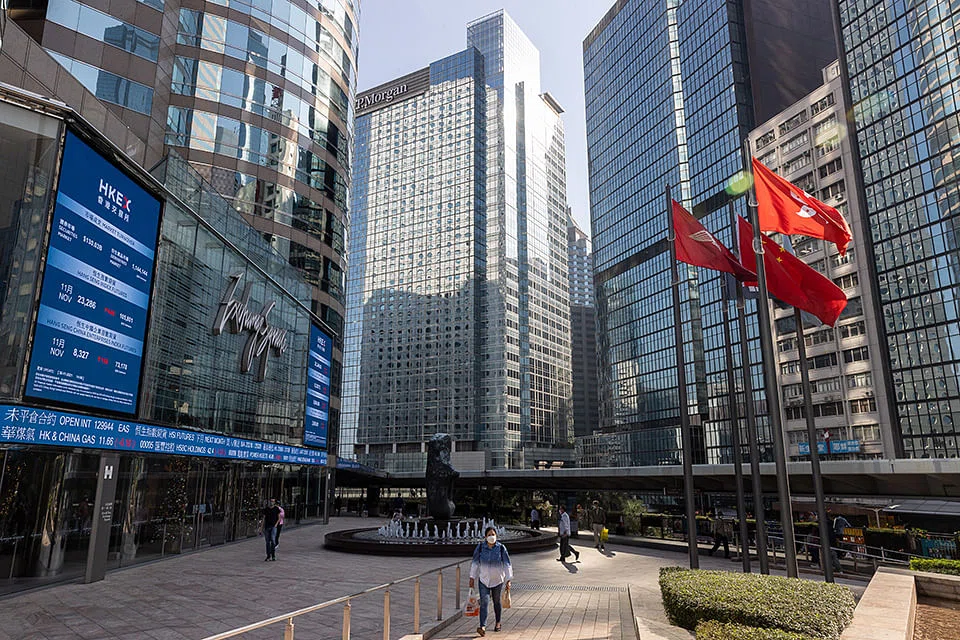
JUST a few weeks ago, Hong Kong seemed to cast a longing eye at blank-cheque companies. But is it a real craving? The Asian financial centre may simply want to minimise the regret it would feel - and be made to feel by investors and the media - if those deals went to arch-rival Singapore.
Fear of missing out is not a great motivation for opening up to special purpose acquisition companies (SPACs). Granted, SPACs have been a major force behind the record US$600 billion boom in global initial public offerings (IPOs) this year.
But the frenzy has been cooling since April, thanks to greater scrutiny of accounting practices of firms floated with the sole purpose of buying other companies and taking them public. A faster-than-anticipated tapering of US monetary expansion might act as a further brake on activity.
The outlook is different for Asia. A rising cost of capital may slow the formation of unicorns - startups valued at US$1 billion or more. But as new digital technologies upend everything from banking to healthcare and transportation in large markets like China, India and Indonesia, there will still be plenty of IPO hopefuls.
Following the lead of South-east Asian ride-hailing provider Grab, which started trading on the Nasdaq on Thursday (Dec 2) after a year-long merger process with a blank-cheque company, at least a few will want to try the SPAC route. From the perspective of exchanges in the region, the important objective will be to not lose exciting Asian startups to the US.
Singapore Exchange announced fairly relaxed rules around local SPAC listings in September, slashing the minimum market capitalisation threshold to S$150 million, half what it had originally proposed.
Soon after, Hong Kong put out a consultation paper. But there was a catch: Hong Kong Exchanges and Clearing proposed to limit participation only to professional investors, basically putting SPACs beyond the reach of the city's mainstay mom-and-pop investors. No other jurisdiction that allows SPACs has such an onerous restriction.
For more evidence that Hong Kong is merely countering Singapore - and that its heart is not fully into the project - consider what it included in the consultation note: a 7-page, 30-year history of the exchange's battles against shell companies.
That probably reflects the predicament of officials. There is competitive pressure on them to fall in with the zeitgeist. But they do not want small investors to get suckered in the bargain.
Evidence from South Korea suggests that excessive speculation in blank-cheque firms could inflate trading prices and trap retail traders, while providing a profitable exit to hedge funds and other institutional investors.
Why bother at all then with SPACs? When the CFA Institute in Hong Kong conducted a straw poll among its members before the consultation paper, 71 per cent of the participants chose private equity-like opportunities for small investors as the blank-cheque structure's biggest draw.
Just how realistic are these expectations? Professional venture capital firms go laughing to the bank on the strength of a few spectacular winners, making up for a large number of duds. Small investors will buy a few SPACs like lottery tickets and lose money in the aggregate.
Even if they find a great sponsor, who in turn lands an attractive target, they might still lose because of the 20 per cent of free shares given to SPAC promoters, the warrants that redeemers get to keep for free, and IPO underwriting fees.
All this dilution means that someone investing $10 in a SPAC and holding through to merger is trying to earn a profit with just $6.67 of cash. Is this poor man's private equity, or private equity's poor cousin?
No wonder "SPAC shares tend to drop by one-third of their value or more within a year following a merger", according to a Stanford Law School working paper, whose authors studied 47 mergers - de-SPAC in industry jargon - between January 2019 and June 2020.
Hong Kong tycoons might welcome the chance to play on their home turf. A business like Prenetics, which is merging with billionaire Adrian Cheng's US SPAC, may be better understood locally where the diagnostic lab's 2-hour Covid-19 tests sell at the airport.
Chinese Internet companies represent the other big opportunity. Ride-hailing giant Didi is facing a possible de-listing from US markets at the behest of Beijing. As China tightens mainland tech giants' access to foreign capital markets because of data security concerns, Hong Kong may emerge as a safe venue, both for traditional IPOs and blank-cheque fundraising.
But the biggest motivation, just like with dual-class shares, may still be the rivalry with Singapore. After surviving strident criticism for losing Alibaba Group's US$25 billion IPO to New York in 2014, Hong Kong relented on its one-share-one-vote principle 4 years ago - just to pre-empt Singapore's rules for shares with differential voting rights.
While the South-east Asian city-state has won only 1 such firm, Hong Kong's victory turned out to be Pyrrhic: Alibaba's 2019 secondary listing in Hong Kong has been a drag on the city's benchmark index.
On specific rules for blank-cheque firms, the investor community is often split right down the middle. Still, there is a broad consensus that when it comes to the bar for entry into public markets, there should be no scope for regulatory arbitrage.
"We aren't enamoured of back-door listings," says Mary Leung, the CFA Institute's Hong Kong-based head of advocacy for Asia-Pacific. "If you can't come in through the front door, you should just stay away."
To let dodgy companies in, just to avoid a near-term loss of advantage to Singapore, may cause a different kind of regret. BLOOMBERG
Decoding Asia newsletter: your guide to navigating Asia in a new global order. Sign up here to get Decoding Asia newsletter. Delivered to your inbox. Free.
Share with us your feedback on BT's products and services

