

Diamonds, nickel - and S$1.46b of failed promises

Singapore
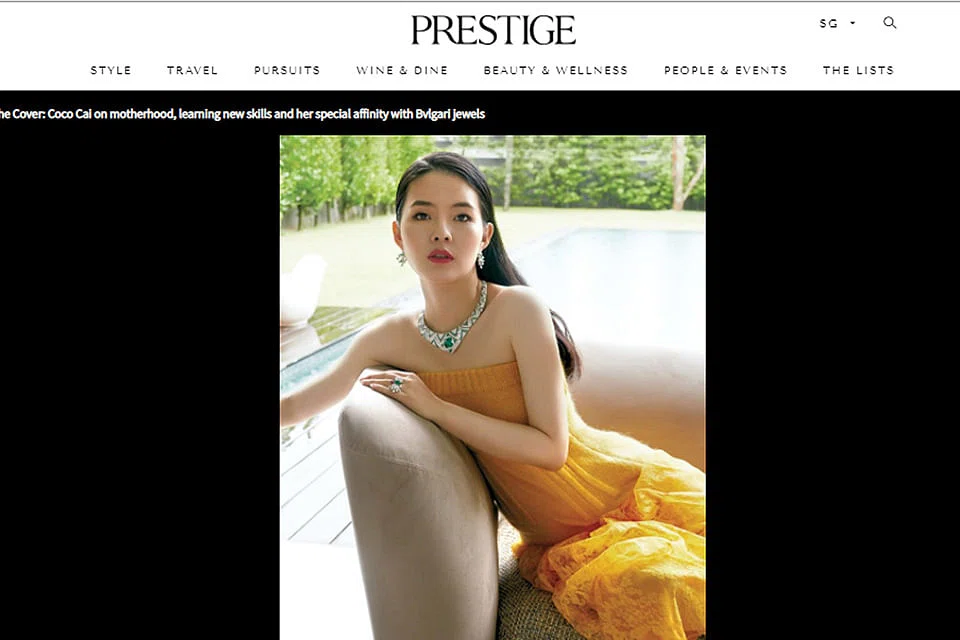
LATE last year, Coco Cai, a 30-year old socialite, was photographed for a luxury magazine, draped in her newly acquired baubles from luxury brand Bvlgari's Barocko jewellery collection.
As a valued client of the Italian jeweller, she was getting an exclusive private viewing of a curated collection, presented to her in her home, since a shopping trip to Italy was out of the question during the pandemic.
Among her purchases was the Cupola necklace, featuring a 32.88-carat sugarloaf cabochon Colombian emerald, framed by a mosaic of platinum, diamonds and more emeralds.
This was another addition to her family's trove of high-end collectibles, which included Chinese ink and water-colour paintings, pop-art sculptures and Louis Vuitton trunks.
But that world threatens to crumble for the Fujian native. In February, her husband, 34-year old Ng Yu Zhi, was arrested. The following month, he was charged with fraud and cheating in one of Singapore's largest suspected investment fraud schemes.
Between 2016 and this year, the heavy-set, bespectacled Singaporean is suspected to have duped close to 1,000 investors into parting with S$1.46 billion for what they thought was going into the trading of nickel.
The metal is a critical mineral in lithium-ion batteries, a key component in the fast-growing electric vehicle market; nickel prices hit a seven-year high recently.
Prosecutors and court-appointed judicial managers, led by KPMG's Bob Yap (partner, head of restructuring and of Asia-Pacific deal advisory), said that while investors had received payments of around S$700 million, they are still owed another S$840 million, based on the face value of outstanding contracts.
Some of the monies were allegedly siphoned into Ng's personal account (S$474 million), and into the account of Lee Si Ye, a deputy managing director of Envy group of companies (S$22 million); S$44 million went to other employees as commissions and profit sharing; S$24 million was paid to investors as referral fees; and about S$120 million went to investors as withdrawn profits.
Investigations are ongoing, but so far, more than S$100 million in bank accounts and properties belonging to various entities connected to Ng have been confiscated by the Commercial Affairs Department (CAD).
The CAD has confirmed that it was not their intent to forfeit assets if there are persons legally entitled to them.
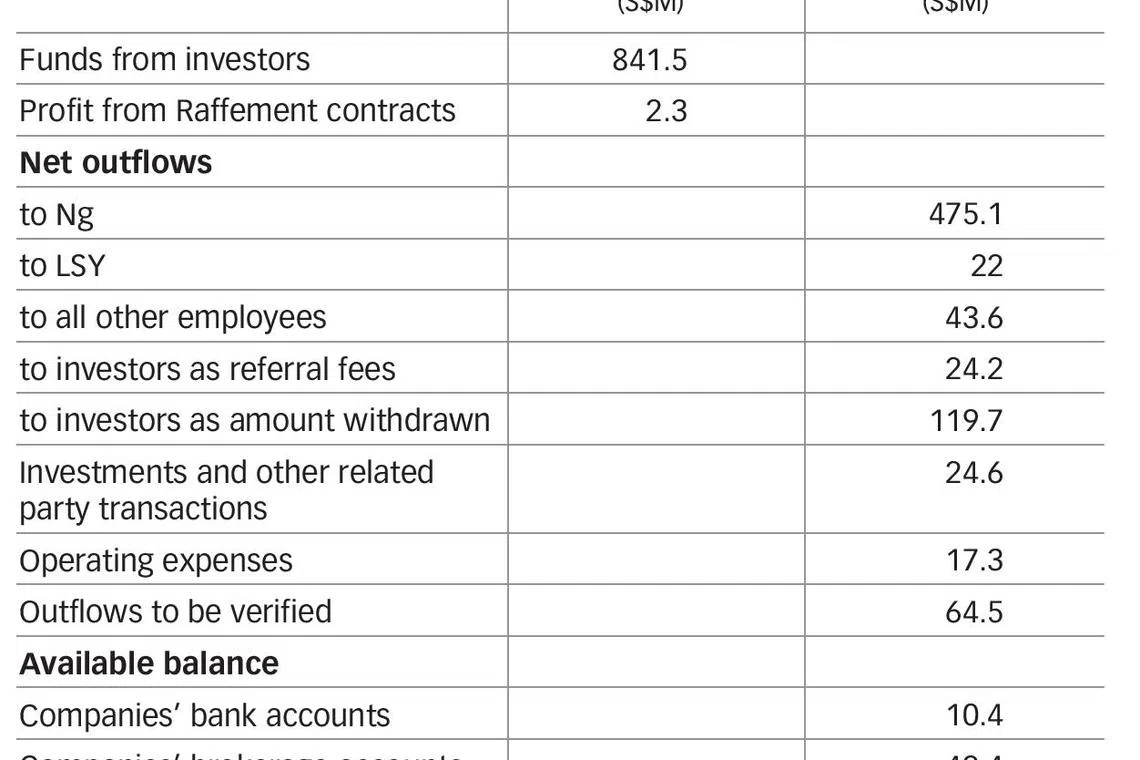
Over several virtual townhall meetings with investors, KPMG's Mr Yap said the interim judicial managers were looking into clawing back the monies, including referral fees, commissions, profit sharing paid and profits withdrawn by investors.
Ng, whose bail has been raised from S$1.5 million to S$4 million, ran Envy Asset Management (EAM) and Envy Global Trading (EGT). As they were not fund-management companies, they were not licensed by the Monetary Authority of Singapore (MAS).
However, in March last year, EAM was put on the MAS' investor-alert list to flag the firm's unlicensed status.
Still, investors poured in money. The companies were eventually brought to the attention of the CAD last November.
What gave Ng away were the large transfers of funds from corporate accounts to personal accounts, which triggered thousands of suspicious transaction reports (STRs) from banks to the police.
Convincing story
Ng led a lavish lifestyle that perpetuated his image of a successful trader. He was charming with women, and known for his friendships with Singapore's business elites, even as he carried out an alleged Ponzi scheme - an investment fraud structure which pays investors with money from new clients rather than actual profits.
The interim judicial managers at KPMG said 424 investors received some profits.
With personal expenses to the tune of S$2 million a month, Ng splurged on travel by private jet, a butler, a chauffeur, alcohol, expenditure at nightclubs, fine-dining restaurants, hotel rooms, multiple luxury cars and significant monetary gifts to close associates.
According to a close family source, his butler was paid S$30,000 a month, more than what many senior executives here earn.
But he was no ordinary help. He ran Ng's households and his many relationships. To the women, Ng was generous and gifted Hermes Birkin bags (each retailing at US$9,000 and up).
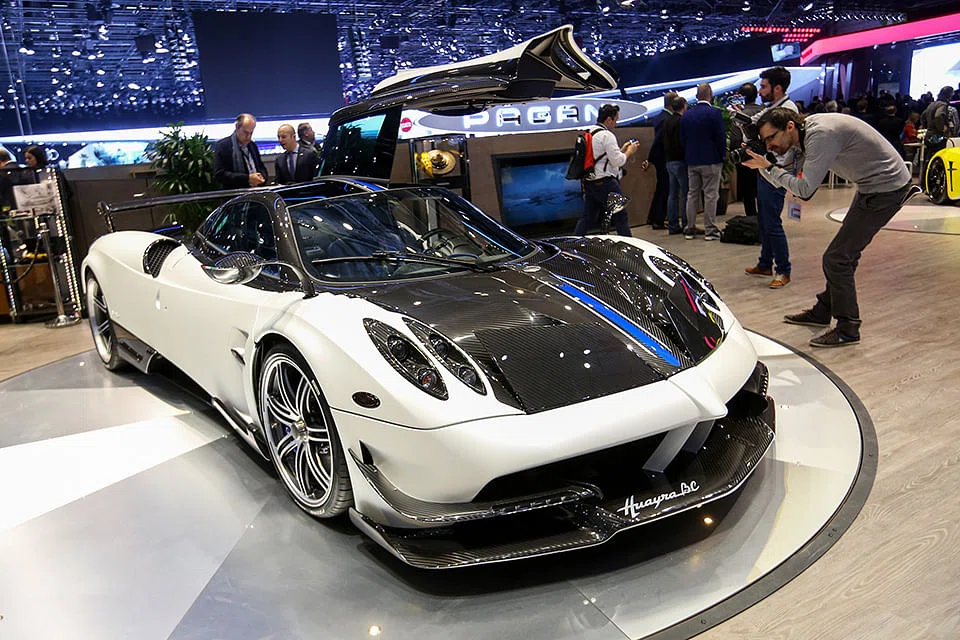
Ng loved his cars, and had 40 of them, including Singapore's only Pagani Huayra, a supercar he bought second-hand for more than S$7 million.
The gull-winged Italian hyper beast was stored in a clean room, under precisely controlled environmental conditions. His other marques included Rolls Royce, Aston Martin, Lamborghini, Ferrari and Porsche.
Despite his conspicuous spending, Ng had a positive public image. He became an increasingly visible figure in Singapore's philanthropic community, and was honoured by the prestigious Yong Loo Lin School of Medicine at the National University of Singapore for his contribution to a fund-raising drive.
The accountancy graduate did not own any real estate. His three-storey bungalow in Bukit Timah, one of Singapore's most desirable residential addresses, was rented - as were most of the homes for his female friends.
There was one exception - a penthouse in Orchard Road, which was bought under a trust.
An option to buy a good-class bungalow was scuttled when the authorities swooped in and his accounts were frozen.
From his office on the 19th floor of Centennial Tower in Singapore's central business district, Ng allegedly targeted victims, promising them average quarterly returns of 15 per cent - an eye-popping 60 per cent or more in annual gain.
This is considerable, given that large hedge funds tracked by Citco had the highest weighted average return of 23 per cent the whole of last year, and smaller funds a weighted average return of 3.3 per cent.
Investors thought their money went into buying physical nickel from Poseidon Nickel Limited, an Australian-listed company, at a discount; the metal was then thought to be sold at a profit to either BNP Paribas or Raffemet.
They would then profit from the sale of nickel to BNP or Raffemet, less the logistics charges and commissions.
The only problem was there were no real nickel trades. The ultimate beneficial interest in the Envy Group was held mostly by Ng.
The other ultimate beneficial owner was Ms Lee.
To convince investors of the existence of the purported nickel trading, he is alleged to have forged documents; shipping documents appeared to be printouts of scanned documents.
Other irregularities included a "Citibank" logo on a document that is inconsistent with Citibank's official logo.
Ng even went to the extent of recording a video showing investors a group of people, including himself, inspecting a shipment of nickel purchased from Raffemet.
But this purchase cannot be traced to any investment agreement.
Unaudited accounts and star-power allure
What is particularly shocking about Ng's scheme was that his alleged victims were not your typical mom-and- pop investors or retirees. He allegedly hoodwinked high-net-worth individuals and some of Singapore's most prominent names in the investment and legal fields.
Alleged victims included Temasek International general counsel Pek Siok Lan, criminal lawyer Sunil Sudheesan, former Law Society president Thio Shen Yi and founder of Vickers Venture Partners Finian Tan, known for spotting the potential in search giant Baidu back in 2000, when it was just a small Chinese start-up.
Ms Pek was allegedly cheated of S$5.5 million, Mr Sunil of S$1 million, Mr Thio of more than S$500,000, and Mr Tan of US$19.2 million (S$25.8 million).
Ng also allegedly cheated Envysion Wealth Management, a Singaporean fund-management company, and its founder Veronica Shim Wai Han, of at least S$48 million.
The interest of Mr Tan, a former Asia-Pacific head at Goldman Sach's oil unit, J. Aron, and Ms Shim, an ex-Singapore Airlines flight stewardess-turned-private banker of almost 20 years' standing, arguably helped lend legitimacy to Ng's scheme.
Kerry Goh, an investment professional who is now chief executive of multifamily office Kamet Capital, said it was important to be wary of funds and companies which court investments by mentioning big names.
"'So-and-so invests in our fund'. You have to watch out for that sort of name-dropping," he said.
"If you're not conducting your own due diligence and want to rely on the famous name as an investor, you have to at least find out who did the due diligence."
Moreover, Ng's companies were not even audited. One investment banker said: "All the investors needed to ask was: 'Who are your auditors?'"
He added that at the most fundamental level, investors could have done "a simple Google search", and in Envy's case, searched Poseidon.
"That would have alerted them as there was no offtake of nickel," he said.
In a statement through the Australian Securities Exchange, Poseidon said it has no business relationship or sales agreements with Ng and the Envy entities.
The names and initials of the Poseidon director who supposedly signed off on the contracts of June 27, 2016 and October 20, 2017, did not match the name of any of the directors listed in Poseidon Nickel's annual reports for the fiscal years 2016 and 2017.
Further checks would show the BNP statements purportedly issued by BNP Paribas Commodity Futures Ltd as the buyer were dated after BNP Paribas Commodity Futures was closed and no longer authorised to conduct regulated business.
David Gerald, founder, president and chief executive of the Securities Investors Association (Singapore), advised investors to do the simple "smell test": If the headline returns are high relative to the risk-free rate, be suspicious, sceptical and walk away.
"Practise the 'Ask, Check and Confirm' routine. Ask as many questions as you need to understand what's being offered, and how the returns are to be generated.
"Then check and double-check the credentials of the proposer or seller and whether it is regulated by the Monetary Authority of Singapore, and go back and confirm everything again and again."
That may still not be enough. Said one affected investor: "If the documents are fabricated, or if there's deliberate fraud, short of conducting forensic due diligence, there's only so much an individual can do to verify that the transaction is legitimate."
READ MORE:
TRENDING NOW

Singapore identifies 7 firms responsible for haze fires, notices issued urging action: Grace Fu

Could stablecoins be the future of money?

Singapore should prepare for prolonged haze until November, says Grace Fu

High Court rules against Julius Baer’s Singapore trust arm in US$50 million family trust dispute

