

Greed and fear, optimism and paranoia
To investment writer Morgan Housel, the psychological side of investing is the most critical
"INVESTOR education pieces are basically saying the same things over and over again, just in different ways," said my wise analyst.
Indeed, the sound principles of investing are very simple. But it is difficult to put into practice because we humans are so full of flaws, chief among them is our tendency to be affected by emotions, which oftentimes lead us to make irrational decisions.
Among the investment writers who resonated with us is Morgan Housel, who recently published his highly anticipated book The Psychology of Money. CFA Institute posted a blog which captured the main points made in the book and by Mr Housel in a recent CFA Institute webinar.
The book opens with a quote from Arthur Conan Doyle's Sherlock Holmes: "The world is full of obvious things which nobody by any chance ever observes."
Said Mr Housel: "Investing is not the study of finance. It is the study of how people behave with money."
Having entered full-time finance writing in 2007 and was confronted almost immediately with the global financial crisis, he found himself constantly exploring the questions of: "Why did the financial crisis of 2008 happen? What were its causes? Why did people behave the way that they did? Have they learned their lesson? Why do they keep making the same mistakes over and over again? Will they keep making those mistakes in the future?"
Mr Housel, now a partner at the Collaborative Fund, discovered clues to his questions in psychology, sociology, and other subjects.
Disciplines that on the surface have little connection to economics or investing could actually yield valuable insights because they ask similar questions. "What is people's relationship with greed and fear? Are people able to take a true long-term mindset? How gullible are you? Who do you trust? Who do you seek information from?" he said. "Those are the most important questions in investing and they also apply to a lot of fields."
To Mr Housel, the psychological side of investing is the most critical.
"You can be the best stock picker in the world, you can be the best economist in the world, you can have the best analytical abilities, the academic credentials of anyone else in the world," he said. "But if you lose your cool, if you lose your temper, in March of 2020, or in 2008, or in 1999, none of that matters."
"A genius is the man who can do the average thing when everyone else around him is losing his mind," a quote by Napoleon is highlighted in the book as well to drive home this point.
Thus, to him, investing is not just about money. "Investing is about our relationship with greed and fear," he said.
In my view, one way to overcome greed and fear is to see as many data points as possible, going as far back in history as we can. By studying history, we get a time-compressed picture of what has happened before - allowing us to detect patterns which are repeated over time. In addition to history, if we are able to observe the behaviour of multitudes of markets, stocks and instruments in real time and see the same mini patterns repeated again and again, then we can have certain assurance on what to expect. This should help us moderate our greed and fear.
Another concept which is talked about ad nauseam in the finance literature is compounding.
This is how compounding works: "You start with something that is so meaningless and benign, and a change in circumstances that doesn't seem to make any difference, that is easy to overlook because it's not intuitive," he said. "But over a period of time, it adds up to something truly extraordinary. And that, of course, is so true in investing as well."
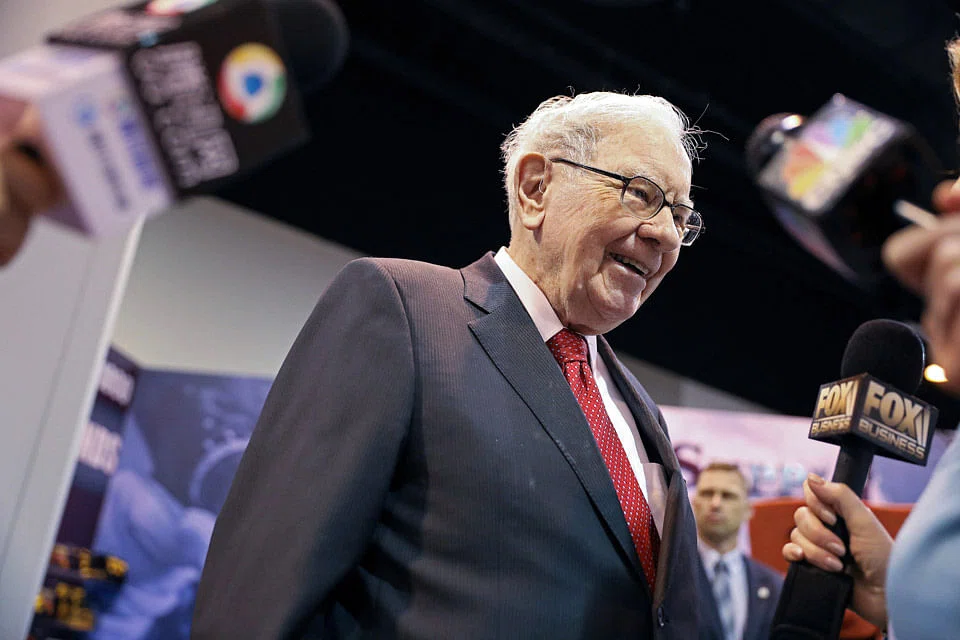
A case in point is investing legend Warren Buffett. Mr Buffett started investing at age 11 and continues today at age 90. So how much of his net worth came after his 50th birthday? About 96 per cent. "If he had started at 25 like a normal person and retired at 65," Mr Housel said, "his net worth would be US$11.7 million not US$90 billion."
Mr Housel said most investing mistakes come from the question: "What will happen next?" While most investing fortunes come from asking: "How long can I stay invested for?"
The next point Mr Housel highlighted is risk. Risk is what you don't see. "The biggest economic risk is what no one is talking about, because if no one's talking about it, no one's prepared for it, and if no one's prepared for it, its damage will be amplified when it arrives."
Trade war, budget deficits, elections are not risks. We know and talk about them and can prepare for them. The risk no one was talking about or paying attention to last year was the global coronavirus pandemic.
So how should investors deal with risks?
Give yourself a wide berth, with room for error, or in value investing parlance, ensure a big margin of safety.
According to Mr Housel, the risks that we are not talking about today is a banner 2021!
What if a vaccine arrives early in 2021 and everyone is soon vaccinated? Life can return to normal. That will release lots of pent-up demand. This, coupled with the government's stimulus programmes, could make 2021 one of the best years for the economy and the markets.
The counterargument, of course, is that if we don't get good vaccine news and stimulus measures are fumbled, 2021 could be one of the worst years for the economy in decades.
He reckoned both extremes are equally likely.
Mr Housel also stressed the distinction between getting rich and staying rich.
"Getting rich requires swinging for the fences, taking a risk, being optimistic," he said. "Staying rich requires a form of pessimism, being pessimistic about the short run, and the ability to survive whatever might happen, whatever may come your way."
To preserve and grow wealth requires a barbell personality of being optimistic about the long run and pessimistic in the short run.
Be optimistic of the market's ability to solve problems and create productivity and produce profits that accrue to shareholders.
"You also need pessimism about the short run, about being able to survive long enough to benefit from the long run," he said.
So how does Mr Housel define optimism?
"A real optimist is someone who knows that the short run and the medium run are going to constantly be filled with setbacks and delays and crises and tragedies but that those things do not prevent long-term growth and long-term optimism," he said.
"If someone says that they think everything is always going to be okay, that's not an optimist. That's a complacent, whereas a real optimist is someone who understands that the short run is always going to be a mess, always going to be a disaster, both for you and other people, constantly running into problems, running into setbacks, but those things do not preclude long-term growth. And that, to me, is the real optimist."
Encapsulating all the above insights would be an investment strategy that:
TRENDING NOW

Once staunchly pro-China, Malaysian Chinese businesses are now distancing themselves from Beijing

Grab CEO’s wife Chloe Tong on life with Anthony Tan and finding her purpose

Could stablecoins be the future of money?

ST Engineering opens tech-focused aircraft maintenance facility in Changi; to create over 500 jobs

