How to invest through high inflation
IS HIGH inflation coming? If so, what stocks should investors be buying? Of late, this is a hot topic in the investment industry. Earlier this month, strategists from the US-based investment research and brokerage firm Bernstein Research said: "There is probably no bigger macro issue, both tactically and strategically, than inflation and what this means for portfolios."
Thankfully, Warren Buffett laid out a blueprint in the 1980s for investors to deal with high inflation.
The right business characteristics
Chuin Ting Weber, chief executive officer of Singapore-based bionic financial adviser, MoneyOwl, wrote in a recent article: "For the US, historically, the worst inflationary period in recent memory was from 1973-1981."
She wrote that the US inflation rate in that period ranged from 4.9 per cent (in 1976) to 13.3 per cent (in 1979). In 1981, it was 8.9 per cent.
It is against this backdrop that Mr Buffett, widely regarded as the world's best investor, discussed how investors could cope with inflation in his 1981 Berkshire Hathaway shareholder letter. He wrote that businesses that are "particularly well adapted to an inflationary environment" must have two characteristics.
First, the business must have "an ability to increase prices rather easily (even when product demand is flat and capacity is not fully utilised) without fear of significant loss of either market share or unit volume".
Second, the business must have "an ability to accommodate large dollar volume increases in business (often produced more by inflation than by real growth) with only minor additional investment of capital".
In other words, a business that can cope well with high inflation must have first, pricing power and second, the ability to increase its sales volume by a large amount without the need for significant additional capital investments.
How inflation hurts
But just why is the reverse type of business - one that has no pricing power and that requires significant investment capital to increase sales volumes - bad in an inflationary environment?
The pernicious effect of a lack of pricing power is straightforward. In an inflationary environment, business costs will rise. Without the ability to increase its selling prices, profits will suffer.
Why would businesses that need significant additional capital to increase their sales volumes suffer during inflationary periods? The reason is more complex. Mr Buffett explained in his 1983 Berkshire Hathaway shareholder letter.
He used two businesses to illustrate his point. One is See's Candies, a subsidiary of Berkshire's that makes and sells confectionaries. The other is a hypothetical company. For our discussion here, let us call it Bad Business.
When Berkshire acquired See's Candies in 1972, it was earning around US$2 million in profit on US$8 million of net tangible assets. On the other hand, Mr Buffett gave Bad Business the hypothetical numbers of US$2 million in profit and US$18 million in net tangible assets.
He further illustrated what would happen to the two businesses if inflation ran at 100 per cent. Both See's Candies and Bad Business would need to double their earnings to US$4 million just to keep pace with inflation.
To do so, the two businesses can simply sell the same number of products at two times their previous prices, assuming that their profit margins remain constant.
But there is a problem. Both businesses would likely also have to double their investments in net tangible assets, "since that is the kind of economic requirement that inflation usually imposes on businesses, both good and bad". For example, doubling dollar sales would mean "correspondingly more dollars must be employed immediately in receivables and inventories".
This is where See's Candies starts to shine. Because See's Candies requires US$8 million in net tangible assets to produce US$2 million in profit, it will only need to ante up a further US$8 million "to finance the capital needs imposed by inflation".
Bad Business, on the other hand, would require a much larger sum of US$18 million in additional capital to produce the output required (the extra US$2 million in profit) simply to keep up with inflation.
Mr Buffett summed up the discussion by saying that "any unleveraged business that requires some net tangible assets to operate (and almost all do) is hurt by inflation". The businesses that are "hurt the least" are the ones that require little tangible assets.
The right businesses
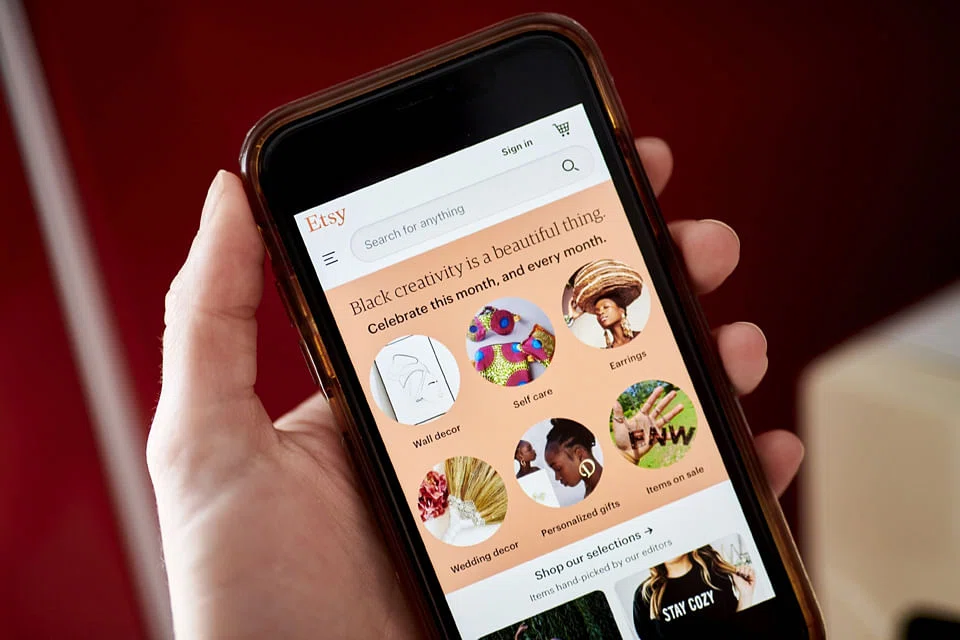
In my opinion, technology businesses that offer digital products or services have one of Mr Buffett's required characteristics to cope well with inflation. Examples of such technology businesses, under my definition, include DocuSign (the provider of an e-signature software solution), Etsy (the owner of its namesake e-commerce marketplace that connects buyers and creators of artisanal, unique products) and Facebook (the company behind its eponymous social media platform).
When such a technology business sells its products or services, its marginal costs are minimal - there is no major difference in costs for the business to provide a piece of software to either one customer or 10. Such products or services also involve minimal inventory, so increasing selling prices in an inflationary environment will not need the deployment of correspondingly more dollars in inventories.
In other words, this technology business can accommodate a large increase in sales volume without the need to increase its working capital.
Contrast this dynamic with a business that manufactures widgets or physical products. The production of each new widget or product requires additional capital for raw materials and/or new manufacturing equipment.
Widgets and physical products also involve inventory, so increasing selling prices in an inflationary environment will require more dollars in inventories, thus tying up valuable working capital.
This is not to say that all technology businesses that offer digital products or services can cope well with inflation. It is also important to consider their pricing power.
We can gain some insight on this by understanding how important a technology business' digital product or service is to its users. The more important the product or service is, the higher the chance that the business in question possesses pricing power.
A better approach
In the early 1970s, Mr Buffett correctly foresaw that high inflation in the United States would rear its ugly head later in the decade. But it is worth noting that he then got his subsequent views on inflation wrong.
For example, in his 1981 Berkshire Hathaway shareholder letter, he wrote that his "views regarding long-term inflationary trends are as negative as ever" and that "a stable price level seems capable of maintenance, but not of restoration".
In another instance, this time in his 1984 Berkshire Hathaway shareholder letter, he shared his belief that "substantial inflation lies ahead". But instead, US inflation declined substantially after the 1970s. Data from the World Bank showed that the country's inflation rate averaged at 7.1 per cent in the 1970s, 5.6 per cent in the 1980s, 3 per cent in the 1990s, 2.6 per cent in the 2000s, and 1.8 per cent in the 2010s.
This is not a dig at Mr Buffett. He is one of my investment heroes. This is simply to show how hard it is to be correct about macroeconomic developments.
So instead of wondering whether high inflation is coming, the better approach for stock market investors - in my opinion - is to not care about inflation. Instead, investors can simply focus on finding businesses that have a high chance of doing well over the long run regardless of the level of inflation.
On this point, I come back again to technology businesses that are selling digital products and services that are highly important to their users.
It is easy to do a lot worse than investing in businesses that have pricing power and can produce large increases in sales volumes without the need for significant additional investment of capital.
- The writer is the co-founder and portfolio manager of Compounder Fund (https://compounderfund.com), a long-term-focused global equities investment fund, at Galilee Investment Management Pte Ltd. He has a vested interest in DocuSign, Etsy, and Facebook. Holdings are subject to change at any time.
Data compiled as at June 19, 2021